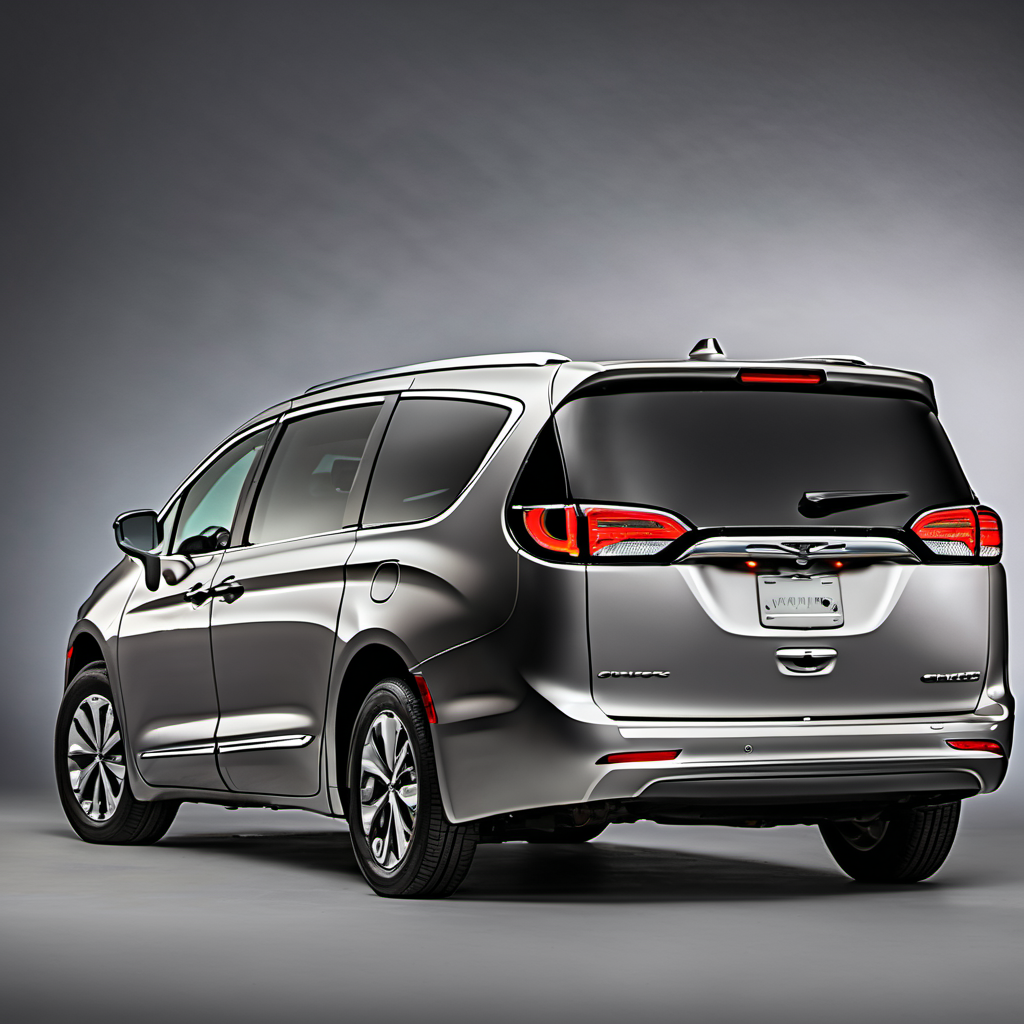
2017 Chrysler Pacifica Van/Minivan

2017 Chrysler

PacificaVan/Minivan

3.6L V6 Pentastar · Van/Minivan

The 2017 Chrysler Pacifica is the reborn nameplate that replaced the long-running Town & Country, arriving as a ground-up redesign on a new platform. It was a significant leap forward in refinement, interior quality, and technology for Chrysler's minivan lineup. The 3.6L Pentastar V6 paired with a 9-speed automatic provides confident highway merging and reasonable fuel economy for a vehicle this size. As a first-year model on a new platform, the 2017 Pacifica came with some growing pains — particularly around the 9-speed transmission and the Uconnect-integrated electronics. That said, the core structure, ride quality, and family utility are genuinely good. Sliding power doors, Stow 'n Go seating, and a well-thought-out second and third row make it a practical daily driver for families. Buyers should be aware this was the first model year after a long hiatus of the Pacifica name, so early software and transmission calibration issues were common. Many were addressed through dealer software updates. Units from 2018 onward had more of these bugs ironed out, but a well-maintained 2017 with updated software is still a solid choice.

Reliability
3/5
Verified data
Specs shown for Pacifica — the most common configuration. Other trims may vary in engine, drivetrain, or fuel economy. Sign in to see your vehicle's exact specs.
Engine
[object Object]
Drivetrain
FWD
Fuel
Gasoline
MPG
18 city / 28 hwy / 22 combined
Seats
7
Doors
4
Body
Minivan
MSRP
$26,990

Overview

AI-curated

The 2017 Chrysler Pacifica is the reborn nameplate that replaced the long-running Town & Country, arriving as a ground-up redesign on a new platform. It was a significant leap forward in refinement, interior quality, and technology for Chrysler's minivan lineup. The 3.6L Pentastar V6 paired with a 9-speed automatic provides confident highway merging and reasonable fuel economy for a vehicle this size. As a first-year model on a new platform, the 2017 Pacifica came with some growing pains — particularly around the 9-speed transmission and the Uconnect-integrated electronics. That said, the core structure, ride quality, and family utility are genuinely good. Sliding power doors, Stow 'n Go seating, and a well-thought-out second and third row make it a practical daily driver for families. Buyers should be aware this was the first model year after a long hiatus of the Pacifica name, so early software and transmission calibration issues were common. Many were addressed through dealer software updates. Units from 2018 onward had more of these bugs ironed out, but a well-maintained 2017 with updated software is still a solid choice.

Known for
  • Stow 'n Go flat-folding second AND third row seats
  • Smooth, quiet ride for a minivan
  • Capable 3.6L Pentastar V6 engine
  • Best-in-class interior storage and flexibility
Best for
  • Families hauling kids and gear regularly
  • Road-trip families who value passenger comfort
  • Buyers who need flat-floor cargo mode frequently
  • Buyers stepping up from a crossover who want more practical space
Watch for
  • 9-speed automatic transmission shudder and rough shifts, especially on 2017 models
  • Uconnect software glitches causing screen freezes or reboots
  • Power sliding door electrical gremlins
  • Higher-than-average first-year model reliability concerns

Common issues by mileage

6 known

9-Speed Automatic Transmission Shudder / Harsh Shifts

high
Typically appears
5–60k mi
Estimated repair
$0 – $600

Power Sliding Door Motor / Actuator Failure

medium
Typically appears
40–100k mi
Estimated repair
$200 – $750

Oxygen Sensor Heater Circuit Failure

low
Typically appears
80–130k mi
Estimated repair
$150 – $400

Stow 'n Go Seat Latch / Track Wear

medium
Typically appears
50–120k mi
Estimated repair
$100 – $400

Maintenance schedule

  1. 1
    Every 5,000–6,000 miles Engine oil and filter change — use only 0W-20 full synthetic

    The Pentastar VVT system is highly sensitive to oil condition. Dirty or low oil is the #1 cause of camshaft timing codes (P0012, P0015, etc.) and solenoid wear. Do not stretch intervals.

  2. 2
    Every 40,000 miles or 4 years Transmission fluid service

    The ZF 9-speed's shudder and shift complaints are worsened by degraded fluid. Chrysler's 'lifetime' fluid claim is overly optimistic — an independent flush at 40k is cheap insurance on a $3,000+ transmission repair.

  3. 3
    Every 30,000 miles Spark plug replacement

    The 3.6L Pentastar uses standard platinum plugs on this generation. Worn plugs cause misfires and can trigger false VVT codes. Stick to the lower end of the interval range.

  4. 4
    Every 12 months / each spring Power sliding door track cleaning and lubrication

    Wisconsin road salt and grit accumulate in the door tracks over winter and accelerate motor and roller wear. Clean and lube with a dry or silicone-based lubricant each spring.

  5. 5
    Every fall, before first freeze Battery load test

    The Pacifica's electronics (Uconnect, power doors, liftgate) draw heavily on the battery. A weak battery in sub-zero temps causes cascading electrical faults. OEM-spec group size 94R or equivalent.

  6. 6
    Every 5 years or 100,000 miles Coolant system inspection and flush

    FCA's OAT coolant degrades over time. Degraded coolant accelerates water pump and thermostat wear. Critical in a Wisconsin climate where freeze protection must be maintained to at least -34°F.

  7. 7
    Every 2–3 years Brake fluid flush

    Brake fluid is hygroscopic and absorbs moisture over time, lowering boiling point and promoting internal caliper corrosion — worsened by Wisconsin salt exposure and winter moisture cycles.

  8. 8
    At every service visit, especially first 3 years Uconnect software update check

    Multiple TSBs exist for the 2017 Pacifica's Uconnect and transmission control modules. Confirm all software updates have been applied — this single step resolves many reported shift and screen issues for free.

Always defer to the manufacturer's service manual for warranty-mandated intervals.

Cost of ownership

Annual maintenance
$600 – $1,200
Fuel
At 22 MPG combined and ~15,000 miles/year, expect roughly $1,800–$2,200/year at current Midwest regular unleaded prices.
Insurance
Typically $1,200–$1,700/year for a family driver in Wisconsin; minivans generally rate favorably compared to SUVs of similar value.

Day-to-day ownership costs are reasonable for a full-size family vehicle. The biggest financial risk on a 2017 is an unserviced 9-speed transmission or neglected oil changes leading to VVT damage — both of which can run $1,500–$4,000+ if ignored. Keep up with oil and transmission fluid and this van is budget-friendly to maintain.
Seasonal care

Lake Geneva, WI
Winter
  • Load test the battery every fall — cold starts plus heavy electrical draw (heated seats, defroster, power doors) will expose any weak battery fast in Lake Geneva winters.
  • Flush washer fluid reservoir and refill with -40°F rated fluid; the large windshield and rear glass on this van demand it.
  • Inspect and treat power sliding door tracks: salt and ice buildup will bind the rollers and burn out door motors prematurely.
  • Check tire pressure monthly — a 30°F temperature drop costs about 3 PSI. Pacifica's recommended pressure is on the door jamb placard.
  • Verify coolant freeze protection is rated to at least -34°F using a coolant tester — not just a visual check.
  • Keep the fuel tank above 1/4 full to reduce condensation in the fuel system and provide weight over the FWD drive axle in slippery conditions.
Summer
  • Inspect the A/C system for refrigerant leaks before hot weather hits — a fully loaded family van with a struggling A/C is miserable on I-94.
  • Check tire pressure weekly during heat waves; overinflation from heat plus highway speeds increases blowout risk.
  • Clean the cabin air filter each spring — winter road debris, salt dust, and mold spores accumulate over the heating season.
  • Inspect the serpentine belt for cracking or glazing; heat accelerates belt degradation on the 3.6L and a failure leaves you stranded.
  • Check sliding door weather stripping for cracking or separation — Wisconsin freeze/thaw cycles are hard on rubber seals.

Comparable vehicles

If you're shopping for one

Red flags
  • Any camshaft timing codes (P0012, P0015, P0022, P0025) present at purchase — these indicate oil neglect or solenoid damage that may already be progressing.
  • Transmission that shudders, slips, or bangs into gear with no TSB software update on record — repair or replacement is expensive.
  • Power sliding doors that only work intermittently — motors and control modules are costly and the problem almost never self-resolves.
  • Uconnect screen that reboots or stays black on startup with U0100–U0104 codes — could indicate a deeper module failure beyond a software fix.
  • Visible rust on brake lines, fuel lines, or floor pan — common on upper-Midwest examples and can be a safety and costly repair issue.
  • No oil change records or evidence of extended intervals — VVT systems on the 3.6L do not recover from oil neglect.
What to inspect
  • Plug in an OBD-II scanner before buying — check for stored or pending codes, especially P0012/P0015/P0022/P0025 (VVT timing) and any U-codes indicating module communication faults.
  • Test ALL power sliding door and liftgate cycles at least 3 times each — listen for grinding or hesitation, which signals worn motors or dirty tracks.
  • Drive the van on the highway specifically to check for transmission shudder between 25–45 MPH during light throttle cruise — a classic ZF 9-speed symptom.
  • Confirm Uconnect software is up to date; ask for dealer service records showing TSB software flashes.
  • Check under the van for rust on the subframe, brake lines, and fuel lines — Wisconsin salt is aggressive, and 2017 models are now 7+ years old.
  • Pull the engine oil dipstick and inspect for dark sludge or a milky appearance — either signals a neglected oil change history, which directly predicts VVT failure.
AI profile generated 20 days ago · claude-sonnet-4-6 · v2.