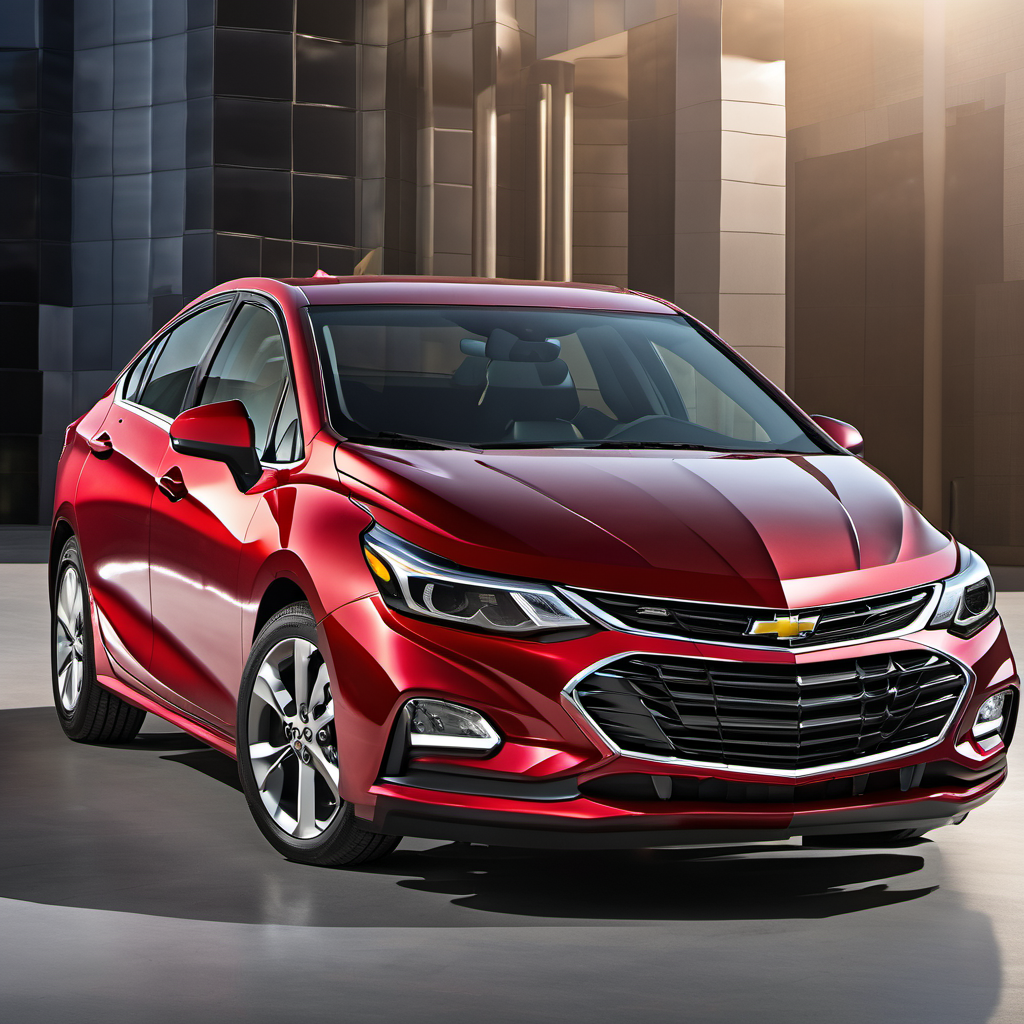
2017 Chevrolet Cruze Hatchback

2017 Chevrolet

CruzeHatchback

1.4L I4 Turbocharged · Hatchback

The 2017 Chevrolet Cruze Hatchback is the second-generation Cruze in its more versatile five-door body style, a form that returned to the North American market after being absent for years. It shares its underpinnings with the sedan but adds a sloping roofline, a longer cargo area, and a standard hands-free power liftgate on higher trims. The hatchback was sold alongside the sedan and offered a bit more practicality without jumping up to a crossover. Under the hood sits GM's turbocharged 1.4L four-cylinder, a peppy engine that delivers solid fuel economy in a compact package. A six-speed manual was available, though most buyers opted for the six-speed automatic. Ride quality is composed for the segment, and the cabin is notably quiet for a compact car. The Cruze Hatchback is a reasonable used-car buy for someone who needs efficient city and highway transportation and wants more cargo flexibility than a sedan. That said, it's a turbo four with variable valve timing — systems that reward strict oil change adherence. Deferred maintenance bites hard on this engine.

Reliability
3/5
Verified data
Specs shown for Cruze — the most common configuration. Other trims may vary in engine, drivetrain, or fuel economy. Sign in to see your vehicle's exact specs.
Engine
[object Object]
Drivetrain
FWD
Fuel
Gasoline
MPG
28 city / 37 hwy / 32 combined
Seats
5
Doors
4
Body
Hatchback
MSRP
$22,190

Overview

AI-curated

The 2017 Chevrolet Cruze Hatchback is the second-generation Cruze in its more versatile five-door body style, a form that returned to the North American market after being absent for years. It shares its underpinnings with the sedan but adds a sloping roofline, a longer cargo area, and a standard hands-free power liftgate on higher trims. The hatchback was sold alongside the sedan and offered a bit more practicality without jumping up to a crossover. Under the hood sits GM's turbocharged 1.4L four-cylinder, a peppy engine that delivers solid fuel economy in a compact package. A six-speed manual was available, though most buyers opted for the six-speed automatic. Ride quality is composed for the segment, and the cabin is notably quiet for a compact car. The Cruze Hatchback is a reasonable used-car buy for someone who needs efficient city and highway transportation and wants more cargo flexibility than a sedan. That said, it's a turbo four with variable valve timing — systems that reward strict oil change adherence. Deferred maintenance bites hard on this engine.

Known for
  • Unusually quiet, refined cabin for the compact segment
  • Strong real-world fuel economy from the 1.4L turbo
  • Practical hatchback cargo area with a power liftgate on upper trims
  • Available six-speed manual transmission
Best for
  • Commuters who want compact-car efficiency with more cargo room
  • Budget-conscious buyers who want a quieter-than-average compact
  • City drivers who appreciate the flexible hatch layout
  • Single owners or couples who don't need a large back seat
Watch for
  • Oil consumption issues on the 1.4L turbo if oil changes were skipped
  • Water leaks into the cabin, particularly around the sunroof drain and rear hatch seal
  • VVT/camshaft actuator problems tied directly to oil change history
  • Infotainment and electronics gremlins on early builds
  • Turbo bypass valve failures leading to reduced power

Common issues by mileage

6 known

VVT Camshaft Actuator / Timing Chain Wear

high
Typically appears
60–120k mi
Estimated repair
$400 – $1,200

Turbo Bypass (Diverter) Valve Failure

medium
Typically appears
50–100k mi
Estimated repair
$150 – $400

Oil Consumption

medium
Typically appears
40–100k mi
Estimated repair
$50 – $2,500

Cabin Water Intrusion (Sunroof Drain / Hatch Seal)

medium
Typically appears
30–80k mi
Estimated repair
$100 – $600

Oxygen Sensor Heater Circuit Faults

medium
Typically appears
70–120k mi
Estimated repair
$150 – $450

Maintenance schedule

  1. 1
    Every 5,000–7,500 miles or 6 months — do NOT stretch to the GM Oil Life Monitor's maximum on a turbo Engine Oil & Filter Change

    The 1.4L turbo runs hot oil through VVT solenoids and turbo bearings. Sludge from extended drain intervals is the #1 cause of expensive camshaft actuator and timing chain failures on this engine.

  2. 2
    Every 60,000 miles Spark Plug Replacement

    Turbocharged engines run plugs harder. Worn plugs cause misfires and can stress the ignition coils.

  3. 3
    Every 30,000 miles or when visibly dirty Engine Air Filter

    A restricted filter reduces turbo efficiency and fuel economy.

  4. 4
    Every 15,000–20,000 miles Cabin Air Filter

    Wisconsin road dust and pollen load it quickly. A clogged cabin filter stresses the HVAC blower motor.

  5. 5
    Every 5 years or 150,000 miles (DEX-COOL) Coolant System Inspection & Flush

    Turbocharged engines run hotter coolant. Degraded coolant accelerates water pump and thermostat wear.

  6. 6
    Every spring and fall Sunroof Drain Cleaning

    Leaves and debris clog the four drain tubes quickly in Wisconsin. A blocked drain is the most common cause of cabin water intrusion on this hatchback.

  7. 7
    Every 3 years or 45,000 miles Brake Fluid Flush

    Brake fluid absorbs moisture over time, lowering boiling point. Important for Wisconsin's hilly back roads and winter stop-and-go.

  8. 8
    Every fall, before temperatures drop below freezing Battery Load Test

    The Cruze's electronics and infotainment are sensitive to low voltage. A weak battery in Wisconsin winters is a common trigger for U-code CAN bus faults and hard-start conditions.

Always defer to the manufacturer's service manual for warranty-mandated intervals.

Cost of ownership

Annual maintenance
$400 – $900
Fuel
At 32 MPG combined and ~15,000 miles/year, expect roughly $1,400–$1,700/year at $3.00–$3.75/gallon. One of the more fuel-efficient options in the compact segment.
Insurance
Typically $900–$1,400/year for a private owner in the Lake Geneva area depending on age, record, and coverage level. Compact cars generally sit in a favorable insurance tier.

The Cruze Hatchback is a low-cost vehicle to fuel and insure. Routine maintenance is affordable. The big financial risk is deferred oil changes leading to VVT or timing chain work ($400–$1,200+). Keep up with oil, don't stretch it, and this car is genuinely cheap to own. Neglect it and repair bills can exceed the car's value quickly.
Seasonal care

Lake Geneva, WI
Winter
  • Load-test the 12V battery every fall — cold cranking a turbo four with a weak battery is hard on the starter and triggers CAN bus faults
  • Switch to a full synthetic 0W-30 or 0W-40 if staying with 5,000-mile intervals — cold oil flow matters for turbo bearing and VVT health at sub-zero temps
  • Flush washer fluid reservoir and top off with a -20°F or colder rated fluid rated for Wisconsin winters
  • Inspect and replace wiper blades with winter-rated blades before first snowfall — the rear wiper on the hatchback is especially important for visibility
  • Rinse the underbody and wheel wells monthly — Lake Geneva roads are heavily salted and the Cruze's rear hatch area and rocker panels can trap brine
  • Clear ice from the rear hatch seal before forcing the liftgate open — the seal can tear in freezing temperatures
Summer
  • Check tire pressure monthly — every 10°F rise in ambient temperature adds roughly 1 PSI; the Cruze runs 35 PSI and overinflation accelerates center tread wear
  • Inspect the A/C system refrigerant and cabin filter before the first heat wave — a clogged cabin filter dramatically reduces cooling performance
  • Flush coolant if overdue — summer heat cycles stress aging DEX-COOL more noticeably
  • Clean sunroof drains after spring pollen and seed season to prevent summer thunderstorm intrusion
  • Check that the turbo intercooler inlet hose clamps are tight — heat soak loosens rubber hose connections over many thermal cycles

Comparable vehicles

If you're shopping for one

Red flags
  • No oil change records or obvious sludge under the valve cover — walk away
  • Cold-start timing chain rattle that lasts more than a few seconds
  • Water stains, musty odor, or wet carpet inside the hatchback cargo area
  • Check engine light with stored VVT codes (P0012, P0015) and no recent repair history
  • Any U-code CAN bus faults (U0100–U0104) without a battery or ground repair documented — can signal deeper electrical problems
What to inspect
  • Pull the oil cap and dipstick — look for sludge, milky residue, or a dramatically low level, all signs of neglected oil changes or a head gasket issue
  • Check for a cold-start timing chain rattle in the first 5 seconds of startup — a rattling chain on a cold morning means expensive repairs ahead
  • Test the power liftgate (if equipped) for smooth operation and verify the rear hatch seal is intact and pliable, not cracked or compressed flat
  • Inspect the carpet under the rear seats and trunk floor for moisture, mold smell, or staining — signs of a leaking hatch seal or clogged sunroof drain
  • Look for boost hesitation during a hard 30–60 mph acceleration test — a stumble or surge can indicate a failing turbo bypass valve or intake leak
  • Request service records specifically showing oil change dates and mileage — this is the single most important document for this engine
AI profile generated 22 days ago · claude-sonnet-4-6 · v2.