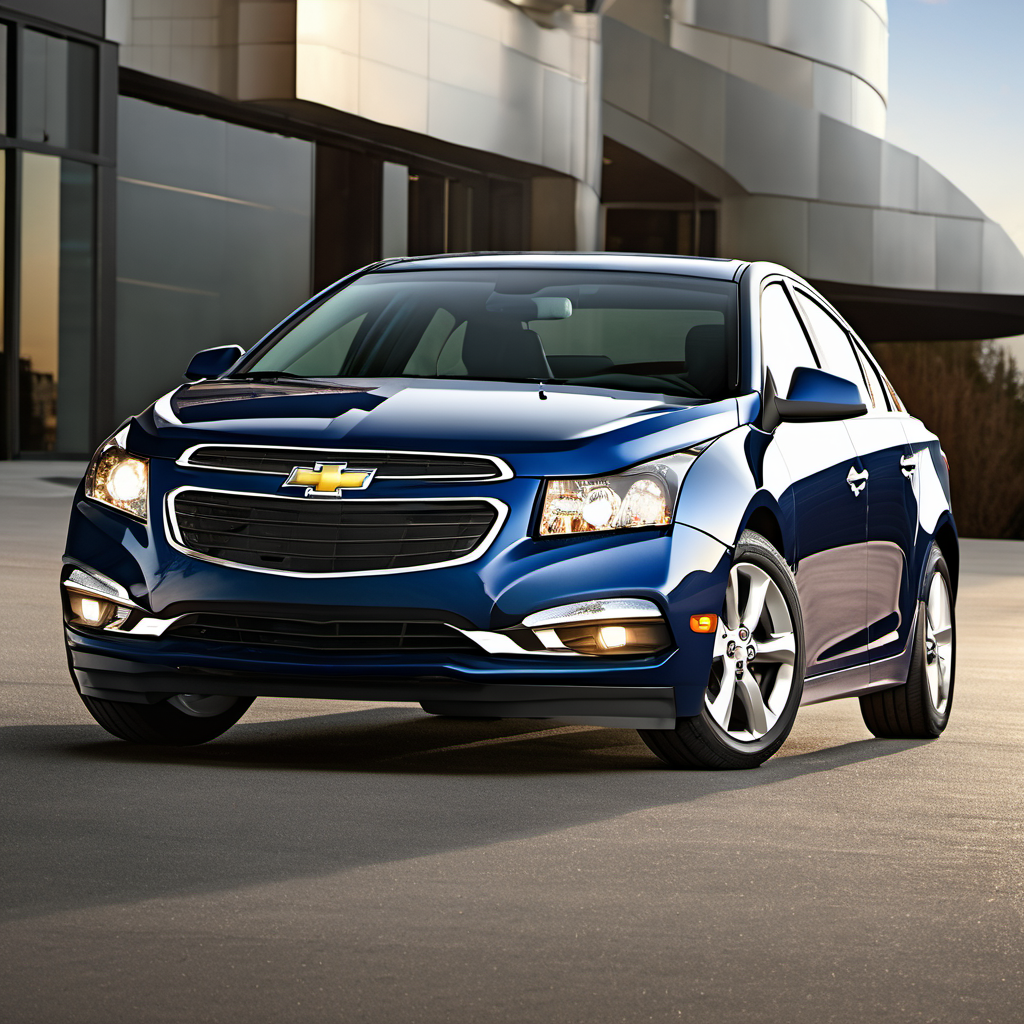
2015 Chevrolet Cruze Sedan

2015 Chevrolet

CruzeSedan

1.4L I4 Turbocharged · Sedan

The 2015 Chevrolet Cruze is a compact sedan that was one of GM's best-selling cars during this era. It slots into the heart of the compact segment, offering a comfortable ride, decent fuel economy, and a reasonably roomy interior for its class. The 2015 model year is part of the first-generation Cruze (2011–2016 in North America), which received a mid-cycle refresh in 2014–2015 that brought interior updates and revised styling. Most 2015 Cruzes came with a turbocharged 1.4L four-cylinder paired to either a six-speed automatic or six-speed manual. The turbo engine gives it peppy low-end pull around town, but it also introduces some long-term maintenance considerations — particularly around oil consumption and cooling system health — that owners need to stay on top of. Overall, a well-maintained 2015 Cruze is a practical, affordable commuter. Its weaknesses are predictable and manageable if you keep up with oil changes and address small issues before they snowball.

Reliability
3/5
Verified data
Specs shown for Cruze — the most common configuration. Other trims may vary in engine, drivetrain, or fuel economy. Sign in to see your vehicle's exact specs.
Engine
[object Object]
Drivetrain
FWD
Fuel
Gasoline
MPG
26 city / 38 hwy / 30 combined
Seats
5
Doors
4
Body
Sedan
MSRP
$18,170

Overview

AI-curated

The 2015 Chevrolet Cruze is a compact sedan that was one of GM's best-selling cars during this era. It slots into the heart of the compact segment, offering a comfortable ride, decent fuel economy, and a reasonably roomy interior for its class. The 2015 model year is part of the first-generation Cruze (2011–2016 in North America), which received a mid-cycle refresh in 2014–2015 that brought interior updates and revised styling. Most 2015 Cruzes came with a turbocharged 1.4L four-cylinder paired to either a six-speed automatic or six-speed manual. The turbo engine gives it peppy low-end pull around town, but it also introduces some long-term maintenance considerations — particularly around oil consumption and cooling system health — that owners need to stay on top of. Overall, a well-maintained 2015 Cruze is a practical, affordable commuter. Its weaknesses are predictable and manageable if you keep up with oil changes and address small issues before they snowball.

Known for
  • Comfortable highway ride for its class
  • Punchy turbocharged 1.4L with decent fuel economy
  • Well-equipped interior at a budget price
  • Known oil consumption issues on the 1.4L turbo
  • Cooling system leaks as a recurring complaint
Best for
  • Daily commuters wanting low running costs
  • First-time car buyers on a budget
  • City and highway mixed driving
  • Drivers who prioritize comfort over sporty handling
Watch for
  • Oil consumption — check the dipstick between changes
  • Coolant leaks from the water outlet/thermostat housing (plastic fitting prone to cracking)
  • Turbocharger issues tied to skipped oil changes
  • Transmission hesitation on the 6-speed automatic
  • Rust on underbody and wheel wells — especially important in Wisconsin

Common issues by mileage

6 known

Coolant leak from water outlet / thermostat housing

high
Typically appears
40–90k mi
Estimated repair
$150 – $400

Oil consumption (1.4L turbo)

high
Typically appears
30–100k mi
Estimated repair
$0 – $1,200

Turbocharger bypass valve failure / wastegate rattle

medium
Typically appears
60–120k mi
Estimated repair
$200 – $900

Variable valve timing / camshaft actuator solenoid fault

medium
Typically appears
70–130k mi
Estimated repair
$150 – $600

Oxygen sensor / heater circuit failure

medium
Typically appears
80–130k mi
Estimated repair
$120 – $350

6-speed automatic transmission hesitation / hard shift

medium
Typically appears
50–100k mi
Estimated repair
$150 – $2,500

Maintenance schedule

  1. 1
    Every 5,000 miles or 6 months — do NOT stretch to the OLM's maximum on a turbo engine Engine oil and filter change

    The 1.4L turbo relies on clean oil for VVT actuators and turbo bearing lubrication. Dirty or low oil is the single biggest cause of expensive failures on this engine.

  2. 2
    Every 1,000–1,500 miles between oil changes Check engine oil level

    This engine is known to consume oil, especially as mileage climbs. Running it low will accelerate turbo and piston ring wear.

  3. 3
    Annually or any time you smell coolant Inspect and pressure-test cooling system

    The plastic water outlet and thermostat housing are failure-prone. Catching a small weep early is a $150 fix; ignoring it until you overheat can cost $1,500+.

  4. 4
    Every 5 years / 150,000 miles (using GM DEXCOOL only) Coolant flush

    DEXCOOL degrades and becomes acidic over time, accelerating corrosion of the already-weak plastic cooling fittings.

  5. 5
    Every 60,000 miles Spark plug replacement

    Turbocharged engines work spark plugs harder. Old plugs cause misfires that can send raw fuel into the catalytic converter.

  6. 6
    Every 25,000–30,000 miles or annually Air filter replacement

    A clogged air filter robs turbo response and fuel economy. Wisconsin winters mean more road grit; check more often.

  7. 7
    Every 45,000–50,000 miles Transmission fluid change (automatic)

    GM marks the transmission fluid 'lifetime' but independent shops — and many owners — have found fluid changes at this interval sharply reduce the hesitation and harsh-shift complaints common on this trans.

  8. 8
    Every 2 years Brake fluid flush

    Brake fluid absorbs moisture over time, lowering its boiling point. Wisconsin's freeze-thaw cycles make this especially important.

Always defer to the manufacturer's service manual for warranty-mandated intervals.

Cost of ownership

Annual maintenance
$450 – $900
Fuel
At 30 MPG combined and ~12,000 miles/year, expect roughly $1,400–$1,700/year at current Wisconsin gas prices. The 1.4T requires 87 octane, which helps keep costs down.
Insurance
Generally inexpensive to insure — expect $800–$1,300/year for full coverage depending on your driving record and ZIP code in the Lake Geneva area.

The Cruze is genuinely cheap to own day-to-day if you stay on top of oil changes and cooling system inspections. The risk is deferred maintenance — skip a few oil changes and a $50 service can turn into a $2,000+ turbo or VVT repair. Budget a little extra for cooling system parts in years 8–12 of ownership; those plastic fittings will eventually need replacement.
Seasonal care

Lake Geneva, WI
Winter
  • Switch to a full-synthetic 5W-30 if not already — it flows faster at cold start and protects the turbo and VVT solenoids during sub-zero Wisconsin mornings.
  • Test the battery before November. The stock battery is typically adequate for 3–5 years; anything older heading into a Lake Geneva winter is a gamble.
  • Use a winter washer fluid rated to at least -20°F and keep the reservoir full — the 1.4T generates a lot of road spray.
  • Inspect the underbody, wheel well liners, and rocker panels for rust each fall. Road salt is brutal here and this platform is prone to corrosion.
  • Replace wiper blades with winter-rated beam blades before the first freeze to avoid ice-loaded blade failures.
  • Allow 30–60 seconds of idle before driving hard in sub-zero temps to let oil reach the turbo bearing before boost builds.
Summer
  • Check tire pressure monthly — every 10°F rise in ambient temperature adds roughly 1 PSI, which can push tires over their max on hot summer days.
  • Inspect the A/C system for proper cooling; the Cruze's cabin heats up quickly and the compressor works hard. A weak A/C charge is worth addressing before July.
  • Keep an eye on coolant level and temperature gauge during hot weather — an already-weakened thermostat housing is more likely to fail under sustained heat load.
  • Check the cabin air filter — pollen and debris from spring/summer can restrict airflow noticeably.

Comparable vehicles

If you're shopping for one

Red flags
  • Oil level more than 1 quart low with no obvious external leak — sign of heavy consumption or neglect.
  • Any evidence of coolant leak or overheating history (staining around the thermostat housing, discolored radiator cap, white deposits).
  • Service records showing oil changes longer than 7,500-mile intervals — turbo and VVT damage from sludge may already be done.
  • Transmission shudder or slip on a test drive — the 6-speed automatic repair/replacement is expensive relative to the car's value.
  • Active cam timing DTCs (P0012, P0015) without a simple fix already identified — could indicate low oil pressure or VVT wear.
  • Heavy underbody rust, especially on the subframe or brake lines — a dealbreaker in the Midwest rust belt.
What to inspect
  • Pull the oil dipstick and check for sludge, low level, or milky color (coolant contamination).
  • Pressure-test the cooling system — look specifically at the water outlet fitting near the front of the engine for cracks or seepage.
  • Check for a wastegate rattle on the turbo: at idle, listen for a metallic ticking or rattling from the turbocharger area.
  • Test drive the automatic transmission: it should shift smoothly with no hunting, hesitation, or shudder between 1st–3rd gear.
  • Inspect the undercarriage, rocker panels, and rear wheel arches closely for rust — this is Wisconsin; salt exposure is a real issue on anything over 3–4 years old.
  • Check the scan tool for any stored or pending codes, especially P001x cam timing and P003x turbo/O2 sensor codes.
AI profile generated 22 days ago · claude-sonnet-4-6 · v2.