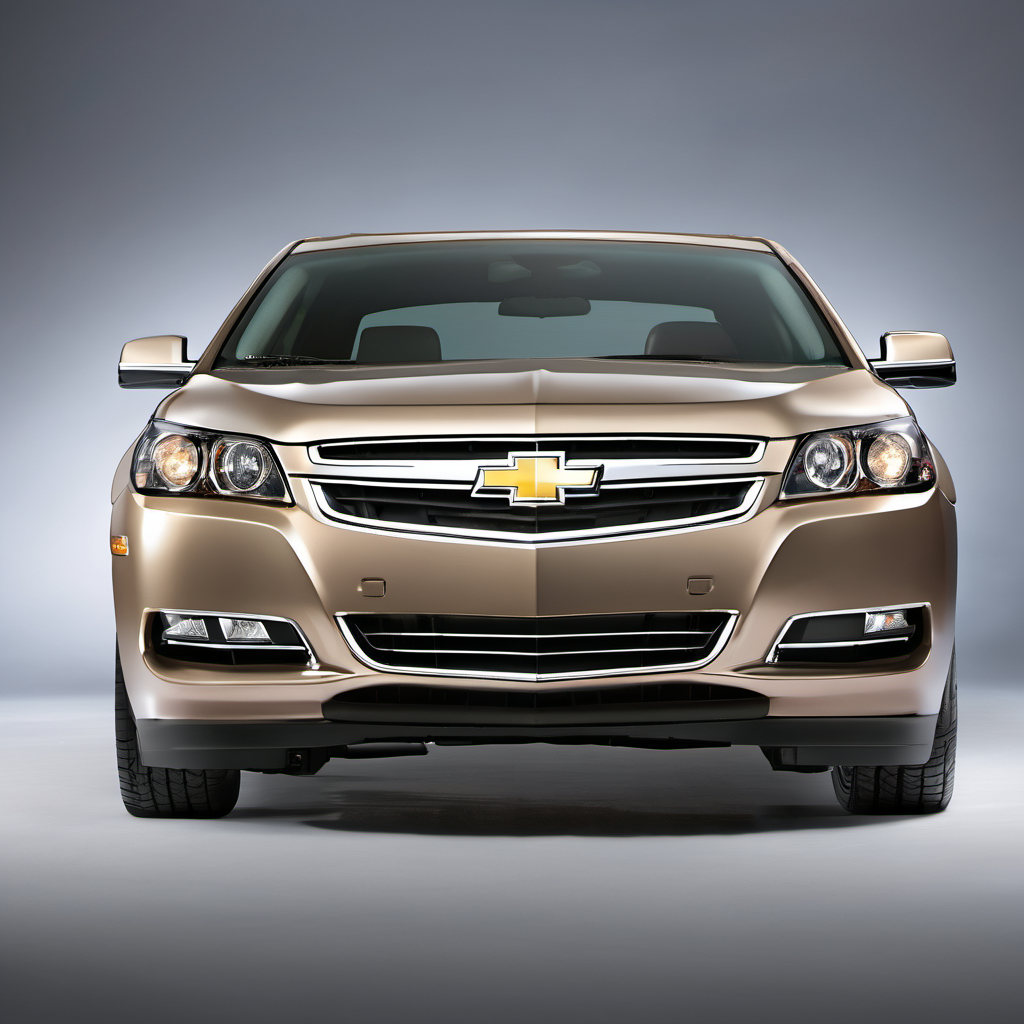
2014 Chevrolet Impala Sedan

2014 Chevrolet

ImpalaSedan

Sedan

The 2014 Chevrolet Impala marks a full redesign — the tenth-generation Impala — after years of the previous platform that dated back to 2000. This was a serious reset for Chevy: the new Impala earned strong press reviews and notably high J.D. Power initial quality scores, putting it in genuine competition with the Toyota Camry and Honda Accord for the first time in a long while. The base engine is a 2.5L four-cylinder with direct injection (SIDI), paired with a 6-speed automatic. A 2.5L is adequate for daily driving and delivers solid highway fuel economy, though buyers who want more power can step up to the available 3.6L V6. The interior is a clear step up from the outgoing model — large, quiet, and comfortable, especially for rear-seat passengers. For Lake Geneva-area buyers, the FWD layout handles winter roads reasonably well with proper winter tires. The car is full-size, which means good road presence on snow-packed highways, though it is not a light vehicle.

Reliability
3/5
Verified data
Specs shown for Impala — the most common configuration. Other trims may vary in engine, drivetrain, or fuel economy. Sign in to see your vehicle's exact specs.
Engine
[object Object]
Drivetrain
FWD
Fuel
Gasoline
MPG
21 city / 31 hwy / 24 combined
Seats
Doors
Body
Large Cars

Overview

AI-curated

The 2014 Chevrolet Impala marks a full redesign — the tenth-generation Impala — after years of the previous platform that dated back to 2000. This was a serious reset for Chevy: the new Impala earned strong press reviews and notably high J.D. Power initial quality scores, putting it in genuine competition with the Toyota Camry and Honda Accord for the first time in a long while. The base engine is a 2.5L four-cylinder with direct injection (SIDI), paired with a 6-speed automatic. A 2.5L is adequate for daily driving and delivers solid highway fuel economy, though buyers who want more power can step up to the available 3.6L V6. The interior is a clear step up from the outgoing model — large, quiet, and comfortable, especially for rear-seat passengers. For Lake Geneva-area buyers, the FWD layout handles winter roads reasonably well with proper winter tires. The car is full-size, which means good road presence on snow-packed highways, though it is not a light vehicle.

Known for
  • Spacious, quiet cabin — one of the best in its class for 2014
  • Strong initial quality scores for a domestic full-size sedan
  • Smooth 6-speed automatic transmission
  • Good highway fuel economy for its size (31 MPG hwy)
  • Large trunk (18.8 cu ft)
Best for
  • Highway commuters and road-trip drivers
  • Families wanting full-size comfort without an SUV
  • Fleet or rideshare use where interior space matters
  • Drivers who prefer a traditional sedan over a crossover
Watch for
  • Oil consumption on 2.5L SIDI engines — direct injection can cause carbon buildup on intake valves
  • Early electronic gremlins tied to the new-generation platform (infotainment, body control modules)
  • Timing chain and VVT system issues on higher-mileage examples
  • Rear suspension wear — this is a big, heavy car and bushings feel it
  • Being a first model year of a redesign — some early production quality variance

Common issues by mileage

6 known

Carbon buildup on intake valves (2.5L SIDI)

high
Typically appears
60–120k mi
Estimated repair
$250 – $500

Variable valve timing (VVT) solenoid failure / camshaft timing codes

medium
Typically appears
80–140k mi
Estimated repair
$150 – $450

Timing chain wear and stretch

medium
Typically appears
100–160k mi
Estimated repair
$800 – $1,800

Oxygen sensor / heated O2 sensor circuit fault

medium
Typically appears
80–130k mi
Estimated repair
$150 – $350

Body control module / electronic communication faults

medium
Typically appears
50–120k mi
Estimated repair
$200 – $700

Rear suspension bushing and strut wear

medium
Typically appears
80–150k mi
Estimated repair
$300 – $800

Maintenance schedule

  1. 1
    Every 5,000–7,500 miles (do not rely solely on the GM Oil Life Monitor on a used example) Engine oil change with full-synthetic 5W-30

    The 2.5L SIDI engine is sensitive to oil quality and level. Low or degraded oil accelerates VVT solenoid wear and timing chain stretch. On a used car, shorten intervals until you know the history.

  2. 2
    Every 60,000–80,000 miles Intake valve cleaning (walnut blasting or chemical soak)

    Direct injection means fuel never washes the intake valves. Carbon deposits build up and reduce power and economy. This is a known service item on all SIDI engines.

  3. 3
    Every 45,000 miles on a used vehicle Transmission fluid change (6T40/6T45 6-speed automatic)

    GM rates this fluid as 'lifetime' but independent shops routinely see dirty fluid causing harsh shifts by 100k. A proactive drain-and-fill keeps the unit healthy.

  4. 4
    Every 5 years or 150,000 miles (DEX-COOL) Coolant system inspection and coolant flush

    DEX-COOL can gel if contaminated with air or if the cooling system has small leaks. Inspect the reservoir and radiator for brown sludge annually.

  5. 5
    Every 2–3 years Brake fluid flush

    Wisconsin winters accelerate moisture absorption in brake fluid. Wet fluid lowers boiling point and promotes corrosion in the ABS modulator.

  6. 6
    Every 6,000–7,500 miles Tire rotation and alignment check

    FWD puts extra wear on front tires. This car is heavy, so uneven wear happens faster than owners expect. Alignment is especially worth checking after a harsh Wisconsin winter of pothole hits.

  7. 7
    Every fall, before winter season Battery load test

    The Impala has a substantial electrical load. Sub-zero Lake Geneva temps can kill a marginal battery overnight. A 3–4 year old battery should be load-tested, not just voltage-checked.

  8. 8
    Every spring after road-salt season Undercarriage and brake line inspection for corrosion

    Wisconsin road salt is brutal on brake lines, fuel lines, and suspension hardware. Catching surface rust early is far cheaper than emergency brake line replacement.

Always defer to the manufacturer's service manual for warranty-mandated intervals.

Cost of ownership

Annual maintenance
$600 – $1,200
Fuel
At 24 MPG combined and ~15,000 miles/year, expect roughly $1,700–$2,100/year at $2.75–$3.30/gallon (regular unleaded). Highway-heavy drivers will do better.
Insurance
Typically moderate — full-size sedans without a performance reputation tend to insure favorably. Expect $900–$1,400/year for full coverage in the Lake Geneva area, depending on driver history and deductibles.

The Impala is a relatively affordable full-size sedan to maintain when healthy. Routine costs are manageable, but budget for the carbon cleaning service around 70–80k if not already done, and keep an eye on VVT-related oil consumption. Avoid deferred oil changes — this engine punishes neglect faster than most.
Seasonal care

Lake Geneva, WI
Winter
  • Switch to dedicated winter tires — the Impala is a heavy FWD car and all-seasons are inadequate in Lake Geneva's lake-effect snow conditions
  • Load-test the battery every October; cold cranking amps drop sharply below 20°F and this car's electronics draw a lot at startup
  • Top off with -40°F rated washer fluid and keep a spare jug in the trunk — Lake Geneva roads spray constantly during freeze-thaw cycles
  • Inspect wiper blades and consider winter-style blades to prevent ice pack buildup in the wiper arm
  • Rinse the undercarriage every 1–2 weeks when road salt is being applied — pay attention to the rear wheel wells and subframe
  • Check tire pressure weekly; every 10°F drop in temperature costs roughly 1 PSI, and the 2.5L's fuel economy suffers noticeably on underinflated tires
Summer
  • Check tire pressure weekly — heat causes overinflation and uneven wear on the already front-heavy FWD setup
  • Inspect the A/C system in May before peak heat; the 2014 Impala's cabin is large and the A/C compressor works hard on humid Wisconsin summer days
  • Check coolant level and condition — heat soak on stop-and-go summer driving stresses the cooling system, especially if the coolant is aging
  • Inspect the cabin air filter — pollen season in spring/summer clogs it fast and reduces A/C efficiency
  • Check brake performance after the first hot day — winter corrosion on rotors sometimes doesn't fully clear until summer heat cycles burn it off

Comparable vehicles

If you're shopping for one

Red flags
  • Any VVT or camshaft timing DTCs (P0012, P0015, P0026, P0027) without a clear, documented repair — walk away until diagnosed
  • Oil consumption exceeding 1 quart per 1,000 miles on the 2.5L — sign of ring or VVT wear
  • Evidence of coolant in the oil (milky residue on oil cap) — suggests head gasket issue
  • Significant undercarriage rust, especially on brake lines — repair cost can exceed the car's value on a high-mileage example
  • U-code network DTCs (U0100–U0104) active without explanation — indicates CAN bus or BCM issues that can be expensive to diagnose and repair
  • No service records at all on a first-year redesign — oil change history is especially critical for the SIDI engine's VVT system longevity
What to inspect
  • Check engine oil level and condition at the dipstick — dark, low, or milky oil on a 2.5L SIDI is a red flag for engine neglect or VVT damage
  • Ask specifically if the intake valve carbon cleaning has ever been performed; if not, budget $250–$500 for it
  • Scan for stored and pending DTCs, especially P0012, P0015, P0026, P0027 (VVT/camshaft timing faults) — these can indicate expensive timing chain or oil control issues
  • Test all MyLink infotainment and electronic features (backup camera, Bluetooth, climate controls) — 2014 was a first-year system and electronics faults are common
  • Inspect the undercarriage for rust on brake lines, fuel lines, and the rear subframe — critical on any Wisconsin-winters car
  • Drive it above 60 MPH on the highway and listen for rear suspension noise — bushings and strut mounts wear on this heavy platform
AI profile generated 4 days ago · claude-sonnet-4-6 · v2.