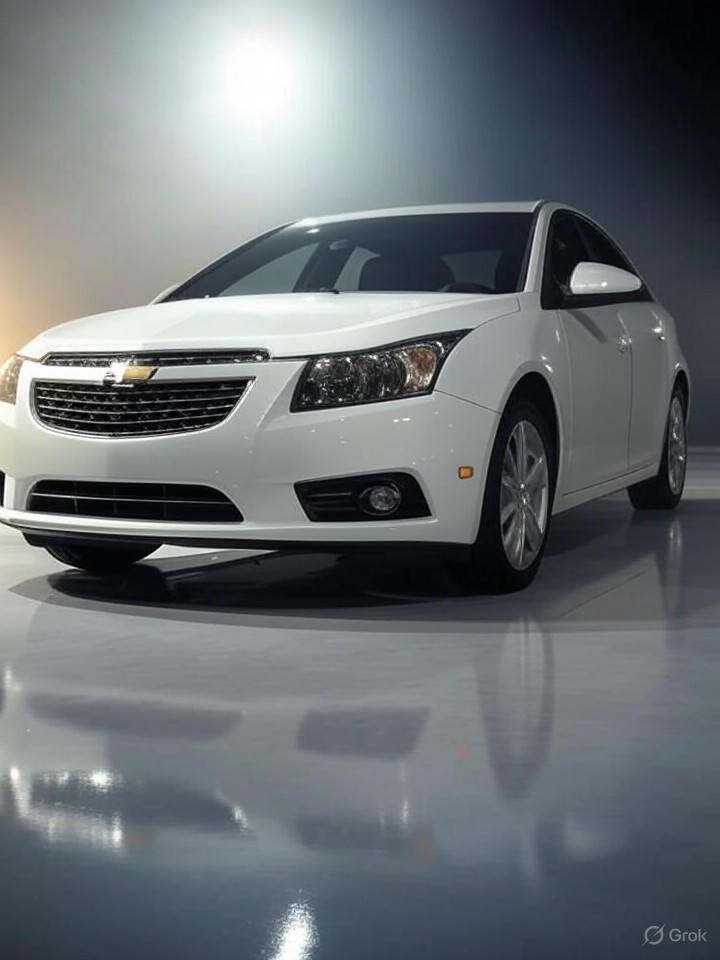
2014 Chevrolet Cruze Sedan

2014 Chevrolet

CruzeSedan

1.4L I4 Turbocharged · Sedan

The 2014 Chevrolet Cruze is a compact front-wheel-drive sedan that was GM's answer to the Civic and Corolla. The second generation of the Cruze nameplate in North America, it offered a choice of a base 1.8L naturally aspirated four-cylinder or the more popular 1.4L turbocharged Ecotec four paired with a 6-speed automatic. Fuel economy, interior room for the class, and a relatively composed ride made it a strong value proposition when new. On the road it's comfortable and reasonably refined, though it was never a driver's car. The 1.4T engine is the one most buyers chose, and it's the one that carries the most known ownership baggage — oil consumption and turbo system leaks are the headline concerns. The 6-speed automatic is generally durable if serviced; the 6-speed manual is the more reliable of the two transmissions. For a Lake Geneva driver this is a practical, fuel-efficient daily commuter. Just budget for the well-documented oil consumption checks and stay on top of coolant and intake system maintenance — both matter more in Wisconsin winters where cold starts accelerate wear on a neglected cooling system.

Reliability
3/5
Verified data
Specs shown for Cruze — the most common configuration. Other trims may vary in engine, drivetrain, or fuel economy. Sign in to see your vehicle's exact specs.
Engine
[object Object]
Drivetrain
FWD
Fuel
Gasoline
MPG
26 city / 38 hwy / 30 combined
Seats
5
Doors
4
Body
Sedan
MSRP
$18,995

Overview

AI-curated

The 2014 Chevrolet Cruze is a compact front-wheel-drive sedan that was GM's answer to the Civic and Corolla. The second generation of the Cruze nameplate in North America, it offered a choice of a base 1.8L naturally aspirated four-cylinder or the more popular 1.4L turbocharged Ecotec four paired with a 6-speed automatic. Fuel economy, interior room for the class, and a relatively composed ride made it a strong value proposition when new. On the road it's comfortable and reasonably refined, though it was never a driver's car. The 1.4T engine is the one most buyers chose, and it's the one that carries the most known ownership baggage — oil consumption and turbo system leaks are the headline concerns. The 6-speed automatic is generally durable if serviced; the 6-speed manual is the more reliable of the two transmissions. For a Lake Geneva driver this is a practical, fuel-efficient daily commuter. Just budget for the well-documented oil consumption checks and stay on top of coolant and intake system maintenance — both matter more in Wisconsin winters where cold starts accelerate wear on a neglected cooling system.

Known for
  • Strong highway fuel economy, especially with the 1.4T
  • Comfortable, quiet highway cruiser for the segment
  • Roomy rear seat for a compact
  • Respectable feature content for the price when new
Best for
  • Daily commuters and highway drivers
  • Budget-conscious buyers who prioritize fuel economy
  • Single drivers or couples without large cargo needs
  • Buyers who service on schedule and check fluids regularly
Watch for
  • 1.4T oil consumption — can burn a quart every 2,000 miles if PCV system is neglected
  • Coolant reservoir cracks and thermostat housing leaks are very common
  • Turbo bypass (diverter) valve failure causes boost loss and rough running
  • Water pump failures on the 1.4T can happen with little warning
  • Carbon buildup on intake valves due to direct injection — no fuel washing

Common issues by mileage

6 known

PCV system failure and excessive oil consumption (1.4T)

high
Typically appears
40–100k mi
Estimated repair
$150 – $450

Coolant reservoir crack and thermostat housing leak

high
Typically appears
50–120k mi
Estimated repair
$100 – $350

Turbo bypass (diverter) valve failure — boost loss, rough idle

medium
Typically appears
60–130k mi
Estimated repair
$100 – $300

Water pump failure (1.4T — internal, driven off timing chain)

medium
Typically appears
80–150k mi
Estimated repair
$400 – $900

VVT/cam phaser system — camshaft timing codes from low oil or sludge

medium
Typically appears
60–120k mi
Estimated repair
$200 – $700

Oxygen sensor and upstream O2 heater circuit faults

low
Typically appears
80–150k mi
Estimated repair
$150 – $350

Maintenance schedule

  1. 1
    Every 5,000 miles or 6 months — do NOT stretch to OLM maximum on the 1.4T Oil change with full-synthetic 5W-30

    The 1.4T is sensitive to oil quality and level. Using the GM Oil Life Monitor's full 10k-mile interval has been linked to sludge buildup and VVT/cam phaser problems. Five thousand miles keeps the system clean.

  2. 2
    Every fill-up or at minimum monthly Check engine oil level

    This engine is documented to consume oil. Running it low even once accelerates wear on the turbo bearings and cam phasers. Make a habit of checking before every road trip.

  3. 3
    Every 30,000 miles or at any sign of oil consumption or smoke Inspect PCV valve and hoses

    A failed PCV system routes oil mist back into the intake, accelerating carbon buildup on valves and increasing oil burn. It's a cheap fix when caught early.

  4. 4
    Every 2 years or 30,000 miles Inspect and flush coolant; check reservoir and thermostat housing for cracks

    The plastic coolant reservoir and thermostat housing are known to crack, especially after Wisconsin freeze-thaw cycles. A slow leak can go unnoticed until the car overheats.

  5. 5
    Every 45,000 miles Transmission fluid change (automatic)

    GM lists this fluid as 'lifetime' but in real-world use the 6-speed develops shudder and rough shifts past 100k miles on original fluid. An independent shop fluid swap around 45k extends life noticeably.

  6. 6
    Every 30,000 miles or when boost feels soft Inspect turbo inlet hose and diverter valve

    The rubber turbo inlet hose cracks and the diverter valve diaphragm fails with age. Both are inexpensive parts; catching them before full failure prevents more expensive turbo stress.

  7. 7
    Every 60,000 miles Serpentine belt and tensioner inspection

    Belt tensioners wear on this engine and a snapped belt leaves you stranded. Worth a close look at every major service interval.

  8. 8
    Every 15,000–20,000 miles or annually Cabin air filter replacement

    Wisconsin road salt and debris load up cabin filters faster than in dry climates. A clogged filter strains the blower motor and degrades defrost performance — critical in winter.

Always defer to the manufacturer's service manual for warranty-mandated intervals.

Cost of ownership

Annual maintenance
$500 – $1,100
Fuel
At 30 MPG combined and ~12,000 miles/year, expect roughly $1,400–$1,700/year at current Midwest gas prices. Highway-heavy driving pushes closer to the lower end.
Insurance
Typically $900–$1,400/year for a 2014 Cruze in Wisconsin for a driver with a clean record; compact sedans in this age range are among the cheaper vehicles to insure.

On paper the Cruze looks cheap to own, and for a diligent owner it can be. The hidden cost is the 1.4T engine's wear items — PCV system, coolant components, and water pump can add up to $1,500–$2,500 in a single bad year if multiple items fail at once. Owners who stay ahead of oil changes and check the coolant level regularly keep those bills spread out and manageable. Budget toward the high end of the maintenance range for any example over 80k miles.
Seasonal care

Lake Geneva, WI
Winter
  • Switch to full-synthetic 5W-30 if not already running it — critical for cold cranking in sub-zero Lake Geneva mornings; the 1.4T turbo needs oil flowing fast on startup
  • Load-test the 12V battery every October; cold temps expose weak batteries and this is not a car you want stranded in a parking lot at -10°F
  • Fill washer fluid reservoir with -20°F or colder rated fluid and keep a spare jug — the 1.4T's hood area traps slush that coats the windshield constantly on salted roads
  • Inspect the underbody and wheel wells for salt buildup; spray or rinse the undercarriage after heavy salting events — the Cruze's rear subframe and suspension cradle mounts are vulnerable to long-term corrosion
  • Check coolant freeze protection before first hard freeze — a cracked reservoir can slowly dilute the mix; protection should be rated to at least -34°F
  • Install winter wiper blades — standard blades ice up at the pivots and streak badly on a compact's curved windshield in freezing conditions
Summer
  • Check tire pressures monthly — ambient temperature swings between Wisconsin winter and summer can shift pressures 6–8 PSI; the Cruze's recommended pressure is 35 PSI cold
  • Inspect the A/C system for refrigerant charge and compressor clutch engagement before the first heat wave; the Cruze's A/C is adequate but not robust — a marginal system will struggle on a 95°F July day with a car that's been sitting in the sun
  • Check the coolant reservoir level and look for signs of weeping around the thermostat housing when the engine is cold — heat cycling accelerates the existing plastic cracking problem
  • Inspect the turbo intake hose for cracks; summer heat-soak degrades the rubber faster and a torn hose causes immediate boost loss and rough running

Comparable vehicles

If you're shopping for one

Red flags
  • Oil level low on the dipstick at time of inspection — walk away or demand a PCV system inspection before purchase
  • Any sign of coolant in the oil (milky cap) or oil in the coolant — potential head gasket issue
  • Rough idle or boost flutter on the test drive — diverter valve or turbo inlet hose already failing
  • Check engine light on with P0012, P0015, P0026, or P0027 codes — VVT/oil system problems that may require expensive cam phaser or oil control valve work
  • Evidence of overheating (white gunk under oil cap, stained overflow tank) — these engines do not survive overheating events well
What to inspect
  • Pull the oil dipstick — if it smells burnt or is black with less than 3,000 miles on it, the PCV system has likely been neglected
  • Check the coolant level and look at the reservoir for hairline cracks or a brown, oily residue (head gasket contamination)
  • With the engine warm, look under the hood for coolant seepage around the thermostat housing (front of engine, passenger side)
  • On a test drive, punch the throttle from 30 mph — the turbo should build boost smoothly with no hesitation or flutter; a fluttering sound points to a failing diverter valve
  • Check for blue smoke at startup or on deceleration — both signal oil consumption from the PCV/ring area
  • Scan for codes even if the check engine light is off — codes P0012, P0015, P0033–P0035 in history indicate known problem areas
AI profile generated 20 days ago · claude-sonnet-4-6 · v2.