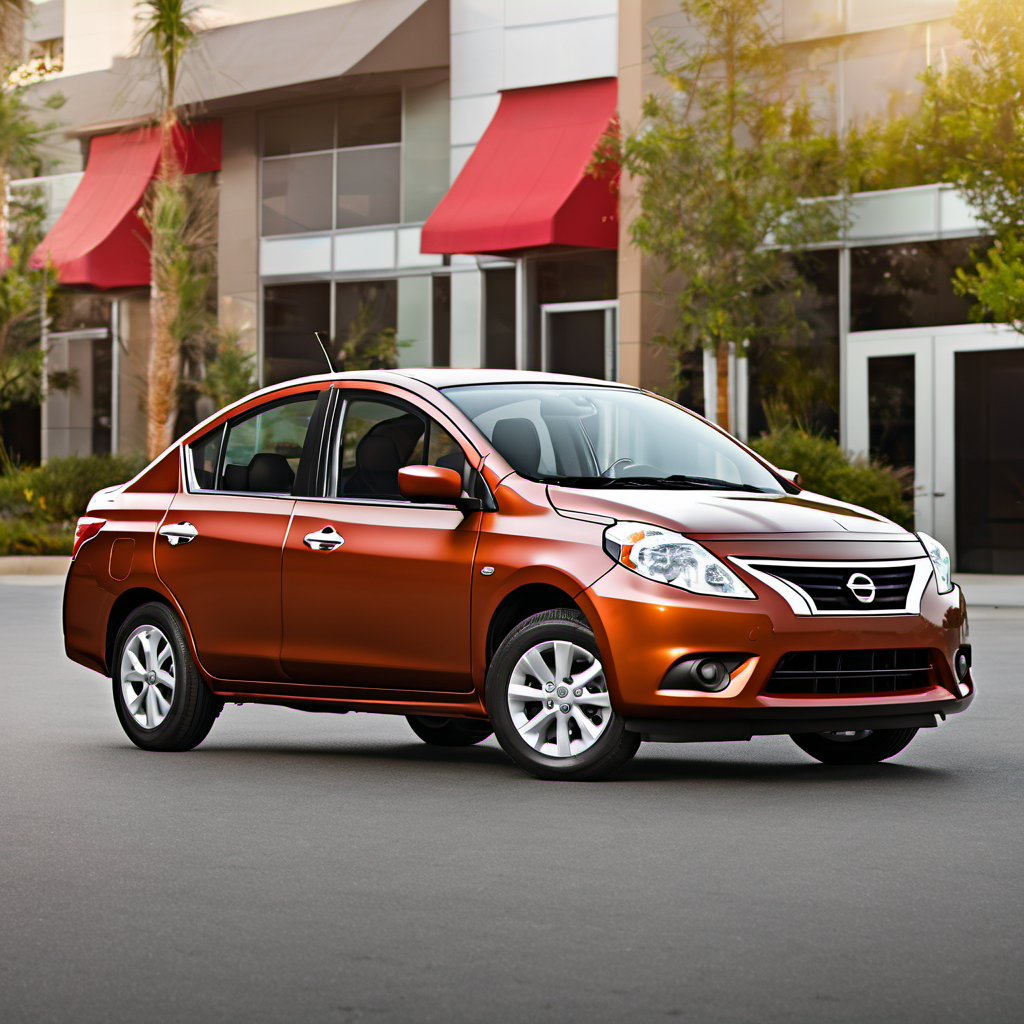
2012 Nissan Versa Sedan

2012 Nissan

VersaSedan

1.6L I4 · Sedan

The 2012 Nissan Versa Sedan is a no-frills subcompact built squarely around low purchase price and low running costs. Nissan significantly redesigned this generation (B17 platform) for 2012, giving it a notably roomier rear seat than nearly any other car in the class — a genuine selling point for taller passengers. The base 1.6L engine is modest but adequate for city and highway commuting, and fuel economy is strong. The Versa's weak points are just as well-known as its strengths. Interior materials are low-grade, the CVT transmission has a mixed reliability record, and the ride/handling balance leans heavily toward compliance over engagement. It is a car for practical, budget-minded transportation — not driving enjoyment. For buyers in the Lake Geneva area, the Versa is a passable daily commuter, but its thin underbody protection and bare-minimum electronic features mean you need to stay on top of rust prevention and winter battery checks. Older examples with high mileage and CVT trouble are common on the used market — inspect carefully.

Reliability
3/5
Verified data
Specs shown for Versa — the most common configuration. Other trims may vary in engine, drivetrain, or fuel economy. Sign in to see your vehicle's exact specs.
Engine
[object Object]
Drivetrain
FWD
Fuel
Gasoline
MPG
27 city / 36 hwy / 30 combined
Seats
5
Doors
4
Body
Sedan
MSRP
$11,990

Overview

AI-curated

The 2012 Nissan Versa Sedan is a no-frills subcompact built squarely around low purchase price and low running costs. Nissan significantly redesigned this generation (B17 platform) for 2012, giving it a notably roomier rear seat than nearly any other car in the class — a genuine selling point for taller passengers. The base 1.6L engine is modest but adequate for city and highway commuting, and fuel economy is strong. The Versa's weak points are just as well-known as its strengths. Interior materials are low-grade, the CVT transmission has a mixed reliability record, and the ride/handling balance leans heavily toward compliance over engagement. It is a car for practical, budget-minded transportation — not driving enjoyment. For buyers in the Lake Geneva area, the Versa is a passable daily commuter, but its thin underbody protection and bare-minimum electronic features mean you need to stay on top of rust prevention and winter battery checks. Older examples with high mileage and CVT trouble are common on the used market — inspect carefully.

Known for
  • Class-leading rear-seat legroom for a subcompact
  • Very low base price and running costs
  • Decent EPA fuel economy from the 1.6L engine
  • Spacious trunk for the segment
  • Simple, inexpensive routine maintenance
Best for
  • Budget-conscious city and suburban commuters
  • New drivers or first-car buyers
  • Low-mileage, short-trip use
  • Buyers prioritizing passenger room per dollar
Watch for
  • CVT reliability — a known weak point, especially with neglected fluid changes
  • Rust on underbody, rear wheel wells, and rocker panels in salt-belt states
  • Thin interior build quality wears quickly with hard use
  • Power steering noise and failure on higher-mileage examples
  • Very basic safety equipment — no stability control on base trims

Common issues by mileage

6 known

CVT Transmission Shudder / Failure

high
Typically appears
80–130k mi
Estimated repair
$1,800 – $4,200

Camshaft Position / VTC Oil Control Valve Issues

medium
Typically appears
60–120k mi
Estimated repair
$150 – $600

Oxygen Sensor Heater Circuit Failure

medium
Typically appears
70–110k mi
Estimated repair
$120 – $320

Power Steering Pump Noise / Failure

medium
Typically appears
70–100k mi
Estimated repair
$300 – $650

Underbody / Rocker Panel Rust

high
Typically appears
50–100k mi
Estimated repair
$400 – $2,000

Catalytic Converter / O2 Sensor Degradation

medium
Typically appears
90–140k mi
Estimated repair
$250 – $900

Maintenance schedule

  1. 1
    Every 30,000–40,000 miles — do NOT follow Nissan's 'lifetime' claim in real-world use CVT Fluid Change

    The NS-2 CVT fluid degrades with heat and use. Neglecting it is the single biggest cause of early CVT failure on this car. Use only Nissan NS-2 or NS-3 fluid — wrong fluid will destroy the transmission.

  2. 2
    Every 5,000 miles or 6 months with conventional oil; every 7,500 miles with full synthetic Engine Oil and Filter Change

    The 1.6L is tolerant but sludges quickly with extended drain intervals, especially on short-trip driving common in cold climates.

  3. 3
    Every 60,000 miles (OEM iridium plugs) Spark Plug Replacement

    Worn plugs increase misfires and put extra strain on the ignition coils. Straightforward DIY access on this engine.

  4. 4
    Every 2–3 years Brake Fluid Flush

    Brake fluid absorbs moisture over time, lowering the boiling point — a safety concern on wet Wisconsin roads and in stop-and-go traffic.

  5. 5
    Every 15,000–20,000 miles or annually Air Filter Replacement

    Salt-belt road debris and winter grit clog filters faster than in dry climates. A dirty filter hurts fuel economy on an already modest engine.

  6. 6
    Every fall, before road salt season Underbody Rust Inspection and Treatment

    The Versa's thin underbody coating offers minimal protection. Annual inspection of brake lines, fuel lines, subframe, and rocker panels is critical in Wisconsin.

  7. 7
    Every fall, especially on batteries over 3 years old Battery Load Test

    Cold cranking demand spikes in sub-zero Lake Geneva winters. A marginal battery that starts fine in September can fail in January.

  8. 8
    Every 5,000–7,500 miles; pressure check monthly in winter Tire Rotation and Pressure Check

    FWD front tires wear faster. Cold temps drop tire pressure roughly 1 PSI per 10°F, affecting handling and fuel economy.

Always defer to the manufacturer's service manual for warranty-mandated intervals.

Cost of ownership

Annual maintenance
$400 – $900
Fuel
At 30 MPG combined and ~12,000 miles/year, expect roughly $1,300–$1,600/year at current Midwest gas prices. Highway-heavy drivers will do better.
Insurance
Generally one of the cheapest cars to insure in its class — expect $900–$1,400/year for a typical adult driver in southeastern Wisconsin, depending on coverage level and driving history.

Day-to-day ownership costs are low when the CVT stays healthy. Budget for a transmission fluid service every 30–40k miles and you'll avoid the big expense. The risk scenario is a CVT replacement — that single repair can cost more than the car's market value on a high-mileage example, so fluid history is the make-or-break factor before buying.
Seasonal care

Lake Geneva, WI
Winter
  • Load-test the battery every fall — the small 1.6L needs full cold-cranking power at sub-zero temps and the factory battery is modestly sized.
  • Switch to a winter washer fluid rated to at least -20°F; the Versa's low nose picks up heavy road spray on Wisconsin highways.
  • Inspect and treat underbody, brake lines, and wheel wells with a rust inhibitor before first salt application of the season.
  • Check tire pressure monthly — expect to add 2–4 PSI as temperatures drop from fall to midwinter.
  • Consider dedicated winter tires; the Versa's light curb weight and FWD setup means all-seasons lose grip quickly on packed snow and ice.
  • Allow a brief warm-up (30–60 seconds) before driving in extreme cold to let the CVT fluid circulate — do not rev aggressively until the engine reaches operating temperature.
Summer
  • Check A/C operation early in the season — the Versa's cabin heats up quickly and the small compressor works hard; recharge if cooling is weak.
  • Inspect the cabin air filter before summer; a clogged filter cuts A/C airflow noticeably in a small cabin.
  • Check coolant level and condition — the 1.6L can heat-soak in slow traffic on hot days, especially with the A/C load.
  • Inflate tires to spec (not above) — summer heat naturally raises pressure, but underinflated tires from a cool-morning fill can overheat on hot pavement.
  • Inspect wiper blades after winter; Wisconsin salt and grit typically shred them by spring.

Comparable vehicles

If you're shopping for one

Red flags
  • CVT shudder, hesitation, or slipping during the test drive — walk away unless priced to absorb a transmission replacement.
  • No transmission fluid service records on any example over 60,000 miles.
  • Visible rust perforation on rockers, subframe, or brake lines — repair cost can exceed the car's value.
  • Check engine light on at purchase — scan codes before buying; P0012/P0015 or O2 sensor codes suggest deferred maintenance.
  • Evidence of flood damage (musty smell, water stains under carpet, corroded fuse box) — the Versa's low floor and budget sealing make it flood-prone.
  • Odometer inconsistency or missing service records on a car presented as 'well maintained'.
What to inspect
  • Pull the CVT fluid dipstick (or have it checked) — dark brown, burnt-smelling fluid means the transmission has been neglected and failure may be near.
  • Ask for all transmission fluid service records; no records on a CVT car over 60k miles is a serious red flag.
  • Inspect rocker panels, rear wheel arches, and underbody brake/fuel lines for rust — Lake Geneva-area used cars frequently have significant salt corrosion.
  • Test drive at highway speeds and check for CVT shudder, hesitation, or 'hunting' — any hesitation during acceleration is a warning sign.
  • Check power steering for whine or stiffness at low speeds.
  • Confirm the A/C blows cold and the cabin air filter has been changed — neglected filters are common on budget cars.
  • Look for oil leaks around the valve cover and oil pan; the 1.6L is generally clean but high-mileage neglected examples can weep.
AI profile generated 20 days ago · claude-sonnet-4-6 · v2.