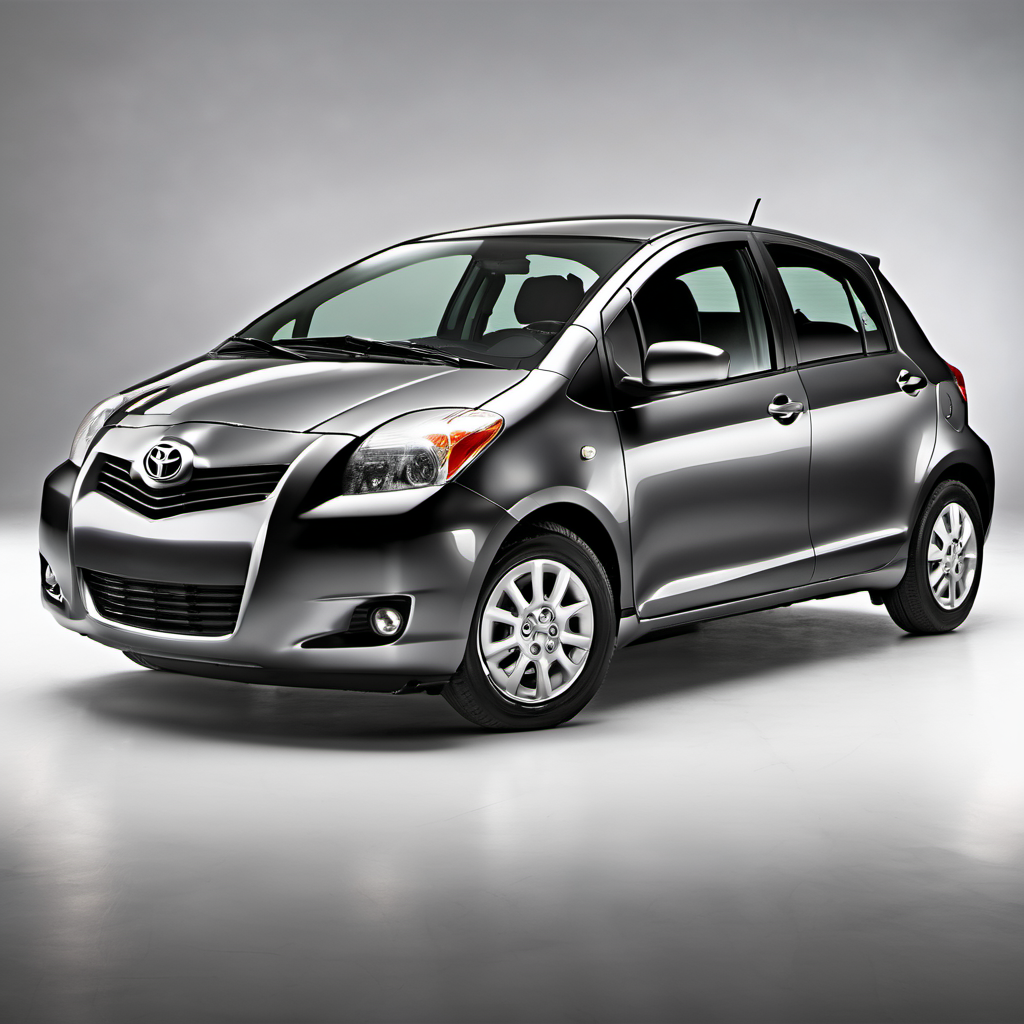
2010 Toyota Yaris Sedan

2010 Toyota

YarisSedan

Sedan

The 2010 Toyota Yaris Sedan is a subcompact four-door that earned its reputation as one of the most fuel-efficient and low-cost-to-own non-hybrid cars of its era. Powered by a modest 1.5L four-cylinder, it was built for commuters and budget-conscious drivers who wanted a reliable point-A-to-point-B machine without the complexity of larger vehicles. The second-generation Yaris (2006–2012) is well-regarded for Toyota's build quality in a class that's often filled with throwaway econoboxes. The engine is simple, the transmission options are straightforward, and parts are cheap and widely available. It won't excite anyone, but it rarely lets owners down. For Lake Geneva drivers, the Yaris's FWD layout and light curb weight handle most winter conditions adequately with a proper set of snow tires. The small engine can struggle a bit in extreme cold starts, so battery health and oil viscosity matter more here than in a larger displacement vehicle.

Reliability
4/5
Verified data
Specs shown for Yaris — the most common configuration. Other trims may vary in engine, drivetrain, or fuel economy. Sign in to see your vehicle's exact specs.
Engine
[object Object]
Drivetrain
FWD
Fuel
Gasoline
MPG
29 city / 35 hwy / 31 combined
Seats
Doors
Body
Subcompact Cars

Overview

AI-curated

The 2010 Toyota Yaris Sedan is a subcompact four-door that earned its reputation as one of the most fuel-efficient and low-cost-to-own non-hybrid cars of its era. Powered by a modest 1.5L four-cylinder, it was built for commuters and budget-conscious drivers who wanted a reliable point-A-to-point-B machine without the complexity of larger vehicles. The second-generation Yaris (2006–2012) is well-regarded for Toyota's build quality in a class that's often filled with throwaway econoboxes. The engine is simple, the transmission options are straightforward, and parts are cheap and widely available. It won't excite anyone, but it rarely lets owners down. For Lake Geneva drivers, the Yaris's FWD layout and light curb weight handle most winter conditions adequately with a proper set of snow tires. The small engine can struggle a bit in extreme cold starts, so battery health and oil viscosity matter more here than in a larger displacement vehicle.

Known for
  • Exceptional fuel economy for a non-hybrid
  • Low ownership and repair costs
  • Reliable 1NZ-FE engine with a long service life
  • Compact size — easy to park and maneuver
  • Spartan interior with minimal electronics to fail
Best for
  • Daily commuters prioritizing fuel savings
  • First-time car owners on a budget
  • City and suburban driving with occasional highway
  • Drivers who want simple, maintainable transportation
Watch for
  • Interior build quality is basic — trim pieces crack and rattle with age
  • Light curb weight means it gets pushed around on winter highways
  • Small fuel tank (~11.1 gal) means more frequent fill-ups on road trips
  • Limited power on highway on-ramps and merging at higher speeds
  • Older examples may have deferred maintenance given their low perceived value

Common issues by mileage

6 known

Oil sludge buildup in the 1NZ-FE engine

medium
Typically appears
80–150k mi
Estimated repair
$200 – $800

Worn or fouled spark plugs causing rough idle / misfire

high
Typically appears
60–120k mi
Estimated repair
$80 – $180

Camshaft timing issues / VVT-i oil control valve fault

low
Typically appears
100–180k mi
Estimated repair
$150 – $550

Oxygen sensor heater circuit failure (upstream sensor)

medium
Typically appears
80–150k mi
Estimated repair
$120 – $280

Interior rattles and cracked dashboard trim

high
Typically appears
50k+ mi
Estimated repair
$0 – $150

Transmission fluid degradation in the 4-speed automatic

medium
Typically appears
100k+ mi
Estimated repair
$80 – $200

Maintenance schedule

  1. 1
    Every 5,000 miles or 6 months — use 5W-30 full synthetic for Wisconsin winters Engine oil and filter change

    The 1NZ-FE is prone to sludge if oil changes are stretched. Synthetic oil also flows faster on sub-zero cold starts, protecting the engine before oil pressure builds.

  2. 2
    Every 60,000 miles (iridium OEM plugs) Spark plug replacement

    Worn plugs cause hard starts and rough idle — both more noticeable in cold weather. Cheap to do; don't skip it.

  3. 3
    Every 60,000–80,000 miles on used vehicles with unknown history Transmission fluid change (automatic)

    Toyota often lists this as 'lifetime' fluid, but on a used car you don't know what 'lifetime' means. Dark, burnt-smelling fluid is a warning sign.

  4. 4
    Every 50,000 miles or 5 years Coolant flush

    Degraded coolant loses freeze protection — critical when Lake Geneva temps drop below -10°F. Check freeze point with a tester before winter.

  5. 5
    Every 30,000 miles or as needed Air filter replacement

    A clogged air filter hurts the already-modest power output noticeably on a small engine like this.

  6. 6
    Every 2–3 years Brake fluid flush

    Brake fluid is hygroscopic — it absorbs moisture over time, lowering its boiling point and promoting internal corrosion. Important on any vehicle with salt exposure.

  7. 7
    Monthly through winter (November–March) Underbody and wheel well rinse

    The Yaris's light unibody and thinner-gauge steel are susceptible to rust from road salt. Focus on the subframe, lower control arms, and rocker panels.

  8. 8
    Every 5,000–7,500 miles Tire rotation

    FWD vehicles wear front tires faster. Even wear extends tire life and maintains balanced handling — especially important on winter tires.

Always defer to the manufacturer's service manual for warranty-mandated intervals.

Cost of ownership

Annual maintenance
$350 – $750
Fuel
At 31 MPG combined and ~12,000 miles/year, expect roughly $1,400–$1,600/year at current Midwest gas prices. One of the cheapest non-hybrid cars to fuel.
Insurance
Typically one of the lowest-cost vehicles to insure in its class — expect $900–$1,300/year for full coverage depending on driver profile and ZIP code.

The Yaris is a genuinely cheap car to own. Parts are inexpensive and widely available, labor time is low because the engine bay is accessible, and fuel costs are minimal. The main financial risk on a used example is catching up on deferred maintenance (timing, fluids, brakes) that a previous owner skipped because 'it's just a cheap car.' Budget $500–$1,000 upfront for a catch-up service on any high-mileage purchase.
Seasonal care

Lake Geneva, WI
Winter
  • Switch to a quality set of dedicated winter tires — the light 2,293 lb curb weight means all-seasons can lose traction quickly on packed snow or ice.
  • Test battery load before November. The small 1.5L engine puts less strain on the charging system, making an aging battery more likely to fail on a -10°F morning.
  • Use 5W-30 full synthetic oil year-round; it flows immediately at startup in sub-zero temps and protects the engine before oil pressure builds.
  • Verify coolant freeze protection to at least -34°F with a test strip or refractometer before the first hard freeze.
  • Top off washer fluid with a -20°F or lower rated solution — the standard summer stuff turns to slush in the reservoir and can freeze the pump.
  • Rinse the undercarriage monthly to flush road salt from the subframe, control arms, and rocker panels. Rust is the biggest long-term threat to this car in Wisconsin.
Summer
  • Check tire pressure after the first hot spell — pressure rises ~1 PSI per 10°F and overinflated tires reduce the already-modest ride quality and contact patch.
  • Inspect the A/C system for refrigerant charge and condenser cleanliness. The Yaris A/C is a small system and a weak charge is very noticeable on a 90°F day.
  • Check coolant level and condition after winter — salt and freeze/thaw cycles stress hoses and the radiator cap seal.
  • Clean the cabin air filter if equipped, or inspect the fresh air intake for debris after spring road grime season.

Comparable vehicles

If you're shopping for one

Red flags
  • Oil sludge visible under the oil cap — walk away unless you're prepared for an engine cleaning or rebuild.
  • Check engine light on — scan for codes before purchase; VVT-i and O2 sensor codes (P0012, P0031, etc.) can be modest fixes, but confirm before agreeing on price.
  • Heavy rust on the subframe or floor pans — structural rust on a light unibody car this size is a safety issue, not just cosmetic.
  • Slipping, shuddering, or delayed engagement in the automatic transmission — fluid service may not save it at that point.
  • Any indication of flood damage: musty smell, water stains under carpet, corroded fuse box connections.
What to inspect
  • Pull the oil filler cap and check for sludge or thick, dark deposits — sign of chronic late oil changes in the 1NZ-FE.
  • Check transmission fluid color and smell on automatic models; dark brown or burnt odor means it's overdue or the trans has been stressed.
  • Inspect the undercarriage, rocker panels, and subframe for rust — Wisconsin salt exposure is the #1 body/structural threat on any used car this age.
  • Test the A/C and heater blower on all speeds; blower motor resistors fail on aging Yarises and are a cheap but annoying fix.
  • Look for interior trim cracks and rattles — cosmetic only, but indicates how hard the car was used overall.
  • Verify the engine idles smoothly when cold and warm; rough idle often points to worn spark plugs or a dirty throttle body.
AI profile generated 4 days ago · claude-sonnet-4-6 · v2.