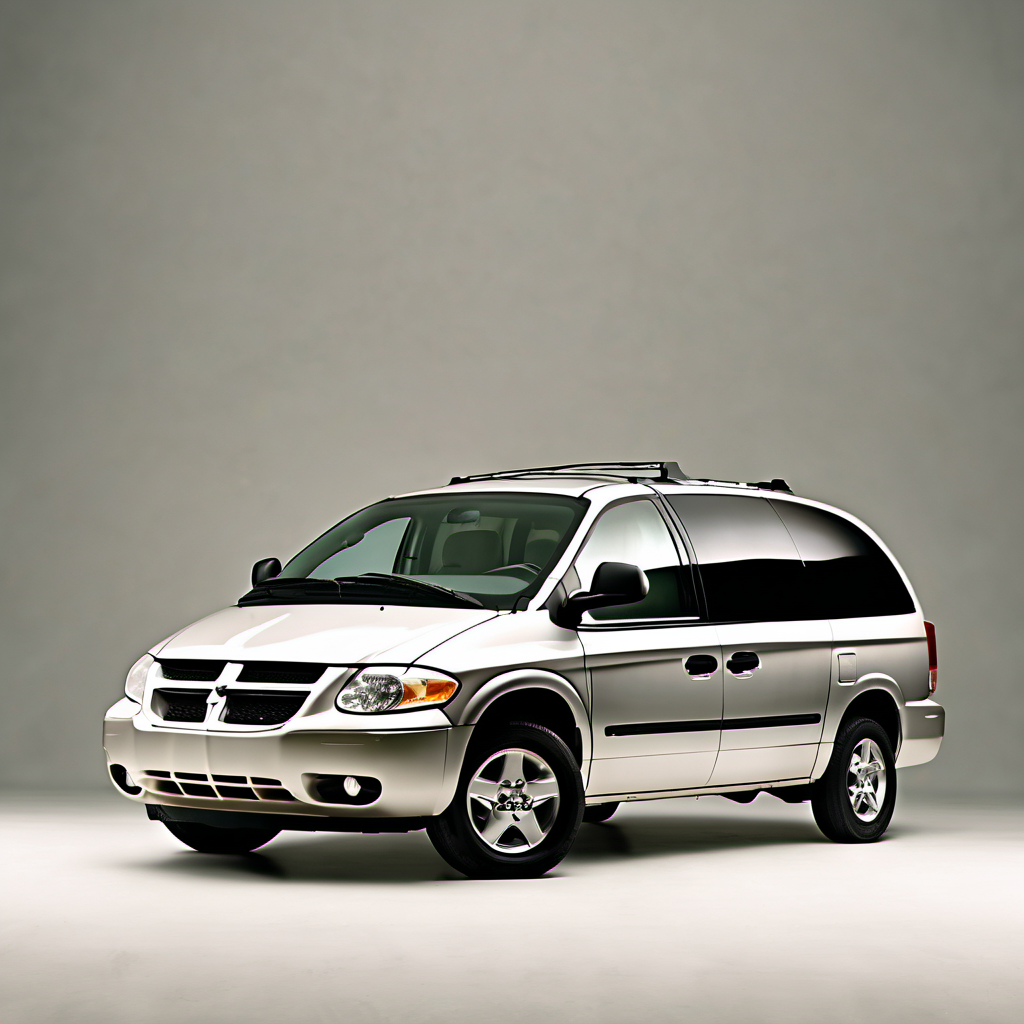
2006 Dodge Grand Caravan Cargo Van/Minivan

2006 Dodge

Grand Caravan CargoVan/Minivan

3.3L V6 · Van/Minivan

The 2006 Dodge Grand Caravan Cargo is the commercial/work variant of Chrysler's long-running RS-generation minivan platform. With the rear seats deleted and the floor plated or carpeted for cargo use, it was marketed primarily to small businesses, tradespeople, and fleets needing an economical, front-wheel-drive cargo hauler with a low load floor and easy city maneuverability. It shares virtually all mechanical components with the passenger Grand Caravan, so parts are abundant and independent shops know it well. The standard powertrain for 2006 is the 3.3L flex-fuel V6 paired with a 4-speed automatic — a combination that's proven but not exciting. The 3.8L V6 was available as an upgrade and offers a bit more grunt. Both engines are straightforward to work on and have a large parts ecosystem. Fuel economy is reasonable for a cargo van, and the low floor makes loading/unloading easier than a traditional cargo van. By 2006 these were beginning to show the electrical and transmission quirks that define the RS-generation Caravans. Rust on lower body panels and the rear liftgate is common on Wisconsin examples. If you're buying one as a used work vehicle, a thorough inspection of the transmission, cooling system, and undercarriage is essential.

Reliability
2/5
Verified data
Engine
3.3L V6
Drivetrain
FWD
Fuel
Flex Fuel
MPG
17 city / 24 hwy / 20 combined
Seats
2
Doors
4
Body
Van
MSRP
$21,300

Overview

AI-curated

The 2006 Dodge Grand Caravan Cargo is the commercial/work variant of Chrysler's long-running RS-generation minivan platform. With the rear seats deleted and the floor plated or carpeted for cargo use, it was marketed primarily to small businesses, tradespeople, and fleets needing an economical, front-wheel-drive cargo hauler with a low load floor and easy city maneuverability. It shares virtually all mechanical components with the passenger Grand Caravan, so parts are abundant and independent shops know it well. The standard powertrain for 2006 is the 3.3L flex-fuel V6 paired with a 4-speed automatic — a combination that's proven but not exciting. The 3.8L V6 was available as an upgrade and offers a bit more grunt. Both engines are straightforward to work on and have a large parts ecosystem. Fuel economy is reasonable for a cargo van, and the low floor makes loading/unloading easier than a traditional cargo van. By 2006 these were beginning to show the electrical and transmission quirks that define the RS-generation Caravans. Rust on lower body panels and the rear liftgate is common on Wisconsin examples. If you're buying one as a used work vehicle, a thorough inspection of the transmission, cooling system, and undercarriage is essential.

Known for
  • Low load floor and easy cargo access
  • Abundant parts and widespread mechanic familiarity
  • Front-wheel drive simplicity — no transfer case or front axle to worry about
  • 3.3L/3.8L V6 engines that can go well past 150k with proper cooling system maintenance
Best for
  • Small business owners needing an economical cargo hauler
  • Urban and suburban delivery runs
  • Budget-conscious buyers who want van utility without full-size van running costs
  • DIY mechanics comfortable with Chrysler platforms
Watch for
  • 4-speed automatic (41TE) transmission failures, especially above 100k miles
  • Cooling system neglect leading to head gasket issues on the 3.3L
  • Rust on rear lower quarters, liftgate, and sliding door sills — critical in Wisconsin
  • TIPM (totally integrated power module) electrical gremlins
  • Lower control arm bushing wear causing handling vagueness

Common issues by mileage

6 known

41TE Automatic Transmission Failure

high
Typically appears
90–150k mi
Estimated repair
$1,800 – $3,800

Cooling System Failure / Head Gasket (3.3L V6)

medium
Typically appears
80–140k mi
Estimated repair
$900 – $2,200

TIPM (Totally Integrated Power Module) Electrical Faults

medium
Typically appears
60–120k mi
Estimated repair
$400 – $1,100

Oxygen Sensor / O2 Heater Circuit Failure

medium
Typically appears
70–120k mi
Estimated repair
$150 – $400

Lower Control Arm Bushings and Ball Joint Wear

high
Typically appears
70–130k mi
Estimated repair
$300 – $700

Sliding Door Latch / Power Sliding Door Mechanism Failure

medium
Typically appears
60–100k mi
Estimated repair
$200 – $600

Maintenance schedule

  1. 1
    Every 30k miles — do NOT wait for 'lifetime' fluid claims Transmission fluid change (41TE)

    The 41TE is the single biggest reliability liability on this van. Fresh ATF+4 fluid is the cheapest insurance against a $2,000+ rebuild. Use only Chrysler-spec ATF+4.

  2. 2
    Every 50k miles or 5 years, whichever comes first Coolant flush

    Degraded OAT coolant accelerates water pump and head gasket failure on the 3.3L. Use the correct Mopar orange OAT coolant — do not mix types.

  3. 3
    Every 60k miles or at any sign of squealing Serpentine belt and tensioner inspection

    Belt-driven accessories (alternator, power steering, A/C) all depend on this single belt. Tensioner springs weaken with age and a snapped belt leaves you stranded.

  4. 4
    Every 30k miles Spark plugs (3.3L V6)

    The rear bank plugs on the 3.3L are awkward to reach; many owners skip them. Worn plugs stress the ignition coils and can cause misfires that are misdiagnosed as bigger problems.

  5. 5
    Every 2–3 years Brake fluid flush

    Moisture-laden brake fluid lowers boiling point and corrodes ABS components. Wisconsin road salt accelerates brake line and caliper corrosion — fresh fluid is cheap prevention.

  6. 6
    Every fall before road salt season Undercarriage rust inspection and treatment

    Lake Geneva area roads are heavily salted. Inspect brake lines, fuel lines, and frame rails annually. Treat surface rust before it reaches structural or hydraulic components.

  7. 7
    Every fall, especially after 3 years of service Battery load test

    Sub-zero Wisconsin winters expose weak batteries. A battery that starts the van fine in September may fail at -10°F in January. Load-test before winter, not during it.

  8. 8
    Every 5k–6k miles Tire rotation and alignment check

    FWD vans wear front tires fast, especially under cargo loads. Worn control arm bushings throw alignment off quickly; catching it early saves tires and steering components.

Always defer to the manufacturer's service manual for warranty-mandated intervals.

Cost of ownership

Annual maintenance
$900 – $2,200
Fuel
At 20 MPG combined and ~15,000 miles/year, expect roughly $1,500–$1,900/year at current Midwest gas prices. E85 availability can reduce fuel cost if the flex-fuel option is used.
Insurance
Commercial cargo van classification may raise premiums slightly over a standard passenger minivan. Expect $900–$1,500/year for a basic commercial policy in Wisconsin depending on use and driver history.

Day-to-day costs are manageable, but budget for the transmission. If the 41TE hasn't been serviced regularly, set aside $500–$1,000 proactively for a fresh service and inspection. A van that's been maintained properly costs ~$900–$1,400/year in routine upkeep; a neglected one can spike to $2,000+ in a single year. Parts are cheap and available — labor rates at an independent shop keep this affordable compared to newer platforms.
Seasonal care

Lake Geneva, WI
Winter
  • Load-test the battery every fall — the 41TE automatic also shifts poorly when a weak battery causes low voltage at startup in cold weather.
  • Switch to a winter-rated washer fluid rated to at least -20°F; the standard reservoir cap seal can crack if you run summer fluid in a Wisconsin winter.
  • Inspect and treat all exposed brake lines and fuel lines for rust before salt season starts — pay special attention to the rear lines near the liftgate.
  • Check the sliding door seals; cracked seals let moisture in and the door track can freeze solid, damaging the power mechanism.
  • Use a fuel system dryer additive if the van sits outdoors in extreme cold — condensation in the fuel tank is a real issue for vans that aren't driven daily.
  • Verify antifreeze protection to at least -34°F with a test strip or refractometer before temperatures drop.
Summer
  • Inspect the A/C system at the start of the season — the cargo van's reduced interior volume means a weak A/C system heats up fast when the van is parked and then reopened.
  • Check tire pressure weekly in summer; cargo loading combined with heat causes significant pressure swings that accelerate uneven wear on the front tires.
  • Inspect the serpentine belt and tensioner before sustained hot weather — heat soak in a cargo van engine bay is significant, especially in stop-and-go delivery use.
  • Flush the coolant if it hasn't been done in the last 3 years; summer is when cooling system neglect turns into an overheating event.

Comparable vehicles

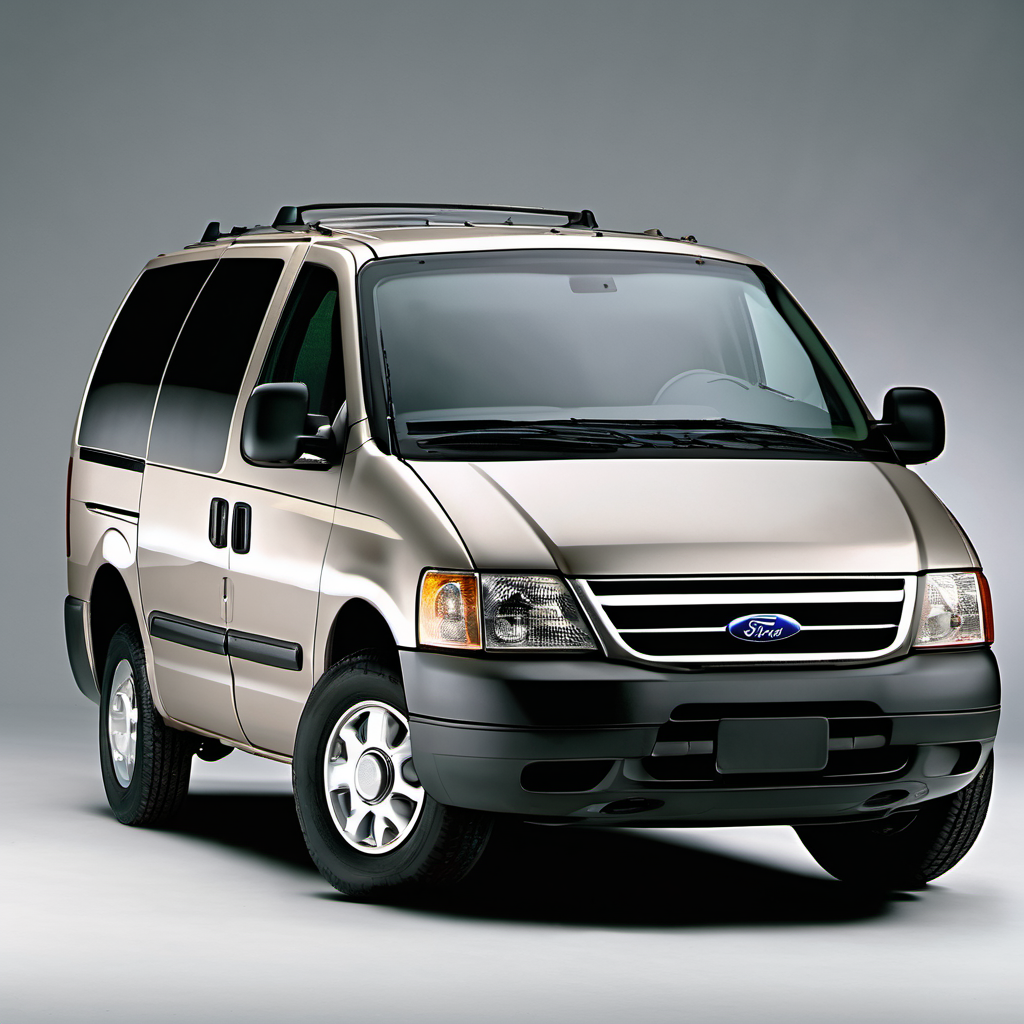
2006 Ford Freestar Cargo
2006 Ford
Freestar Cargo

Ford's direct cargo-van competitor on the same platform generation. Similar FWD layout, comparable payload, and similarly priced used. The Freestar has its own transmission issues but parts are widely available.

2006 Chevrolet
Astro Cargo

RWD layout offers better towing and load capacity. More mechanically rugged but older platform (discontinued after 2005); parts still available. Better in mud/snow with rear-wheel drive but less fuel-efficient.

No catalog match
2006 Ford
E-150 Cargo Van

Full-size option for heavier cargo needs. Higher fuel cost but far more payload capacity, more durable drivetrain, and better long-term reliability reputation. Worth considering if load requirements are growing.

No catalog match
2006 Chrysler Town & Country Cargo
2006 Chrysler
Town & Country Cargo

Mechanically identical to the Grand Caravan Cargo — same 41TE transmission and 3.3L/3.8L engines. Slightly more upscale trim level that occasionally appears in the used cargo van market at similar prices.

If you're shopping for one

Red flags
  • Any evidence of overheating history (stained coolant reservoir, white residue on oil cap, or a replaced thermostat with no cooling system service record).
  • Rust holes or severe pitting on the undercarriage — brake line failure in Wisconsin winter is a serious safety hazard.
  • Transmission that slips, hesitates into reverse, or clunks between gears — budget a rebuild or walk away.
  • Check engine light with TIPM-related network codes (U0100–U0104) — these can cascade and affect ABS, airbags, and fuel pump control simultaneously.
  • A cargo van that's been used as a fleet vehicle with no maintenance records — these are often run hard and serviced minimally.
What to inspect
  • Pull the transmission dipstick — ATF+4 should be pink/red and smell clean. Dark brown or burnt smell means deferred service; budge your offer accordingly.
  • Look for rust along the lower rear quarter panels, liftgate bottom edge, sliding door sill plates, and underneath along the rear brake and fuel lines.
  • Warm the engine up fully and watch for coolant loss, white exhaust smoke, or a sweet smell — signs of a head gasket issue on the 3.3L.
  • Test all power accessories (sliding door motor, windows, locks) — TIPM faults can cause intermittent failures that don't always throw codes at the time of inspection.
  • Check the power steering fluid; a whining pump or stiff steering at low speeds indicates a worn pump that's common on higher-mileage examples.
  • Inspect the front struts and lower control arm bushings — grab each front wheel and check for play. Worn bushings are a safety issue and a real cost on FWD vans.
AI profile generated 1 hr ago · claude-sonnet-4-6 · v2.