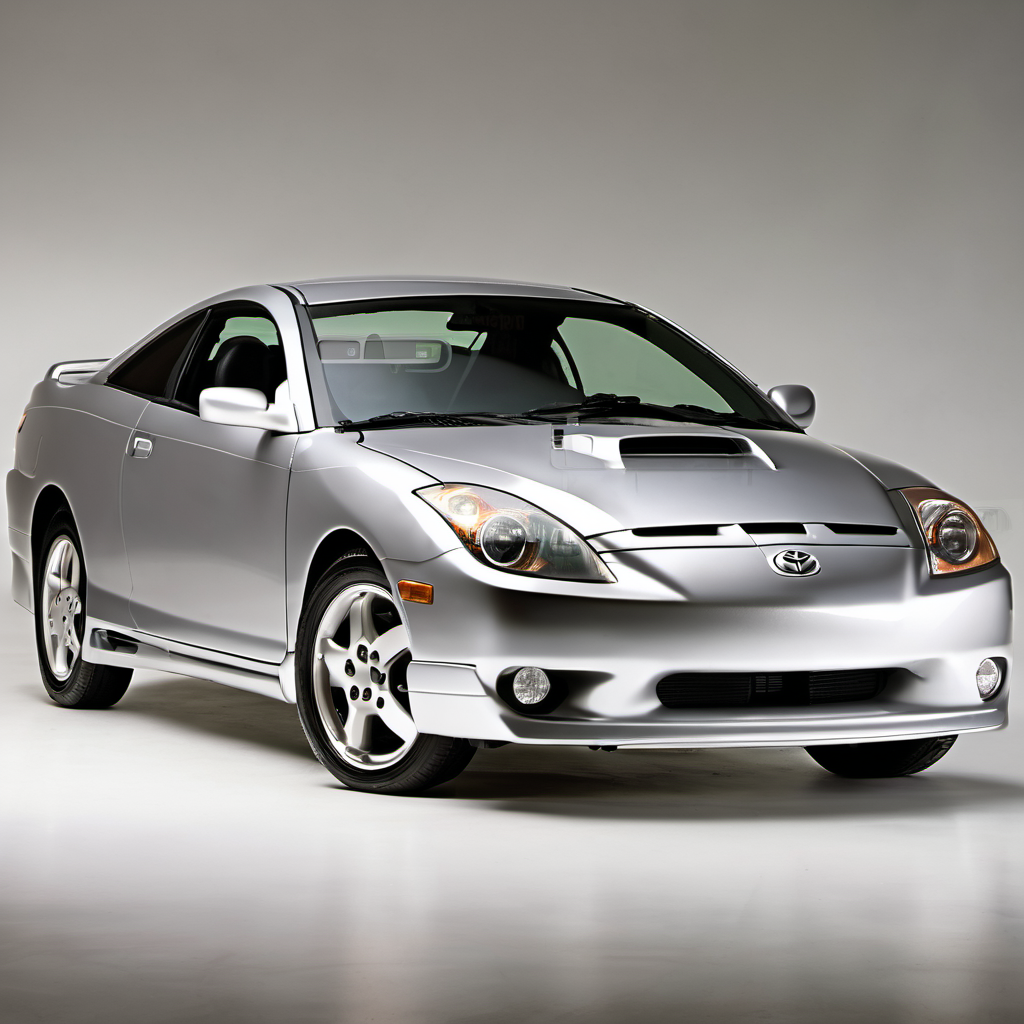
2005 Toyota Celica Hatchback

2005 Toyota

CelicaHatchback

Hatchback

The 2005 Toyota Celica is the final model year of the seventh-generation (T230) Celica, a front-wheel-drive sport compact hatchback that ran from 2000 through 2005. It earned a loyal following for its crisp handling, attractive styling, and Toyota's legendary long-term reliability. The base GT trim used a 140-hp 1ZZ-FE engine, while the GT-S came with the high-revving 180-hp 2ZZ-GE paired with a 6-speed manual. As a final-year model, the 2005 represents the most refined version of this generation. This was not a muscle car — it's a driver's car built around balance and precision. The relatively small engines reward revving and rewarded drivers who enjoy working through corners rather than mashing a throttle. Fuel economy was excellent for a sporty coupe of its era, and parts availability remains solid thanks to widespread Toyota platform sharing. By 2025, most surviving Celicas have significant mileage and 20 years of wear, so condition varies wildly. A well-maintained example is still an engaging and reliable daily driver or weekend car, but deferred maintenance and the 2ZZ-GE's known oil consumption issues make a thorough pre-purchase inspection essential.

Reliability
4/5
Verified data
Specs shown for Celica — the most common configuration. Other trims may vary in engine, drivetrain, or fuel economy. Sign in to see your vehicle's exact specs.
Engine
[object Object]
Drivetrain
FWD
Fuel
Gasoline
MPG
25 city / 33 hwy / 28 combined
Seats
Doors
Body
Subcompact Cars

Overview

AI-curated

The 2005 Toyota Celica is the final model year of the seventh-generation (T230) Celica, a front-wheel-drive sport compact hatchback that ran from 2000 through 2005. It earned a loyal following for its crisp handling, attractive styling, and Toyota's legendary long-term reliability. The base GT trim used a 140-hp 1ZZ-FE engine, while the GT-S came with the high-revving 180-hp 2ZZ-GE paired with a 6-speed manual. As a final-year model, the 2005 represents the most refined version of this generation. This was not a muscle car — it's a driver's car built around balance and precision. The relatively small engines reward revving and rewarded drivers who enjoy working through corners rather than mashing a throttle. Fuel economy was excellent for a sporty coupe of its era, and parts availability remains solid thanks to widespread Toyota platform sharing. By 2025, most surviving Celicas have significant mileage and 20 years of wear, so condition varies wildly. A well-maintained example is still an engaging and reliable daily driver or weekend car, but deferred maintenance and the 2ZZ-GE's known oil consumption issues make a thorough pre-purchase inspection essential.

Known for
  • Sharp, precise handling with a sporty suspension tune
  • Toyota reliability and low long-term ownership costs
  • High-revving 2ZZ-GE engine (GT-S) that delivers strong power above 6,000 rpm
  • Excellent fuel economy for a sport coupe
  • Distinctive wedge styling that still turns heads
Best for
  • Driving enthusiasts who want an affordable, fun-to-drive daily
  • Budget-conscious buyers who want sporty looks with Toyota reliability
  • Commuters who want good MPG without sacrificing style
  • First-time sport compact owners
Watch for
  • 2ZZ-GE engine (GT-S trim) is known for excessive oil consumption — check before buying
  • Rust on the rear wheel arches, rocker panels, and undercarriage from road salt exposure
  • At 20 years old, timing belt (GT-S) and accessory belts are due if not already replaced
  • Limited rear seat room and cargo space — this is a strict 2+2
  • Aging weather seals can allow water intrusion into the hatchback area

Common issues by mileage

6 known

2ZZ-GE Engine Oil Consumption (GT-S trim)

high
Typically appears
60–150k mi
Estimated repair
$500 – $3,000

VVT-i Oil Control Valve / Camshaft Position Actuator Failure

medium
Typically appears
80–150k mi
Estimated repair
$200 – $600

Oxygen Sensor Heater Circuit Failure

medium
Typically appears
80–130k mi
Estimated repair
$150 – $400

Rear Wheel Arch and Rocker Panel Rust

high
Typically appears
Any — age/salt dependent
Estimated repair
$400 – $2,500

Worn Struts and Suspension Bushings

high
Typically appears
100k+ mi
Estimated repair
$400 – $1,200

Clutch Wear (Manual Transmission)

medium
Typically appears
80–120k mi
Estimated repair
$600 – $1,100

Maintenance schedule

  1. 1
    Every 5,000 miles or 6 months — strictly every 3,000–4,000 miles for 2ZZ-GE (GT-S) Engine oil and filter change

    The 2ZZ-GE is sensitive to oil quality and level. Low oil from consumption can cause premature cam wear. Check the dipstick every other fill-up.

  2. 2
    Every 60,000 miles or 7 years Timing belt inspection and replacement (GT-S / 2ZZ-GE only)

    The 2ZZ-GE uses a timing belt — not a chain. At 20 years old, if there is no documented replacement, treat it as overdue. A broken belt means engine damage.

  3. 3
    Every 50,000 miles or 5 years Coolant flush

    The original Toyota Super Long Life Coolant degrades over time. Old coolant accelerates corrosion in the aluminum engine and radiator — especially relevant in Wisconsin's extreme temperature swings.

  4. 4
    Every 60,000 miles (iridium plugs) Spark plug replacement

    Worn plugs on the high-revving 2ZZ-GE can contribute to rough running and misfires above 6,000 rpm where the engine comes alive.

  5. 5
    Every 2 years regardless of mileage Brake fluid flush

    Brake fluid absorbs moisture over time. In Wisconsin winters, contaminated fluid can contribute to corrosion in ABS components and reduced braking performance in cold temps.

  6. 6
    Every fall, before winter Inspect and lubricate door seals and hatch weatherstripping

    Aging rubber seals dry out and shrink, allowing water and road salt spray into the cabin and hatch area. A quick silicone treatment each fall extends seal life significantly.

  7. 7
    Every 45,000–60,000 miles Transmission fluid change (manual)

    Toyota doesn't always list this as a scheduled item, but the gear oil degrades with use and age. Fresh fluid improves cold-weather shifting noticeably in sub-zero Wisconsin temps.

  8. 8
    Every spring, after winter Underbody and wheel arch rust inspection

    Lake Geneva road salt is hard on thin body panels and the pinch welds behind the rear wheels. Catching surface rust early with touch-up or rustproofing is far cheaper than panel repair later.

Always defer to the manufacturer's service manual for warranty-mandated intervals.

Cost of ownership

Annual maintenance
$400 – $900
Fuel
At ~28 mpg combined and typical Wisconsin driving, expect roughly $1,400–$1,700/year at current fuel prices, depending on E10 vs. premium preferences.
Insurance
Generally inexpensive to insure as a 20-year-old economy sport coupe — typically lower than average for the class, though rates vary by driver profile.

The Celica is a low-cost vehicle to own when it's been maintained. Parts are inexpensive and widely available. The main financial risk is deferred maintenance on a high-mileage example — particularly 2ZZ-GE engine work or rust repair, which can quickly exceed the car's market value. Budget accordingly when buying used.
Seasonal care

Lake Geneva, WI
Winter
  • Test the battery before first hard freeze — this car's small engine needs a strong battery to cold-crank at sub-zero temps. Replace anything below 450 CCA.
  • Switch to a full-synthetic 0W-20 or 5W-30 for improved cold-start oil flow, especially important for the VVT-i system which depends on oil pressure at startup.
  • Check wiper fluid is rated to at least -20°F — Lake Geneva can see brutal lows. The low hood line means the reservoir is relatively small; top it off often.
  • Install winter tires — the low-profile summer rubber on most Celicas becomes dangerously stiff and slippery below 45°F. All-seasons are a compromise; dedicated winters are the right call.
  • Inspect the underbody and rocker panels before and after winter for salt-induced rust. Apply touch-up or undercoating to any bare metal you find.
  • Keep the gas tank at least half full to reduce condensation in the fuel system and add weight over the front-drive wheels.
Summer
  • Monitor tire pressure closely — low-profile tires lose pressure faster with heat and show less visible sag. Every 10°F of temperature rise adds roughly 1 PSI.
  • Check the cooling system — hoses, thermostat, and coolant concentration — before summer heat sets in. A 20-year-old cooling system should be considered for proactive hose replacement.
  • Run the A/C compressor briefly each week year-round to keep seals lubricated; if the A/C isn't cooling well, a refrigerant check is cheap insurance before a hot July drive.
  • Inspect brake pads and rotors — spirited summer driving accelerates wear, and the Celica's light weight means less margin before braking performance drops noticeably.

Comparable vehicles

If you're shopping for one

Red flags
  • Excessive blue smoke at startup or under hard acceleration — likely severe 2ZZ-GE oil consumption
  • Any rust perforation on the rear arches or rocker panels — repair costs can exceed the car's value
  • No records of timing belt replacement on a GT-S with unknown mileage history
  • A check engine light that the seller dismisses as 'nothing' — scan it before you buy
  • Grinding or notchy gear engagement — could indicate worn synchros or clutch damage from abusive driving
  • Evidence of track use (aftermarket roll bars, harnesses, stripped interior, worn brake rotors with heavy heat marks)
What to inspect
  • Pull the oil dipstick and check for low level, milky color (coolant), or a burnt smell — especially on GT-S models
  • Inspect the rear wheel arches and lower rocker panels closely for bubbling paint or rust perforation — this is the most common rust zone on Wisconsin-kept examples
  • Ask for documentation of timing belt replacement (GT-S) — if unknown, budget for it immediately
  • Drive the car hard above 6,000 rpm (GT-S) to confirm the VVTL-i lift engages cleanly — a stumble or hesitation at lift engagement can indicate VVT actuator or solenoid issues
  • Check all weather seals around the hatch, doors, and rear quarter windows for cracking or gaps
  • Verify the clutch engages and releases cleanly with no slipping or chattering under load
  • Look under the car for underbody rust on the subframe, floor pans, and fuel lines — a common problem on any 20-year-old Midwest car
AI profile generated 59 min ago · claude-sonnet-4-6 · v2.