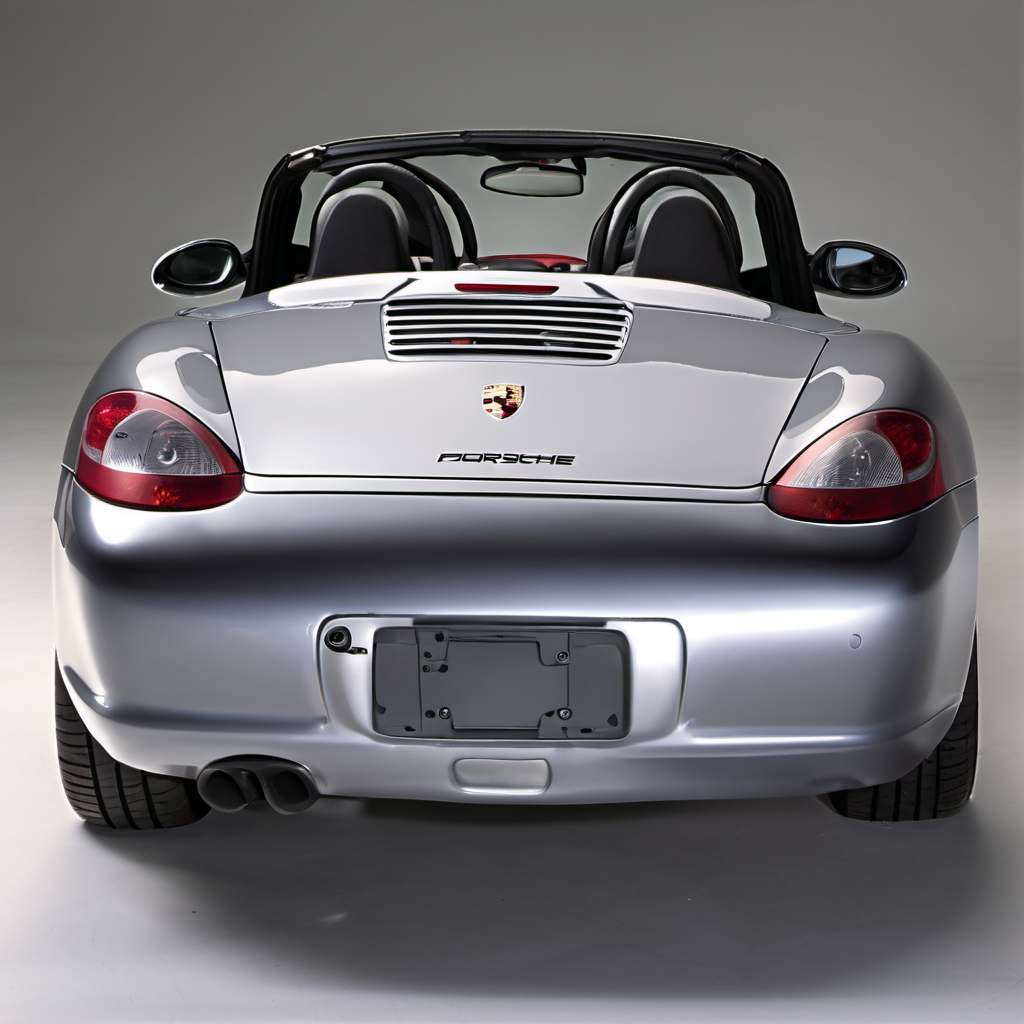
2005 Porsche Boxster Convertible

2005 Porsche

BoxsterConvertible

Convertible

The 2005 Porsche Boxster is a mid-engine, rear-wheel-drive roadster built for pure driving engagement. In its second generation (986 body style, final year), it carries a 2.7L flat-six mounted just behind the cockpit — a layout that delivers near-perfect 50/50 weight distribution and a handling balance that still benchmarks sports cars twice its price. It's a genuine driver's car that rewards mechanical sympathy and punishes neglect. The Boxster is genuinely fun to own, but it is not a low-maintenance vehicle. Porsche engineering is precise and parts are priced accordingly. An owner who stays on top of fluid changes, inspects the intermediate shaft (IMS) bearing proactively, and keeps the convertible top mechanism clean will be well rewarded. An owner who defers maintenance will face serious — and seriously expensive — engine bills. In Lake Geneva, this car makes an outstanding three-season driver. It is not a winter vehicle. Plan to store it properly from November through April, and you'll enjoy one of the best-driving sports cars at any price point.

Reliability
3/5
Verified data
Specs shown for Boxster — the most common configuration. Other trims may vary in engine, drivetrain, or fuel economy. Sign in to see your vehicle's exact specs.
Engine
[object Object]
Drivetrain
RWD
Fuel
Premium gasoline
MPG
18 city / 27 hwy / 21 combined
Seats
Doors
Body
Two Seaters

Overview

AI-curated

The 2005 Porsche Boxster is a mid-engine, rear-wheel-drive roadster built for pure driving engagement. In its second generation (986 body style, final year), it carries a 2.7L flat-six mounted just behind the cockpit — a layout that delivers near-perfect 50/50 weight distribution and a handling balance that still benchmarks sports cars twice its price. It's a genuine driver's car that rewards mechanical sympathy and punishes neglect. The Boxster is genuinely fun to own, but it is not a low-maintenance vehicle. Porsche engineering is precise and parts are priced accordingly. An owner who stays on top of fluid changes, inspects the intermediate shaft (IMS) bearing proactively, and keeps the convertible top mechanism clean will be well rewarded. An owner who defers maintenance will face serious — and seriously expensive — engine bills. In Lake Geneva, this car makes an outstanding three-season driver. It is not a winter vehicle. Plan to store it properly from November through April, and you'll enjoy one of the best-driving sports cars at any price point.

Known for
  • Mid-engine flat-six with a spine-tingling exhaust note
  • Best-in-class handling balance and steering feel
  • Compact, purpose-built roadster proportions
  • Premium Porsche build quality in the interior
  • Retractable soft top that operates in seconds
Best for
  • Enthusiast drivers who enjoy back-road weekend trips
  • Owners with a dedicated storage space for winter months
  • Buyers who can budget for above-average maintenance costs
  • Three-season use in the upper Midwest
Watch for
  • Intermediate shaft (IMS) bearing failure — the Boxster's most notorious and costly risk
  • Rear main seal (RMS) oil leaks are common and a precursor to IMS damage
  • Coolant pipe failures on the 986-generation engine
  • Convertible top hydraulic leaks and motor wear
  • High ownership cost if maintenance has been deferred by prior owners

Common issues by mileage

6 known

Intermediate Shaft (IMS) Bearing Failure

medium
Typically appears
40k–100k mi
Estimated repair
$8,000 – $15,000

Rear Main Seal (RMS) Oil Leak

high
Typically appears
50k–120k mi
Estimated repair
$1,200 – $2,500

Coolant Pipe / Plastic Coolant Pipe Failure

high
Typically appears
60k–100k mi
Estimated repair
$800 – $1,800

Convertible Top Hydraulic Leak or Motor Failure

medium
Typically appears
60k–150k mi
Estimated repair
$500 – $2,500

Mass Air Flow (MAF) Sensor Failure

medium
Typically appears
50k–100k mi
Estimated repair
$250 – $600

A/C Compressor Failure

medium
Typically appears
80k–130k mi
Estimated repair
$900 – $1,800

Maintenance schedule

  1. 1
    Every 5,000 miles or 1 year — do not stretch to the 10k OEM interval on a used example Engine oil and filter change using Porsche-approved full synthetic (Mobil 1 0W-40 or equivalent spec)

    The IMS bearing is oil-lubricated. Fresh, clean oil is the single most affordable IMS protection measure you have.

  2. 2
    Immediately if not documented; otherwise at next clutch or rear main seal service IMS bearing retrofit inspection and/or replacement

    IMS failure is catastrophic and undetectable until it's too late. Retrofitting an upgraded bearing during any transmission-out job is the smart move.

  3. 3
    Inspect every oil change; replace at first sign of oil weeping Rear main seal inspection and replacement if seeping

    A leaking RMS allows oil to contact the IMS bearing, accelerating its failure. This seal is adjacent to the IMS — catch it early.

  4. 4
    Every 2 years / 30,000 miles Coolant flush and plastic coolant pipe inspection

    The 986's plastic coolant pipes and expansion tank are notorious for cracking with age. A coolant loss event in a mid-engine car can destroy the engine quickly.

  5. 5
    Every spring before first use Convertible top lubrication and hydraulic fluid check

    Dried pivot points and low hydraulic fluid are the leading causes of top mechanism failure. A $20 lubrication job prevents a $2,000 repair.

  6. 6
    Every 2 years Brake fluid flush

    Porsche specifies this interval because DOT 4 fluid absorbs moisture, raising boiling point concerns on a performance-driven vehicle.

  7. 7
    Every 30,000 miles Air filter and spark plug inspection

    Worn plugs cause misfires that can register cam timing codes; fresh plugs keep the flat-six running cleanly.

  8. 8
    Every spring after winter storage Tire pressure and alignment check

    Cold storage affects tire pressure; alignment shifts with time. The Boxster's precise handling is the first thing to go if tires aren't properly set.

Always defer to the manufacturer's service manual for warranty-mandated intervals.

Cost of ownership

Annual maintenance
$1,200 – $3,500
Fuel
Requires premium 91+ octane. At 21 MPG combined and typical Wisconsin driving, expect $1,800–$2,400/year depending on fuel prices and usage.
Insurance
Expect $900–$1,600/year for a driver with a clean record in the Lake Geneva area. Rates drop significantly with agreed-value collector car insurance if the car is garaged and driven seasonally.

The Boxster's annual routine maintenance (oil, brakes, filters, coolant) is manageable at $1,200–$1,800/year for a well-kept car. However, the contingency reserve matters enormously here: IMS retrofit if not done ($1,500–$2,500 opportunistically), coolant pipes ($800–$1,800), RMS ($1,200–$2,500), and top repairs ($500–$2,500) all lurk in the background. Budget a contingency of $1,500–$2,000/year on top of routine costs. Three-season storage can actually reduce wear and lower insurance premiums, helping offset the higher per-service costs.
Seasonal care

Lake Geneva, WI
Winter
  • Do not drive this car on salted Wisconsin roads — the 986 underbody and suspension components corrode quickly, and replacement parts are expensive.
  • Before storage, perform a full oil change with fresh synthetic so acids from combustion byproducts don't sit in the engine all winter.
  • Store with a trickle charger / battery tender connected. The Boxster's electronics and alarm system drain the battery in weeks.
  • Inflate tires to the high end of the spec range before storage to help prevent flat-spotting in the cold.
  • Leave the convertible top up and use a breathable indoor car cover — do not store top-down, as the folded fabric cracks in sustained cold.
  • Fill the fuel tank and add a fuel stabilizer if storing more than 60 days.
Summer
  • Check coolant level and condition before summer driving season — heat is hard on the aging plastic coolant pipes.
  • Inspect and top off convertible top hydraulic fluid; the pump works hardest in warm weather with daily top-up/down cycles.
  • Monitor tire pressure closely — Lake Geneva summer heat can raise pressure 4–6 PSI above the cold reading; adjust accordingly.
  • Verify the A/C system is holding charge before hot weather arrives; recharging after a winter of dormancy is common.
  • Inspect the soft top for UV cracking or seam separation before the rainy season; a small seam repair is far cheaper than a new top.

Comparable vehicles

If you're shopping for one

Red flags
  • No documentation of IMS retrofit — walk away or negotiate a very large price reduction to fund the repair.
  • Any evidence of coolant in the oil (milky residue on the dipstick or oil cap) — indicates a potential head gasket or cooling system catastrophe.
  • Convertible top that hesitates, stutters, or stops mid-cycle — hydraulic system is failing.
  • Excessive oil consumption (more than 1 quart per 1,000 miles) — indicates engine wear or seal failure.
  • Check engine light with cam timing codes (P0012, P0015, P0022, P0025) — IMS or VVT system involvement possible.
  • Rust bubbling around the windshield frame or rear trunk lid — common rust trap on 986s that were used in winter or stored outdoors.
What to inspect
  • Demand proof that the IMS bearing retrofit has been completed — this is non-negotiable on a used 986 Boxster.
  • Check for oil around the rear of the engine (rear main seal seepage) and underneath the car after it's been parked 10+ minutes.
  • Inspect the convertible top fabric for UV cracking, seam separation, and the rear plastic window for hazing or delamination.
  • Look under the car for any rust on the subframe, suspension trailing arms, and underbody — salt damage on a car stored in Wisconsin winters is common.
  • Ask for a complete service history. A Boxster with missing records is a significant financial risk.
  • Have a Porsche-familiar independent shop perform a pre-purchase inspection with the car on a lift and the engine warm.
AI profile generated 1 hr ago · claude-sonnet-4-6 · v2.