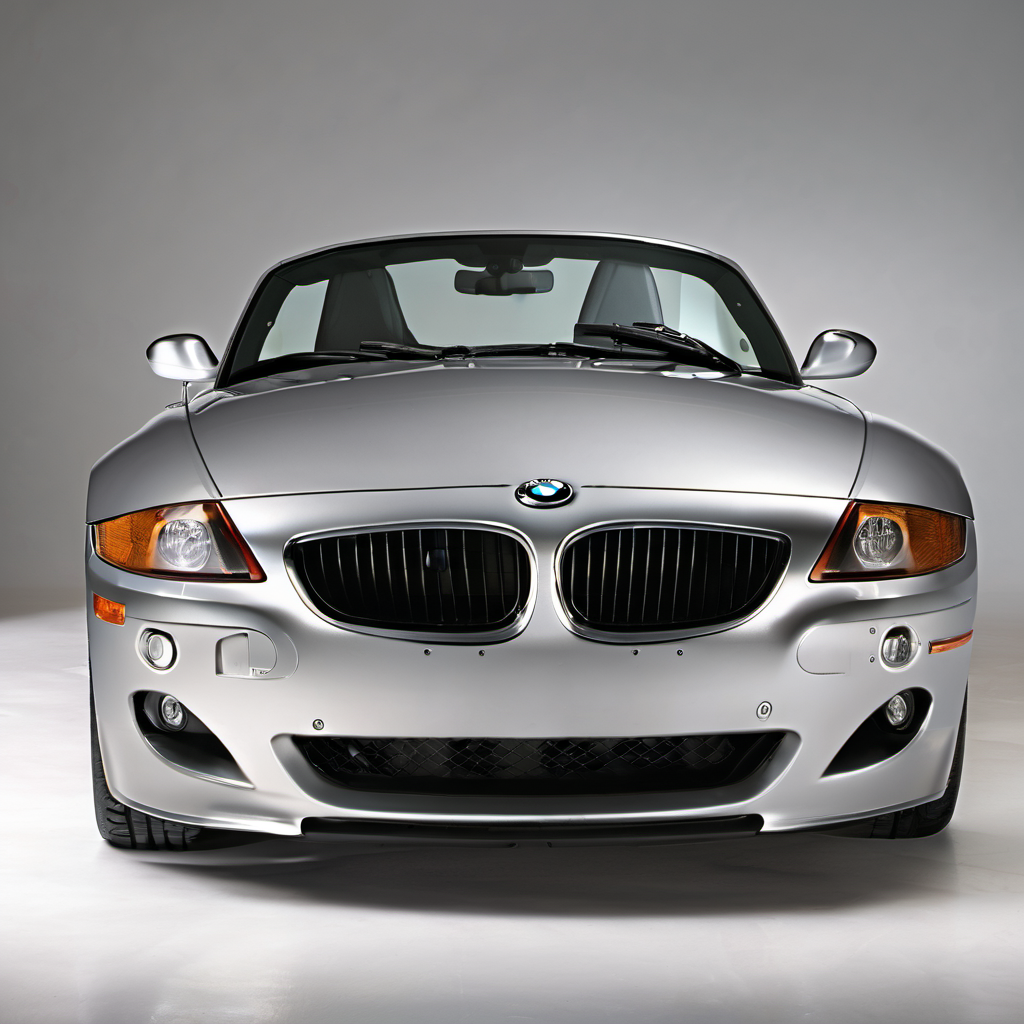
2005 BMW Z4 Convertible

2005 BMW

Z4Convertible

Convertible

The 2005 BMW Z4 is a two-seat rear-wheel-drive roadster built on BMW's E85 platform. It replaced the Z3 in 2003 and brought sharper handling, a more aggressive Bangle-era design, and a stiffer chassis to BMW's entry-level sports car lineup. The 2.5i variant — the volume seller — pairs a naturally aspirated 2.5L inline-six with either a 5-speed manual or 5-speed automatic, delivering a balanced mix of everyday drivability and open-top fun. At 20 years old, a well-maintained Z4 can still be a rewarding driver's car. The E46-sourced inline-six engines are proven, but BMW's maintenance requirements — premium fuel, high-capacity oil changes, and VANOS servicing — mean running costs are firmly in European-sport territory. This is not a car to buy and ignore. In the Lake Geneva area, the Z4 is best treated as a three-season car. Its low clearance, performance summer tires, and RWD dynamics in snow make winter use a genuine liability. If you plan to drive it year-round, a dedicated set of winter wheels and serious skill behind the wheel are non-negotiable.

Reliability
3/5
Verified data
Specs shown for Z4 Roadster — the most common configuration. Other trims may vary in engine, drivetrain, or fuel economy. Sign in to see your vehicle's exact specs.
Engine
[object Object]
Drivetrain
RWD
Fuel
Premium gasoline
MPG
18 city / 26 hwy / 21 combined
Seats
Doors
Body
Two Seaters

Overview

AI-curated

The 2005 BMW Z4 is a two-seat rear-wheel-drive roadster built on BMW's E85 platform. It replaced the Z3 in 2003 and brought sharper handling, a more aggressive Bangle-era design, and a stiffer chassis to BMW's entry-level sports car lineup. The 2.5i variant — the volume seller — pairs a naturally aspirated 2.5L inline-six with either a 5-speed manual or 5-speed automatic, delivering a balanced mix of everyday drivability and open-top fun. At 20 years old, a well-maintained Z4 can still be a rewarding driver's car. The E46-sourced inline-six engines are proven, but BMW's maintenance requirements — premium fuel, high-capacity oil changes, and VANOS servicing — mean running costs are firmly in European-sport territory. This is not a car to buy and ignore. In the Lake Geneva area, the Z4 is best treated as a three-season car. Its low clearance, performance summer tires, and RWD dynamics in snow make winter use a genuine liability. If you plan to drive it year-round, a dedicated set of winter wheels and serious skill behind the wheel are non-negotiable.

Known for
  • Sharp, communicative rear-wheel-drive handling
  • Smooth, rev-happy BMW inline-six
  • Premium interior quality for its class
  • Clean power-folding soft top operation
  • Strong driver engagement at all speeds
Best for
  • Weekend canyon or backroad drivers
  • BMW enthusiasts comfortable with European maintenance costs
  • Drivers who want a sports car with daily-driver civility
  • Three-season open-top cruising
Watch for
  • VANOS variable valve timing system failures — expensive if neglected
  • Cooling system components (water pump, thermostat, hoses) are age-related failure points
  • Power steering rack leaks common by this mileage
  • Soft top hydraulic or seal issues on high-mileage examples
  • Rust in door sills, rockers, and subframe mounting points from road salt exposure

Common issues by mileage

6 known

VANOS Variable Valve Timing Solenoid / Seal Failure

high
Typically appears
60–120k mi
Estimated repair
$400 – $1,200

Cooling System Failure (Water Pump, Thermostat, Expansion Tank)

high
Typically appears
60–100k mi
Estimated repair
$500 – $1,100

Power Steering Rack Leak

medium
Typically appears
80–130k mi
Estimated repair
$800 – $1,800

Soft Top Hydraulic Cylinder Leak or Seal Deterioration

medium
Typically appears
70–120k mi
Estimated repair
$300 – $900

Oxygen Sensor / Heater Circuit Failure

medium
Typically appears
80–150k mi
Estimated repair
$200 – $500

Valve Cover Gasket Oil Leak

high
Typically appears
60–100k mi
Estimated repair
$250 – $550

Maintenance schedule

  1. 1
    Every 5,000–7,500 miles (do not follow BMW's 15k OLM interval on a 20-year-old engine) Oil change with BMW-spec 5W-30 full synthetic

    The M54 inline-six is prone to sludge if oil is stretched. Shorter intervals protect VANOS components and reduce wear at this age.

  2. 2
    Every 50,000 miles or at first rough idle / cold-start hesitation VANOS solenoid screen cleaning and seal inspection

    Clogged VANOS screens cause cam timing codes and rough running. Catching it early avoids a full rebuild. Related to P0012/P0015 codes.

  3. 3
    Every 60,000 miles or at any sign of temperature fluctuation Cooling system inspection (water pump, thermostat, hoses, expansion tank)

    Plastic water pump impellers and expansion tanks crack with age. Failure can cause rapid overheating and serious engine damage on a 20-year-old car.

  4. 4
    Every 45,000–60,000 miles Spark plugs and ignition coils

    OEM coil-on-plug units degrade with heat cycles. Worn plugs increase misfire risk and stress the catalytic converters.

  5. 5
    Every 2 years regardless of mileage Brake fluid flush

    BMW recommends this interval; brake fluid absorbs moisture over time, raising the risk of vapor lock under hard braking — especially important on a performance car.

  6. 6
    Every spring and fall Soft top lubrication and seal conditioning

    Seals dry out and crack in Wisconsin winters. Keeping them conditioned prevents leaks and reduces wear on the hydraulic system.

  7. 7
    Every 50,000 miles Differential and transmission fluid change

    BMW calls these 'lifetime' fills, but on a 20-year-old car that fluid is long past its service life. Fresh fluid protects bearings and synchros.

  8. 8
    Every spring after winter storage Undercarriage rust inspection and touch-up

    Wisconsin road salt accelerates corrosion on the subframe mounts, rocker panels, and brake lines. Catching surface rust early prevents structural issues.

Always defer to the manufacturer's service manual for warranty-mandated intervals.

Cost of ownership

Annual maintenance
$1,200 – $3,500
Fuel
Premium fuel required. At 21 MPG combined and ~12,000 miles/year, expect roughly $2,000–$2,400/year at current Wisconsin premium prices.
Insurance
Typically moderate — the Z4 is a sports car but not a high-theft or high-horsepower target. Expect $1,000–$1,600/year for a driver with a clean record; lower if stored seasonally.

The Z4 is affordable to buy used but costs real money to maintain properly. Budget $1,200–$2,000/year for routine upkeep on a well-maintained example, and keep a $2,000–$3,500 reserve for the age-related repairs (cooling system, VANOS, power steering) that are overdue on most cars at this point. Deferred maintenance is the #1 budget killer on these — inspect before you buy, then stay ahead of the schedule.
Seasonal care

Lake Geneva, WI
Winter
  • Store the Z4 if at all possible — RWD, low ground clearance, and performance tires make it genuinely dangerous in Wisconsin snow and ice.
  • If storing, use a battery tender; the Z4's electronics drain the battery over weeks of inactivity in cold temperatures.
  • Before storage, apply a quality undercarriage wash to remove road salt accumulated from fall driving.
  • Condition the soft top seals before storage to prevent cracking in sub-zero temperatures.
  • Check and top off brake fluid and coolant freeze protection (to at least -34°F) before the first hard freeze.
  • If driven in winter, switch to a dedicated set of winter tires on steel wheels — do not use all-season tires as a substitute on this car.
Summer
  • Check tire pressure monthly — Wisconsin summer heat can raise pressure 4–6 PSI above cold readings; follow BMW's spec, not the max molded on the tire.
  • Inspect the A/C system at the start of the season; recharge if cooling is weak — the cabin heats up fast in a black-interior convertible.
  • Monitor coolant temperature closely on hot days; the aging cooling system is most vulnerable under sustained heat load.
  • Top up windshield washer fluid with a bug-removing formula — open-top driving means more insect debris on the windscreen.
  • Inspect the soft top for UV-related seal shrinkage or cracking before the rainy season.
  • Check battery health — heat degrades batteries as fast as cold does, and a weak battery will strand you far from home on a backroad.

Comparable vehicles

If you're shopping for one

Red flags
  • No maintenance records — on a 20-year-old BMW, this almost guarantees deferred VANOS and cooling system work.
  • Check engine light at time of sale, or evidence it was recently cleared.
  • Overheating history or a replaced head gasket — indicates the cooling system was allowed to fail.
  • Soft top that doesn't seal fully or leaks water at the windshield header.
  • Rust on the subframe mounting points or brake lines — structural and safety-critical on a car this age.
  • Burning oil smell or visible blue smoke — points to valve stem seals or PCV system failure.
What to inspect
  • Pull codes before purchase — any cam timing codes (P0012, P0015) signal VANOS problems that need immediate attention.
  • Check the soft top operation through a full open/close cycle; listen for hesitation, hydraulic whine, or incomplete sealing.
  • Inspect door sills, rocker panels, and the underside of the rear wheel arches for salt rust — common in Midwest-owned cars.
  • Look for oil weeping around the valve cover and VANOS solenoid area on the top of the engine.
  • Verify coolant is clean (not brown or rusty) and check the expansion tank for cracks.
  • Test the power steering for smoothness and check the rack area for fluid residue or weeping.
AI profile generated 1 hr ago · claude-sonnet-4-6 · v2.