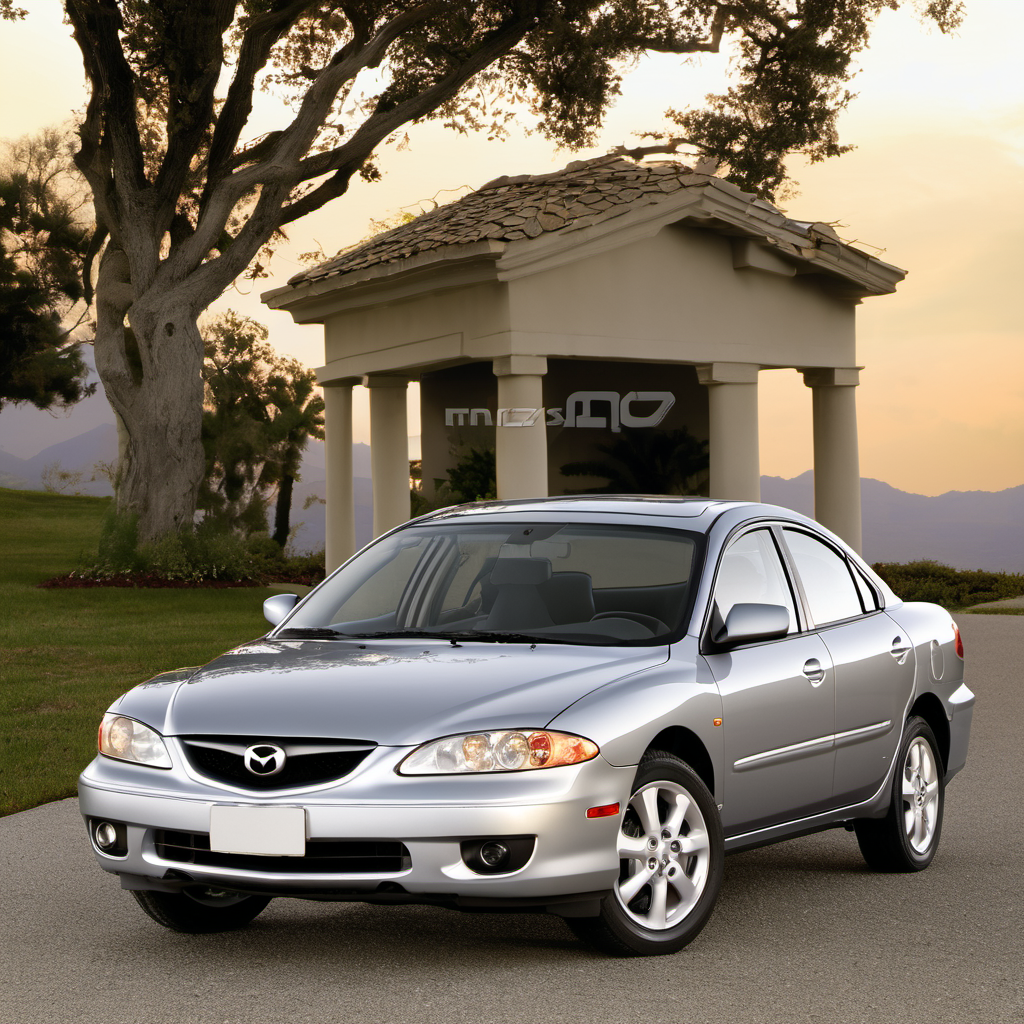
2005 MAZDA MAZDA6 Sedan

2005 MAZDA

MAZDA6Sedan

2.3L I4 · Sedan

The 2005 Mazda6 (first generation, GG platform) is a mid-size sedan that brought genuine driving fun to a segment dominated by bland family cars. Built on a shared Ford-Mazda platform, it offered a more athletic feel than the Camry or Accord of its era — tighter steering, a lower center of gravity, and engines that rewarded revving. It was available as a sedan, hatchback, and wagon, though the sedan was by far the most common. Under the hood, most 2005 Mazda6 sedans came with a 2.3L four-cylinder; the sportier S-trim got a 3.0L V6. Both are reasonably durable, but the V6 comes with a more complex maintenance profile. The five-speed automatic and five-speed manual both held up well with proper fluid changes. At 20 years old, the biggest concerns on any surviving Mazda6 are rust (especially in Wisconsin), aged rubber components, and deferred maintenance from previous owners. Well-maintained examples are still satisfying daily drivers, but you need to go in with eyes open on corrosion and suspension wear.

Reliability
3/5
Verified data
Engine
2.3L I4
Drivetrain
FWD
Fuel
Gasoline
MPG
22 city / 30 hwy / 25 combined
Seats
5
Doors
4
Body
Sedan
MSRP
$20,160

Overview

AI-curated

The 2005 Mazda6 (first generation, GG platform) is a mid-size sedan that brought genuine driving fun to a segment dominated by bland family cars. Built on a shared Ford-Mazda platform, it offered a more athletic feel than the Camry or Accord of its era — tighter steering, a lower center of gravity, and engines that rewarded revving. It was available as a sedan, hatchback, and wagon, though the sedan was by far the most common. Under the hood, most 2005 Mazda6 sedans came with a 2.3L four-cylinder; the sportier S-trim got a 3.0L V6. Both are reasonably durable, but the V6 comes with a more complex maintenance profile. The five-speed automatic and five-speed manual both held up well with proper fluid changes. At 20 years old, the biggest concerns on any surviving Mazda6 are rust (especially in Wisconsin), aged rubber components, and deferred maintenance from previous owners. Well-maintained examples are still satisfying daily drivers, but you need to go in with eyes open on corrosion and suspension wear.

Known for
  • Sharp, engaging driving dynamics for a family sedan
  • Durable 2.3L four-cylinder engine
  • Stylish European-influenced interior and exterior design
  • Solid manual transmission option for driving enthusiasts
Best for
  • Budget-conscious drivers who want a sporty commuter
  • DIY mechanics comfortable with a 20-year-old platform
  • Drivers who prioritize handling over interior space
Watch for
  • Frame and underbody rust on Midwest/salt-belt examples
  • Neglected automatic transmission fluid (causes early failure)
  • Worn or cracked suspension bushings at this age
  • Power window regulator failures (very common on this generation)

Common issues by mileage

6 known

Power Window Regulator Failure

high
Typically appears
60–150k mi
Estimated repair
$150 – $350

Automatic Transmission Wear / Slipping

medium
Typically appears
80–150k mi
Estimated repair
$800 – $3,200

Oxygen Sensor / Heater Circuit Failure

medium
Typically appears
80–130k mi
Estimated repair
$150 – $400

Suspension Bushing and Sway Bar Link Wear

high
Typically appears
100k+ mi
Estimated repair
$200 – $600

Underbody / Subframe Rust (Salt-Belt)

high
Typically appears
Any mileage on Midwest cars
Estimated repair
$300 – $2,500

Maintenance schedule

  1. 1
    Every 30–40k mi (non-negotiable on a used example) Automatic Transmission Fluid Change

    Mazda did not call for regular ATF changes on the factory schedule, which led to widespread early transmission wear. On a used car, change it immediately if history is unknown — it is far cheaper than a rebuild.

  2. 2
    Every 5,000 mi or 6 months Engine Oil Change (Conventional or Synthetic)

    The 2.3L responds well to consistent oil changes. Extended intervals on a 20-year-old engine accelerate sludge buildup and can trigger VCT/oil pressure faults.

  3. 3
    Every 5 years or 60k mi Coolant Flush

    Old coolant loses its corrosion inhibitors and can attack the aluminum components in the cooling system, including the heater core.

  4. 4
    Every 60k mi Spark Plugs

    The 2.3L uses standard iridium plugs. Worn plugs on this engine cause misfires and can affect fuel economy noticeably.

  5. 5
    Every 2–3 years Brake Fluid Flush

    Brake fluid is hygroscopic and absorbs moisture over time, lowering boiling point. Critical for winter driving when brakes work hardest.

  6. 6
    Every 60k mi or at purchase on a used example Serpentine Belt and Tensioner Inspection

    Belts this age are prone to cracking in cold Wisconsin winters. A snapped belt leaves you stranded and can damage accessories.

  7. 7
    Annually before winter Underbody Rust Inspection and Treatment

    Lake Geneva road salt is harsh. Check brake lines, fuel lines, and subframe mounting points. Treat bare metal with a rust inhibitor before first snowfall.

  8. 8
    Every 15–20k mi or annually Cabin Air Filter Replacement

    Clogged filters restrict airflow and reduce defrost effectiveness — a real safety issue on Wisconsin winter mornings.

Always defer to the manufacturer's service manual for warranty-mandated intervals.

Cost of ownership

Annual maintenance
$600 – $1,400
Fuel
Expect roughly $1,600–$2,000/year at average Midwest fuel prices and 12,000 mi/year based on ~25 MPG combined.
Insurance
Typically $900–$1,400/year for full coverage in southeastern Wisconsin on a vehicle this age; liability-only can drop well below $700.

The 2005 Mazda6 is inexpensive to own if it's mechanically sound going in. Parts are widely available and affordable. The risk is deferred maintenance catching up — a transmission rebuild or serious rust repair can quickly exceed the car's market value. Budget for a pre-purchase inspection and keep up with fluids to avoid the big-ticket surprises.
Seasonal care

Lake Geneva, WI
Winter
  • Switch to a 0W-20 or 5W-30 full synthetic if not already — cold starts are brutal on aging seals with thick conventional oil.
  • Test the battery before November. Cold cranking amps drop sharply below 20°F and a marginal battery will fail at the worst time.
  • Inspect and refill washer fluid with a rated -20°F or lower formula. The factory reservoir is moderate size and empties fast in a Wisconsin winter.
  • Switch to dedicated winter tires — the stock all-seasons on a FWD Mazda6 lose grip quickly below 35°F.
  • Inspect brake lines and fuel lines for rust bubbles or pinhole corrosion before temperatures drop. Salt accelerates any existing rust.
  • Keep the fuel tank above half to prevent moisture accumulation in the fuel system and reduce fuel line freeze risk.
Summer
  • Check tire pressure monthly — pressure drops roughly 1 PSI for every 10°F of temperature change, affecting handling and fuel economy.
  • Inspect the A/C system for refrigerant charge and condenser debris. A 20-year-old system may need a recharge or a new cabin air filter to blow cold.
  • Check coolant level and condition — look for discoloration or oil contamination, which can indicate a slow head gasket weep on high-mileage examples.
  • Inspect rubber hoses and belts for heat cracking; high summer temps accelerate deterioration on aged components.

Comparable vehicles

If you're shopping for one

Red flags
  • Visible rust on the subframe, floor pans, or suspension mounting points — walk away.
  • Transmission that shudders, slips, or hesitates between gears with no service history.
  • Oil that looks milky or coolant with an oily film — potential head gasket issue.
  • Check engine light or multiple warning lights on — have codes pulled before buying.
  • Any sign of flood damage: musty smell, waterlines in the trunk or under the dash.
What to inspect
  • Crawl under and look at the subframe, brake lines, and fuel lines for rust — this is the single most important check on any Wisconsin Mazda6.
  • Check all four power windows; regulators fail frequently and replacement is labor-intensive.
  • Test the automatic transmission for smooth shifts through all gears, and ask for ATF service records.
  • Look for oil leaks around the valve cover gasket and cam seals, especially on higher-mileage examples.
  • Check the front suspension for clunks over bumps — worn sway bar links and control arm bushings are common at this age.
  • Verify the A/C blows cold and the heater defrosts quickly — both matter for Wisconsin driving.
AI profile generated 1 hr ago · claude-sonnet-4-6 · v2.