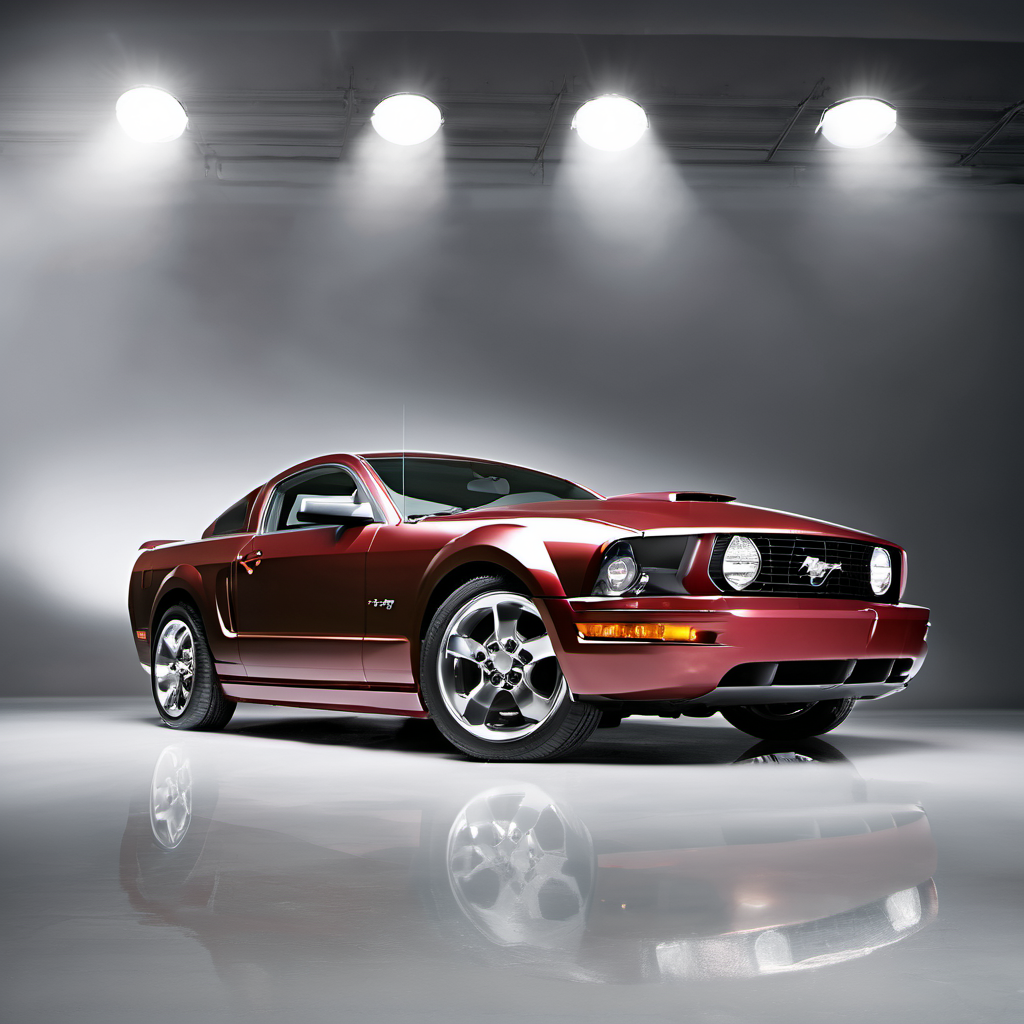
2005 Ford Mustang Coupe
Popular pick

2005 Ford

MustangCoupe

4.0L V6 · Coupe

The 2005 Ford Mustang marks the debut of the fourth-generation 'S197' platform — a full redesign that brought retro-inspired styling back to the nameplate after years of the polarizing New Edge body. Built at the Auto Alliance International plant in Flat Rock, Michigan, the '05 was a landmark model year and quickly became a sales success. The V6 coupe represents the entry point into the lineup, offering the classic Mustang experience at a more approachable price and insurance cost. The 4.0L SOHC V6 (Cologne engine) produces 210 horsepower and pairs with either a 5-speed manual or 5-speed automatic. It's no GT, but it's a capable daily driver with genuine rear-wheel-drive character. Buyers who don't need the GT's V8 power often find the V6 easier to live with day-to-day. At nearly 20 years old, these cars are now deep into their second or third ownership cycle. Deferred maintenance, modifications, and accident history are real concerns on the used market. Mechanically they can be sturdy, but this generation's V6 has a few well-documented weak points that any prospective buyer should understand before writing a check.

Reliability
3/5
Verified data
Specs shown for Mustang — the most common configuration. Other trims may vary in engine, drivetrain, or fuel economy. Sign in to see your vehicle's exact specs.
Engine
[object Object]
Drivetrain
Rear-Wheel Drive
Fuel
Gasoline
MPG
19 city / 25 highway
Seats
Doors
2
Body
Subcompact Cars
MSRP
$19,410

Overview

AI-curated

The 2005 Ford Mustang marks the debut of the fourth-generation 'S197' platform — a full redesign that brought retro-inspired styling back to the nameplate after years of the polarizing New Edge body. Built at the Auto Alliance International plant in Flat Rock, Michigan, the '05 was a landmark model year and quickly became a sales success. The V6 coupe represents the entry point into the lineup, offering the classic Mustang experience at a more approachable price and insurance cost. The 4.0L SOHC V6 (Cologne engine) produces 210 horsepower and pairs with either a 5-speed manual or 5-speed automatic. It's no GT, but it's a capable daily driver with genuine rear-wheel-drive character. Buyers who don't need the GT's V8 power often find the V6 easier to live with day-to-day. At nearly 20 years old, these cars are now deep into their second or third ownership cycle. Deferred maintenance, modifications, and accident history are real concerns on the used market. Mechanically they can be sturdy, but this generation's V6 has a few well-documented weak points that any prospective buyer should understand before writing a check.

Known for
  • Retro S197 styling that aged extremely well
  • True rear-wheel-drive layout with solid rear axle
  • Large, active enthusiast community and cheap parts availability
  • 4.0L Cologne V6 — proven but not without known issues
  • Affordable entry into the pony car segment
Best for
  • Weekend drivers and enthusiasts on a budget
  • First-time RWD performance car owners
  • Anyone wanting a stylish daily driver with low purchase price
  • DIY mechanics — parts are plentiful and inexpensive
Watch for
  • Intake manifold runner control (IMRC) failures are extremely common on the 4.0L V6
  • RWD in Wisconsin winters requires dedicated winter tires or significant caution
  • High likelihood of modifications or abuse on any used example
  • Rear axle and differential seals commonly weep oil by high mileage
  • Rust on subframe, floor pans, and wheel arches is a real concern on upper-Midwest cars

Common issues by mileage

6 known

Intake Manifold Runner Control (IMRC) failure

high
Typically appears
60–120k mi
Estimated repair
$150 – $400

Oxygen sensor heater circuit failure

medium
Typically appears
80–150k mi
Estimated repair
$120 – $280

Rear axle / differential pinion seal leak

medium
Typically appears
80–150k mi
Estimated repair
$100 – $250

Thermostat and cooling system failure

medium
Typically appears
60–100k mi
Estimated repair
$100 – $220

Power window regulator failure

high
Typically appears
60–120k mi
Estimated repair
$80 – $200

Worn or collapsed rear shock absorbers

high
Typically appears
80–130k mi
Estimated repair
$300 – $600

Maintenance schedule

  1. 1
    Every 5,000 miles or 6 months Engine oil change — use 5W-20 full synthetic

    The 4.0L V6 is sensitive to oil maintenance. Sludge accelerates IMRC problems and shortens valve train life. Full synthetic in Wisconsin's cold winters aids cold-start lubrication.

  2. 2
    Every 30,000 miles or at first sign of rough idle / check engine light Inspect and clean IMRC plates and linkage

    Carbon buildup on the IMRC butterfly plates is the #1 drivability issue on this engine. Cleaning early can defer expensive replacement.

  3. 3
    Every 30,000–45,000 miles Differential fluid change (rear axle)

    The solid 8.8-inch rear axle is tough but the fluid degrades. Old fluid leads to seal weeping and chatter on the limited-slip differential if equipped.

  4. 4
    Every 30,000 miles or at each oil change Inspect rear axle pinion and axle seals for leaks

    Seal leaks are common and easy to catch early. Left unaddressed, low fluid destroys the differential.

  5. 5
    Every 60,000 miles or 5 years Coolant flush

    Ford's orange coolant degrades and turns acidic, attacking the aluminum components and hoses. Fresh coolant prevents costly overheating repairs.

  6. 6
    Every 60,000 miles Spark plugs — replace with motorcraft-spec plugs

    The 4.0L V6 uses standard plugs that are straightforward to replace. Non-OEM plug types have caused misfire issues on Ford V6 and V8 engines of this era.

  7. 7
    Every 40,000 miles or at tire rotation Inspect front control arm bushings and ball joints

    The S197 front suspension bushings wear with age and are a common cause of wandering, clunking, and uneven tire wear on high-mileage examples.

  8. 8
    Every 2 years Brake fluid flush

    Wisconsin's road salt accelerates corrosion in brake components. Fresh fluid prevents moisture-related corrosion in calipers and wheel cylinders.

Always defer to the manufacturer's service manual for warranty-mandated intervals.

Cost of ownership

Annual maintenance
$600 – $1,400
Fuel
At 21 MPG combined and typical Wisconsin driving, expect roughly $1,500–$2,000/year at current gas prices. Premium fuel is not required.
Insurance
V6 Mustangs are typically cheaper to insure than V8 variants. Expect $900–$1,500/year for full coverage depending on age, driving record, and zip code. Sports car classification may push rates slightly above comparable sedans.

The 2005 V6 Mustang is one of the more affordable sports cars to own. Parts are cheap and plentiful, labor is straightforward, and independent shops can handle nearly everything. The main cost wild card is deferred maintenance from previous owners — budget for a thorough inspection and catch-up service on any used purchase. A well-maintained example can run below $1,000/year in routine maintenance costs.

Seasonal care

Lake Geneva, WI
Winter
  • Switch to a dedicated set of winter tires on steel wheels — RWD + rear solid axle makes this car genuinely dangerous on snow and ice with all-season tires
  • Use 5W-20 full synthetic oil to ensure proper cold-start lubrication in sub-zero temps
  • Test the battery before first hard freeze — these cars are now old enough that original or early replacement batteries are likely due
  • Fill washer fluid reservoir with -20°F or -40°F rated fluid; the low cowl design means the windshield picks up road spray constantly
  • Rinse the undercarriage regularly — Lake Geneva roads are heavily salted and the floor pans, subframe, and brake lines on these cars are known rust targets
  • Keep the gas tank at least half full to prevent fuel line freeze and reduce condensation in the tank
Summer
  • Check tire pressure monthly — dark-colored Mustangs heat-soak quickly and tire pressure rises noticeably on hot pavement
  • Inspect the A/C system for refrigerant leaks and verify the cabin air filter (if equipped) is clean before summer heat sets in
  • Monitor coolant temperature closely during hot, slow traffic — the 4.0L V6 can run warm with a marginal thermostat or aging coolant
  • Inspect rubber weatherstripping around doors and windows — Wisconsin UV and heat cause it to crack and allows water intrusion
  • Check brake pads and rotor condition before summer driving season, especially if the car was garaged all winter

Comparable vehicles

2005 Chevrolet
Camaro

Direct pony car rival — note the Camaro was discontinued after 2002 and didn't return until 2010, so used Camaros of this era are the F-body generation. Similar RWD layout and enthusiast following.

No catalog match
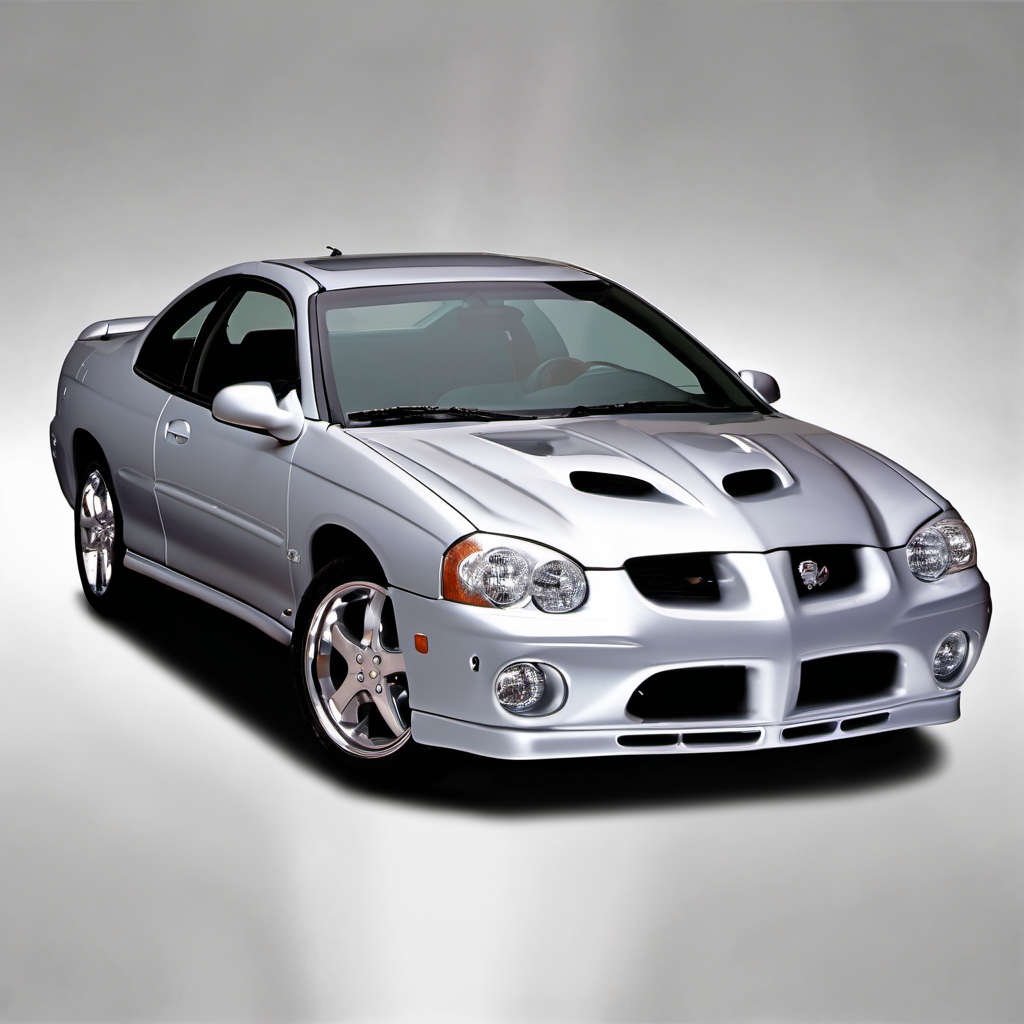
2005 Pontiac GTO
2005 Pontiac
GTO

RWD V8-powered American coupe in the same era and price range on the used market. More refined but less parts-accessible than the Mustang.

2005 Dodge
Challenger

The Challenger didn't return until 2008, but used examples now overlap in price with S197 Mustangs. Same RWD pony car mission with more interior room.

No catalog match
2005 Ford Mustang GT
2005 Ford
Mustang GT

If budget allows, the GT's 4.6L V8 is more reliable than the V6 Cologne engine, makes significantly more power, and commands strong resale. Worth the price difference if you can find a clean one.

If you're shopping for one

Red flags
  • Any rust bubbling on the lower quarter panels, rockers, or visible floor pan — structural rust on an S197 is expensive and sometimes not worth repairing
  • Check engine light with no explanation or a cleared code with no repair — on a 20-year-old V6 Mustang, this is a negotiating point at minimum
  • Slipping or harsh-shifting automatic transmission — the 5R55S automatic on these cars can be expensive to rebuild ($1,500–$2,800)
  • Rear end clunking or howling — worn differential, spider gears, or axle bearing issues
  • Evidence of track or autocross use without documented corresponding maintenance
  • Mismatched paint panels or gaps in body seams — indicator of prior accident repair
What to inspect
  • Run the IMRC system — check for P0026–P0029 codes and rough idle; assume IMRC service is needed on any car over 80k miles
  • Check all four O2 sensor heater circuits for pending codes (P0030–P0036) — they're common and cheap to fix but signal age/neglect
  • Inspect the entire undercarriage for rust, especially floor pans, subframe connectors, rear frame rails, and brake lines — Wisconsin/upper-Midwest cars can be heavily compromised
  • Check the rear differential for leaks and verify fluid condition
  • Test every power window — regulators fail frequently and replacement is $80–$200 per door
  • Verify the cooling system health: inspect hoses, check for milky oil (head gasket), and confirm thermostat function
  • Look for evidence of modifications — lowered suspension, aftermarket exhaust, tune — and ask for full service history
AI profile generated 4 days ago · claude-sonnet-4-6 · v2.