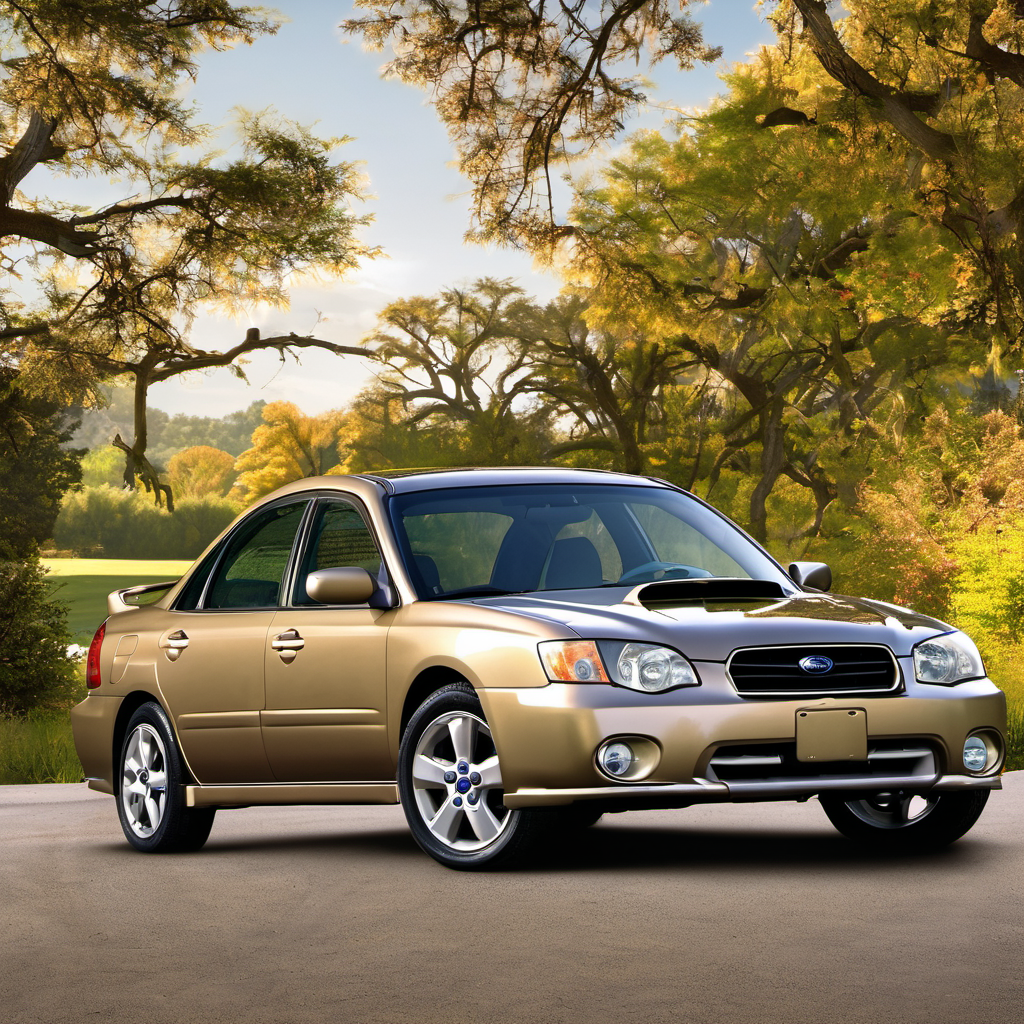
2004 Subaru Legacy Sedan

2004 Subaru

LegacySedan

2.5L H4 (EJ25) · Sedan

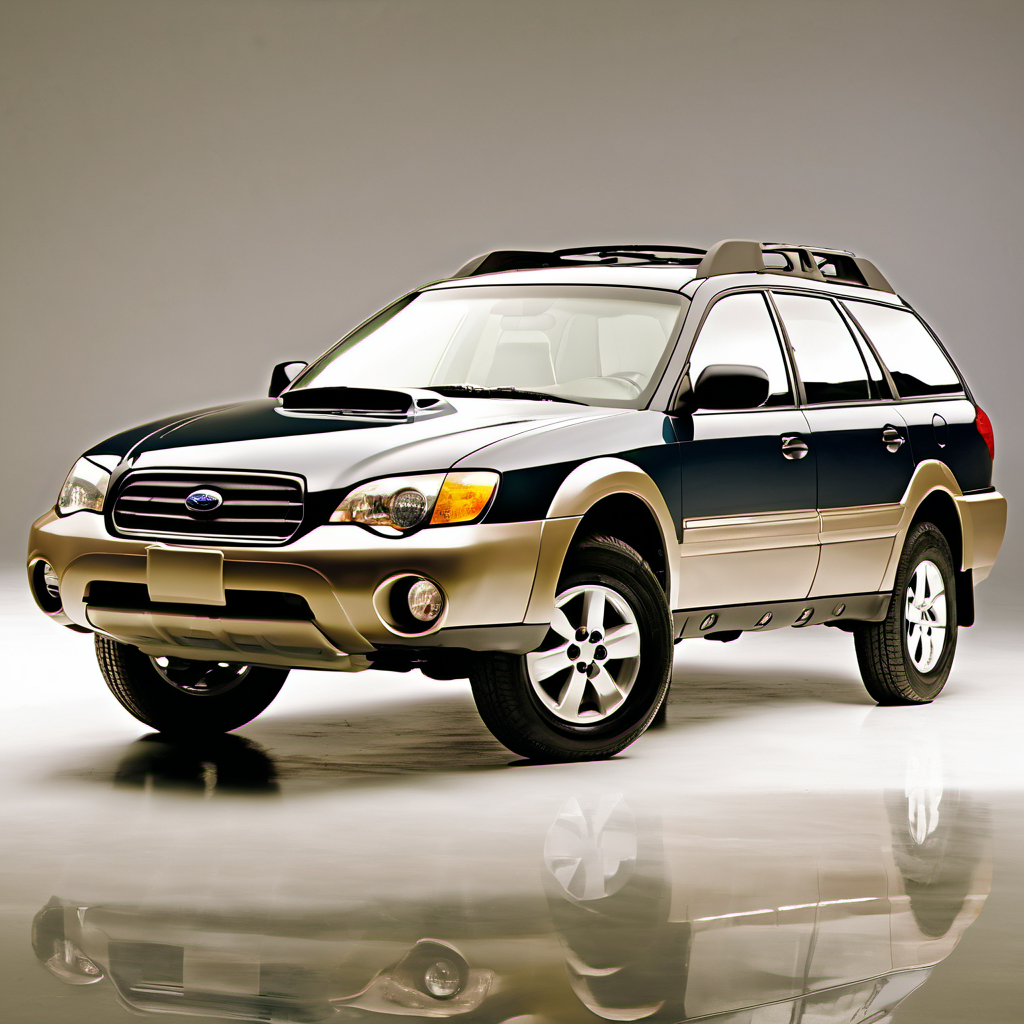
The 2004 Subaru Legacy Sedan is the fourth generation of Subaru's mid-size family sedan, sold alongside the Outback wagon variant. It comes standard with Subaru's symmetrical all-wheel drive and either a 2.5L naturally aspirated flat-four or an available 2.5L turbocharged engine in the GT trim. For a compact AWD sedan in this price range, the Legacy punches above its weight in all-weather confidence. At 20 years old, this Legacy sits squarely in high-mileage territory. The mechanicals are generally proven and sturdy, but the 2.5L EJ25 engine carries a well-documented head gasket weakness that every prospective buyer and current owner needs to understand. Budget and plan accordingly — catching it early is far cheaper than an overheated engine. For Lake Geneva drivers, the standard AWD is a genuine advantage through Wisconsin winters. These cars respond well to attentive maintenance and can reach well past 200k miles when the head gaskets and timing components are kept up with.

Reliability
3/5
Verified data
Engine
2.5L H4 (EJ25)
Drivetrain
AWD
Fuel
Gasoline
MPG
22 city / 29 hwy / 25 combined
Seats
5
Doors
4
Body
Sedan
MSRP
$21,995

Overview

AI-curated

The 2004 Subaru Legacy Sedan is the fourth generation of Subaru's mid-size family sedan, sold alongside the Outback wagon variant. It comes standard with Subaru's symmetrical all-wheel drive and either a 2.5L naturally aspirated flat-four or an available 2.5L turbocharged engine in the GT trim. For a compact AWD sedan in this price range, the Legacy punches above its weight in all-weather confidence. At 20 years old, this Legacy sits squarely in high-mileage territory. The mechanicals are generally proven and sturdy, but the 2.5L EJ25 engine carries a well-documented head gasket weakness that every prospective buyer and current owner needs to understand. Budget and plan accordingly — catching it early is far cheaper than an overheated engine. For Lake Geneva drivers, the standard AWD is a genuine advantage through Wisconsin winters. These cars respond well to attentive maintenance and can reach well past 200k miles when the head gaskets and timing components are kept up with.

Known for
  • Symmetrical AWD standard on all trims
  • Flat-four (boxer) engine layout with low center of gravity
  • EJ25 head gasket vulnerability — a known and well-understood issue
  • Solid all-weather handling for a mid-size sedan
  • Strong long-term longevity when properly maintained
Best for
  • Wisconsin winter commuters who want AWD without an SUV
  • Buyers willing to do preventive maintenance on a budget
  • Drivers who want a practical, low-profile sedan with real traction
  • Owners comfortable with independent shop servicing
Watch for
  • Head gasket failure on the 2.5L EJ25 — nearly inevitable without proactive replacement
  • Rust on subframes, rocker panels, and brake lines from road salt exposure
  • Timing belt service — this is an interference engine, a snapped belt destroys the engine
  • Automatic transmission fluid neglect leading to early slipping or failure
  • Oil consumption if head gaskets have been seeping unnoticed

Common issues by mileage

6 known

Head Gasket Failure (EJ25)

high
Typically appears
80–150k mi
Estimated repair
$1,400 – $2,200

Timing Belt & Water Pump Wear

high
Typically appears
60–105k mi (every 105k thereafter)
Estimated repair
$500 – $900

Oxygen Sensor / O2 Heater Circuit Failure

medium
Typically appears
100–160k mi
Estimated repair
$150 – $400

Subframe and Underbody Rust

high
Typically appears
Any mileage on salted roads
Estimated repair
$300 – $2,500

Automatic Transmission Slipping / Failure

medium
Typically appears
120–200k mi
Estimated repair
$1,800 – $3,500

Maintenance schedule

  1. 1
    Every 105,000 miles or 7 years — whichever comes first Timing Belt & Water Pump Replacement

    The EJ25 is an interference engine. A failed timing belt causes catastrophic engine damage. Always replace the water pump, tensioner, and idler pulleys at the same time — labor is almost identical.

  2. 2
    Inspect at every oil change; plan replacement by 120k mi if never done Head Gasket Inspection / Proactive Replacement

    The EJ25 non-turbo is notorious for external coolant seepage at the head gaskets. Catching it early (slight sweet smell, minor coolant loss) is far cheaper than dealing with an overheated engine. Use updated OEM-spec multi-layer steel gaskets.

  3. 3
    Every 30,000 miles or 2 years Coolant Flush

    Degraded coolant accelerates head gasket and water pump corrosion on the EJ25. Use Subaru's recommended coolant spec and keep the system full.

  4. 4
    Every 5,000 miles with conventional oil; 6,000–7,500 with full synthetic Engine Oil Change

    Oil quality directly affects head gasket sealing surfaces and hydraulic valve lifter operation. Don't stretch intervals on a high-mileage EJ25.

  5. 5
    Every 30,000 miles regardless of 'lifetime' labels Automatic Transmission Fluid Change

    The 2004 Legacy's 4-speed automatic is durable but punished by neglected fluid. Fresh fluid at regular intervals is cheap insurance against a $2,000+ rebuild.

  6. 6
    Every 30,000 miles Differential and Front/Rear Gear Oil

    AWD Subarus have front, rear, and center differentials that need fluid service. Often skipped, this neglect causes whining differentials and AWD binding.

  7. 7
    Every spring, after winter Brake Line Inspection

    Road salt in Wisconsin aggressively attacks steel brake lines on this generation Legacy. Pinhole leaks can fail quickly. Inspect and replace corroded sections before they become an emergency.

  8. 8
    Every 30,000 miles Spark Plugs

    Boxer engines require more effort to access rear plugs. Don't let this discourage timely replacement — fouled plugs on a high-compression flat-four cause misfires that stress the catalytic converter.

Always defer to the manufacturer's service manual for warranty-mandated intervals.

Cost of ownership

Annual maintenance
$700 – $1,800
Fuel
Expect roughly $1,800–$2,400/year based on 15,000 miles at current Wisconsin gas prices and ~25 MPG combined.
Insurance
Typically $900–$1,400/year for a 2004 Legacy in Wisconsin, depending on driver profile and coverage level.

On a good year with no major repairs, this Legacy runs $700–$1,000 in routine maintenance. Budget $1,500–$2,200 in any year where timing belt or head gasket work comes due — both will come due if not already done. Rust remediation is a wildcard that can range from a few hundred to several thousand dollars on a Wisconsin car of this age. Overall, a well-maintained example is an affordable car to own; a neglected one can surprise you fast.
Seasonal care

Lake Geneva, WI
Winter
  • Switch to a full synthetic 0W-20 or 5W-30 for easier cold starts — the EJ25 flat-four needs oil to reach bearings quickly at sub-zero temperatures
  • Test the battery before November — cold cranking a boxer engine with a weak battery is a common no-start scenario in Wisconsin winters
  • Inspect and treat underbody, subframe, and brake lines with a rust inhibitor before first heavy salt exposure
  • Use winter-rated washer fluid rated to at least -20°F — the Legacy's low hood line means the windshield gets road spray constantly
  • Check AWD system function and all differential fluids — AWD binding in cold weather can indicate low or degraded gear oil
  • Fit a dedicated set of winter tires if you haven't — AWD helps you go, it does not help you stop
Summer
  • Monitor coolant level and temperature closely — a head gasket that seeps slowly in winter can push toward failure under summer heat loads
  • Check tire pressure monthly; Wisconsin summer heat causes pressure to rise ~1 PSI per 10°F above the morning baseline used when tires were set
  • Inspect the A/C system refrigerant level and cabin air filter — a clogged filter guts airflow and makes the compressor work harder
  • Look for oil seeps around the valve covers and head gasket area after the engine heat cycles of summer — fresh seepage shows up clearly on a clean engine

Comparable vehicles

If you're shopping for one

Red flags
  • No maintenance records at all — especially no timing belt history on a high-mileage car
  • Coolant reservoir that's been recently topped off but the engine runs hot or fluctuates on the temp gauge
  • Visible rust perforation on rocker panels, subframe, or anywhere near the rear wheel wells
  • Oil level low with no explanation, or oil with a gray/milky color
  • Any sign of recent head gasket 'stop leak' additive in the coolant (look for sealant residue around hose fittings)
  • Puddle of coolant under the car after sitting overnight
What to inspect
  • Pull the dipstick and check for milky or foamy oil — a sign of coolant mixing from a blown head gasket
  • Check the coolant reservoir for oily residue or bubbling at idle, which indicates combustion gases entering the cooling system
  • Look for white or sweet-smelling exhaust at startup and at operating temperature
  • Check the underside for rust on the subframe, rear trailing arm mounts, and steel brake lines — all common failure points on salted Wisconsin cars
  • Verify timing belt service history with receipts — if unknown, assume it's due and factor the cost into your offer
  • Test the AWD by driving in a tight circle on dry pavement — binding or clunking suggests differential or transfer case wear
  • Check for transmission shudder or delayed engagement when selecting Drive from Park — early signs of ATF neglect
AI profile generated 59 min ago · claude-sonnet-4-6 · v2.