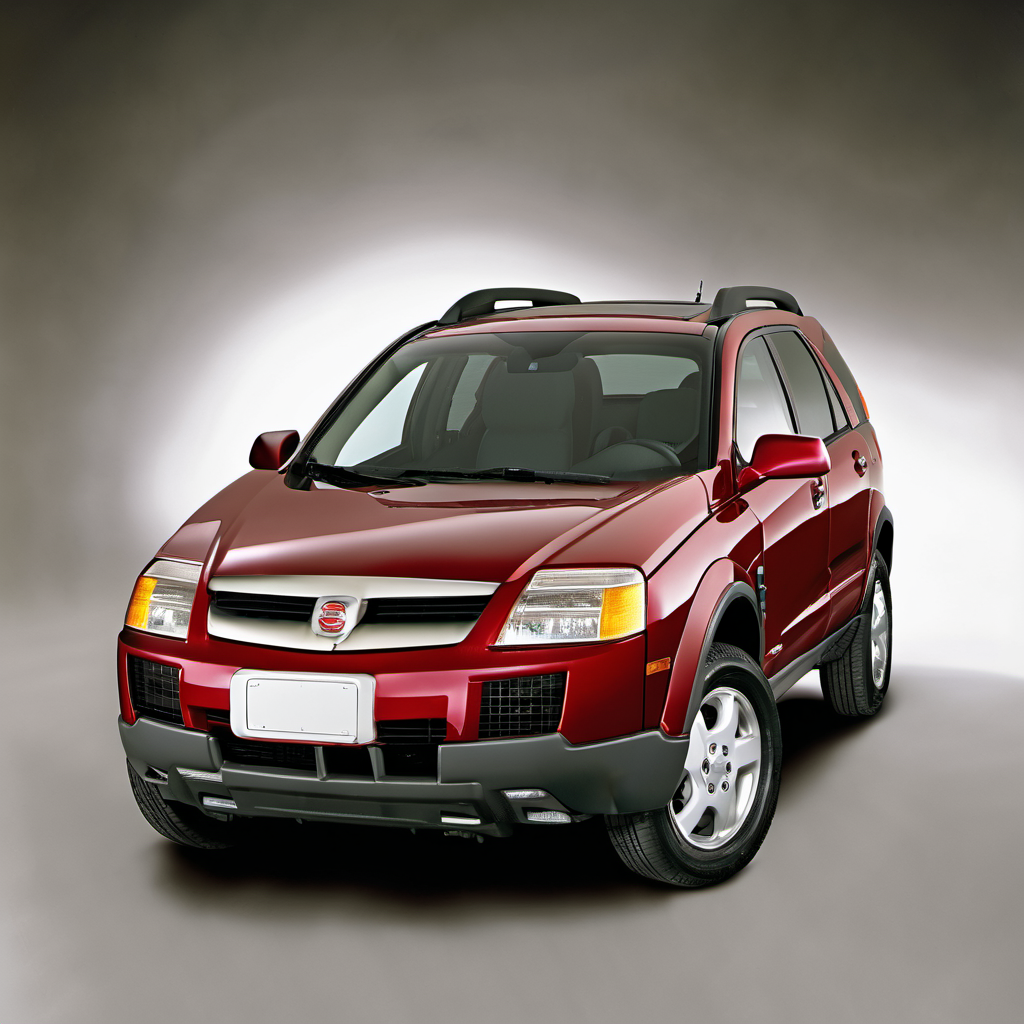
2004 Saturn VUE SUV

2004 Saturn

VUESUV

SUV

The 2004 Saturn VUE is a compact SUV built on GM's Delta platform and sold through Saturn dealerships before the brand's 2010 closure. It was one of the first compact SUVs from GM designed from the ground up with car-based unibody construction, giving it a more carlike ride than traditional truck-based SUVs of the era. The 2004 model year offered a 2.2L Ecotec four-cylinder as the base engine and an optional Honda-sourced 3.5L V6. The four-cylinder was paired with either a five-speed manual or an unusual continuously variable transmission (CVT), while the V6 used a five-speed automatic. FWD was standard; AWD was available on V6 models. By 2004, Saturn had built a loyal following for no-haggle pricing and friendly service, but the VUE's long-term ownership record is mixed. The CVT in particular developed a reputation for expensive failures, and parts availability has thinned considerably now that Saturn is defunct. Budget accordingly.

Reliability
2/5
Verified data
Specs shown for Vue FWD — the most common configuration. Other trims may vary in engine, drivetrain, or fuel economy. Sign in to see your vehicle's exact specs.
Engine
[object Object]
Drivetrain
FWD
Fuel
Gasoline
MPG
19 city / 26 hwy / 22 combined
Seats
Doors
Body
Sport Utility Vehicle - 2WD

Overview

AI-curated

The 2004 Saturn VUE is a compact SUV built on GM's Delta platform and sold through Saturn dealerships before the brand's 2010 closure. It was one of the first compact SUVs from GM designed from the ground up with car-based unibody construction, giving it a more carlike ride than traditional truck-based SUVs of the era. The 2004 model year offered a 2.2L Ecotec four-cylinder as the base engine and an optional Honda-sourced 3.5L V6. The four-cylinder was paired with either a five-speed manual or an unusual continuously variable transmission (CVT), while the V6 used a five-speed automatic. FWD was standard; AWD was available on V6 models. By 2004, Saturn had built a loyal following for no-haggle pricing and friendly service, but the VUE's long-term ownership record is mixed. The CVT in particular developed a reputation for expensive failures, and parts availability has thinned considerably now that Saturn is defunct. Budget accordingly.

Known for
  • Carlike unibody ride quality for a compact SUV
  • Base 2.2L Ecotec four-cylinder shared with many GM platforms
  • Notoriously fragile CVT transmission on 4-cylinder models
  • Discontinued brand making parts sourcing harder over time
  • Practical cargo area and reasonable fuel economy for the era
Best for
  • Budget-conscious buyers who want a small SUV for light-duty use
  • City and suburban commuters who don't need AWD
  • Owners comfortable with DIY maintenance on aging GM platforms
  • Short-to-medium term transportation at low purchase price
Watch for
  • CVT transmission failure — often catastrophic and expensive
  • Rust on rocker panels, frame rails, and wheel arches from road salt
  • Discontinued brand means some parts are dealer-only or NLA
  • Timing chain stretch on high-mileage 2.2L Ecotec engines
  • Weak power steering pump and rack issues at higher mileage

Common issues by mileage

6 known

CVT Transmission Failure

high
Typically appears
60–120k mi
Estimated repair
$2,500 – $5,500

Timing Chain Stretch / Camshaft Position Fault

medium
Typically appears
80–150k mi
Estimated repair
$600 – $1,400

Oxygen Sensor / Heater Circuit Failure

medium
Typically appears
70–120k mi
Estimated repair
$150 – $400

Power Steering Rack Leak or Failure

medium
Typically appears
90–150k mi
Estimated repair
$500 – $1,100

Rocker Panel and Underbody Rust

high
Typically appears
Any mileage on salt-exposed vehicles
Estimated repair
$400 – $2,500

Intake Valve Control Solenoid / VVT Solenoid Fault

low
Typically appears
80–130k mi
Estimated repair
$200 – $600

Maintenance schedule

  1. 1
    Every 5,000 miles or 6 months — whichever comes first Engine oil and filter change

    The 2.2L Ecotec's timing chain and VVT system are oil-pressure sensitive. Dirty or low oil accelerates chain stretch and can trigger camshaft position codes. Use the manufacturer-specified viscosity.

  2. 2
    Every 40,000–50,000 miles, or immediately if shuddering or slipping is noticed CVT fluid inspection and change

    The CVT on 4-cylinder VUEs is the single biggest reliability liability. Fresh fluid won't save a failing unit, but neglected fluid dramatically shortens CVT life. Use only GM-specified CVT fluid.

  3. 3
    Every 5 years or 60,000 miles Coolant flush

    Degraded coolant causes internal corrosion and thermostat issues. The 2.2L Ecotec is prone to coolant system leaks as hoses and the water pump age.

  4. 4
    Every 3 years regardless of mileage Brake fluid flush

    Wisconsin winters accelerate moisture absorption in brake fluid, lowering boiling point and promoting internal ABS module corrosion.

  5. 5
    Every fall before winter season Undercarriage rust inspection and treatment

    Road salt in Lake Geneva area is hard on rocker panels, subframe, and brake lines on vehicles this age. Catching rust early is far cheaper than structural repair.

  6. 6
    Every 60,000 miles or at first sign of squealing Serpentine belt and tensioner inspection

    Belt-driven accessories are critical on the 2.2L. A failed tensioner can leave you stranded; replacement is inexpensive when caught early.

  7. 7
    Every fall before temperatures drop below freezing Battery load test

    Cold cranking amps drop sharply in sub-zero starts. A battery that tests fine in October may fail to start the car in January. Batteries on vehicles this age are often overdue.

  8. 8
    Every 7,500 miles Tire rotation and brake inspection

    FWD vehicles wear front tires faster. Even rotation extends tire life and gives the tech a chance to catch caliper slide pin corrosion, which is common on salt-belt vehicles.

Always defer to the manufacturer's service manual for warranty-mandated intervals.

Cost of ownership

Annual maintenance
$700 – $1,800
Fuel
At 22 MPG combined and typical Wisconsin driving, expect roughly $1,800–$2,400/year at current fuel prices, depending on mix of city and highway use.
Insurance
Generally low — compact SUV with modest power and low market value typically runs $900–$1,400/year for full coverage in southern Wisconsin, depending on driving record and zip code.

At this age and price point, the VUE can be cheap to own day-to-day — until it isn't. Routine maintenance is affordable, and the Ecotec engine shares parts with many other GM vehicles. The catastrophic risk is the CVT: if it hasn't been replaced or inspected recently, budget $2,500–$5,500 as a potential near-term expense. Rust remediation on a Wisconsin example can also add up quickly. Know your exit number before buying.
Seasonal care

Lake Geneva, WI
Winter
  • Load-test the battery every fall — sub-zero starts on a weak battery are a common no-start call in January.
  • Switch to winter-grade windshield washer fluid rated to at least -20°F; the standard reservoir and lines can freeze solid.
  • Inspect and replace wiper blades with winter-specific blades before first snowfall; the VUE's flat hood gives them little protection.
  • Flush and inspect brake lines and rubber hoses — this vehicle is old enough that salt-corroded brake lines are a real safety hazard.
  • Rinse the undercarriage thoroughly after every heavy salt event; focus on rocker panels and rear wheel arches where mud packs and holds moisture.
  • Verify heat output and check the thermostat — a stuck-open thermostat means the cabin never warms up and the engine runs cold, accelerating wear.
Summer
  • Check tire pressure monthly — pressure drops roughly 1 PSI for every 10°F temperature swing, and underinflated FWD tires wear unevenly on the front axle.
  • Inspect the A/C system for refrigerant charge and condenser fin damage; the VUE's condenser sits low and is vulnerable to road debris.
  • Check coolant level and look for weeping from hoses, the water pump, and the reservoir — heat soak in stop-and-go traffic stresses a marginal cooling system.
  • Inspect the CVT fluid for discoloration or burnt smell after highway runs; overheating is a known CVT killer in warm weather with heavy loads.

Comparable vehicles

If you're shopping for one

Red flags
  • Any CVT shudder, slip, or hesitation under load — walk away unless priced to reflect imminent transmission replacement.
  • Rust perforations on rocker panels or visible holes in the subframe — structural rust is a safety issue and rarely worth repairing on a vehicle this value.
  • P0012 or P0015 codes present without a recent timing chain service — indicates possible chain stretch from neglected oil changes.
  • Missing service records on a vehicle this age — the CVT especially needs documented fluid changes to have any confidence in its remaining life.
  • Evidence of coolant leaks (white residue around hoses, low reservoir) without a clear recent repair — the 2.2L can develop head gasket issues if overheated.
  • Saturn brand is defunct: walk away from any seller claiming 'dealer warranty' or 'OEM parts available' without verification.
What to inspect
  • CVT operation: drive it at highway speed and listen for slipping, shuddering, or whining — any of these means CVT replacement is imminent.
  • Check for CVT fluid on the dipstick: burnt smell or dark color is a red flag.
  • Scan for stored and pending DTCs before purchase — camshaft position codes (P0012, P0015) or VVT solenoid codes signal neglected oil changes or timing chain wear.
  • Lift the vehicle and inspect rocker panels, rear wheel arches, and brake lines for rust perforation — not just surface rust.
  • Check all four corners of the subframe and front cradle mounts for rust-through; structural rust can make the vehicle unsafe.
  • Run the A/C, heat, and all power accessories — window regulators and blower motors are age-related failure points.
  • Verify the engine doesn't consume oil between changes; the 2.2L Ecotec can develop oil consumption issues at higher mileage.
AI profile generated 11 days ago · claude-sonnet-4-6 · v2.