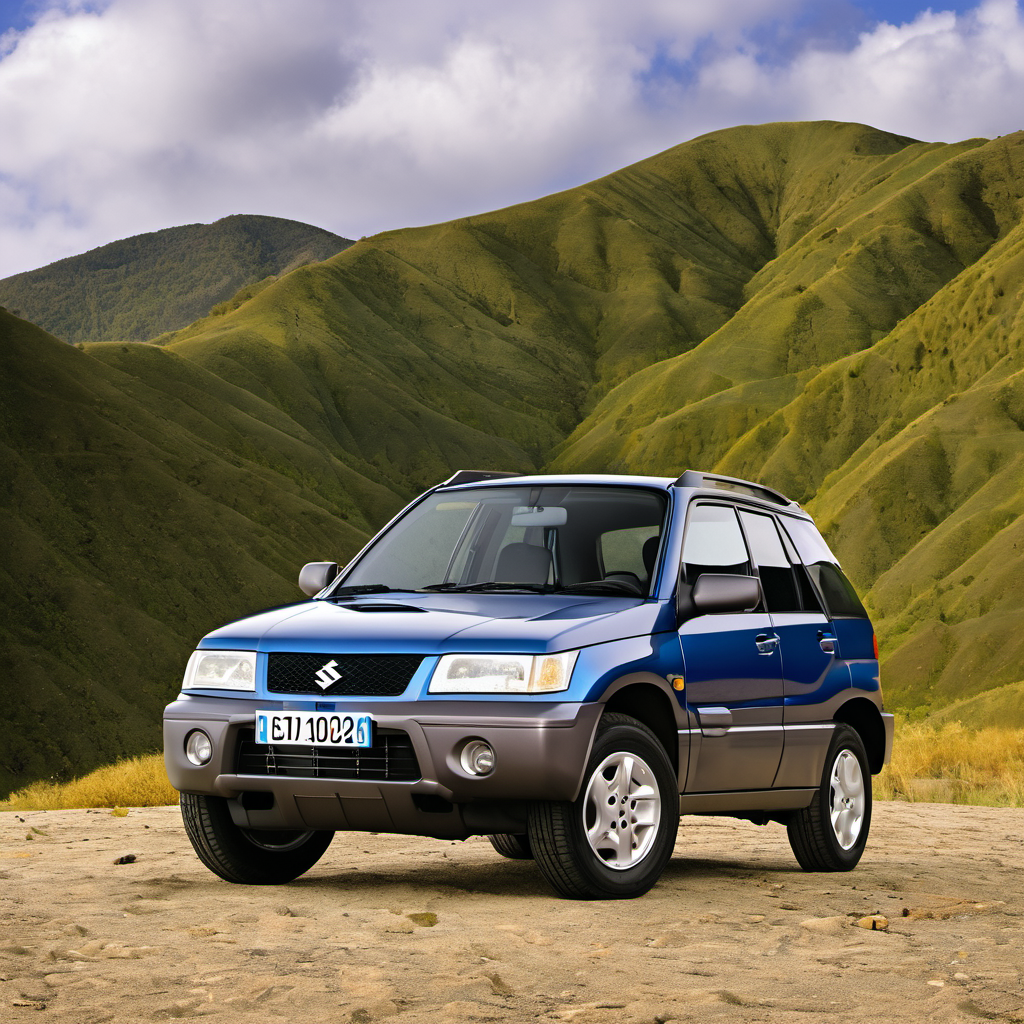
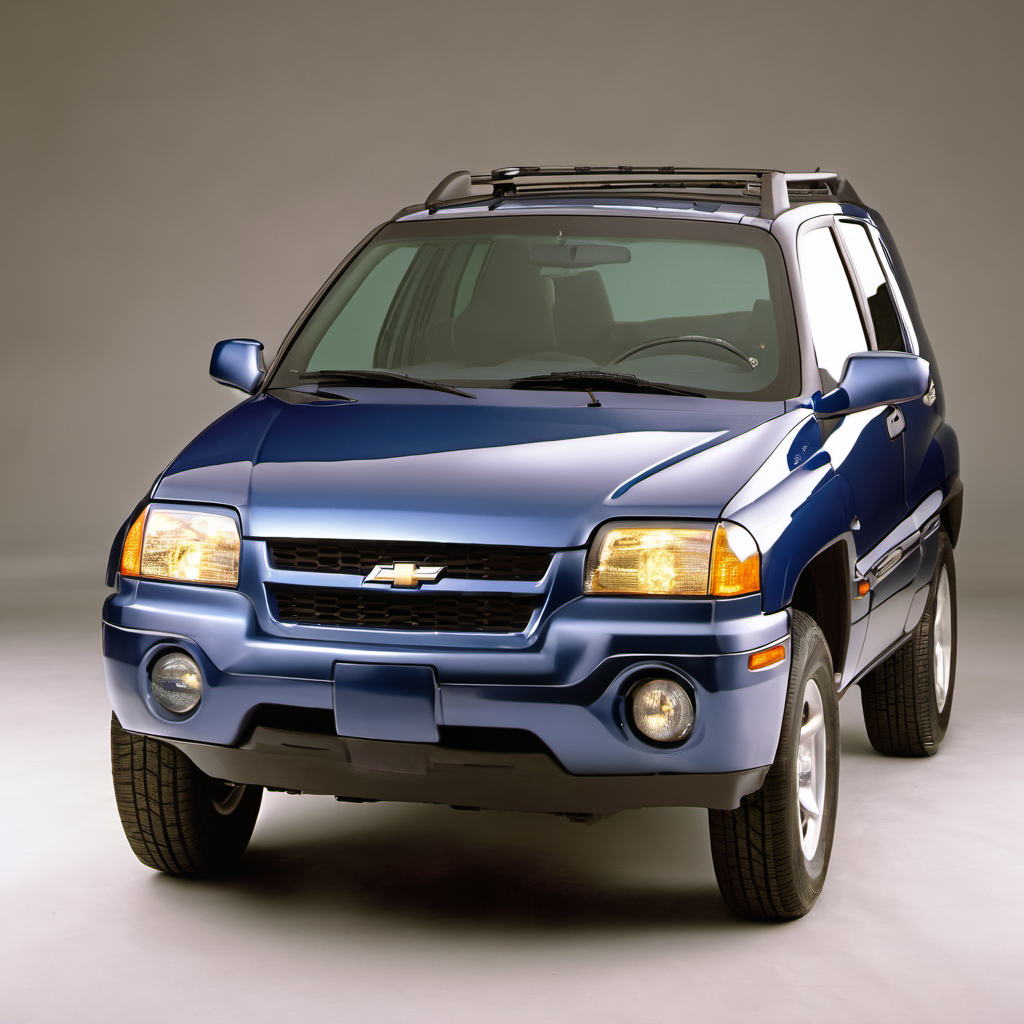
2002 Suzuki Vitara SUV

2002 Suzuki

VitaraSUV

SUV

The 2002 Suzuki Vitara is a compact, body-on-frame SUV that carried over Suzuki's long tradition of affordable, right-sized off-roaders into the early 2000s. It shares its platform with the Chevrolet Tracker and was sold in both two- and four-door versions. The 2.0L four-cylinder with a 4-speed automatic (or 5-speed manual) made it peppy enough for daily driving and light trails, though it was never meant to compete with full-size truck-based SUVs. At over 20 years old, surviving Vitaras are aging vehicles that need careful scrutiny. Rust is the dominant concern in the upper Midwest — salt exposure attacks the frame, floor pans, and brake lines hard. Parts availability has thinned considerably since Suzuki exited the U.S. market in 2012, so sourcing components can take time. For the right buyer — someone who wants a small, maneuverable SUV for light off-roading or a second vehicle on a tight budget — a well-maintained, rust-free example can still be a reasonable buy. Go in with eyes open on the rust situation and plan for higher-than-average parts hunting time.

Reliability
3/5
Verified data
Specs shown for Vitara 2Door — the most common configuration. Other trims may vary in engine, drivetrain, or fuel economy. Sign in to see your vehicle's exact specs.
Engine
[object Object]
Drivetrain
RWD
Fuel
Gasoline
MPG
20 city / 23 hwy / 21 combined
Seats
Doors
Body
Sport Utility Vehicle - 2WD

Overview

AI-curated

The 2002 Suzuki Vitara is a compact, body-on-frame SUV that carried over Suzuki's long tradition of affordable, right-sized off-roaders into the early 2000s. It shares its platform with the Chevrolet Tracker and was sold in both two- and four-door versions. The 2.0L four-cylinder with a 4-speed automatic (or 5-speed manual) made it peppy enough for daily driving and light trails, though it was never meant to compete with full-size truck-based SUVs. At over 20 years old, surviving Vitaras are aging vehicles that need careful scrutiny. Rust is the dominant concern in the upper Midwest — salt exposure attacks the frame, floor pans, and brake lines hard. Parts availability has thinned considerably since Suzuki exited the U.S. market in 2012, so sourcing components can take time. For the right buyer — someone who wants a small, maneuverable SUV for light off-roading or a second vehicle on a tight budget — a well-maintained, rust-free example can still be a reasonable buy. Go in with eyes open on the rust situation and plan for higher-than-average parts hunting time.

Known for
  • Compact, easy-to-park footprint
  • Capable part-time 4WD system for light trail use
  • Shared platform and some parts with Chevrolet Tracker
  • Simple mechanicals that are straightforward to work on
Best for
  • Budget-conscious buyers wanting a small 4WD SUV
  • Light off-road and gravel road use
  • Urban drivers who want occasional trail capability
  • Second or spare vehicle on a modest maintenance budget
Watch for
  • Frame and floor pan rust — critical concern in Wisconsin
  • Declining parts availability post-2012 Suzuki U.S. exit
  • Aging rubber: seals, hoses, and weatherstripping crack badly at this age
  • Transfer case and front differential wear on high-mileage examples
  • Weak crash-safety ratings by modern standards

Common issues by mileage

6 known

Frame and undercarriage rust

high
Typically appears
Any mileage, age-driven
Estimated repair
$500 – $3,000

Brake line corrosion and failure

high
Typically appears
Any mileage, age-driven
Estimated repair
$300 – $900

Oxygen sensor failure / heater circuit fault

medium
Typically appears
80k–150k mi
Estimated repair
$150 – $400

Transfer case shift motor or vacuum lines leaking

medium
Typically appears
80k–130k mi
Estimated repair
$200 – $700

Aging coolant hoses and thermostat housing leaks

medium
Typically appears
60k–120k mi
Estimated repair
$100 – $350

Wheel bearing wear (front and rear)

medium
Typically appears
90k–150k mi
Estimated repair
$200 – $500

Maintenance schedule

  1. 1
    Every 5,000 miles or 6 months Engine oil and filter change

    The 2.0L I4 depends on clean oil. At this vehicle's age, more frequent changes help catch early signs of sludge or internal wear.

  2. 2
    Every spring after winter season Full undercarriage inspection for rust

    Road salt in Wisconsin is brutal. Check frame rails, floor pans, brake lines, and fuel lines every spring — catching surface rust before it becomes structural saves thousands.

  3. 3
    Annually Brake line and fuel line inspection

    Steel lines on a 20+ year old vehicle in the salt belt corrode from the outside in. A pinhole brake line failure is a safety emergency.

  4. 4
    Every 2 years or 30,000 miles Coolant flush and thermostat inspection

    Old coolant loses its anti-corrosion additives and can attack the aluminum components. Fresh coolant also protects against Wisconsin's sub-zero winters.

  5. 5
    Every 30,000 miles Transfer case fluid change

    The part-time 4WD system relies on clean fluid. Neglected fluid leads to premature wear in the transfer case and front differential.

  6. 6
    Every 60,000 miles or 5 years Timing belt replacement

    The 2.0L I4 is an interference engine. A broken timing belt causes catastrophic engine damage. If interval history is unknown, replace it before driving.

  7. 7
    Every fall before winter Battery test and terminal cleaning

    Cold cranking capacity drops sharply in sub-zero temps. A marginal battery that starts fine in October will leave you stranded in January in Lake Geneva.

  8. 8
    Every 2–3 years Inspect and replace rubber seals, hoses, and weatherstripping

    At 20+ years, all original rubber is suspect. Cracked hoses cause coolant leaks; failed door seals let water into the cabin and accelerate floor pan rust.

Always defer to the manufacturer's service manual for warranty-mandated intervals.

Cost of ownership

Annual maintenance
$600 – $1,800
Fuel
At ~21 MPG combined and typical driving of 12,000 miles/year, expect roughly $1,700–$2,100/year in fuel at current Wisconsin gas prices.
Insurance
Typically low — older compact SUV with modest book value. Expect $600–$1,000/year for full coverage depending on driver profile, though liability-only on a vehicle this age is common.

Day-to-day costs are modest when the vehicle is rust-free and well-maintained. The wild card is deferred maintenance catch-up on a 20+ year old vehicle — budget $1,500–$3,000 in the first year if service history is unknown. Parts can carry a premium due to limited availability after Suzuki's U.S. exit.
Seasonal care

Lake Geneva, WI
Winter
  • Test the battery every fall — cold cranking amps drop fast below 0°F and this vehicle has no cold-start margin to spare.
  • Switch to a full synthetic 5W-30 oil if not already using one; it flows better on sub-zero starts and reduces cold-start wear.
  • Flush wiper fluid reservoir and refill with a -40°F rated fluid; the stock reservoir has no heater and standard fluid freezes in the nozzles.
  • Inspect and treat the undercarriage with a rust inhibitor before first snowfall; road salt is the number-one killer of Vitaras in Wisconsin.
  • Check 4WD engagement before winter — you don't want to discover the transfer case won't shift when you're already stuck.
  • Verify heater core function and blower motor — cabin heat is safety equipment at -15°F, not a comfort item.
Summer
  • Check tire pressure monthly; heat causes pressure to rise and the Vitara's small tires are sensitive to over-inflation wear.
  • Inspect the A/C system for refrigerant leaks — seals on a 20-year-old system are prone to slow leaks, and recharging without fixing the leak is a short-term fix only.
  • Check coolant concentration with a test strip to confirm freeze/boil protection is in range; summer heat soak on a small SUV engine can push temps up quickly.
  • Inspect the radiator and cooling fan operation after winter; road debris and salt residue can clog the radiator fins and reduce airflow.

Comparable vehicles

If you're shopping for one

Red flags
  • Any visible rust penetrating the frame rails or floor pans — this is a dealbreaker in a Wisconsin context.
  • Soft or spongy brake pedal — a sign of compromised brake lines, which are a common failure point at this age.
  • Unknown timing belt history on a high-mileage example — interference engine damage is expensive and common when this is skipped.
  • 4WD that won't engage or makes grinding noise — transfer case repairs on this vehicle are increasingly difficult due to parts scarcity.
  • Strong coolant smell inside the cabin — can indicate a leaking heater core, which is a significant labor job on this platform.
  • Milky or frothy oil on the dipstick — potential head gasket failure, which can be costly relative to the vehicle's value.
What to inspect
  • Crawl underneath before anything else — inspect frame rails, floor pans, brake lines, and fuel lines for rust perforation, not just surface rust.
  • Verify the timing belt has been replaced within the last 60,000 miles or 5 years; ask for documentation. If unknown, walk away or factor in immediate replacement cost.
  • Test 4WD engagement in both 4-High and 4-Low — listen for grinding or refusal to shift, which signals transfer case or front differential problems.
  • Check for coolant leaks around the thermostat housing and at hose connections; look for white residue or staining.
  • Inspect all door seals and the spare tire well for signs of water intrusion — wet carpet accelerates floor pan rust from the inside.
  • Have a shop pull any stored DTCs before purchase; oxygen sensor and camshaft timing codes on a high-mileage example can indicate bigger issues.
AI profile generated 13 days ago · claude-sonnet-4-6 · v2.