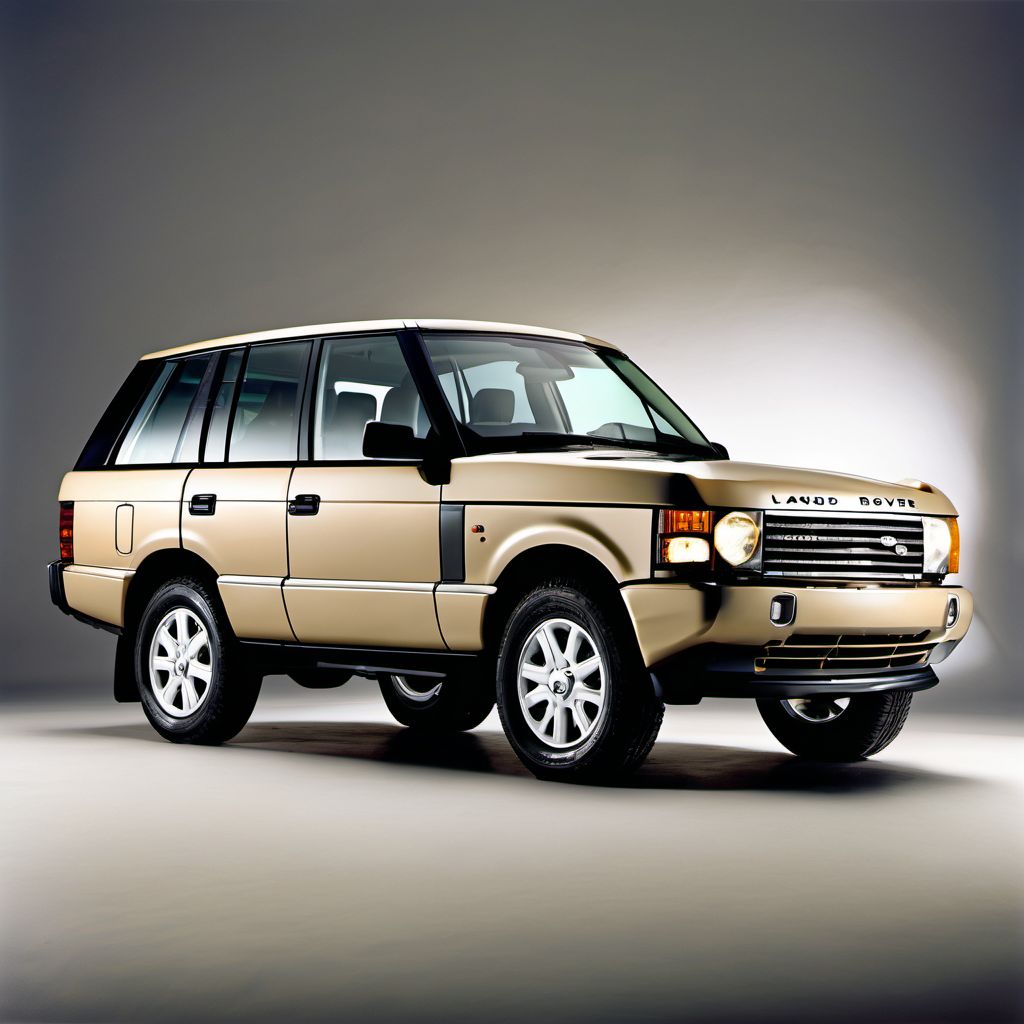
2000 Land Rover Range Rover SUV

2000 Land Rover

Range RoverSUV

SUV

The 2000 Range Rover (P38A generation, 1994–2002) is the second-generation Range Rover, a vehicle that set the template for luxury SUVs well before the category existed. It combines genuine off-road capability — low-range transfer case, locking center differential, and air suspension — with a wood-and-leather interior. At 25 years old, it is now firmly a collector/enthusiast vehicle rather than a daily driver, and it demands owners who understand that reality. The 4.0L V8 in this truck is the Rover V8 (a long-running aluminum-block engine with roots going back to Buick), mated to a ZF 4-speed automatic and permanent AWD. On paper it's capable; in practice these engines are sensitive to overheating and require clean, frequent oil changes to avoid sludging. Owning a P38 Range Rover is rewarding when it's running right and deeply frustrating when it isn't. The air suspension, BECM (Body Electrical Control Module), and EAS (Electronic Air Suspension) system are the three pillars of pain. Budget accordingly, find a Land Rover specialist, and you'll have one of the most distinctive vehicles on the road in Lake Geneva.

Reliability
2/5
Verified data
Specs shown for Range Rover — the most common configuration. Other trims may vary in engine, drivetrain, or fuel economy. Sign in to see your vehicle's exact specs.
Engine
[object Object]
Drivetrain
AWD
Fuel
Premium gasoline
MPG
12 city / 16 hwy / 13 combined
Seats
Doors
Body
Sport Utility Vehicle - 4WD

Overview

AI-curated

The 2000 Range Rover (P38A generation, 1994–2002) is the second-generation Range Rover, a vehicle that set the template for luxury SUVs well before the category existed. It combines genuine off-road capability — low-range transfer case, locking center differential, and air suspension — with a wood-and-leather interior. At 25 years old, it is now firmly a collector/enthusiast vehicle rather than a daily driver, and it demands owners who understand that reality. The 4.0L V8 in this truck is the Rover V8 (a long-running aluminum-block engine with roots going back to Buick), mated to a ZF 4-speed automatic and permanent AWD. On paper it's capable; in practice these engines are sensitive to overheating and require clean, frequent oil changes to avoid sludging. Owning a P38 Range Rover is rewarding when it's running right and deeply frustrating when it isn't. The air suspension, BECM (Body Electrical Control Module), and EAS (Electronic Air Suspension) system are the three pillars of pain. Budget accordingly, find a Land Rover specialist, and you'll have one of the most distinctive vehicles on the road in Lake Geneva.

Known for
  • Genuine off-road capability with luxury interior
  • Distinctive styling that still turns heads
  • Air suspension delivering a supple, car-like ride on-road
  • Rover 4.0L aluminum V8 — smooth but fragile when neglected
Best for
  • Enthusiasts who enjoy wrenching or have a trusted specialist
  • Light to moderate off-road use (trails, snow, unpaved roads)
  • Buyers who want a classic luxury SUV at a fraction of original MSRP
  • Weekend/secondary vehicle duty rather than sole daily driver
Watch for
  • Air suspension compressor and bag failures — very common and expensive
  • BECM (Body Electrical Control Module) failures that can leave the vehicle stranded
  • Rover V8 head gasket failure, especially if the truck has ever overheated
  • Chronic electrical gremlins — windows, sunroof, seat modules
  • Rust on frame, undercarriage, and body sills from road salt exposure

Common issues by mileage

6 known

BECM (Body Electrical Control Module) Failure

high
Typically appears
Any mileage — age-related
Estimated repair
$400 – $1,200

Rover V8 Head Gasket Failure

medium
Typically appears
80k–130k mi
Estimated repair
$1,500 – $3,500

Oxygen Sensor / O2 Sensor Heater Circuit Faults

medium
Typically appears
60k–120k mi
Estimated repair
$150 – $450

Electrical Gremlins (Windows, Seats, Sunroof Modules)

high
Typically appears
Any mileage — age-related
Estimated repair
$200 – $1,000

CAN Bus / Module Communication Faults

medium
Typically appears
Any mileage — age/corrosion related
Estimated repair
$300 – $1,500

Maintenance schedule

  1. 1
    Every 5,000 miles or 6 months Oil and filter change — use full synthetic 10W-40 or manufacturer-specified weight

    The Rover V8 aluminum block sludges badly with extended intervals. This is the single most important thing you can do to keep this engine alive.

  2. 2
    Every 30,000 miles Coolant flush and thermostat inspection

    The Rover V8 is extremely sensitive to overheating. A failing thermostat or degraded coolant is a fast path to head gasket failure.

  3. 3
    Every 2 years or as needed EAS system inspection — check compressor, air lines, and bag condition

    Air lines crack with age and Wisconsin freeze-thaw cycles. Early detection prevents a full system replacement.

  4. 4
    Every fall (pre-winter) Undercarriage wash and corrosion inspection

    Road salt in the Lake Geneva area accelerates rust on frame rails, sill panels, and brake lines. Address surface rust before it becomes structural.

  5. 5
    Every 60,000 miles Spark plugs, plug wires, and distributor cap replacement

    Ignition components on the Rover V8 are tucked in tight and degrade with heat cycles. Misfires stress the catalytic converters and can mask other issues.

  6. 6
    Every 30,000 miles Transfer case and differential fluid service

    This truck has a center differential and low-range transfer case. Neglected gear oil turns acidic and accelerates wear in the diffs and transfer case.

  7. 7
    Every fall (pre-winter) Battery load test and terminal cleaning

    The BECM is sensitive to low voltage. A weak battery in sub-zero starts can trigger false fault codes or cause the BECM to lock the vehicle.

  8. 8
    Every 2 years Brake fluid flush

    Hygroscopic fluid absorbs moisture over time; in Wisconsin winters this lowers the boiling point and promotes corrosion in the ABS modulator.

Always defer to the manufacturer's service manual for warranty-mandated intervals.

Cost of ownership

Annual maintenance
$1,500 – $4,500
Fuel
Premium fuel is recommended for the Rover V8. At 13 MPG combined and Lake Geneva driving, expect $3,000–$4,500/year at current fuel prices depending on mileage.
Insurance
Typically moderate — these trucks have low replacement values now, but specialty/agreed-value coverage may be worth exploring for a well-kept example.

The P38 Range Rover is cheap to buy and expensive to own. Routine maintenance costs are manageable, but this truck rarely goes a full year without an unplanned repair. Budget $1,500–$2,500/year for routine upkeep and keep a separate $1,500–$2,000 emergency repair fund. A major event (head gaskets, air suspension rebuild, BECM replacement) can push a single-year bill past $4,000 at an independent shop.

Seasonal care

Lake Geneva, WI
Winter
  • Load-test the battery every fall — the BECM is voltage-sensitive and a dying battery in sub-zero temps can trigger module faults or lock the vehicle entirely.
  • Switch to a full synthetic engine oil rated for sub-zero starts (e.g., 5W-40 full synthetic) before temperatures drop below 10°F.
  • Inspect all EAS air lines and compressor before winter. Cold temps cause cracked lines to fail faster, and the compressor works harder in the cold.
  • Flush washer fluid to a -30°F or lower rated formula — the P38 has a large windshield and forward-swept wipers that ice up fast.
  • After every road-salt exposure, rinse the undercarriage. Frame rails, brake lines, and sill panels are rust-prone and road salt in Wisconsin winters will accelerate deterioration significantly.
  • Keep at least a half tank of fuel to prevent fuel line freeze and reduce condensation in the tank.
Summer
  • Monitor the temperature gauge closely — the Rover V8 does not tolerate overheating. Pull over immediately if the gauge climbs above normal.
  • Check A/C refrigerant charge and cabin filter before summer. The P38 A/C is a known trouble spot and a failed system makes a hot, heavy truck miserable.
  • Check tire pressures monthly — heat causes pressure to rise roughly 1 PSI per 10°F increase in ambient temperature, and these trucks run large, heavy tires.
  • Inspect the coolant overflow reservoir and hoses for cracking — heat cycles age rubber quickly on 20+ year-old hoses.

Comparable vehicles

If you're shopping for one

Red flags
  • Any sign of coolant in the oil (milky dipstick) or white exhaust smoke — likely head gasket failure on the Rover V8.
  • Truck sitting low on one corner or all corners at startup — EAS compressor or bags are failing.
  • No service records. This truck needs documented, frequent oil changes to survive. No records = assume the worst.
  • BECM fault lights or multiple simultaneous warning lights — could indicate a failing BECM, which is expensive and sometimes requires dealer-level programming.
  • Rust on the sill panels, frame rails, or around the rear wheel arches — these are common rust zones and repairs are labor-intensive.
  • Engine hesitation, rough idle, or misfires — could be head gaskets, ignition wear, or fuel delivery issues, all of which compound on a neglected example.
What to inspect
  • Cold start: observe ride height leveling, listen for air compressor running longer than 30 seconds (indicates leaks).
  • Full cooling system: hoses, overflow tank, thermostat housing — look for any signs of seepage or residue around the head gasket area.
  • All four air suspension corners with a bounce test and a visual on the rubber bags for cracking.
  • Undercarriage for rust on brake lines, frame, and fuel lines — pay special attention if the truck has lived in the upper Midwest or Northeast.
  • All power accessories: windows, sunroof, heated seats, mirrors — budget for at least one module failure if any are non-functional.
  • Have a Land Rover-capable scan tool (not a generic OBD2 reader) pulled on all modules before purchase — hidden body/chassis codes are common.
AI profile generated 4 days ago · claude-sonnet-4-6 · v2.