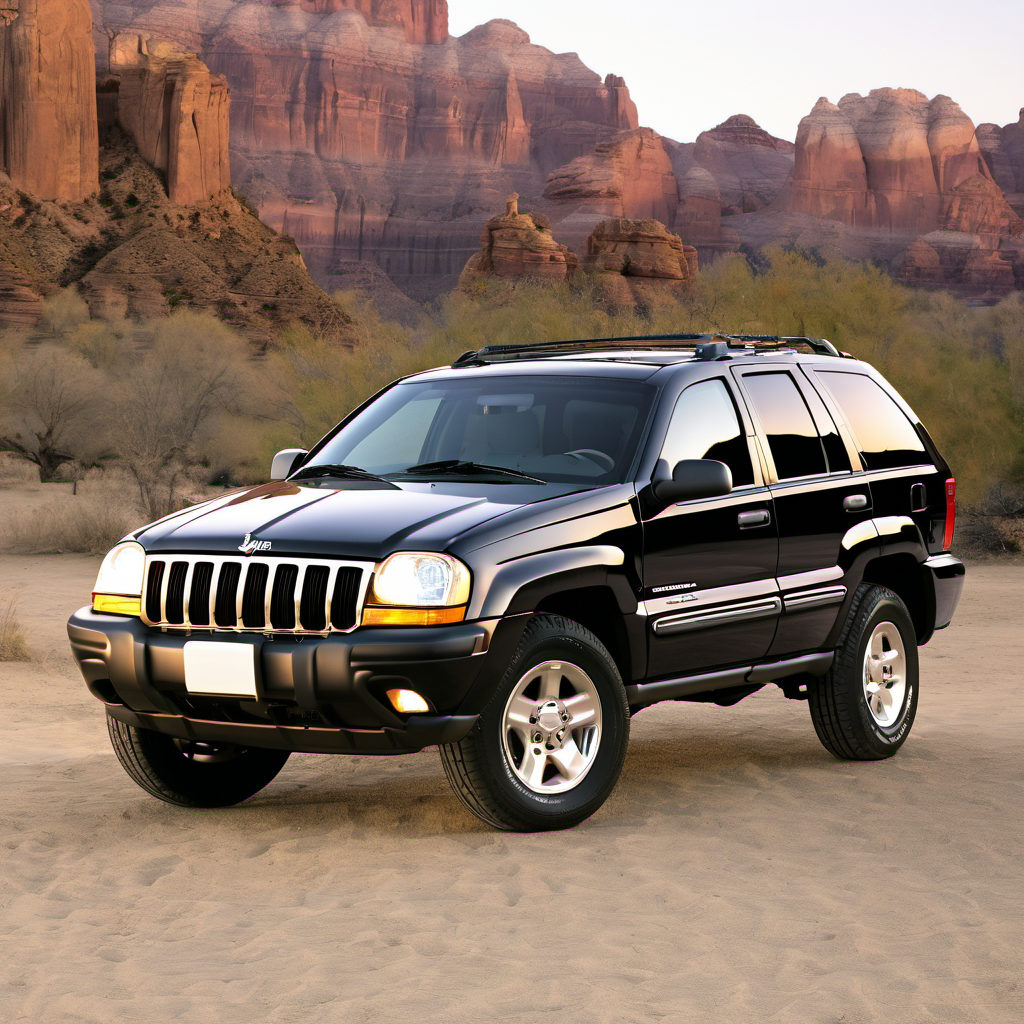
2001 Land Rover Discovery Series II SUV

2001 Land Rover

Discovery Series IISUV

4.0L V8 · SUV

The 2001 Land Rover Discovery Series II is a body-on-frame, four-wheel-drive mid-size SUV built in Solihull, England. It carried over Land Rover's proven 4.0L Rover V8 paired with a permanent four-wheel-drive system and coil-spring suspension at all four corners — genuine off-road hardware in a family-friendly package. Seven-seat capacity and a tall, upright cabin made it practical for larger families or adventure-minded buyers. On paper the Disco II checks a lot of boxes: true low-range 4WD, impressive ground clearance, a commanding view of the road, and a character few vehicles can match. In practice, the Series II era (1999–2004) is widely regarded as Land Rover's most problematic modern generation. Electrical gremlins, cooling system failures, and rust in the chassis frame are recurring themes across owner communities. For a Lake Geneva buyer, the combination of Wisconsin road salt and the Disco II's known rust vulnerabilities is a serious concern. This vehicle rewards meticulous preventive maintenance and punishes neglect harshly. It is best suited to enthusiasts willing to wrench, budget generously for upkeep, and accept that something will always need attention.

Reliability
2/5
Verified data
Engine
4.0L V8
Drivetrain
4WD
Fuel
Gasoline
MPG
12 city / 16 hwy / 13 combined
Seats
7
Doors
5
Body
SUV
MSRP
$36,500

Overview

AI-curated

The 2001 Land Rover Discovery Series II is a body-on-frame, four-wheel-drive mid-size SUV built in Solihull, England. It carried over Land Rover's proven 4.0L Rover V8 paired with a permanent four-wheel-drive system and coil-spring suspension at all four corners — genuine off-road hardware in a family-friendly package. Seven-seat capacity and a tall, upright cabin made it practical for larger families or adventure-minded buyers. On paper the Disco II checks a lot of boxes: true low-range 4WD, impressive ground clearance, a commanding view of the road, and a character few vehicles can match. In practice, the Series II era (1999–2004) is widely regarded as Land Rover's most problematic modern generation. Electrical gremlins, cooling system failures, and rust in the chassis frame are recurring themes across owner communities. For a Lake Geneva buyer, the combination of Wisconsin road salt and the Disco II's known rust vulnerabilities is a serious concern. This vehicle rewards meticulous preventive maintenance and punishes neglect harshly. It is best suited to enthusiasts willing to wrench, budget generously for upkeep, and accept that something will always need attention.

Known for
  • Genuine off-road capability with factory low-range and center diff lock
  • Iconic tall-roofed, three-row SUV design with optional rear-facing jump seats
  • Rover 4.0L V8 with a reputation for overheating if cooling system is not maintained
  • Complex and often unreliable British electrical systems
  • High ownership costs relative to Japanese and American competitors
Best for
  • Off-road enthusiasts who maintain their vehicles religiously
  • Buyers who want a capable overlanding platform and can do some of their own work
  • Collectors or hobbyists who appreciate classic British 4x4s
  • Owners with access to a Land Rover–familiar independent mechanic
Watch for
  • Head gasket failure and chronic overheating — the single biggest risk on the 4.0L V8
  • Frame and chassis rust, especially critical on Wisconsin salt roads
  • ACE (Active Cornering Enhancement) hydraulic system failures — expensive to repair
  • Corroded and brittle wiring harnesses causing cascading electrical faults
  • Brittle plastic coolant pipes that crack and cause sudden coolant loss

Common issues by mileage

6 known

Head Gasket Failure / Overheating (4.0L V8)

high
Typically appears
60–120k mi
Estimated repair
$1,800 – $3,500

Cracked / Failing Plastic Coolant Distribution Housing and Hoses

high
Typically appears
50–100k mi
Estimated repair
$300 – $800

ACE (Active Cornering Enhancement) Hydraulic System Failure

high
Typically appears
80–130k mi
Estimated repair
$800 – $2,500

Electrical Gremlins — Wiring Harness Corrosion and Connector Failure

high
Typically appears
Any mileage
Estimated repair
$200 – $1,500

Chassis / Frame Rust (Outriggers and Cross-Members)

high
Typically appears
Any mileage on salt roads
Estimated repair
$500 – $3,000

Rear Differential and Transfer Case Fluid Contamination / Failure

medium
Typically appears
80–150k mi
Estimated repair
$600 – $2,200

Maintenance schedule

  1. 1
    Every 30k mi or every 3 years — whichever comes first Cooling system inspection and full fluid/hose replacement

    The plastic coolant distribution housing and rubber hoses become brittle with age. A single coolant loss event can overheat and destroy the head gaskets on the 4.0L V8. Replace proactively, not reactively.

  2. 2
    Every 60k mi Thermostat replacement

    Thermostats on the Rover V8 are known to fail toward the closed position, trapping heat. Cheap insurance against the most expensive failure on this engine.

  3. 3
    Every 15k mi ACE fluid level and condition check

    The ACE hydraulic pump draws from a remote reservoir. Low or degraded fluid leads to pump failure and loss of the active suspension function. Catches leaks early.

  4. 4
    Every fall before Wisconsin winter Chassis and underbody rust inspection and treatment

    Road salt accelerates rust on the outriggers and cross-members. Annual inspection and application of a penetrating rust inhibitor on bare metal can add years to the chassis life.

  5. 5
    Every 30k mi Transfer case and differential fluid change

    The permanent 4WD system has multiple fluid-filled units. Contaminated fluid causes accelerated wear and eventual failure of expensive components.

  6. 6
    Every 2 years Brake fluid flush

    ABS and traction control sensors are already prone to faults on this generation. Moisture-laden brake fluid accelerates internal corrosion in ABS modulators and calipers.

  7. 7
    Every 30k mi Air filter and fuel filter replacement

    The V8 breathes hard under load. Restricted airflow contributes to higher combustion temps, which this engine does not tolerate well.

  8. 8
    Every 2 years Wiring harness and connector inspection (engine bay and under-vehicle)

    Corrosion at multi-plug connectors is a primary cause of the electrical faults this vehicle is notorious for. Cleaning and dielectric-greasing connectors prevents cascading module communication errors.

Always defer to the manufacturer's service manual for warranty-mandated intervals.

Cost of ownership

Annual maintenance
$1,500 – $4,000
Fuel
At 13 MPG combined and Wisconsin driving patterns, expect $2,800–$3,800/year at current fuel prices. Premium fuel is not required but some owners report improved knock behavior with it.
Insurance
Typically $900–$1,400/year for a 2001 model in Wisconsin depending on coverage level and driver history. Agreed-value coverage worth considering if the vehicle is well-maintained.

The Discovery Series II is an expensive vehicle to own relative to its current market value. Annual maintenance in a healthy year runs $1,500–$2,000 for routine items; in a problem year — a head gasket job, ACE pump, or wiring repair — costs can easily reach $4,000 or more at an independent shop. Budget a dedicated repair fund and do not let deferred maintenance accumulate.
Seasonal care

Lake Geneva, WI
Winter
  • Flush and refill coolant to the correct concentration (at minimum -34°F rated) before freeze season — the V8's thermal sensitivity makes a proper mix critical.
  • Inspect and treat all exposed chassis metal and frame outriggers with rust inhibitor before first salt application on roads.
  • Test the battery under load — cold cranking a 4.0L V8 at sub-zero temps will expose any weak battery. Replace if it tests below spec.
  • Switch to winter-rated washer fluid rated to at least -20°F; the tall windshield and exposed wiper arms make wiper function critical.
  • Verify that the 4WD low-range engages and disengages cleanly before winter arrives — frozen or stuck transfer case linkage is easier to address before the season.
  • Inspect door seals and rubber gaskets; standing water and salt can work into door cavities and accelerate interior rust and wiring corrosion.
Summer
  • Monitor coolant temperature gauge closely in stop-and-go traffic or while towing — pull over and shut down at the first sign of overheating to avoid head gasket damage.
  • Check tire pressure monthly; the Disco II rides on large-section tires that lose pressure faster with heat fluctuation and are more prone to heat soak on highway runs.
  • Inspect the A/C system for refrigerant leaks and proper function before hot weather; the cabin is large and a marginal A/C system will struggle.
  • Check ACE fluid level after winter; cold-weather operation can mask small leaks that become obvious in summer heat.

Comparable vehicles

If you're shopping for one

Red flags
  • No coolant system service records — walk away or negotiate a large allowance for immediate cooling system overhaul.
  • Any sign of frame perforation rust — this is a safety issue and typically a total loss on a vehicle of this value.
  • ACE warning light illuminated with no documented repair — the pump alone can cost $800–$1,500 at an independent shop.
  • Overheating history or a 'recent head gasket repair' with no supporting paperwork — the repair may have been done poorly and the root cause not addressed.
  • Multiple U-codes (network communication faults) stored in memory — these indicate widespread wiring harness deterioration that is extremely labor-intensive to diagnose and repair.
  • Evidence of water intrusion in the interior — the Disco II's sunroof drains and window seals are notorious failure points and hidden rust is the result.
What to inspect
  • Crawl under the vehicle and physically inspect the chassis outriggers and cross-members for rust perforation — not just surface rust. Poke suspected areas with a screwdriver. Frame rust can make the vehicle structurally unsafe and is not economically repairable.
  • Check the coolant reservoir for a brown, oily film or bubbles when the engine is warm — both indicate head gasket combustion gas intrusion.
  • Ask for the complete service history with specific attention to cooling system work. If there's no documented coolant hose/housing replacement, budget for it immediately.
  • Start the engine cold and watch for white smoke from the exhaust that persists after warm-up — a head gasket flag.
  • Test all electrical functions: windows, sunroof, instrument cluster, ACE warning lights, ABS warning lights. Note any that do not work — each one is a potential repair bill.
  • Look for ACE system warning light on the dash. Ask when the ACE pump and fluid were last serviced.
  • Check for oil leaks at the valve covers, rear main seal, and oil cooler lines — all common on this V8.
  • Inspect the interior B-pillar and floor under the rear seats for rust from leaking window seals.
AI profile generated 4 days ago · claude-sonnet-4-6 · v2.