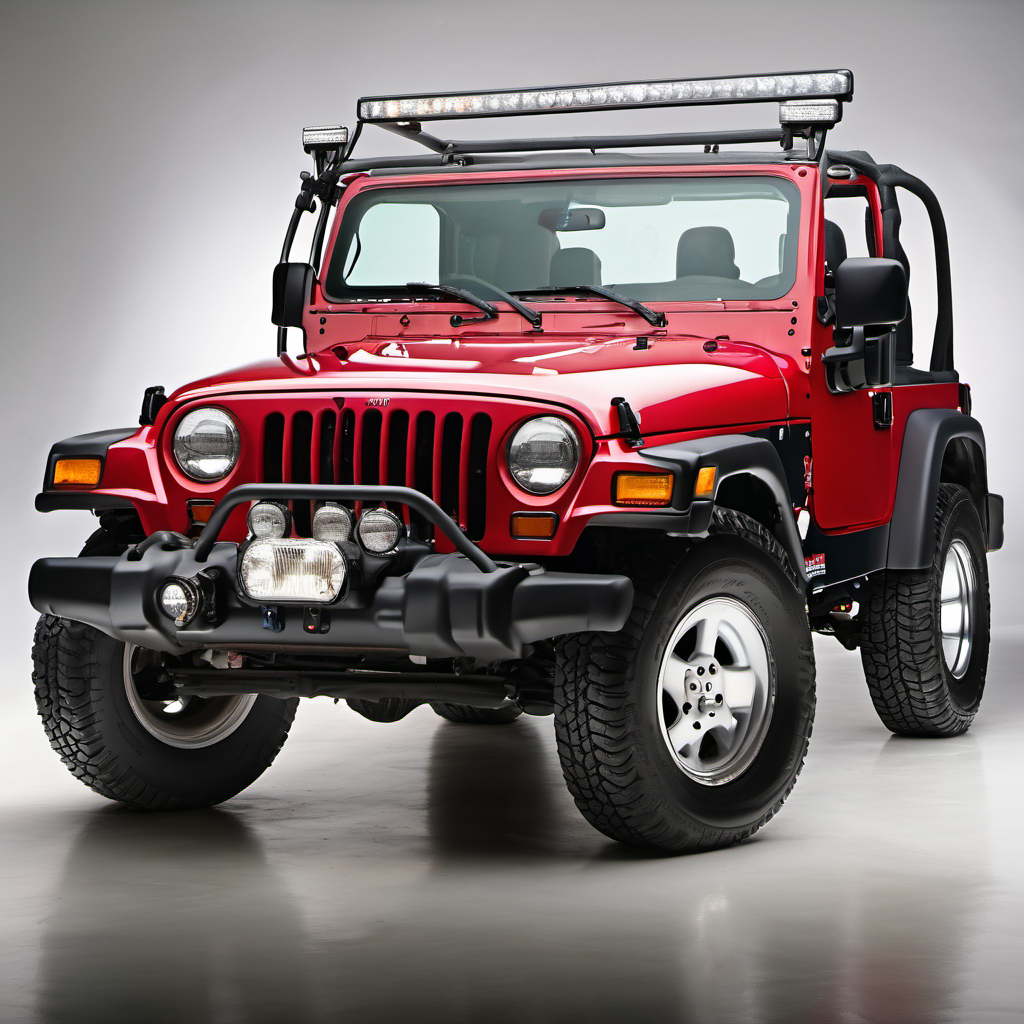
1997 Jeep Wrangler SUV

1997 Jeep

WranglerSUV

SUV

The 1997 Jeep Wrangler (TJ generation, launched that year) is a genuine body-on-frame off-roader that replaced the YJ with a return to round headlights and a coil-spring front suspension — a major handling improvement over its leaf-spring predecessor. It came with either a 2.5L four-cylinder or a 4.0L inline-six, and its Dana axles, solid front and rear axle setup, and Jeep's Command-Trac 4WD system made it legitimately capable on trails right off the dealer lot. At nearly 30 years old, any surviving example is well into its second or third life. These trucks are popular for restoration, modification, and daily driving in equal measure, which means the used market is full of both well-loved examples and abused trail rigs. Rust — especially on the frame, floor pans, and rocker panels — is the dominant concern in the upper Midwest. If the bones are solid, the mechanical pieces are relatively inexpensive and well-supported by an enormous aftermarket. The 2.5L four-cylinder in this trim is adequate for street use and light trails but noticeably underpowered compared to the 4.0L. Fuel economy is marginal by any modern standard. Owners who keep up with basic maintenance and stay ahead of rust can expect to get many more years from these — there are plenty of high-mileage TJs still running daily in Wisconsin.

Reliability
3/5
Verified data
Specs shown for Wrangler 4WD — the most common configuration. Other trims may vary in engine, drivetrain, or fuel economy. Sign in to see your vehicle's exact specs.
Engine
[object Object]
Drivetrain
4WD
Fuel
Gasoline
MPG
17 city / 19 hwy / 18 combined
Seats
Doors
Body
Special Purpose Vehicles

Overview

AI-curated

The 1997 Jeep Wrangler (TJ generation, launched that year) is a genuine body-on-frame off-roader that replaced the YJ with a return to round headlights and a coil-spring front suspension — a major handling improvement over its leaf-spring predecessor. It came with either a 2.5L four-cylinder or a 4.0L inline-six, and its Dana axles, solid front and rear axle setup, and Jeep's Command-Trac 4WD system made it legitimately capable on trails right off the dealer lot. At nearly 30 years old, any surviving example is well into its second or third life. These trucks are popular for restoration, modification, and daily driving in equal measure, which means the used market is full of both well-loved examples and abused trail rigs. Rust — especially on the frame, floor pans, and rocker panels — is the dominant concern in the upper Midwest. If the bones are solid, the mechanical pieces are relatively inexpensive and well-supported by an enormous aftermarket. The 2.5L four-cylinder in this trim is adequate for street use and light trails but noticeably underpowered compared to the 4.0L. Fuel economy is marginal by any modern standard. Owners who keep up with basic maintenance and stay ahead of rust can expect to get many more years from these — there are plenty of high-mileage TJs still running daily in Wisconsin.

Known for
  • Excellent off-road capability with coil-spring suspension and solid axles
  • Simple, repairable mechanicals with massive aftermarket support
  • Iconic styling that has changed little over decades
  • Prone to rust in salt-belt states, especially frame and floor pans
  • Noisy, drafty, and utilitarian — not a comfort cruiser
Best for
  • Off-road enthusiasts and trail drivers
  • Owners who do their own wrenching
  • Light-duty hauling and towing on rural roads
  • Weekend adventure vehicle with weekday utility
  • Collectors and restoration projects
Watch for
  • Frame and floor pan rust — critical in Wisconsin salt environment
  • Leaking soft tops and doors that never fully seal
  • Underpowered 2.5L engine struggles on highway on-ramps and loaded
  • Previous off-road abuse: bent skid plates, stressed axles, damaged suspension
  • Cooling system neglect leading to overheating on the 4-cylinder

Common issues by mileage

6 known

Frame and floor pan rust

high
Typically appears
All mileages — age-dependent
Estimated repair
$500 – $4,000

Soft top and door seal leaks

high
Typically appears
All mileages
Estimated repair
$200 – $1,200

Cooling system failure / overheating (thermostat, water pump, hoses)

medium
Typically appears
80k–150k mi
Estimated repair
$150 – $600

Transfer case and manual transmission fluid leaks

medium
Typically appears
60k–120k mi
Estimated repair
$150 – $600

Front axle U-joints and differential wear (especially if off-roaded)

medium
Typically appears
60k–150k mi
Estimated repair
$200 – $900

Maintenance schedule

  1. 1
    Annually — every fall before salt season Inspect and treat frame, floor pans, and rocker panels for rust

    Wisconsin road salt accelerates rust aggressively on this body-on-frame truck. Catching surface rust early with wire brush and rust converter is far cheaper than structural repair later.

  2. 2
    Every 3,000–5,000 miles with conventional oil Engine oil and filter change

    The 2.5L four-cylinder responds well to frequent oil changes. At this age, conventional oil with regular intervals is preferred over extended-drain synthetics unless the engine is known-clean inside.

  3. 3
    Every 30,000 miles or if water crossing is suspected Differential and transfer case fluid change

    Dana axles and the Command-Trac transfer case hold up well when fluid is kept fresh. Water intrusion during off-road use destroys gear oil — milky fluid means immediate change.

  4. 4
    Every 2 years or 30,000 miles Coolant flush and system inspection (hoses, thermostat, water pump)

    The 2.5L is sensitive to cooling system neglect. Old coolant loses its corrosion inhibitors and accelerates water pump and hose deterioration.

  5. 5
    Every 3–5 years or when leaks appear Inspect and replace soft top hardware and seals

    Soft top material and plastic windows harden and crack with age and UV exposure. Leaks lead to floor pan rust and interior mold.

  6. 6
    Every 30,000 miles Spark plugs and ignition wires

    Original-spec copper plugs and wires wear predictably. Misfires on a four-cylinder are more noticeable and stressful on the engine than on a six or eight.

  7. 7
    Every fall before winter Battery load test and terminal cleaning

    Sub-zero starts in Lake Geneva winters are hard on aging batteries. A battery that passes a summer test can still fail at -10°F. Load test in October, not January.

  8. 8
    Every 30,000 miles or annually if off-roaded Check and repack front and rear axle U-joints

    Greaseable U-joints last much longer with regular attention. Neglected joints wear through and can cause a driveshaft to drop — a dangerous failure at any speed.

Always defer to the manufacturer's service manual for warranty-mandated intervals.

Cost of ownership

Annual maintenance
$600 – $2,000
Fuel
At ~18 MPG combined and typical driving, expect $1,800–$2,400/year at current Midwest gas prices. Highway trips in the 2.5L will feel the pump more than city use.
Insurance
Generally low to moderate for a 1997 vehicle with actual cash value near $5,000–$12,000 depending on condition. Liability-only coverage is common on older examples.

A well-maintained TJ Wrangler can be a reasonably affordable vehicle to own if you do your own work and stay ahead of rust. The big wildcard is deferred maintenance from previous owners — budget for a thorough inspection and potentially $1,000–$3,000 in catch-up work on a used example. Parts are cheap and plentiful. The 2.5L is not an expensive engine to service. Rust repair, however, can escalate quickly and should be factored into any purchase decision.

Seasonal care

Lake Geneva, WI
Winter
  • Load test the battery every October — cold cranking amps drop sharply in sub-zero temps and a marginal battery will fail when you need it most
  • Switch to full-synthetic 5W-30 oil if not already done; it flows immediately at cold start and reduces wear during Wisconsin's hard cold snaps
  • Flush and fill washer fluid reservoir with -40°F rated fluid; the TJ's open body lets road spray hit the windshield constantly
  • Inspect soft top seams and zippers for cracks before winter — a leaking top means wet floor pans and accelerated rust all season
  • Rinse the undercarriage thoroughly after every significant salt event, paying close attention to the frame rails, skid plates, and axle housing
  • Confirm 4WD engagement (both 4H and 4L) works smoothly before the first snow — do not wait until you are stuck to discover a transfer case issue
Summer
  • Check coolant level and hose condition before summer heat — the 2.5L can run warm when working hard in heat, especially with A/C on
  • Inspect tire pressure monthly; summer heat raises PSI and overinflated tires on a short-wheelbase truck reduce the already-limited ride stability
  • Clean and condition soft top vinyl and plastic windows with UV protectant to prevent cracking and hazing
  • Check the A/C system charge — R-134a systems this age commonly develop slow leaks and many TJs have never had the system properly serviced
  • Inspect brake fluid for moisture absorption (it darkens and boils at lower temps after absorbing water over time)

Comparable vehicles

If you're shopping for one

Red flags
  • Any visible frame rust-through — structural repair is expensive and a safety issue on a body-on-frame vehicle
  • Lift kit installed without documentation of what was done — improper lifts stress axles, CV joints, and alignment
  • Aftermarket lockers, winch, or heavy bumpers with no service records — these suggest hard use without necessarily careful maintenance
  • Soft top replaced recently but floor pans not inspected — sellers sometimes cover up rust damage with a fresh top
  • Oil consumption or white smoke at startup — head gasket issues are possible on a neglected or overheated 2.5L
  • Title showing multiple owners in a short period — rapid resale often means a problem was discovered
What to inspect
  • Frame rails — grab a flashlight and mirror and inspect every inch for rust perforation, especially under the body mounts and near the rear crossmember
  • Floor pans — press down firmly in driver and passenger footwells and behind the seats; soft spots mean rust-through, which is expensive to repair properly
  • Rocker panels and body tub corners — common rust traps on TJs that have lived in salt states
  • 4WD system: test 4H and 4L engagement and disengagement at low speed; listen for grinding in the transfer case
  • Front axle U-joints: grab each front wheel at 3 and 9 o'clock and rock it — any clunk or play indicates worn U-joints or ball joints
  • Soft top condition: inspect all seams, zippers, and plastic windows for cracking, separation, and leaks
  • Cooling system: look for white residue around hoses, coolant reservoir, or radiator cap indicating past overheating or a slow leak
  • Underbody skid plates: bent or missing skid plates are a sign of hard off-road use — inspect what's behind them
AI profile generated 18 days ago · claude-sonnet-4-6 · v2.