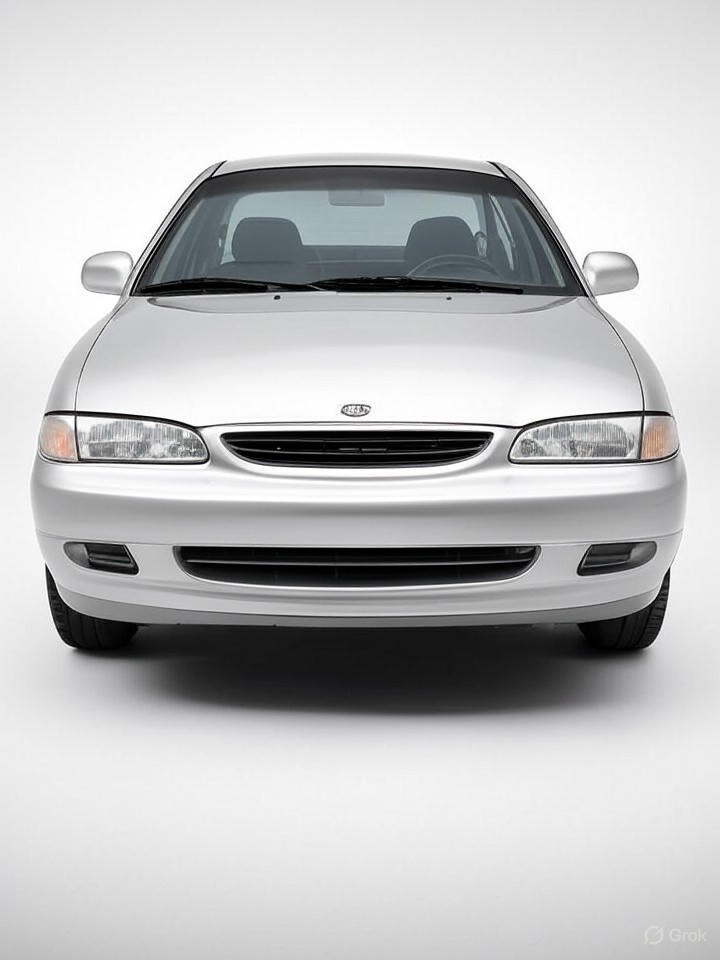
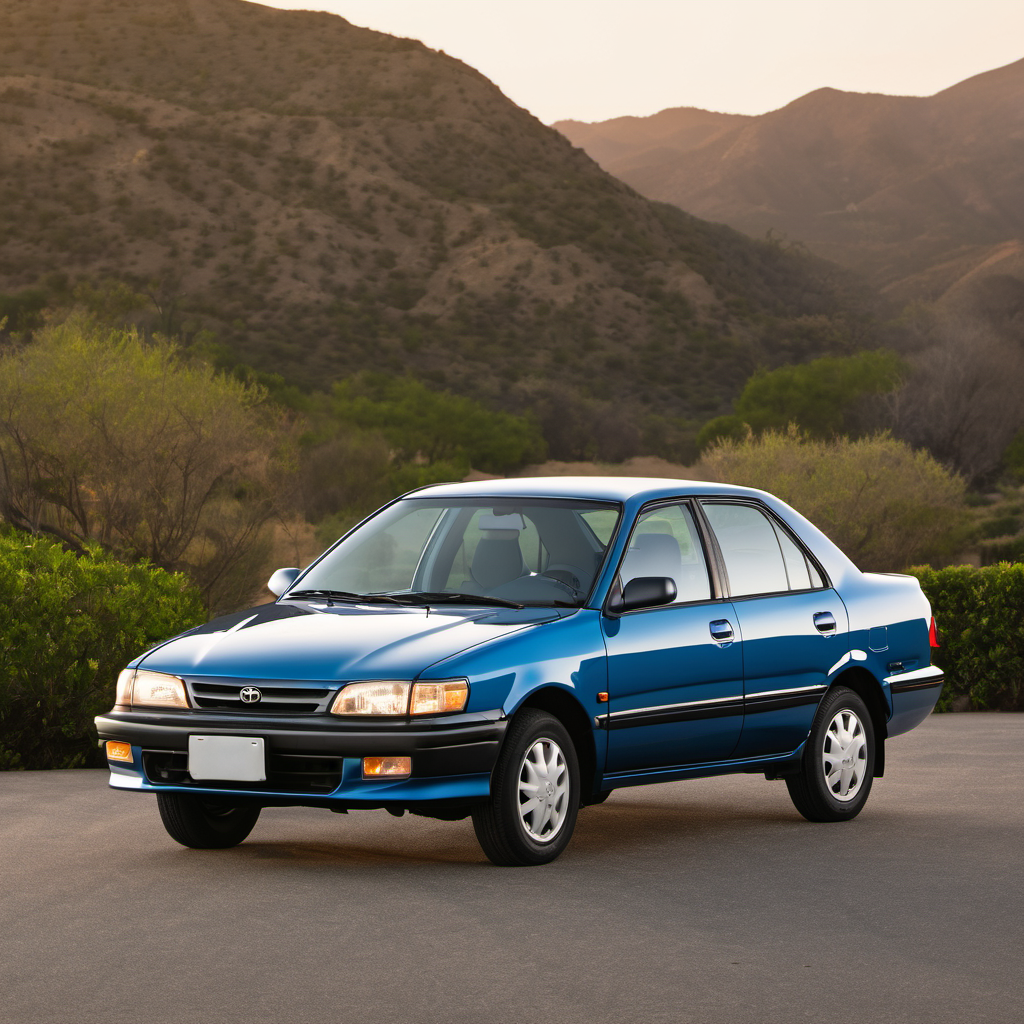
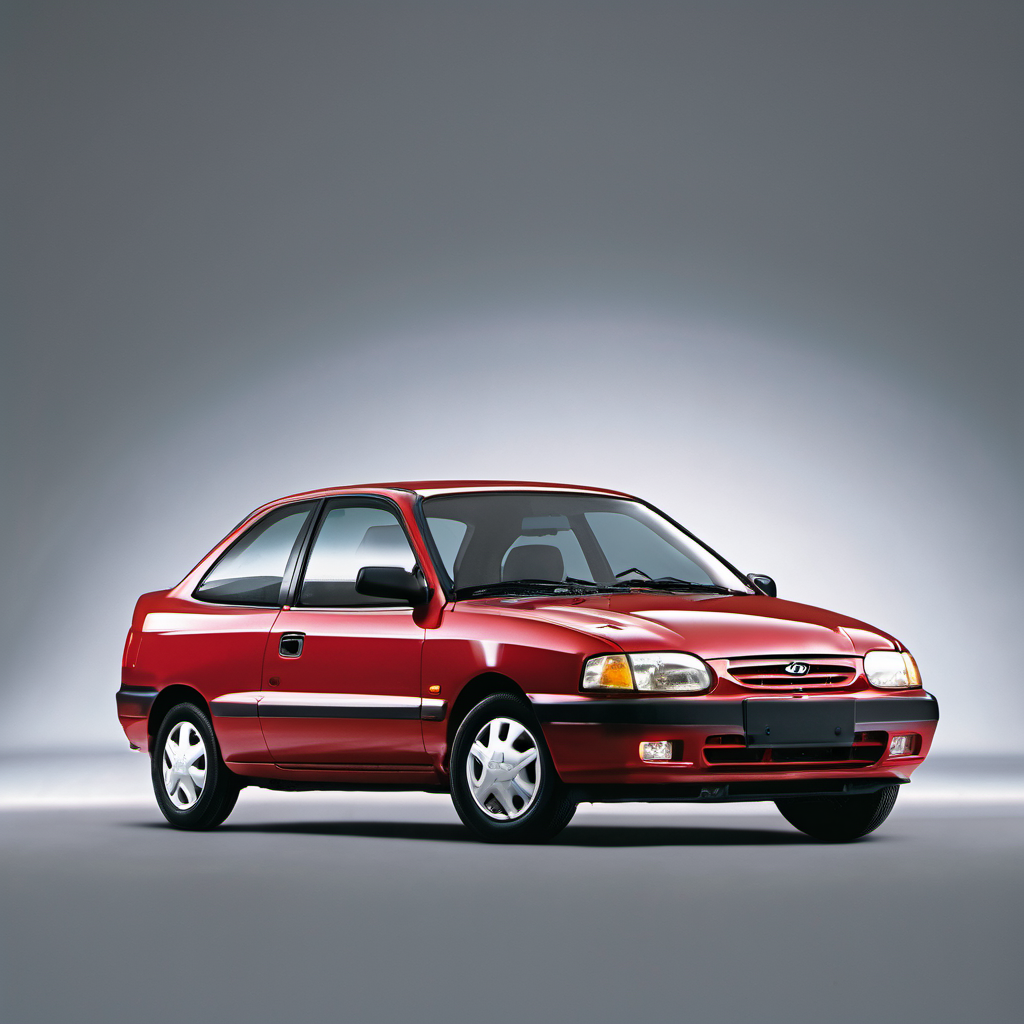
1995 Kia Sephia Sedan

1995 Kia

SephiaSedan

Sedan

The 1995 Kia Sephia was Kia's first serious attempt at the U.S. compact sedan market. Built in South Korea with heavy Mazda 323 influence — early Sephias shared platform architecture and some powertrain DNA with Mazda — this was a budget-first car aimed at first-time buyers and value shoppers. It was never a performance or luxury vehicle, but it offered basic reliable transportation at a very low price of entry. By 1995, Kia was still an unknown brand to most American consumers, and the Sephia reflected that: reasonable fit and finish for the price, a capable-but-unexciting 1.6L four-cylinder, and a straightforward FWD drivetrain. Parts availability today is limited, which is the single biggest practical concern for any owner. At nearly 30 years old, surviving Sephias are rare. Any example you encounter has either been meticulously maintained or is well past its service life. Budget generously for deferred maintenance and rust if you're considering one.

Reliability
2/5
Verified data
Specs shown for Sephia — the most common configuration. Other trims may vary in engine, drivetrain, or fuel economy. Sign in to see your vehicle's exact specs.
Engine
[object Object]
Drivetrain
FWD
Fuel
Gasoline
MPG
22 city / 31 hwy / 25 combined
Seats
Doors
Body
Compact Cars

Overview

AI-curated

The 1995 Kia Sephia was Kia's first serious attempt at the U.S. compact sedan market. Built in South Korea with heavy Mazda 323 influence — early Sephias shared platform architecture and some powertrain DNA with Mazda — this was a budget-first car aimed at first-time buyers and value shoppers. It was never a performance or luxury vehicle, but it offered basic reliable transportation at a very low price of entry. By 1995, Kia was still an unknown brand to most American consumers, and the Sephia reflected that: reasonable fit and finish for the price, a capable-but-unexciting 1.6L four-cylinder, and a straightforward FWD drivetrain. Parts availability today is limited, which is the single biggest practical concern for any owner. At nearly 30 years old, surviving Sephias are rare. Any example you encounter has either been meticulously maintained or is well past its service life. Budget generously for deferred maintenance and rust if you're considering one.

Known for
  • Very low original purchase price
  • Mazda 323-derived platform giving it a reasonably solid bones
  • Simple 1.6L engine that is easy to work on
  • Decent fuel economy for its era
Best for
  • Budget-conscious buyers comfortable with older vehicles
  • Mechanically inclined owners who can handle their own repairs
  • Short-distance urban or suburban commuting
  • Buyers who just need basic point-A-to-point-B transportation
Watch for
  • Severe rust on body panels, subframe, and brake lines — a major issue on any 30-year-old Wisconsin car
  • Parts scarcity: many OEM and aftermarket components are discontinued or hard to source
  • Cooling system neglect leading to overheating and head gasket failure
  • Timing belt that may have never been replaced on high-mileage examples
  • Electrical gremlins common on aging wiring harnesses

Common issues by mileage

6 known

Timing belt failure

high
Typically appears
60–100k mi (or any age-unknown interval)
Estimated repair
$250 – $450

Cooling system deterioration / head gasket failure

high
Typically appears
80k+ mi
Estimated repair
$600 – $1,200

Rust — brake lines, subframe, and floorpans

high
Typically appears
Any mileage on a Wisconsin/salt-belt car
Estimated repair
$300 – $2,500

CV axle and front-end wear (tie rods, ball joints)

high
Typically appears
90k+ mi
Estimated repair
$200 – $600

Aging wiring harness / electrical gremlins

medium
Typically appears
Any — age-related
Estimated repair
$150 – $800

Maintenance schedule

  1. 1
    Every 60k mi or immediately if history is unknown Timing belt replacement

    This is an interference engine — a snapped belt means bent valves and a destroyed engine. On a 30-year-old car, assume it's overdue unless you have paper documentation.

  2. 2
    Every 2 years or 30k mi Coolant flush and system inspection

    Aged coolant loses its corrosion inhibitors and attacks aluminum components. Inspect hoses, clamps, and the thermostat at the same time — all are likely original or aged on surviving examples.

  3. 3
    Annually — every fall before winter Brake line inspection

    Decades of Wisconsin road salt make brake line rust-through a safety-critical concern on any car this age. This is not optional.

  4. 4
    Every 30k mi Spark plugs and ignition wires

    Original-spec plugs and wires degrade over time and cause rough cold starts, misfires, and poor fuel economy. Parts are still available and inexpensive.

  5. 5
    Every 3,000–5,000 mi with conventional oil Engine oil and filter

    Older engines with higher clearances benefit from more frequent changes. Use the shorter interval if the car sees cold Wisconsin starts regularly.

  6. 6
    Every 30k mi Fuel filter replacement

    Aging fuel systems accumulate tank sediment. A clogged filter starves the fuel pump, which is expensive to replace on this car.

  7. 7
    Every 15k mi or at every oil change CV axle boots inspection

    Torn CV boots lead to grease loss and eventual joint failure. Catching a torn boot early is a $50–80 fix; ignoring it leads to a $200–350 axle replacement.

  8. 8
    Every fall Battery load test

    Wisconsin winters are hard on aging batteries. A battery that starts the car fine in October can fail entirely at -10°F in January. Load-test before the cold season, not after you're stranded.

Always defer to the manufacturer's service manual for warranty-mandated intervals.

Cost of ownership

Annual maintenance
$600 – $1,800
Fuel
At 25 MPG combined and ~12,000 miles/year, expect roughly $1,300–$1,500/year at current Wisconsin gas prices. Fuel cost is one of this car's genuine strengths.
Insurance
Liability-only coverage is common on vehicles this age and value. Expect $400–$700/year for liability-only with a clean driving record in the Lake Geneva area.

The Sephia is cheap to insure and cheap to fuel. The wildcard is mechanical upkeep on a 30-year-old car with limited parts availability. A well-maintained example with documented service history may need only routine maintenance; a neglected one could require $2,000–$4,000 in catch-up repairs in the first year of ownership. Budget conservatively and have it thoroughly inspected before buying.
Seasonal care

Lake Geneva, WI
Winter
  • Load-test the battery every October — cold cranking amps drop sharply below 20°F and this engine needs all the help it can get on sub-zero mornings.
  • Inspect brake lines and fuel lines for rust-through before winter. Salt spray accelerates corrosion dramatically on a car this old.
  • Switch to a full synthetic 5W-30 oil if not already — it flows faster on cold starts and reduces wear during the critical warm-up period.
  • Use a -40°F rated washer fluid. Wisconsin winters regularly dip below the threshold that cheap washer fluid freezes solid in the lines.
  • Install winter wiper blades to prevent the standard blade frames from clogging with ice and leaving streaks.
  • Keep the gas tank at least half-full to reduce condensation in the fuel system and give you a buffer if you get stuck or stranded.
Summer
  • Check coolant concentration and condition before summer heat — an already-marginal cooling system will show its weaknesses quickly above 85°F in stop-and-go traffic.
  • Inspect the A/C system for refrigerant charge and compressor condition. The R-134a systems on mid-1990s cars often have slow leaks after this many years.
  • Check tire pressure monthly — ambient temperature swings between Wisconsin winters and summers can shift pressure by 5–8 PSI, affecting handling and wear.
  • Inspect belts for cracking and glazing in the spring — heat accelerates the degradation of already-aged rubber belts on a 30-year-old vehicle.

Comparable vehicles

If you're shopping for one

Red flags
  • Any soft, flaking, or perforated metal on the brake lines, subframe, or floorpan — walk away.
  • Milky or foamy oil on the dipstick or filler cap — head gasket failure is expensive relative to this car's value.
  • A seller who cannot produce any maintenance records — on a car this age, no records almost always means no maintenance.
  • Overheating during a test drive or temperature gauge that creeps above normal — cooling system problems on this engine can escalate quickly.
  • Parts-bin odometer readings that don't match wear on the pedals, steering wheel, and seat bolster — odometer rollback is a real risk on older cars.
  • Any evidence of significant accident repair (mismatched paint, uneven panel gaps, overspray on trim) — structural integrity on a 30-year-old car that's been hit is very difficult to verify.
What to inspect
  • Brake lines from front to rear — poke with a finger, not just a visual scan. Rust-through is a hidden danger on any 30-year-old Wisconsin car.
  • Subframe and frame rails for structural rust — this can make the car unsafe and uninsurable regardless of how the engine runs.
  • Timing belt — ask for documentation. If the seller can't prove it's been done, price in an immediate replacement.
  • Coolant condition and oil filler cap for milky residue, which indicates a likely head gasket leak.
  • All four CV axle boots for cracking or grease splatter on the inside of the wheel wells.
  • Compression test on all four cylinders — a 30-year-old engine with unknown history deserves this before any purchase.
  • Undercarriage for evidence of patch welds or filler used to hide rust perforation.
AI profile generated 4 days ago · claude-sonnet-4-6 · v2.