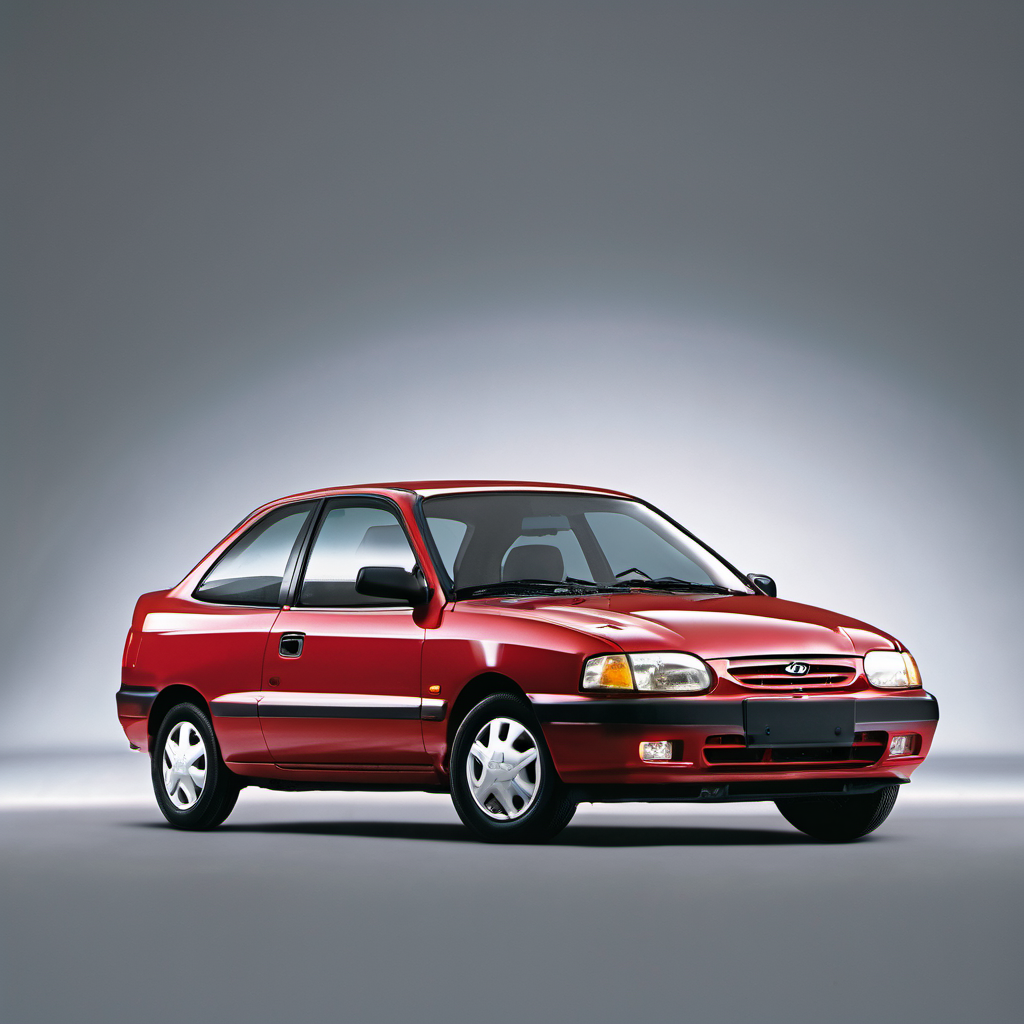
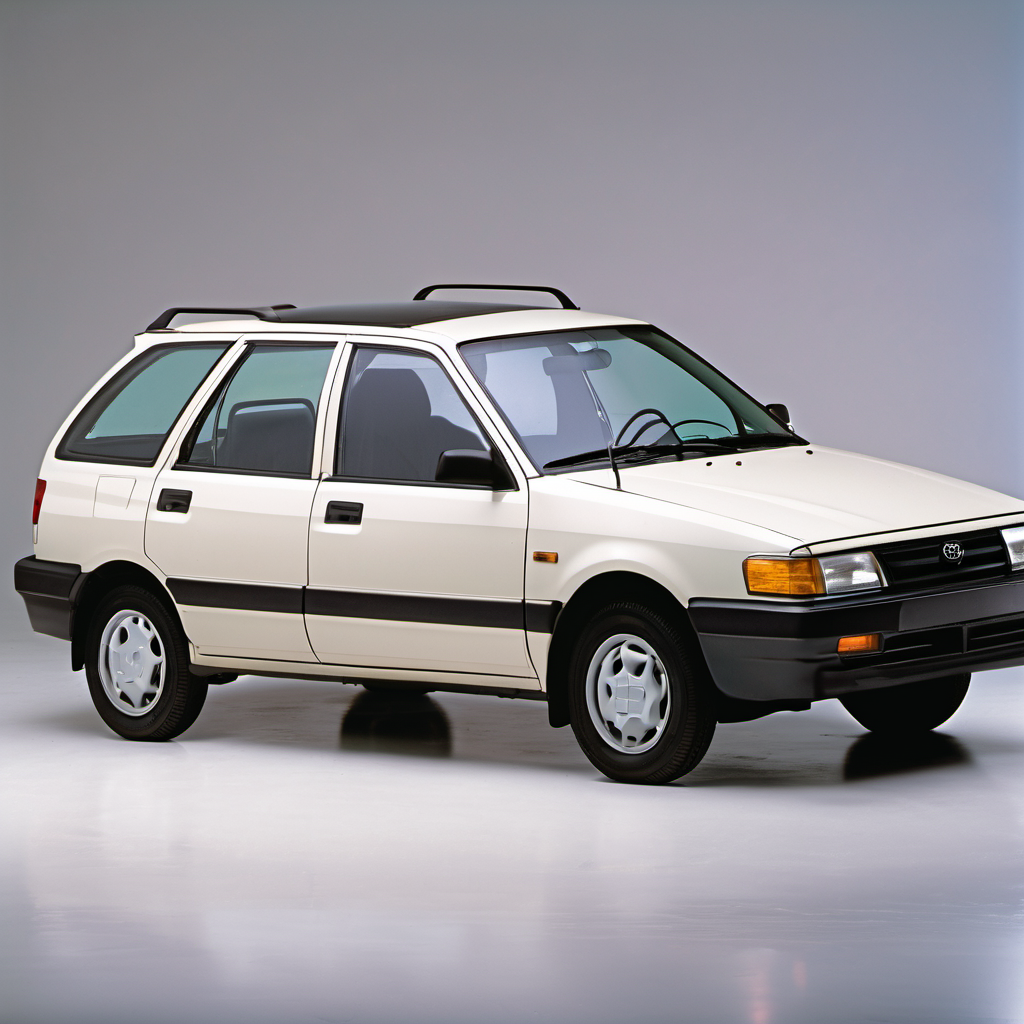
1995 Hyundai Accent Hatchback

1995 Hyundai

AccentHatchback

Hatchback

The 1995 Hyundai Accent was Hyundai's entry-level subcompact, replacing the Excel and marking a significant step up in build quality for the brand at that time. Powered by a 1.5L four-cylinder engine, it was designed first and foremost for affordability and fuel economy — not performance or luxury. By mid-1990s standards it was a competent city car, though it reflected Hyundai's budget-tier reputation of the era. At 30 years old, surviving examples are rare and typically show their age. Rust is the single biggest concern, especially in salt-belt states like Wisconsin. Mechanical parts can be hard to source, and the car's original value proposition (cheap transportation) is largely offset today by age-related repair needs. Treat any example as a project or beater, not a daily driver you depend on. For a buyer in the Lake Geneva area, this vehicle demands a thorough undercarriage inspection before purchase. What little is left of the rustproofing from the factory was modest to begin with, and three decades of Wisconsin winters take a heavy toll.

Reliability
2/5
Verified data
Specs shown for Accent — the most common configuration. Other trims may vary in engine, drivetrain, or fuel economy. Sign in to see your vehicle's exact specs.
Engine
[object Object]
Drivetrain
FWD
Fuel
Gasoline
MPG
24 city / 33 hwy / 27 combined
Seats
Doors
Body
Compact Cars

Overview

AI-curated

The 1995 Hyundai Accent was Hyundai's entry-level subcompact, replacing the Excel and marking a significant step up in build quality for the brand at that time. Powered by a 1.5L four-cylinder engine, it was designed first and foremost for affordability and fuel economy — not performance or luxury. By mid-1990s standards it was a competent city car, though it reflected Hyundai's budget-tier reputation of the era. At 30 years old, surviving examples are rare and typically show their age. Rust is the single biggest concern, especially in salt-belt states like Wisconsin. Mechanical parts can be hard to source, and the car's original value proposition (cheap transportation) is largely offset today by age-related repair needs. Treat any example as a project or beater, not a daily driver you depend on. For a buyer in the Lake Geneva area, this vehicle demands a thorough undercarriage inspection before purchase. What little is left of the rustproofing from the factory was modest to begin with, and three decades of Wisconsin winters take a heavy toll.

Known for
  • Excellent fuel economy for its era
  • Very low original purchase price
  • Simple, straightforward mechanicals
  • Lightweight and easy to maneuver in tight spaces
Best for
  • Budget-conscious buyers wanting a parts-runner or secondary vehicle
  • Mechanically inclined owners comfortable with DIY repairs
  • Short-distance city driving where mileage and cost matter most
Watch for
  • Severe underbody and floor pan rust on Wisconsin examples
  • Difficulty sourcing new OEM or quality aftermarket parts
  • Aging rubber components: hoses, belts, seals, and bushings near or past end of life
  • Weak crash safety ratings by modern standards
  • Electrical gremlins common on high-age examples

Common issues by mileage

6 known

Timing belt failure

high
Typically appears
60–100k mi (or every 7–10 years by age)
Estimated repair
$250 – $450

Underbody and floor pan rust

high
Typically appears
Any mileage on salt-belt vehicles
Estimated repair
$500 – $3,000

Cooling system leaks (hoses, radiator, water pump)

high
Typically appears
80k+ mi / 15+ years
Estimated repair
$150 – $600

Worn or cracked suspension bushings and ball joints

high
Typically appears
80k+ mi
Estimated repair
$200 – $600

Failing or corroded electrical connectors and sensors

medium
Typically appears
Any mileage on aging examples
Estimated repair
$75 – $400

Maintenance schedule

  1. 1
    Every 60k miles or 7 years, whichever comes first — on a 30-year-old car, do it immediately if history is unknown Timing belt and water pump replacement

    The 1.5L is an interference engine. A snapped belt causes catastrophic valve and piston damage. At this vehicle's age, rubber degradation matters as much as mileage.

  2. 2
    Every 2 years or at any change in ownership Full cooling system flush and inspection

    Three decades of coolant breakdown leaves deposits that accelerate corrosion in the radiator, heater core, and water pump. Fresh coolant with proper inhibitors is cheap insurance.

  3. 3
    Every 2 years Brake fluid flush

    Brake fluid absorbs moisture over time, lowering its boiling point and accelerating internal corrosion in calipers and wheel cylinders — a real concern on a 30-year-old hydraulic system.

  4. 4
    Immediately on any newly acquired example; every 4–5 years thereafter Inspect and replace all rubber hoses and belts

    Factory rubber components are well past their designed service life. A burst coolant hose or cracked brake line on a Wisconsin road is a safety emergency.

  5. 5
    Every spring after winter salt season Full undercarriage rust inspection

    Brake lines, fuel lines, and subframe mounting points are the priority. Rust perforation in these areas is a safety failure, not just a cosmetic issue.

  6. 6
    Every 30k miles Spark plugs and ignition wires

    The original MPFI system depends on clean ignition delivery. Old wires cause misfires and hard starts, especially in cold Wisconsin winters.

  7. 7
    Every fall before winter Battery test and terminal cleaning

    Cold-cranking demand is hard on any battery, and on an older car the charging system may already be marginal. A fresh battery and clean terminals prevent no-start situations at -10°F.

  8. 8
    Every 3,000–5,000 miles or annually Engine and transmission oil change

    Short trip driving and cold starts on an aged engine accelerate oil breakdown. Regular changes are the cheapest way to extend engine life on an economy car with tight tolerances.

Always defer to the manufacturer's service manual for warranty-mandated intervals.

Cost of ownership

Annual maintenance
$400 – $1,200
Fuel
At 27 mpg combined and typical local driving, expect roughly $1,000–$1,400/year at current gas prices — one of the cheaper vehicles to fuel.
Insurance
Liability-only coverage on a vehicle this age and value is typical; expect $400–$700/year depending on your driver profile. Full coverage rarely makes financial sense given the car's market value.

On paper, the Accent is cheap to own — low fuel costs, low insurance, and simple mechanicals. In practice, a 30-year-old example in Wisconsin will demand periodic injections of money for age-related failures. Budget for at least one significant repair (cooling system, brakes, suspension) per year. Parts availability has improved through aftermarket suppliers but can still cause delays. If major rust is present, repair costs can easily exceed the vehicle's entire market value.
Seasonal care

Lake Geneva, WI
Winter
  • Test battery cold-cranking amps every October — sub-zero starts will expose a weak battery immediately
  • Switch to a 5W-30 or 5W-20 full synthetic oil if not already; the stock engine tolerances are tight and cold-start oil flow matters
  • Flush washer fluid reservoir and fill with a fluid rated to at least -20°F; the original reservoir cap and lines are old and can crack if water-based fluid freezes
  • Inspect brake lines and fuel lines for rust pinholes before winter — salt accelerates any existing corrosion into leaks
  • Check antifreeze concentration; a 30-year-old cooling system may have diluted or degraded coolant that won't protect below 0°F
  • Apply a rubber protectant to door seals to prevent freezing shut — the original seals are aged and seal poorly when brittle
Summer
  • Inspect the A/C system if equipped — refrigerant leaks are common on aging hoses and o-rings; recharging a leaking system without fixing the root cause is money wasted
  • Check tire pressure monthly; Wisconsin summer heat causes pressure fluctuations and the light-duty tires on this car are sensitive to under-inflation
  • Inspect the radiator cap and overflow tank for cracks — heat soak on a small radiator with aging components can push coolant temps into dangerous territory in stop-and-go traffic
  • Look for fuel system vapor lock symptoms (hard hot restart) which can signal a failing fuel pressure regulator or aging fuel lines

Comparable vehicles

If you're shopping for one

Red flags
  • Any visible rust holes in the floor, rocker panels, or undercarriage — structural rust on a 30-year-old economy car is usually not worth repairing economically
  • No timing belt records and a seller unwilling to negotiate repair cost into the price
  • Coolant in the oil (milky dipstick) or oil in the coolant overflow tank — head gasket failure on a 30-year-old engine is a serious repair
  • Check engine light on with no explanation — on a car this age, deferred repairs are common and codes can indicate deep-rooted issues
  • Soft or spongy brake pedal indicating master cylinder wear or a failing brake line
  • Seller asking anywhere near original MSRP — fair market value for a running, non-rusty example is well under $3,000; rust or mechanical issues should be reflected in a significantly lower price
What to inspect
  • Lift the floor mats and check for rust perforation in the floor pan — this is the most common deal-breaker on Midwest examples
  • Inspect all four brake lines and the fuel line along the undercarriage for rust bubbling or active leaks
  • Look at the subframe and strut towers for weld-point rust, which affects structural integrity and repairability
  • Ask for timing belt service history — if unknown, budget for immediate replacement before driving it
  • Run the engine to full operating temperature and watch for coolant loss, overheating, or steam from the heater core area
  • Check all rubber bushings in the front suspension for cracking or complete deterioration
AI profile generated 4 days ago · claude-sonnet-4-6 · v2.