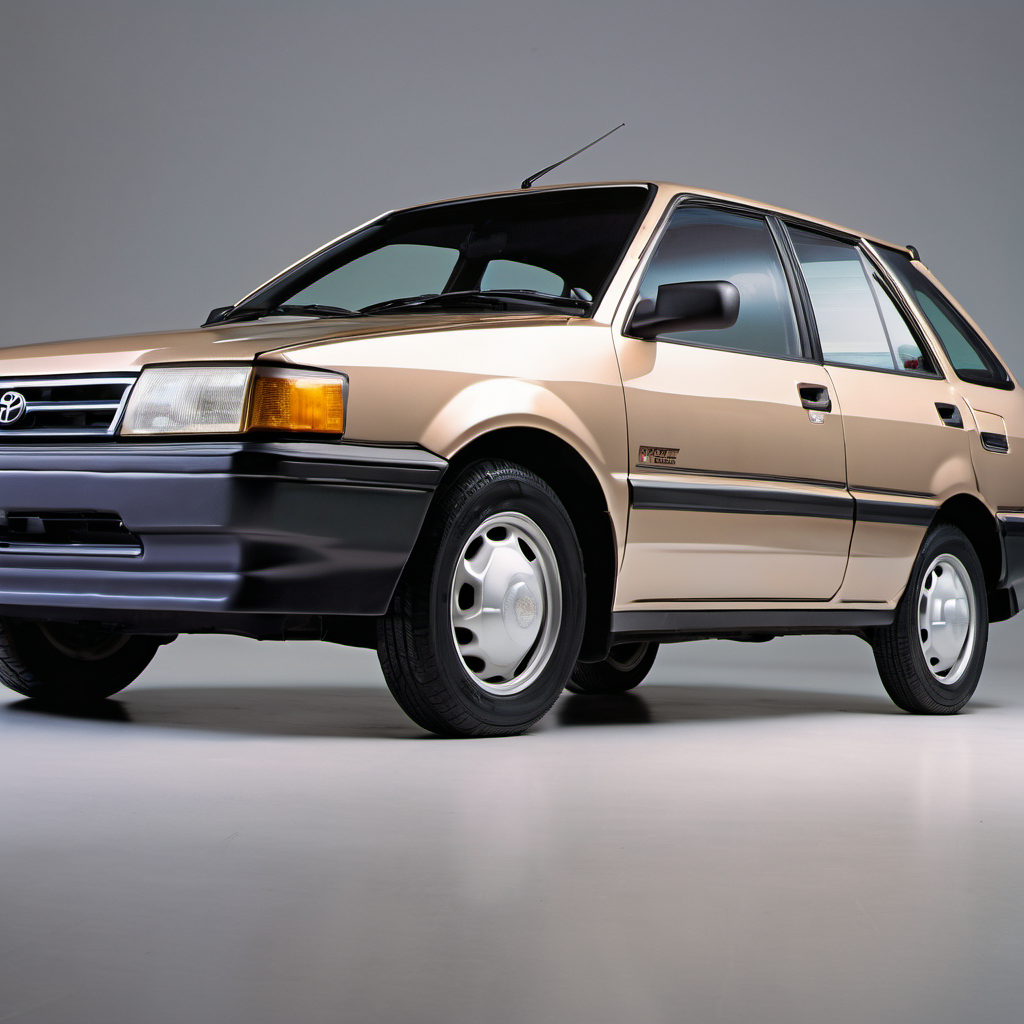
1993 Volkswagen Fox Coupe

1993 Volkswagen

FoxCoupe

Coupe

The Volkswagen Fox was a budget-oriented subcompact sold in North America from 1987 through 1993. Built in Brazil and engineered on an older VW platform, it was one of the most affordable new cars on the market during its run. The Fox Coupe is a two-door version of the lineup, sharing its mechanicals with the four-door sedan variant. Powered by a carbureted (later throttle-body injected) 1.8L four-cylinder and paired with a simple manual or automatic transmission, the Fox was never a performance car — but it was light, reasonably fuel-efficient, and easy to work on. Parts availability has become the biggest challenge keeping these vehicles on the road today. By 1993 the Fox was in its final model year for North America, making survivors increasingly rare. Any example still running today has almost certainly exceeded 150,000 miles and depends heavily on how well it was maintained and whether it avoided rust in salt-belt states like Wisconsin.

Reliability
2/5
Verified data
Specs shown for Fox — the most common configuration. Other trims may vary in engine, drivetrain, or fuel economy. Sign in to see your vehicle's exact specs.
Engine
[object Object]
Drivetrain
FWD
Fuel
Gasoline
MPG
22 city / 30 hwy / 25 combined
Seats
Doors
Body
Subcompact Cars

Overview

AI-curated

The Volkswagen Fox was a budget-oriented subcompact sold in North America from 1987 through 1993. Built in Brazil and engineered on an older VW platform, it was one of the most affordable new cars on the market during its run. The Fox Coupe is a two-door version of the lineup, sharing its mechanicals with the four-door sedan variant. Powered by a carbureted (later throttle-body injected) 1.8L four-cylinder and paired with a simple manual or automatic transmission, the Fox was never a performance car — but it was light, reasonably fuel-efficient, and easy to work on. Parts availability has become the biggest challenge keeping these vehicles on the road today. By 1993 the Fox was in its final model year for North America, making survivors increasingly rare. Any example still running today has almost certainly exceeded 150,000 miles and depends heavily on how well it was maintained and whether it avoided rust in salt-belt states like Wisconsin.

Known for
  • Affordable, no-frills transportation in its day
  • Simple, mechanic-friendly carbureted/TBI drivetrain
  • Light curb weight making it nimble in city driving
  • Solid German-Brazilian build quality when rust-free
  • One of the last truly basic economy cars sold new in the US
Best for
  • Vintage VW enthusiasts and collectors
  • Budget-minded DIY mechanics comfortable with older tech
  • Short-distance commuters who want a simple, fixable car
  • Those seeking a unique, rarely seen daily driver
Watch for
  • Severe rust, especially rocker panels, floor pans, and wheel arches — critical in Wisconsin
  • Parts scarcity: many body, trim, and mechanical pieces are no longer reproduced
  • Aging fuel and vacuum lines that crack and cause drivability or fire hazards
  • Carburetor/TBI issues causing hard starts and poor cold-weather performance
  • Neglected timing belt — failure is engine-destroying on this motor

Common issues by mileage

6 known

Timing belt failure

high
Typically appears
Any mileage on aging belt
Estimated repair
$250 – $500

Rust in floor pans, rockers, and wheel arches

high
Typically appears
All mileages on salt-belt vehicles
Estimated repair
$500 – $4,000

Carburetor / TBI unit degradation — hard starts, rough idle, poor fuel economy

high
Typically appears
100k+ mi or any neglected example
Estimated repair
$150 – $600

Cooling system failure — aging hoses, thermostat, and radiator leaks

medium
Typically appears
80k+ mi
Estimated repair
$100 – $450

Cracked or hardened vacuum and fuel lines causing drivability issues or leaks

high
Typically appears
All mileages given vehicle age
Estimated repair
$80 – $300

Clutch wear (manual) — pedal feel, slipping, difficult engagement

medium
Typically appears
100k–150k mi
Estimated repair
$300 – $700

Maintenance schedule

  1. 1
    Every 60,000 miles or immediately if interval is unknown Timing belt replacement

    This engine is interference-design adjacent — a snapped belt can cause significant internal damage. On a 30-year-old car, replace it regardless of mileage if history is undocumented.

  2. 2
    Every 3,000–5,000 miles using conventional 10W-40 Engine oil and filter change

    Older flat-tappet engines benefit from conventional oil with adequate ZDDP levels. Frequent changes keep a high-mileage engine clean.

  3. 3
    Every 2 years or 30,000 miles Full coolant flush and hose inspection

    Original hoses and clamps are 30+ years old. A burst hose in a Wisconsin winter is a tow call and potential engine damage.

  4. 4
    Annually Fuel system inspection — lines, filter, and carburetor/TBI

    Rubber fuel lines become brittle and crack with age. A fuel leak near hot engine components is a fire hazard. Replace proactively.

  5. 5
    Every 2 years Brake fluid flush

    Glycol-based brake fluid absorbs moisture over time, lowering boiling point and promoting internal corrosion in older brake hardware.

  6. 6
    Every fall before Wisconsin winter Underbody rust inspection and treatment

    Road salt is the top killer of Fox bodies. Clean, inspect, and treat exposed metal annually to prevent floor pan and structural rust.

  7. 7
    Every 30,000 miles Spark plugs and ignition wires

    Worn plugs and cracked ignition wires cause misfires and cold-start problems — especially noticeable below 20°F.

  8. 8
    Every fall Battery load test

    A weak battery in a 30-year-old car with an aging charging system will fail in sub-zero Wisconsin temperatures. Test before first frost.

Always defer to the manufacturer's service manual for warranty-mandated intervals.

Cost of ownership

Annual maintenance
$400 – $1,200
Fuel
Reasonable — 25 MPG combined on 87 octane regular. At $3.50/gallon and 10,000 miles/year, expect roughly $1,400/year in fuel.
Insurance
Typically low — liability coverage on a low-value 30-year-old economy car is minimal. Agreed-value classic car insurance may be worth exploring if the car is well-preserved.

Day-to-day running costs are low when the car is in good shape — simple mechanicals, cheap fuel, low insurance. The unpredictable cost is parts: many VW Fox-specific components are discontinued or only available used. Budget generously for unplanned repairs and never assume a part will be easy to find. A single rust repair or engine job can easily exceed the car's market value.
Seasonal care

Lake Geneva, WI
Winter
  • Load-test the battery every fall — cold cranking amps drop sharply below 0°F and this car's charging system is marginal by modern standards.
  • Replace wiper blades with winter blades and fill the washer reservoir with -20°F or colder rated fluid; standard fluid freezes in the lines and on the windshield.
  • Flush the cooling system and verify antifreeze protection to at least -34°F before temperatures drop.
  • Inspect and treat all exposed underbody metal and wheel arches with rust inhibitor before first road salt application.
  • Use 5W-30 or 10W-30 conventional oil in winter months to improve cold-start lubrication on the aging I4.
  • Keep the fuel tank at least half full to reduce condensation in the tank and prevent fuel line freeze in extreme cold.
Summer
  • Check coolant level and inspect hoses for soft spots or bulging — heat soak accelerates deterioration on 30-year-old rubber.
  • Verify the A/C system is functional if equipped; recharge or repair before summer heat (many Fox examples have long-dead A/C).
  • Check tire pressure monthly — every 10°F rise in ambient temperature increases pressure by roughly 1 PSI, risking overinflation.
  • Inspect the carburetor/TBI for vapor lock symptoms (hard hot restarts) — a known issue on older fuel systems in high heat.
  • Park in shade when possible to protect aging plastic trim, seals, and interior materials that are already brittle with age.

Comparable vehicles

If you're shopping for one

Red flags
  • Any visible rust holes in the floor, rockers, or frame rails — walk away unless you have a dedicated restoration budget.
  • Unknown maintenance history with no records — on a 30-year-old car, this means every system is overdue.
  • Hard starts, rough idle, or stalling — carburetor/TBI or ignition issues that may require hard-to-find parts.
  • Oil leaks from the valve cover, cam seal, or rear main seal — common at this age but factor repair cost into the offer.
  • Asking price that approaches or exceeds $3,000–$4,000 for a driver-quality example — the market for these is thin and parts costs can quickly exceed the car's value.
  • Any indication the car has been sitting for more than a year — dormant fuel systems, brakes, and seals require significant recommissioning work.
What to inspect
  • Floor pans — push firmly on driver and passenger floors; soft or spongy areas mean rust-through, which is a structural and safety issue.
  • Rocker panels and pinch welds — probe with a screwdriver; rust here is expensive to repair properly and indicates the car has lived a hard Midwest life.
  • Timing belt — ask for documented replacement history. If unknown, budget for immediate replacement before driving.
  • All rubber: fuel lines, vacuum lines, coolant hoses, and CV axle boots — inspect for cracking, hardness, or weeping.
  • Engine oil — pull the dipstick and check for milky or foamy oil, which indicates a head gasket leak mixing coolant into the oil.
  • Under the car for fresh oil or fuel stains — leaks on a 30-year-old car are common and range from trivial to dangerous.
  • Parts availability research before purchase — verify that any known needed parts (body trim, fuel system components) are actually obtainable.
AI profile generated 4 days ago · claude-sonnet-4-6 · v2.