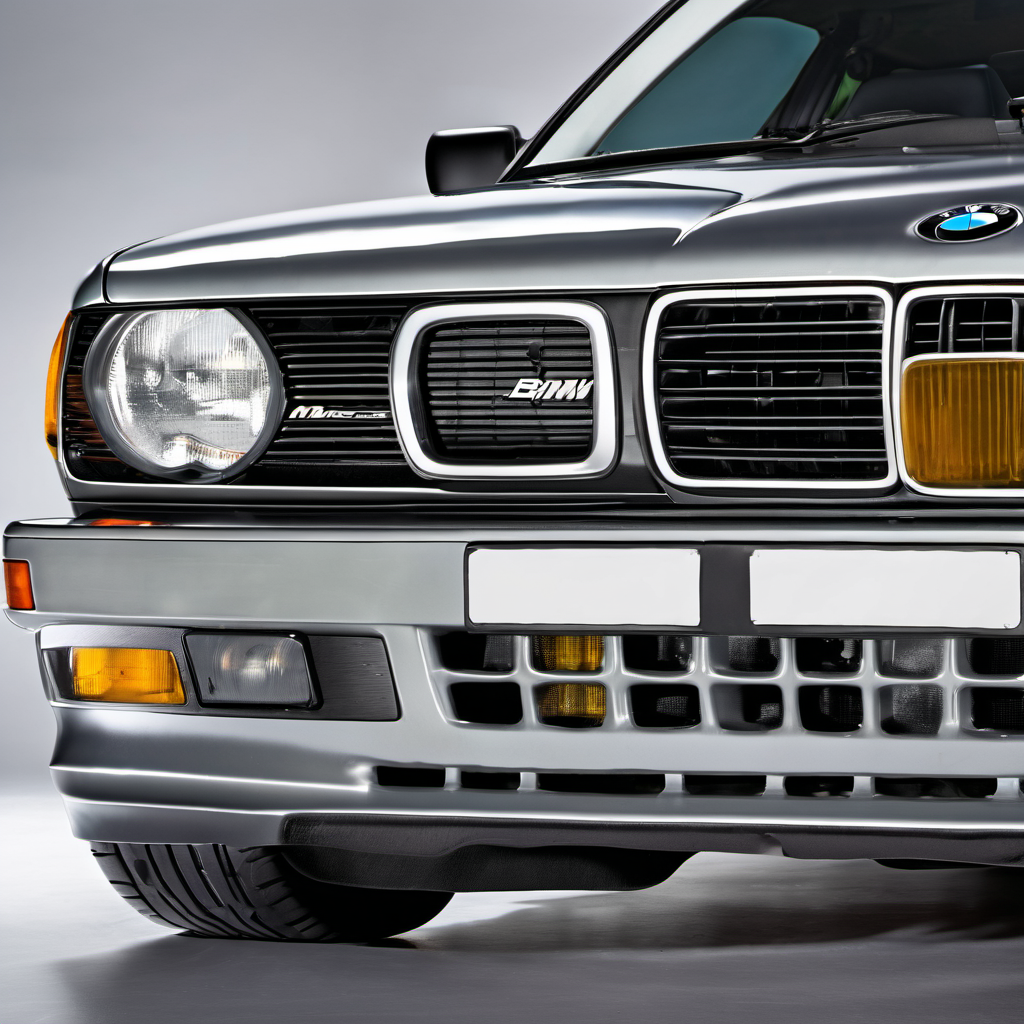
1993 BMW M5 Sedan

1993 BMW

M5Sedan

3.8L I6 (S38B38) · Sedan

The 1993 BMW M5 (E34 generation) is a hand-built, high-performance sport sedan produced in limited numbers at BMW's Garching facility. It pairs a 3.6L or 3.8L inline-six with a driver-focused chassis derived from the standard 5 Series — the result is a car that's equally at home on the Autobahn at triple-digit speeds or a winding back road. U.S.-market 1993 models received the 3.8L S38B38 engine, upgraded over the earlier 3.6L unit with more displacement and revised internals. As a collector car now well past 30 years old, the E34 M5 commands serious respect among enthusiasts — and serious maintenance budgets. Parts are scarce, specialist knowledge is essential, and deferred maintenance is punishing. Budget accordingly and find a shop that actually knows BMW performance engines before you buy or service one. This is not a daily driver in the Lake Geneva winters unless you're committed to proper storage or seasonal care. Road salt is the enemy of the E34's aging undercarriage, and sub-zero starts on a high-compression inline-six demand fresh oil, a strong battery, and genuine premium fuel.

Reliability
3/5
Verified data
Engine
3.8L I6 (S38B38)
Drivetrain
RWD
Fuel
Gasoline
MPG
15 city / 21 hwy / 17 combined
Seats
5
Doors
4
Body
Sedan
MSRP
$65,000

Overview

AI-curated

The 1993 BMW M5 (E34 generation) is a hand-built, high-performance sport sedan produced in limited numbers at BMW's Garching facility. It pairs a 3.6L or 3.8L inline-six with a driver-focused chassis derived from the standard 5 Series — the result is a car that's equally at home on the Autobahn at triple-digit speeds or a winding back road. U.S.-market 1993 models received the 3.8L S38B38 engine, upgraded over the earlier 3.6L unit with more displacement and revised internals. As a collector car now well past 30 years old, the E34 M5 commands serious respect among enthusiasts — and serious maintenance budgets. Parts are scarce, specialist knowledge is essential, and deferred maintenance is punishing. Budget accordingly and find a shop that actually knows BMW performance engines before you buy or service one. This is not a daily driver in the Lake Geneva winters unless you're committed to proper storage or seasonal care. Road salt is the enemy of the E34's aging undercarriage, and sub-zero starts on a high-compression inline-six demand fresh oil, a strong battery, and genuine premium fuel.

Known for
  • Hand-built 3.8L inline-six (S38B38) with individual throttle bodies
  • Sport sedan that could embarrass purpose-built sportscars of its era
  • Exceptional chassis balance and rear-wheel-drive handling purity
  • Limited production numbers — extremely rare in U.S. trim
  • One of the last M5s built before electronics took over the driving experience
Best for
  • Experienced BMW enthusiasts with a dedicated specialist mechanic
  • Collectors willing to store the car in winter and invest in proper upkeep
  • Drivers who prioritize analog, high-revving performance over modern comfort
  • Weekend and track-day use rather than year-round commuting
Watch for
  • Extremely high parts costs — many components are NLA (no longer available) from BMW
  • Deferred maintenance is common on these cars and very expensive to catch up on
  • Road salt exposure accelerates subframe and floorpan corrosion on aging bodywork
  • VANOS-era oiling issues and throttle body synchronization complexity
  • Finding a mechanic with actual E34 M5 experience is genuinely difficult

Common issues by mileage

6 known

Cooling system failure — hoses, thermostat, water pump

high
Typically appears
Any mileage on 30+ year-old cars
Estimated repair
$800 – $2,200

Individual throttle body synchronization and idle issues

high
Typically appears
60k–150k mi
Estimated repair
$400 – $1,200

Valve cover gasket and camshaft cover oil leaks

high
Typically appears
60k–150k mi
Estimated repair
$300 – $800

Subframe and undercarriage rust (especially Wisconsin/salt-belt cars)

high
Typically appears
Any mileage on unprotected cars
Estimated repair
$1,500 – $6,000

Differential and rear suspension bushing wear

medium
Typically appears
80k–150k mi
Estimated repair
$600 – $2,500

Electrical gremlins — aged wiring harness, cracked connectors, failed relays

medium
Typically appears
Any mileage on 30+ year-old cars
Estimated repair
$300 – $3,000

Maintenance schedule

  1. 1
    Every 5,000 miles or annually, whichever comes first Engine oil and filter change — use full synthetic 10W-60 or manufacturer-spec grade

    The S38 has tight tolerances and runs hot. Stale or wrong-viscosity oil accelerates cam and lifter wear dramatically. Do not stretch intervals on this engine.

  2. 2
    Every 4–5 years regardless of mileage Complete cooling system service — hoses, thermostat, water pump, expansion tank

    Rubber hoses and plastic expansion tanks degrade with age, not just mileage. An overheat on this engine is extremely expensive. Proactive replacement is far cheaper than a head gasket job.

  3. 3
    Every 30,000 miles or when idle quality degrades Throttle body cleaning and synchronization

    Six individual throttle bodies must be balanced to ensure smooth idle and even power delivery. This requires specialist equipment and experience with the S38.

  4. 4
    Every 2 years Brake fluid flush

    BMW has required biennial brake fluid flushes for decades. The high-performance brakes on the M5 generate serious heat; degraded fluid raises boiling point risk under hard use.

  5. 5
    Every 5 years or at purchase of a used example Inspect and replace aged rubber — engine mounts, subframe bushings, suspension bushings

    30-year-old rubber is hard and cracked regardless of visual appearance. Failed mounts and bushings compromise both handling precision and safety.

  6. 6
    Every 30,000 miles Fuel system inspection — injectors, fuel lines, fuel filter

    Aged fuel lines can crack and leak, and injectors on the S38 benefit from cleaning or testing at high mileage. A fuel leak on a high-compression performance engine is a fire risk.

  7. 7
    Annually — especially before and after Wisconsin winters Undercarriage inspection and corrosion treatment

    Road salt destroys the E34's floorpans, subframe mounting points, and brake lines. Annual inspection and rustproofing/undercoating is not optional in a salt-belt state.

  8. 8
    Every fall before winter storage or daily-driver season Battery load test

    Sub-zero Wisconsin temperatures are brutal on aging batteries. The M5's electrical system draws significant current at startup. A weak battery in January is a real problem.

Always defer to the manufacturer's service manual for warranty-mandated intervals.

Cost of ownership

Annual maintenance
$2,000 – $6,000
Fuel
Premium 91+ octane required. At 17 MPG combined and current Midwest premium prices, expect $2,800–$3,800/year for ~10,000 miles of driving.
Insurance
Collector/agreed-value policies are strongly recommended given the car's rarity and increasing value. Expect $800–$2,000/year depending on usage, storage, and coverage type.

This is an expensive car to own correctly. Routine annual maintenance on a well-maintained example runs $2,000–$4,000. A neglected car being brought back to proper condition can easily run $8,000–$15,000 in the first year. Parts sourcing is the primary challenge — some components require European suppliers or specialist salvage yards, adding lead time and cost. Budget generously and resist the urge to defer anything.
Seasonal care

Lake Geneva, WI
Winter
  • Do not drive this car on Wisconsin salted roads unless you are committed to thorough undercarriage washing after every outing — salt destroys the aging unibody, brake lines, and subframe mounts.
  • If storing for winter, use a trickle charger (battery tender) to maintain battery health through sub-zero months — a discharged AGM or lead-acid battery in cold storage dies permanently.
  • Change to fresh full-synthetic oil before storage or winter use — old oil in a cold-soaked engine at startup causes the most wear the S38 sees all year.
  • Inspect coolant freeze protection — ensure antifreeze is rated to at least -34°F for Wisconsin winters.
  • Replace wiper blades with winter-rated blades if driving; the stock wiper system is marginal in heavy snow.
  • Check tire pressure with every 10°F temperature drop — RWD on summer performance tires in Wisconsin winter is genuinely dangerous.
Summer
  • Monitor coolant temperature closely in slow traffic or on track days — the E34 M5 cooling system is 30+ years old and heat soak in stop-and-go traffic can catch you off guard.
  • Inspect A/C system for refrigerant leaks and compressor condition — R134a retrofit may have been done on this car if not already converted from original R12.
  • Check tire pressure weekly in summer heat — performance tires on RWD cars lose grip fast when overinflated from heat expansion.
  • Inspect brake pads and rotors before any spirited summer driving — the car's performance capability makes brake condition a genuine safety issue.

Comparable vehicles

If you're shopping for one

Red flags
  • No documented service history — walk away unless the price reflects a full recommissioning budget.
  • Any evidence of overheating history (white residue around coolant hoses, stained head area, milky oil cap).
  • Visible undercarriage rust, especially at subframe mounting points or around rear wheel arches.
  • Modified or non-original intake, exhaust, or engine management — implies unknown changes to a precision-engineered system.
  • Mismatched or incorrect VIN tags — limited-production cars attract fraud and title washing.
  • Electrical issues written off as 'minor' — on a 30-year-old car with aging wiring, electrical faults often indicate a deeper harness problem.
What to inspect
  • Pull the service history and look for documentation of cooling system, oil service, and throttle body work — absence of records is a red flag on a car this age.
  • Check all six throttle bodies for smooth, equal movement and inspect linkage for wear or makeshift repairs.
  • Inspect the undercarriage, subframe mounting points, and floorpans thoroughly for rust — a Wisconsin car or any former salt-belt car may have serious structural corrosion under intact paint.
  • Start the engine cold and listen for valve train noise, rough idle, or smoke — the S38 should idle smoothly and quietly once warm.
  • Check all rubber — engine mounts, differential mount, rear subframe bushings, and suspension arms. Budget for replacement regardless.
  • Verify the 6-speed Getrag gearbox shifts cleanly through all gears with no grinding, notchiness, or popping out of gear.
  • Have a BMW specialist (not a general shop) perform a pre-purchase inspection. This is non-negotiable on a car this rare and expensive.
AI profile generated 4 days ago · claude-sonnet-4-6 · v2.