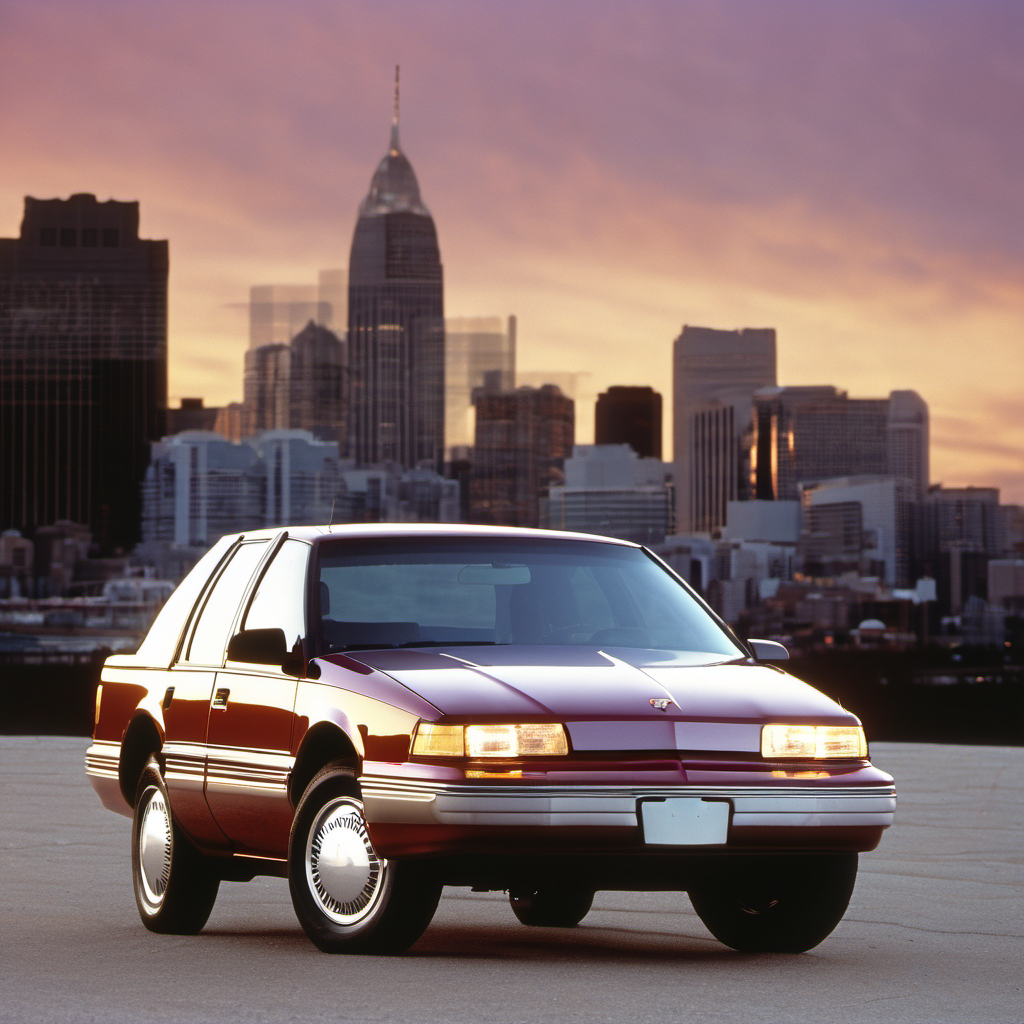
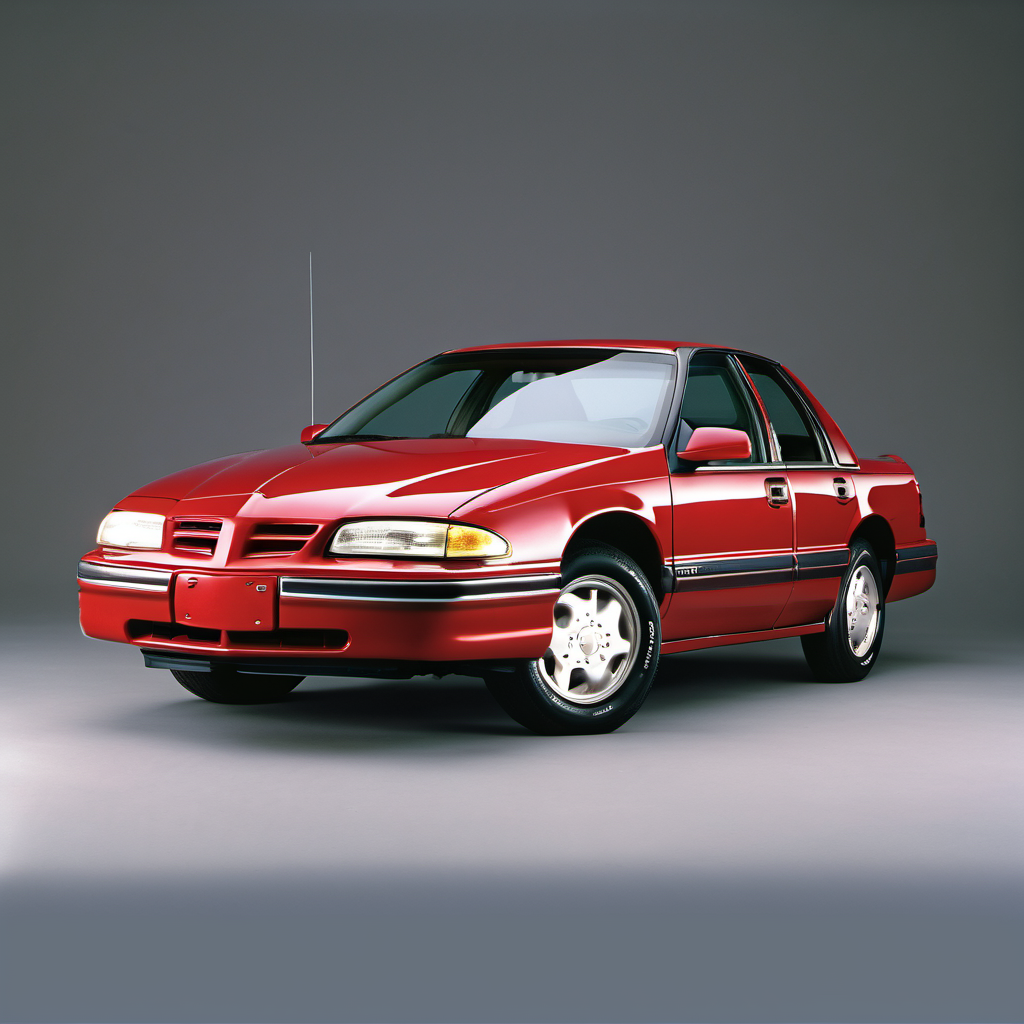
1992 Oldsmobile Achieva Sedan

1992 Oldsmobile

AchievaSedan

Sedan

The 1992 Oldsmobile Achieva was GM's replacement for the Cutlass Calais, built on the N-body platform shared with the Buick Skylark and Pontiac Grand Am. It was positioned as a sporty-ish compact sedan aimed at younger buyers, offering front-wheel drive and a choice of four-cylinder engines. In its day it was a competent, affordable compact — but it was never a standout in reliability or refinement. At over 30 years old, any surviving Achieva is a high-mileage, aging vehicle. Rust is the single biggest threat in Wisconsin — the N-body platform was not known for strong corrosion resistance, and decades of road salt exposure can compromise floorpans, subframe mounts, and brake lines. Parts availability has become increasingly thin as the model fades from service. If you're looking at one today, it's almost certainly a budget buy. Go in clear-eyed: mechanical repairs are generally inexpensive if you can find parts, but the car's age means you're managing rust and worn-out wear items as much as anything else.

Reliability
2/5
Verified data
Specs shown for Achieva — the most common configuration. Other trims may vary in engine, drivetrain, or fuel economy. Sign in to see your vehicle's exact specs.
Engine
[object Object]
Drivetrain
FWD
Fuel
Gasoline
MPG
19 city / 27 hwy / 22 combined
Seats
Doors
Body
Compact Cars

Overview

AI-curated

The 1992 Oldsmobile Achieva was GM's replacement for the Cutlass Calais, built on the N-body platform shared with the Buick Skylark and Pontiac Grand Am. It was positioned as a sporty-ish compact sedan aimed at younger buyers, offering front-wheel drive and a choice of four-cylinder engines. In its day it was a competent, affordable compact — but it was never a standout in reliability or refinement. At over 30 years old, any surviving Achieva is a high-mileage, aging vehicle. Rust is the single biggest threat in Wisconsin — the N-body platform was not known for strong corrosion resistance, and decades of road salt exposure can compromise floorpans, subframe mounts, and brake lines. Parts availability has become increasingly thin as the model fades from service. If you're looking at one today, it's almost certainly a budget buy. Go in clear-eyed: mechanical repairs are generally inexpensive if you can find parts, but the car's age means you're managing rust and worn-out wear items as much as anything else.

Known for
  • Affordable compact FWD package on GM's N-body platform
  • Quad 4 (2.3L) engine with strong output for its era but a history of head gasket and oil consumption issues
  • Light, nimble feel but budget interior quality
  • Shared parts with Buick Skylark and Pontiac Grand Am
Best for
  • Very tight budgets needing basic transportation
  • Mechanically inclined owners who can handle DIY repairs
  • Short-distance city driving
  • Collectors interested in early-90s GM history
Watch for
  • Severe rust on floorpans, subframe, and brake lines after decades of Wisconsin salt exposure
  • Quad 4 engine head gasket failures and oil consumption
  • Rapidly declining parts availability for 30+ year old GM N-body components
  • Worn suspension and steering components common at this age
  • Electrical gremlins in aging GM body and instrument cluster wiring

Common issues by mileage

6 known

Quad 4 Head Gasket Failure

high
Typically appears
80–130k mi
Estimated repair
$800 – $1,600

Coolant Leaks / Intake Manifold Gasket

high
Typically appears
70–120k mi
Estimated repair
$300 – $700

Strut and Control Arm Bushing Wear

high
Typically appears
60k mi and beyond
Estimated repair
$400 – $900

Rust — Floorpan, Subframe Mounts, Brake Lines

high
Typically appears
All mileages on aged vehicles
Estimated repair
$500 – $3,000

Instrument Cluster and Gauge Failure

medium
Typically appears
80k mi and beyond
Estimated repair
$150 – $500

Oxygen Sensor Heater Circuit Failure

medium
Typically appears
80–150k mi
Estimated repair
$100 – $300

Maintenance schedule

  1. 1
    Every 3,000–5,000 mi on a vehicle this age Engine oil and filter change

    The Quad 4 is prone to oil consumption and sludging. Shorter intervals help protect the head gasket and top-end lubrication.

  2. 2
    Every 2 years or 30,000 mi Coolant flush and inspection

    Degraded coolant accelerates head gasket and water pump failures — a known weakness on this engine. Check for any milky discoloration indicating head gasket seepage.

  3. 3
    Every spring after Wisconsin winter Brake line inspection

    Road salt accelerates brake line corrosion on this platform. A failing brake line is a safety emergency. Inspect the entire length annually.

  4. 4
    Annually, ideally every fall and spring Underbody rust inspection

    At 30+ years in the upper Midwest, rust on floorpans, subframe, and fuel lines can make a car unsafe or uneconomical to repair.

  5. 5
    Every 40,000–50,000 mi or every 4 years Serpentine belt and tensioner inspection

    Old belts get brittle in Wisconsin winters. A snapped belt on a sub-zero morning leaves you stranded.

  6. 6
    Every 30,000 mi Spark plugs and plug wires

    The Quad 4 is sensitive to ignition condition. Worn plugs and cracked wires cause misfires and rough cold starts.

  7. 7
    Every fall before winter Battery load test

    A marginal battery that starts the car in summer will often fail at the first hard freeze. Load-test before November.

  8. 8
    Every 30,000 mi or at each tire rotation Suspension and steering component inspection

    Control arm bushings, tie rod ends, and struts wear quickly on N-body cars and are overdue on any high-mileage 1992 example.

Always defer to the manufacturer's service manual for warranty-mandated intervals.

Cost of ownership

Annual maintenance
$600 – $1,800
Fuel
At 22 mpg combined and typical upper Midwest driving, expect roughly $1,400–$1,800/year at current gas prices depending on mileage driven.
Insurance
Liability-only coverage is typical for a vehicle at this value — expect $400–$700/year depending on your driving history and coverage level.

On paper this car is cheap to own — low purchase price and inexpensive parts when you can find them. The real cost is unpredictability: at 30+ years old, a single repair (head gasket, brake lines, rust remediation) can easily exceed the car's market value. Budget for surprises. Annual maintenance costs assume routine items only; any major mechanical or rust repair is extra.
Seasonal care

Lake Geneva, WI
Winter
  • Load-test the battery every fall — cold-cranking a 30-year-old Quad 4 at -10°F will kill a weak battery fast.
  • Switch to full-strength winter washer fluid rated to at least -20°F; Wisconsin winters will freeze standard fluid solid in the lines.
  • Inspect and replace wiper blades before first snowfall; consider winter-style blades to handle ice and heavy snow.
  • Check coolant freeze protection with a tester — should be good to at least -30°F given Lake Geneva temperatures.
  • Inspect brake lines carefully each fall; salt accelerates corrosion and a 30-year-old brake line can fail without warning.
  • If the car sits outdoors, use a block heater or interior battery maintainer to ease cold starts and protect the aging engine.
Summer
  • Check tire pressure monthly — tires lose and gain roughly 1 PSI per 10°F of temperature change and Wisconsin summers run hot.
  • Inspect the A/C system for refrigerant leaks and proper cooling; the original R-12 system has likely been converted to R-134a — verify the conversion was done correctly.
  • Check coolant level and inspect hoses for cracks before summer heat — the Quad 4 runs warm and a heat-soaked cooling system accelerates head gasket wear.
  • Inspect the serpentine belt for cracking or glazing; heat degrades old rubber quickly.

Comparable vehicles

If you're shopping for one

Red flags
  • Any visible rust perforation in the floorpan or subframe — structural rust can make the car unsafe and uneconomical to repair.
  • Milky oil or sweet-smelling exhaust — head gasket failure in progress.
  • Soft or spongy brake pedal — could indicate a corroded or failing brake line.
  • Check engine light on with no explanation from the seller.
  • Signs of deferred maintenance: original-looking hoses, cracked belts, or a battery with a manufacture date before 2020.
  • Market value on these cars is very low — if a repair estimate approaches or exceeds $1,500, it may exceed what the car is worth.
What to inspect
  • Put the car on a lift and probe the floorpan, subframe mounting points, and all brake lines for rust — this is non-negotiable on a 30-year-old Wisconsin car.
  • Check the oil filler cap and dipstick for milky or frothy residue indicating a head gasket leak mixing coolant and oil.
  • Look for coolant stains around the intake manifold and cylinder head — common seepage points on the Quad 4.
  • Test all four corners of the suspension for looseness, clunking, and worn bushings.
  • Verify the A/C system has been properly converted from R-12 to R-134a and actually cools.
  • Check instrument cluster functionality — gauge failures are common and replacement clusters are increasingly hard to find.
  • Do a full cold start to check for rough idling, smoke, or hard starting that signals engine wear.
AI profile generated 1 day ago · claude-sonnet-4-6 · v2.