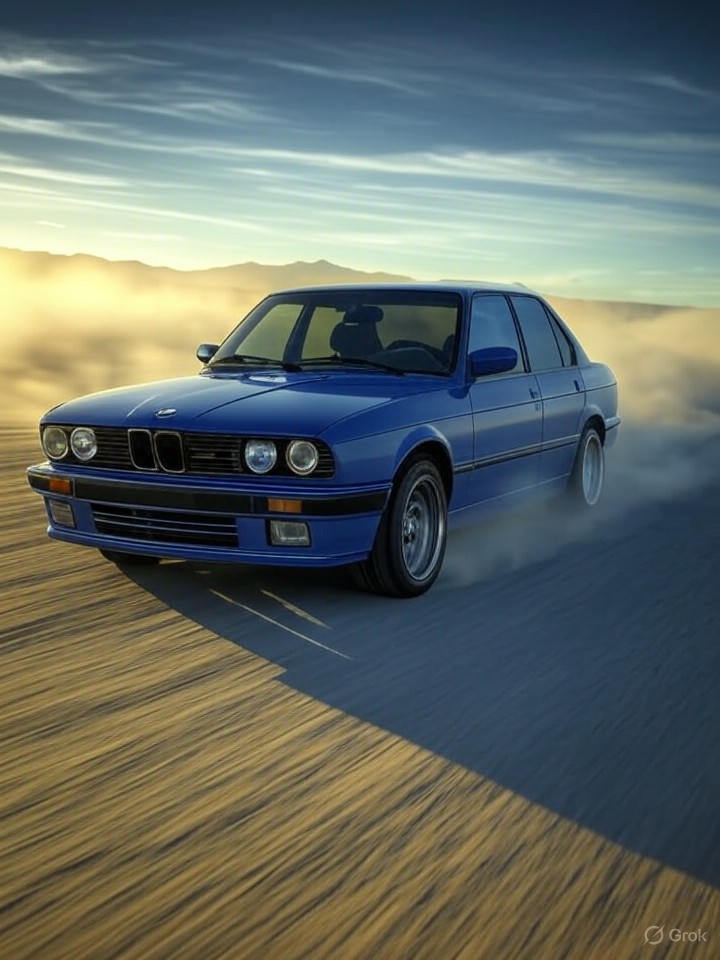
1992 BMW M5 Sedan

1992 BMW

M5Sedan

3.6L S38B36 I6 · Sedan

The E34-generation BMW M5 (1991–1993 in North America) is one of the most celebrated sport sedans ever built. Powered by the legendary S38B36 inline-six — a 3.6-liter, 24-valve engine hand-assembled at BMW Motorsport — it delivered 310 horsepower and a driving experience that was genuinely exotic wrapped in a business-like four-door body. Only a small number were brought to the U.S. each year, making the '92 a relatively rare find. In period, the E34 M5 was the benchmark for the 'super sedan' genre: it out-handled nearly everything with four seats while remaining livable as a daily driver. The interior was high-quality by early-90s standards, with sport seats, analog gauges, and a driver-focused layout that holds up surprisingly well today. Owning one in 2024 is a committed enthusiast proposition. Parts can be expensive and sometimes hard to source, and this car rewards — and frankly requires — an owner who stays ahead of maintenance. For the right buyer, it is an irreplaceable piece of driving history.

Reliability
3/5
Verified data
Engine
3.6L S38B36 I6
Drivetrain
RWD
Fuel
Premium gasoline
MPG
13 city / 20 hwy / 16 combined
Seats
5
Doors
4
Body
Compact Cars
MSRP
$62,000

Overview

AI-curated

The E34-generation BMW M5 (1991–1993 in North America) is one of the most celebrated sport sedans ever built. Powered by the legendary S38B36 inline-six — a 3.6-liter, 24-valve engine hand-assembled at BMW Motorsport — it delivered 310 horsepower and a driving experience that was genuinely exotic wrapped in a business-like four-door body. Only a small number were brought to the U.S. each year, making the '92 a relatively rare find. In period, the E34 M5 was the benchmark for the 'super sedan' genre: it out-handled nearly everything with four seats while remaining livable as a daily driver. The interior was high-quality by early-90s standards, with sport seats, analog gauges, and a driver-focused layout that holds up surprisingly well today. Owning one in 2024 is a committed enthusiast proposition. Parts can be expensive and sometimes hard to source, and this car rewards — and frankly requires — an owner who stays ahead of maintenance. For the right buyer, it is an irreplaceable piece of driving history.

Known for
  • Hand-built S38B36 inline-six with extraordinary throttle response
  • Near-perfect 50/50 weight distribution and razor-sharp handling
  • Discreet, executive styling that hides its performance intent
  • One of the last BMW M cars built before widespread electronic driver aids
Best for
  • Experienced enthusiasts who can perform or manage their own maintenance
  • Collectors who want a significant, appreciating piece of BMW history
  • Drivers who prioritize analog engagement over modern convenience
  • Those who already have a reliable daily driver
Watch for
  • VANOS variable valve timing system failures — expensive to rebuild
  • Cooling system components (water pump, hoses, expansion tank) are 30+ years old
  • Deferred maintenance is common on collector cars; budget for a full inspection
  • Electrical gremlins from aged wiring, relays, and connectors throughout
  • Rust in wheel wells, floor pans, and undercarriage from road salt exposure

Common issues by mileage

6 known

VANOS Variable Valve Timing Failure

high
Typically appears
60–150k mi
Estimated repair
$800 – $2,200

Cooling System Failure (Water Pump, Thermostat, Expansion Tank, Hoses)

high
Typically appears
Any mileage on original components
Estimated repair
$600 – $1,400

Oxygen Sensor and Fuel Mixture Issues

medium
Typically appears
80–150k mi
Estimated repair
$200 – $600

Differential Seal and Output Shaft Leaks

medium
Typically appears
80–130k mi
Estimated repair
$300 – $800

Fuel Pump Relay and Fuel Delivery Failures

medium
Typically appears
60–120k mi
Estimated repair
$150 – $500

Underbody and Wheel Arch Rust (Salt Belt Cars)

high
Typically appears
Any mileage — age-driven
Estimated repair
$500 – $4,000

Maintenance schedule

  1. 1
    Every 5,000 miles or annually, whichever comes first Engine oil and filter change with BMW-spec 10W-60 or 5W-40 full synthetic

    The S38 has tight oil passages and hand-fit tolerances. Using correct viscosity and not stretching intervals is the single most important thing you can do for engine longevity.

  2. 2
    Every 3 years or 30,000 miles; inspect hoses annually Cooling system full flush and component inspection (hoses, clamps, expansion tank, water pump, thermostat)

    All cooling components are over 30 years old. Plastic expansion tanks crack without warning. An overheated S38 is an expensive rebuild.

  3. 3
    Inspect at 60k mi; rebuild seals at signs of rattle or rough idle VANOS unit inspection and seal/rebuild as needed

    VANOS seals harden with age, causing loss of low-end torque, rough cold starts, and timing codes. Proactive service prevents cam gear damage.

  4. 4
    Every 2 years regardless of mileage Brake fluid flush

    BMW recommends this interval; brake fluid absorbs moisture over time, lowering boiling point — critical for a performance car with hard braking potential.

  5. 5
    Every 30,000 miles Differential and gearbox fluid change

    The Getrag 420G and limited-slip diff benefit from clean fluid. Neglected differentials develop whine and wear quickly.

  6. 6
    Every fall before Wisconsin winter Inspect and lubricate door seals, sunroof drain tubes, and rubber trim

    Dried seals let water and road-salt spray into the cabin and sills, accelerating hidden rust. Sunroof drains clogged with leaves cause interior flooding.

  7. 7
    Every fall; replace battery every 4–5 years Battery load test and terminal cleaning

    The E34's extensive electronics — DME, instrument cluster, window regulators — are sensitive to voltage sag. Sub-zero Wisconsin mornings will find a weak battery immediately.

  8. 8
    Every 30,000 miles Fuel injector cleaning and fuel filter replacement

    Aged injectors on a high-compression engine cause rough running, poor fuel economy, and hard starting in cold weather.

Always defer to the manufacturer's service manual for warranty-mandated intervals.

Cost of ownership

Annual maintenance
$1,500 – $4,500
Fuel
Premium 91+ octane required. Expect $2,800–$4,200/year at average 12,000 miles and current Wisconsin pump prices.
Insurance
Typically $900–$1,800/year for an agreed-value collector policy on a well-maintained example. A standard-use policy will cost more; most owners insure these as limited-mileage collector vehicles.

This is not a cheap car to own. Even in a good year with no major repairs, routine maintenance on an S38-powered M5 runs $1,500–$2,500 at an independent shop. Budget an additional $1,000–$2,000 annually for age-related component replacement — hoses, belts, sensors, seals. A deferred-maintenance example can easily see a $5,000–$10,000 catch-up bill in year one. Parts availability is reasonable but some items are dealer-only or sourced from European suppliers, adding lead time and cost.
Seasonal care

Lake Geneva, WI
Winter
  • Do not drive this car on salted Wisconsin roads if avoidable — the E34 body is 30+ years old and rust repair is costly. Storage is the best winter strategy.
  • If driven in winter, rinse the undercarriage thoroughly after every salt exposure; pay special attention to the subframe mounts, rear wheel arches, and floor pan seams.
  • Store on a trickle/maintainer charger (not a standard charger) to prevent battery drain and sulfation during storage.
  • Use a full-synthetic 5W-40 oil if the car will be started in sub-zero temps; the S38 needs proper lubrication on cold cranks.
  • Replace wiper blades with winter-rated blades before first snowfall and keep the reservoir filled with -20°F or lower rated washer fluid.
  • Check coolant freeze protection annually with a refractometer — target -34°F minimum for Lake Geneva winters.
Summer
  • Monitor coolant temperature closely during summer driving — the aging cooling system is most stressed in stop-and-go heat. Do not ignore a rising temp gauge.
  • Check tire pressure monthly; summer heat can add 4–6 PSI above a cool-morning reading. The M5's performance tires are sensitive to pressure changes.
  • Inspect the A/C system for refrigerant level and cabin filter condition; the evaporator drain can clog and cause musty odors or interior moisture.
  • Inspect brake pads before any spirited summer driving — these cars are fast enough to fade neglected brakes on a back road.
  • Park in shade or use a quality car cover to protect the 30-year-old rubber seals and plastics from UV degradation.

Comparable vehicles

If you're shopping for one

Red flags
  • Any cooling system warning lights, temperature gauge spikes in history, or evidence of overheating (white deposits at hose connections, milky oil cap).
  • Rust bubbles under paint at the rear wheel arches or sill edges — this almost always means more rust hidden underneath.
  • A seller who won't allow a pre-purchase inspection by an independent BMW specialist.
  • Modified suspension without documentation — lowered or stiffened springs can indicate track use and accelerated wear.
  • Mismatched paint panels suggesting prior accident repair — always check panel gaps and door jamb paint edges.
  • Low asking price with vague service history. A properly maintained E34 M5 commands a fair market value; a too-cheap example has usually been neglected.
What to inspect
  • Pull the full service history — an M5 with documented BMW or reputable independent shop records is worth a significant premium over one with gaps.
  • Cold-start the engine and listen for VANOS rattle in the first 10–30 seconds; a loud ticking on cold start that clears when warm points to worn VANOS seals.
  • Pressure-test the cooling system before purchase; a failing expansion tank or seeping head gasket is a major red flag.
  • Inspect all four wheel arches, the rear subframe mounting points, and the floor pan for rust — these are the E34's known rust initiation points.
  • Check all electrical systems: windows, sunroof, instrument cluster (common pixel failures), and HVAC blower. Repairs are labor-intensive.
  • Verify the original engine is present (check the S38B36 stamp on the block) — some examples have been swapped with lesser engines.
  • Test drive should include a highway pull to redline in 3rd gear; the engine should pull cleanly and strongly to 7,000 RPM with no hesitation or misfires.
AI profile generated 4 days ago · claude-sonnet-4-6 · v2.