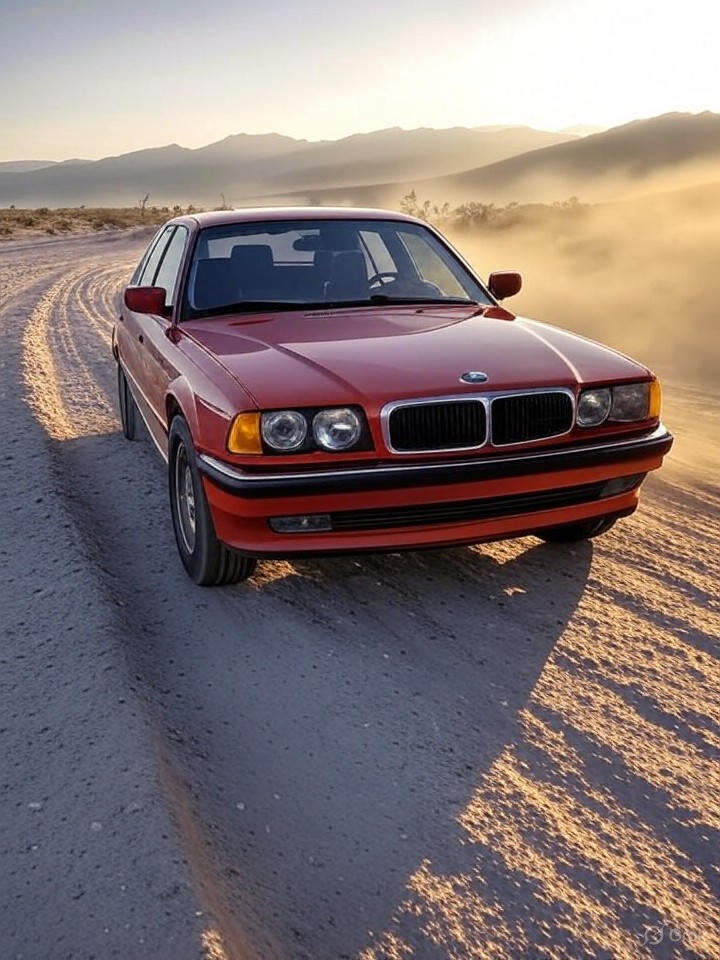
1992 BMW 7 Series Sedan

1992 BMW

7 SeriesSedan

Sedan

The 1992 BMW 7 Series (E32 generation) is a full-size luxury sedan that represented BMW's engineering and prestige flagship of the era. Introduced in 1987 and refreshed for the early '90s, the E32 brought a blend of sporting dynamics and executive comfort that few competitors could match at the time. The 740i/740iL variants carry the 3.4L inline-six (M30B35 or M30B34 depending on exact spec), a proven iron-block engine known for longevity when maintained. This is a 30-plus-year-old luxury car, which means two realities collide: mechanical simplicity compared to modern BMWs, but decades of age-related wear and the high cost of German parts. Electrical gremlins from aging wiring harnesses, deteriorating rubber components, and deferred maintenance are the norm on surviving examples. Budget accordingly. For a Wisconsin owner, the E32's RWD layout and heavy curb weight demand winter tires — this is not a snow-friendly car on all-seasons. Salt exposure is severe in Lake Geneva; rust inspection underneath is non-negotiable before purchase and annually thereafter.

Reliability
2/5
Verified data
Specs shown for 735i — the most common configuration. Other trims may vary in engine, drivetrain, or fuel economy. Sign in to see your vehicle's exact specs.
Engine
[object Object]
Drivetrain
RWD
Fuel
Gasoline
MPG
14 city / 20 hwy / 16 combined
Seats
Doors
Body
Midsize Cars

Overview

AI-curated

The 1992 BMW 7 Series (E32 generation) is a full-size luxury sedan that represented BMW's engineering and prestige flagship of the era. Introduced in 1987 and refreshed for the early '90s, the E32 brought a blend of sporting dynamics and executive comfort that few competitors could match at the time. The 740i/740iL variants carry the 3.4L inline-six (M30B35 or M30B34 depending on exact spec), a proven iron-block engine known for longevity when maintained. This is a 30-plus-year-old luxury car, which means two realities collide: mechanical simplicity compared to modern BMWs, but decades of age-related wear and the high cost of German parts. Electrical gremlins from aging wiring harnesses, deteriorating rubber components, and deferred maintenance are the norm on surviving examples. Budget accordingly. For a Wisconsin owner, the E32's RWD layout and heavy curb weight demand winter tires — this is not a snow-friendly car on all-seasons. Salt exposure is severe in Lake Geneva; rust inspection underneath is non-negotiable before purchase and annually thereafter.

Known for
  • Smooth, long-lived M30 inline-six engine
  • Rear-wheel-drive luxury sport dynamics
  • Well-appointed interior with analog luxury feel
  • Complex electrical systems that age poorly
  • High parts and labor costs typical of European luxury
Best for
  • Enthusiasts comfortable with DIY or trusted indie BMW shops
  • Collectors wanting a classic '90s luxury sedan
  • Drivers who prioritize highway comfort and smooth power delivery
Watch for
  • Aging wiring harnesses causing intermittent electrical faults
  • Nikasil cylinder bore issues on some early-'90s BMW sixes (fuel quality damage)
  • Deferred maintenance — these cars are cheap to buy but expensive to fix right
  • Rust in rocker panels, floor pans, and subframe mounts from road salt
  • High cost of genuine BMW or quality OEM parts

Common issues by mileage

6 known

Cooling system failure (thermostat housing, expansion tank, hoses)

high
Typically appears
Any mileage on a 30+ year old car
Estimated repair
$300 – $900

Wiring harness deterioration / electrical gremlins

high
Typically appears
Any mileage — age-driven
Estimated repair
$400 – $2,500

Oxygen sensor heater circuit failure

medium
Typically appears
80k+ mi
Estimated repair
$150 – $450

Camshaft position / valve timing faults (oil sludge, worn timing chain guides)

medium
Typically appears
90k–150k mi
Estimated repair
$600 – $2,000

Automatic transmission service neglect (slipping, harsh shifts)

medium
Typically appears
70k–120k mi
Estimated repair
$300 – $3,500

Rust — rocker panels, floor pans, rear subframe mounts

high
Typically appears
Any — age and salt exposure
Estimated repair
$500 – $5,000

Maintenance schedule

  1. 1
    Every 5,000 miles or 6 months — do not follow the old 15k BMW service intervals on a 30-year-old engine Engine oil and filter change

    The M30 tolerates neglect poorly at this age. Fresh oil prevents sludge buildup in the valve train and timing chain area.

  2. 2
    Every 2 years or immediately if not documented Cooling system inspection and fluid flush

    Plastic cooling components (expansion tank, thermostat housing) become brittle with age. Coolant degrades and becomes acidic, accelerating corrosion. Overheating can be catastrophic on this engine.

  3. 3
    Every 30,000 miles Fuel filter replacement

    Aging fuel lines and tank sediment put extra load on the injectors; a clean filter protects them.

  4. 4
    Every 2 years Brake fluid flush

    Hygroscopic brake fluid absorbs moisture over time, lowering boiling point — especially important given the age of the brake system components.

  5. 5
    Every 4 years or at first sign of rough idle / vacuum leaks Inspect and replace vacuum hoses

    The M30 relies on a network of vacuum lines that harden, crack, and split after 30 years. A vacuum leak causes rough running and poor fuel economy.

  6. 6
    Every 40,000 miles Automatic transmission fluid service

    BMW's 'lifetime fill' guidance does not apply to a 30-year-old transmission. Fresh ATF prevents slipping and extends clutch pack life.

  7. 7
    Annually, especially after every Wisconsin winter Inspect undercarriage for rust — rocker panels, subframe mounts, floor pan

    Road salt accelerates rust on this era of BMW. Subframe rust can be a safety issue and is expensive to repair once advanced.

  8. 8
    Every 4 years regardless of mileage Inspect and replace serpentine / accessory belts

    Rubber belts degrade with age as much as mileage. A belt failure on the highway leaves you stranded and can damage ancillary components.

Always defer to the manufacturer's service manual for warranty-mandated intervals.

Cost of ownership

Annual maintenance
$1,200 – $4,000
Fuel
At 16 MPG combined and typical Wisconsin driving, expect $2,000–$2,800/year in fuel at current prices. Premium fuel (91+ octane) required.
Insurance
Collector or classic car insurance may be available and affordable; standard comprehensive coverage on a vehicle this age and value is typically $800–$1,400/year depending on usage.

The E32 7 Series is inexpensive to purchase but expensive to maintain correctly. Parts are costly and labor hours are high due to German engineering complexity. Budget at least $1,200/year for routine maintenance in a good year; a year with a major repair (transmission, cooling system, electrical) can easily exceed $4,000 at an independent shop. Deferred maintenance on a used example can mean a $3,000–$8,000 catch-up bill. This is a passion purchase, not an economical one.

Seasonal care

Lake Geneva, WI
Winter
  • Install a dedicated set of winter tires — RWD on Wisconsin roads with all-seasons is genuinely dangerous. Winter tires are not optional on this car.
  • Test and replace the battery before first hard freeze. Cold cranking a 3.4L inline-six at -10°F stresses even a good battery; this engine needs a strong battery.
  • Flush and refill coolant with fresh 50/50 mix rated to at least -34°F; old coolant loses freeze protection.
  • Switch to a lighter-viscosity engine oil (e.g. 5W-30) if using conventional oil — the M30 can be sluggish to oil on cold starts in sub-zero temperatures.
  • Inspect and treat undercarriage with rust inhibitor before winter; rinse the undercarriage during mid-winter thaws to remove road salt accumulation.
  • Use DOT-rated winter washer fluid rated to -20°F or colder — standard summer fluid will freeze in the reservoir and lines.
Summer
  • Monitor coolant temperature closely — the aging cooling system on the E32 is prone to overheating, especially in stop-and-go traffic in summer heat.
  • Check tire pressure monthly; heat causes pressure to rise and aging tires to show their limits. This car is heavy and hard on tires.
  • Have the A/C system inspected and recharged if needed — the original R-134a conversion (if done) or factory charge may have leaked over 30+ years.
  • Inspect rubber door seals and weatherstripping; UV exposure hardens them and summer heat accelerates cracking, leading to wind noise and water leaks.

Comparable vehicles

If you're shopping for one

Red flags
  • No service records at all — walk away or price in $3,000–$5,000 for catch-up maintenance
  • Any rust through on rocker panels or visible floor pan rust — repair costs can exceed the car's value
  • Coolant in oil or oil in coolant (milky residue on dipstick or cap)
  • Check engine light that the seller can't explain or has 'just reset'
  • Deferred timing chain service — rattling on cold start indicates worn guides
  • Evidence of amateur electrical repairs (tape-wrapped wiring, non-OEM fuse additions)
What to inspect
  • Full undercarriage inspection for rust — especially rocker panels, rear subframe mounting points, and floor pan
  • Cooling system: look for milky oil (head gasket), check expansion tank for cracks, feel all hoses for hardness
  • Check for oil leaks at valve cover gasket, rear main seal, and oil pan — common on high-mileage M30 engines
  • Electrical: test all windows, sunroof, climate control, instrument cluster functions — these all fail with age
  • Verify automatic transmission shifts smoothly through all gears; shudder or slipping indicates expensive work ahead
  • Look for signs of Nikasil bore damage: blue-gray smoke on cold start, high oil consumption, loss of compression on cylinder leak-down test
  • Ask for all service records; a car with no documentation should be priced to absorb a full catch-up service
AI profile generated 4 days ago · claude-sonnet-4-6 · v2.