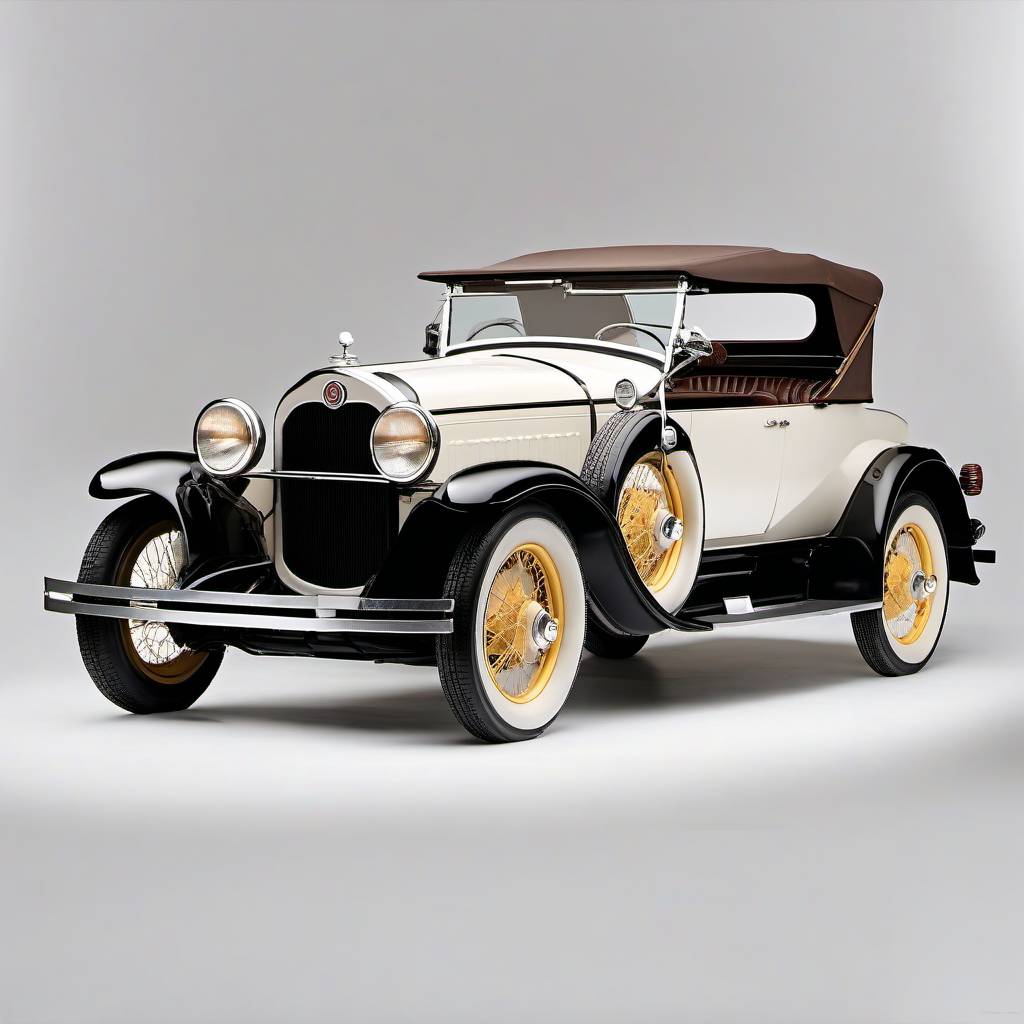
1928 Buick Series 115 Roadster

1928 Buick

Series 115Roadster

207 CI I6 · Roadster

The 1928 Buick Series 115 Roadster is a pre-Depression-era open-body automobile built on Buick's smallest wheelbase (115 inches) for that model year. It was powered by Buick's proven overhead-valve inline six-cylinder engine — a notable feature at a time when many rivals were still running side-valve designs — giving it a reputation for smooth, refined power that Buick marketed heavily. The Series 115 occupied the entry point of the Buick lineup, but still carried the brand's hallmark quality of finish and engineering over cheaper contemporaries like Chevrolet or Ford. Today, a 1928 Buick Series 115 Roadster is a collector and show vehicle first, a driver second. Surviving examples range from barn-find project cars to fully restored show-quality pieces. Parts availability is limited to specialty suppliers, antique auto swap meets, and the broader Buick club network. Budget and patience are prerequisites for any restoration or maintenance work. Owning this car in Lake Geneva, Wisconsin means managing the very real threat that 96+ years of Wisconsin salt, humidity, and freeze-thaw cycles have done to the body, frame, and mechanical components. This is not a daily driver. Storage, careful seasonal use, and a relationship with a shop experienced in pre-war vehicles are essential.

Reliability
3/5
Verified data
Engine
207 CI OHV I6
Drivetrain
RWD
Fuel
Gasoline
MPG
Seats
2
Doors
2
Body
Roadster
MSRP
$1,195

Overview

AI-curated

The 1928 Buick Series 115 Roadster is a pre-Depression-era open-body automobile built on Buick's smallest wheelbase (115 inches) for that model year. It was powered by Buick's proven overhead-valve inline six-cylinder engine — a notable feature at a time when many rivals were still running side-valve designs — giving it a reputation for smooth, refined power that Buick marketed heavily. The Series 115 occupied the entry point of the Buick lineup, but still carried the brand's hallmark quality of finish and engineering over cheaper contemporaries like Chevrolet or Ford. Today, a 1928 Buick Series 115 Roadster is a collector and show vehicle first, a driver second. Surviving examples range from barn-find project cars to fully restored show-quality pieces. Parts availability is limited to specialty suppliers, antique auto swap meets, and the broader Buick club network. Budget and patience are prerequisites for any restoration or maintenance work. Owning this car in Lake Geneva, Wisconsin means managing the very real threat that 96+ years of Wisconsin salt, humidity, and freeze-thaw cycles have done to the body, frame, and mechanical components. This is not a daily driver. Storage, careful seasonal use, and a relationship with a shop experienced in pre-war vehicles are essential.

Known for
  • Overhead-valve I6 engine — advanced for its era
  • Smooth, quiet operation compared to Ford and Chevy contemporaries
  • High-quality coachwork and interior appointments
  • Strong Buick club and marque community support
  • Durable chassis when properly maintained
Best for
  • Collectors and antique car enthusiasts
  • Car show participants
  • Occasional warm-weather Sunday drives
  • Buick marque historians and restorers
Watch for
  • Extensive rust in frame rails, body sills, and floor — near-universal at this age in the Midwest
  • Asbestos-containing gaskets, brake linings, and insulation — handle with care
  • Unavailable or hard-to-source OEM parts; many items must be fabricated or sourced from other 1920s Buick models
  • Mechanical brake system (no hydraulics) requires expert setup and regular adjustment
  • Original wiring, if present, is cloth-insulated and a fire hazard

Common issues by mileage

6 known

Frame and body rust / structural corrosion

high
Typically appears
All ages — universal concern on Midwest cars
Estimated repair
$2,000 – $20,000

Mechanical brake adjustment and lining wear

high
Typically appears
Any mileage
Estimated repair
$400 – $2,500

Carburetor rebuild / fuel system cleaning

high
Typically appears
Any — especially after storage
Estimated repair
$300 – $900

6-volt electrical system and wiring degradation

high
Typically appears
All examples at this age
Estimated repair
$500 – $4,000

Water pump and radiator leaks / cooling system failure

medium
Typically appears
Any mileage
Estimated repair
$400 – $2,000

Timing gear and babbit bearing wear

medium
Typically appears
High mileage or long-dormant engines
Estimated repair
$1,500 – $6,000

Maintenance schedule

  1. 1
    Every 1,000–1,500 miles or annually Engine oil and filter service using non-detergent or ZDDP-additive oil

    Babbit bearings and flat-tappet camshafts in pre-war engines require high zinc/phosphorus (ZDDP) content. Modern API-SN oils are formulated for modern engines and can accelerate wear on these older components. Use a purpose-matched classic car oil.

  2. 2
    Every 500 miles or before each driving season Mechanical brake adjustment — all four wheels

    Unlike hydraulic brakes, mechanical systems require manual equalizing at each wheel. Unequal adjustment causes pulling and dramatically extends stopping distances. Have a pre-war-experienced mechanic set these properly.

  3. 3
    Annually or after any storage period over 60 days Carburetor cleaning and float/needle inspection

    Ethanol-blended modern pump gas degrades rubber components and leaves varnish deposits. Use ethanol-free fuel where available, and add a fuel stabilizer before storage.

  4. 4
    Every 500 miles Full chassis lubrication (zerks, king pins, tie rod ends, spring shackles)

    Pre-war chassis have numerous grease points designed to be serviced frequently. Neglecting them accelerates wear on components that are difficult and expensive to replace.

  5. 5
    Annually Coolant flush and radiator inspection

    The early cooling system uses a mix of cast iron and brass/copper that is sensitive to electrolytic corrosion. Use a period-appropriate coolant mixture and check hoses — replacements may need to be custom-made.

  6. 6
    Every driving season Inspect and re-tension fan belt and generator belt

    6-volt systems have very little electrical margin. A slipping generator belt means the battery won't charge, leaving you stranded. Belt replacement may require custom fabrication.

  7. 7
    Before each use Tire inspection (inner tubes and tires)

    Bias-ply and tube-type tires of this era age-crack internally even if they look fine. A blowout at speed on a car with mechanical brakes is extremely dangerous. Store the car on jack stands to prevent flat-spotting.

  8. 8
    Annually — or immediately if wiring is original Full electrical wiring inspection

    Original cloth-insulated wiring is a fire hazard after 90+ years. Any wiring that has not been replaced or professionally inspected in the last decade should be considered suspect. Keep a fire extinguisher in the car.

Always defer to the manufacturer's service manual for warranty-mandated intervals.

Cost of ownership

Annual maintenance
$800 – $5,000
Fuel
Ethanol-free 87-octane preferred. Low-use collector cars typically consume under 50–100 gallons per year; fuel cost is minor. Ethanol-blended fuel accelerates carburetor and fuel-line degradation.
Insurance
Agreed-value collector car insurance is strongly recommended and is typically very affordable — often $200–$500/year for occasional-use policies — because annual mileage is low. Standard auto insurance is inappropriate for this vehicle.

Annual costs are highly variable and dependent on restoration state. A fully sorted, recently restored car in regular light use might cost $800–$2,000/year in consumables, fluids, and minor adjustments. Any car needing restoration work can easily absorb $5,000–$30,000+ in a single year. Budget for specialty parts sourcing, possible fabrication labor, and the reality that no shop can give you a flat-rate price from a labor guide — this is custom work.
Seasonal care

Lake Geneva, WI
Winter
  • Do not drive this car in winter under any circumstances in Wisconsin. Road salt will accelerate corrosion on an already-vulnerable pre-war body and frame at an extreme rate.
  • Store in a heated or at minimum dry, climate-controlled garage. Avoid plastic covers that trap moisture — use breathable cloth car covers.
  • Before storage, drain the cooling system fully or use a properly mixed antifreeze solution tested to at least -40°F. The early cooling system has no overflow reservoir — check level directly at the radiator cap.
  • Disconnect the 6-volt battery and store it on a trickle charger or smart maintainer designed for 6-volt systems. Standard 12-volt maintainers will overcharge and damage a 6-volt battery.
  • Add fuel stabilizer to the tank and run the engine briefly to distribute it through the carburetor before storage.
  • Store on jack stands to take weight off tires and prevent flat-spotting during long Wisconsin winters.
Summer
  • Heat soak is a real concern — early carburetors are prone to vapor lock on hot days. Allow the engine to cool before restarting after a brief stop. Carry water in case of an overheating event.
  • Check coolant level at the radiator cap (not a reservoir) before every drive. Hoses and connections should be inspected for seepage as heat cycles stress old materials.
  • Monitor tire pressure before each use — bias-ply tube-type tires are sensitive to pressure changes with temperature. Check the correct spec in period documentation, not a modern chart.
  • Carry a basic toolkit and spare inner tube on any drive of more than a few miles. Roadside assistance programs for antique vehicles are available but response times in rural Wisconsin can be long.

Comparable vehicles

1928 Chevrolet National AB Roadster
1928 Chevrolet
National AB Roadster

Direct era competitor at a lower price point. Much larger parts supply and owner community, but less refined mechanically than the Buick. Good benchmark for comparing restoration costs and driving experience.

1928 Studebaker
Erskine Roadster

Similar displacement six-cylinder, similar body style and era. Slightly more obscure marque means even harder parts sourcing, but comparable collector interest and value.

No catalog match
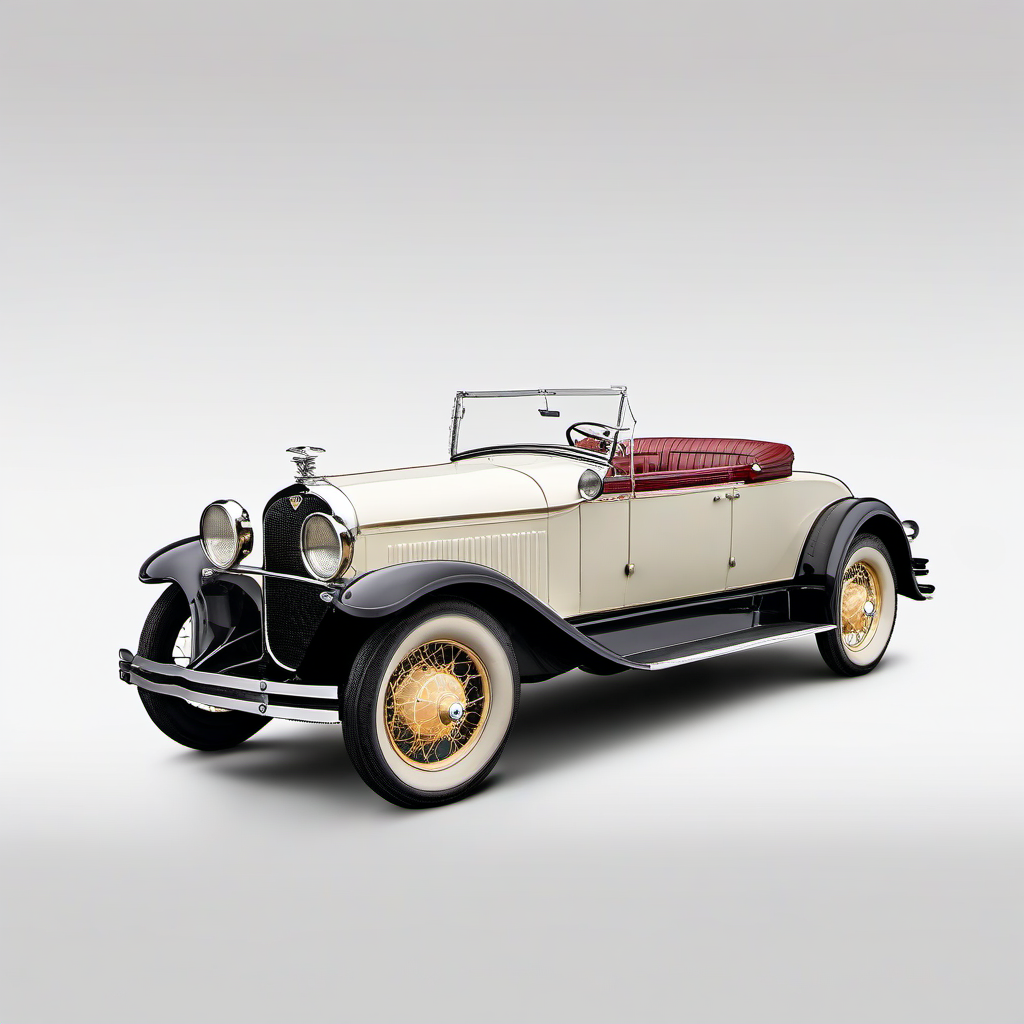
1928 Chrysler Series 52 Roadster
1928 Chrysler
Series 52 Roadster

Comparable mid-tier American roadster from the same year. Chrysler's hydraulic brakes (introduced in 1924) give it a mechanical safety advantage over the Buick's mechanical system.

1929 Buick
Series 116 Roadster

The direct follow-on model year. High parts cross-compatibility with the 1928 Series 115 makes it a strong source for NOS and used components. Very similar driving experience.

No catalog match

If you're shopping for one

Red flags
  • Fresh undercoating applied to the frame or floor — a common way to hide severe rust
  • Mismatched body panel gaps or filler-heavy bodywork suggesting accident damage or rust repair without proper metalwork
  • Any claim that 'it just needs a tune-up' on a car that has been sitting — dormant pre-war cars almost always need far more
  • No documentation of restoration work — a car without receipts or photos is impossible to evaluate accurately
  • Evidence of amateur electrical work — spliced wires, added 12-volt components, or mixed 6V/12V systems are dangerous and expensive to sort out
  • Asbestos brake linings that have been disturbed or show dust — a health and liability concern requiring professional remediation
What to inspect
  • Frame rails — probe with a screwdriver for rust perforation, especially at body mount points and rear spring hangers
  • Floor boards and rocker panels — these are primary rust failure points on open-body pre-war cars exposed to Midwest weather
  • Engine oil — pull the dipstick and look for milky or sludgy oil indicating head gasket failure or long-term neglect
  • Mechanical brake equalization — have someone apply the brakes firmly while the car is on a level surface; all four wheels should lock evenly
  • All wiring — any original cloth-insulated wire is a fire hazard and a negotiating point; budget for full rewiring
  • Radiator — look for solder repairs, external leaks, and check coolant color for rust contamination
  • Babbit bearing condition — a knocking engine at idle that quiets under load suggests worn mains; plan for an engine-out rebuild
AI profile generated 4 days ago · claude-sonnet-4-6 · v2.