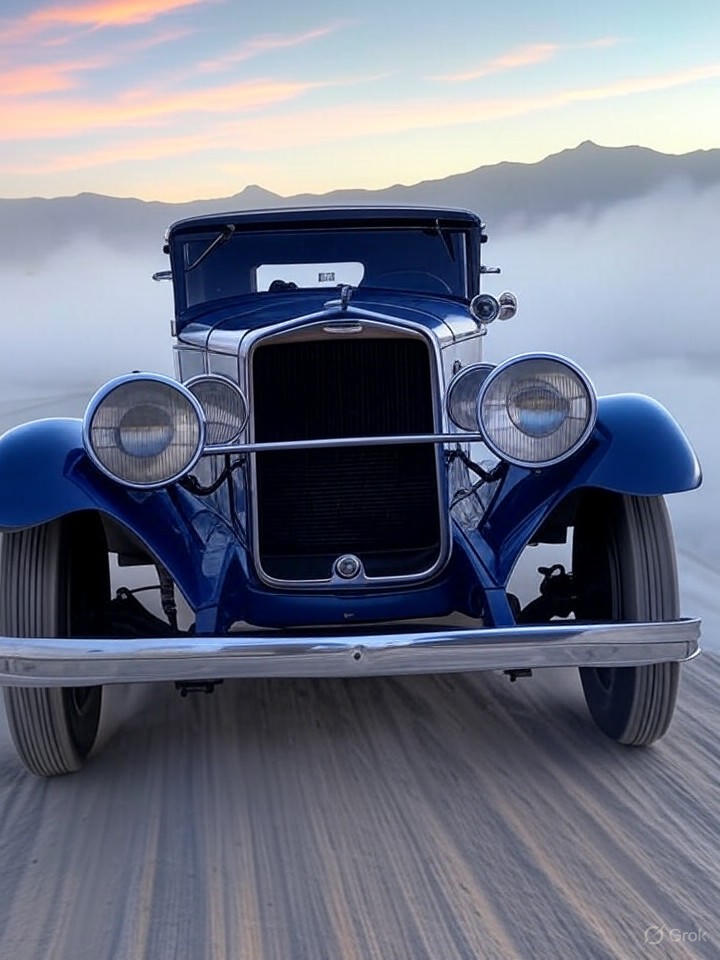
1927 Buick Series 115 Coupe

1927 Buick

Series 115Coupe

207 CI I6 · Coupe

The 1927 Buick Series 115 is a pre-Depression-era American automobile built on Buick's smallest wheelbase (115 inches) for that model year. Powered by Buick's well-regarded overhead-valve inline six-cylinder engine displacing 207 cubic inches, it represented a significant engineering step forward over many contemporaries that still relied on flathead designs. The Series 115 Coupe seated two to three occupants in a closed body style — a relatively luxurious choice for 1927 when many buyers still opted for open touring cars. As a nearly 100-year-old vehicle, the Series 115 today is purely a collector and show piece. Parts are largely unavailable off the shelf and require specialist suppliers, marque clubs (Buick Heritage Alliance, Antique Automobile Club of America), or custom fabrication. Mechanical systems are simple by modern standards — carburetor, points ignition, mechanical fuel pump, no electronics whatsoever — but corrosion, deteriorated rubber, and decades of improvised repairs are the real adversaries. Owning one of these in Lake Geneva, Wisconsin means contending with extreme freeze-thaw cycles and road salt exposure that can be merciless on 97-year-old steel and cast iron. This is a fair-weather, garage-kept vehicle. Budget generously for restoration and upkeep, and connect with Buick marque specialists before purchasing.

Reliability
3/5
Verified data
Engine
207 CI OHV I6
Drivetrain
RWD
Fuel
Gasoline
MPG
Seats
3
Doors
2
Body
Coupe
MSRP
$1,195

Overview

AI-curated

The 1927 Buick Series 115 is a pre-Depression-era American automobile built on Buick's smallest wheelbase (115 inches) for that model year. Powered by Buick's well-regarded overhead-valve inline six-cylinder engine displacing 207 cubic inches, it represented a significant engineering step forward over many contemporaries that still relied on flathead designs. The Series 115 Coupe seated two to three occupants in a closed body style — a relatively luxurious choice for 1927 when many buyers still opted for open touring cars. As a nearly 100-year-old vehicle, the Series 115 today is purely a collector and show piece. Parts are largely unavailable off the shelf and require specialist suppliers, marque clubs (Buick Heritage Alliance, Antique Automobile Club of America), or custom fabrication. Mechanical systems are simple by modern standards — carburetor, points ignition, mechanical fuel pump, no electronics whatsoever — but corrosion, deteriorated rubber, and decades of improvised repairs are the real adversaries. Owning one of these in Lake Geneva, Wisconsin means contending with extreme freeze-thaw cycles and road salt exposure that can be merciless on 97-year-old steel and cast iron. This is a fair-weather, garage-kept vehicle. Budget generously for restoration and upkeep, and connect with Buick marque specialists before purchasing.

Known for
  • Overhead-valve inline-six engine ahead of its time for 1927
  • Solid, coachbuilt closed-body construction with good weather protection
  • Mechanical simplicity — no electronics, easy to understand and repair
  • Strong marque community and club support through Buick Heritage Alliance
  • Elegant late-1920s styling typical of GM's mid-luxury positioning
Best for
  • Serious antique car collectors and restorers
  • Car show participants and AACA judged events
  • Enthusiasts who enjoy hands-on mechanical work on vintage engines
  • Garage-kept, dry-climate or seasonal fair-weather driving only
Watch for
  • Nearly century-old rubber seals, hoses, and gaskets — all must be assumed failed or failing
  • Ethanol in modern pump gasoline attacks vintage fuel system components
  • Cast-iron engine components are prone to cracking if overheated or frozen
  • Brake system is mechanical (not hydraulic) — requires specialist knowledge and adjustment
  • Improvised past repairs are extremely common on vehicles this age; expect surprises

Common issues by mileage

6 known

Fuel system degradation from ethanol-blended gasoline

high
Typically appears
All mileages
Estimated repair
$300 – $1,200

Deteriorated or failed mechanical brake adjustment and linkage

high
Typically appears
All mileages
Estimated repair
$200 – $800

Hardened or cracked engine, transmission, and differential gaskets and seals causing oil leaks

high
Typically appears
All mileages
Estimated repair
$400 – $1,500

Ignition points, condenser, and distributor wear causing misfires or hard starting

medium
Typically appears
All mileages
Estimated repair
$100 – $400

Cooling system deterioration — cracked hoses, failing water pump, sediment-clogged radiator

high
Typically appears
All mileages
Estimated repair
$300 – $1,800

Body rot and frame rust, especially at sill, floor, and rear quarter areas

high
Typically appears
All mileages
Estimated repair
$500 – $8,000

Maintenance schedule

  1. 1
    Every fill-up or at minimum annually Use ethanol-free (E0) premium gasoline or add a fuel stabilizer rated for vintage carbureted engines

    Ethanol corrodes vintage zinc and pot-metal carb components, softens original fuel hoses, and causes phase separation in stored fuel. E0 is available at several stations in the Lake Geneva area.

  2. 2
    Annually before storage Drain or treat the fuel system completely if storing over winter

    Fuel varnishes rapidly in a carbureted system. A gummed carb or stuck float is the single most common reason a vintage car won't start in spring.

  3. 3
    Every spring before first drive Inspect and adjust mechanical brake linkage, rods, and equalizer

    Four-wheel mechanical brakes require periodic adjustment to equalize stopping force. A single seized or slack linkage can cause severe pulling or loss of braking.

  4. 4
    Annually Check and replace ignition points, condenser, and spark plugs as needed

    Points-based ignition drifts out of spec with use and age. Fresh points and a new condenser are cheap insurance against a no-start or misfire.

  5. 5
    Every 1,000 miles or annually Change engine oil using a non-detergent straight-weight oil appropriate for vintage flat-tappet engines

    Modern detergent oils and low-ZDDP formulations are unsuitable for splash-lubricated vintage engines with babbit bearings. Use the correct non-detergent grade.

  6. 6
    Annually Flush and refill the cooling system; inspect all hoses, clamps, and the radiator core

    Cast-iron engines are vulnerable to internal rust and freeze damage. Silicate-free antifreeze at the correct concentration (not pure water) is essential for Wisconsin winters.

  7. 7
    Annually before storage Apply a quality corrosion inhibitor to underbody, frame rails, and any bare metal

    Lake Geneva road salt is destructive to 97-year-old steel. Even for a stored vehicle, salt tracked into the garage on other cars accelerates corrosion.

  8. 8
    Annually Lubricate all chassis grease fittings (zerks), king pins, and steering linkage

    1927 chassis have numerous manual lubrication points that are simply forgotten on modern cars. Neglect causes rapid wear in steering and suspension components that are difficult to source.

Always defer to the manufacturer's service manual for warranty-mandated intervals.

Cost of ownership

Annual maintenance
$600 – $4,000
Fuel
Minimal — show/fair-weather use only. Budget for ethanol-free premium at a slight price premium over regular pump gas.
Insurance
Agreed-value collector vehicle insurance is strongly recommended and is typically very affordable (often $200–$600/yr) given the limited annual mileage of a show car.

Annual costs vary enormously based on whether the car is being actively restored, maintained in show condition, or simply stored. A stable, fully restored example in regular show use might cost $600–$1,500/yr for fluids, consumables, and minor adjustments. Any restoration work, bodywork, or parts sourcing can quickly reach $3,000–$10,000+ in a single season. Parts must often be sourced from marque specialists, AACA swap meets, or custom-fabricated — budget time as well as money. Do not plan to use a general-purpose repair shop; find a vintage/antique car specialist.
Seasonal care

Lake Geneva, WI
Winter
  • Store indoors in a climate-stable garage — this vehicle must not be driven on salted Wisconsin roads under any circumstances. Salt will destroy the body, frame, and mechanicals rapidly.
  • Drain or fully stabilize the fuel system before storage. Run the engine briefly after adding stabilizer so treated fuel reaches the carburetor.
  • Disconnect the battery (if a modern battery is fitted) and store it on a maintainer trickle charger indoors to prevent freeze damage and sulfation.
  • Ensure antifreeze concentration is tested and adequate for sub-zero temps before any winter storage period — a cracked cast-iron block is a catastrophic and expensive loss.
  • Place the car on jack stands or use tire cradles to prevent flat-spotting on tires that may sit stationary for months.
  • Use a breathable car cover inside the garage to prevent moisture condensation on the body while allowing airflow.
Summer
  • Monitor the temperature gauge vigilantly on every drive — the vintage cooling system has limited capacity and traffic idling can cause rapid heat soak.
  • Carry water and a period-correct fire extinguisher; vintage fuel systems can seep at fittings when hot.
  • Check tire condition and inflation before each outing — vintage bias-ply or reproduction tires degrade faster with heat and UV exposure.
  • Park in the shade whenever possible; original or restored upholstery and lacquer finishes fade and crack quickly in direct sun.
  • Inspect carburetor and fuel lines after every drive in hot weather for seeps or drips that worsen with heat expansion.

Comparable vehicles

1927 Chrysler Series 50
1927 Chrysler
Series 50

Direct contemporary competitor in the same price and size class, also featuring a six-cylinder engine and closed-body options. Strong club support and similar parts-sourcing challenges.

1927 Studebaker
Erskine Six

Same era, similar displacement six-cylinder, comparable closed coupe body. Slightly more affordable original price point with a comparable collector market today.

No catalog match
1927 Dodge
Senior Six

Another 1927 closed six-cylinder coupe from a major American marque, well-supported by the antique car community with overlapping parts availability.

No catalog match
1927 Oakland
Model 6-54

GM stablemate from 1927 in the same mid-market tier. Shares some design-era characteristics and is found in similar collector circles as the Buick Series 115.

No catalog match

If you're shopping for one

Red flags
  • No documentation or provenance history whatsoever — serious red flag for a vehicle of this age and value
  • Evidence of long outdoor or barn storage, especially in the upper Midwest — assume full restoration required
  • Non-original engine or major drivetrain swap — significantly reduces collector value and complicates parts sourcing
  • Bondo or filler masking rust rather than proper metalwork — check all lower body panels and floor
  • Seller unwilling to allow a pre-purchase inspection by an antique car specialist
  • Advertised as 'runs great' with no recent mechanical documentation — insist on a cold-start demonstration and test drive
What to inspect
  • Frame rails and body sills for rust perforation — probe with a pick, not just visual inspection
  • Engine compression across all six cylinders; low compression on any cylinder signals worn rings or valves
  • Functionality and adjustment of all four mechanical brakes — test on a safe surface before any road drive
  • Condition of all fuel system components: fuel tank (internal rust, sediment), fuel lines, and carburetor
  • Cooling system integrity: pressure-test the radiator, inspect hoses, check for milky oil indicating internal leak
  • Authenticity and provenance documentation — matching numbers, restoration records, and ownership history dramatically affect collector value
  • Quality of any past repairs — look for mismatched hardware, non-period materials, or evidence of amateur welding on structural components
AI profile generated 4 days ago · claude-sonnet-4-6 · v2.