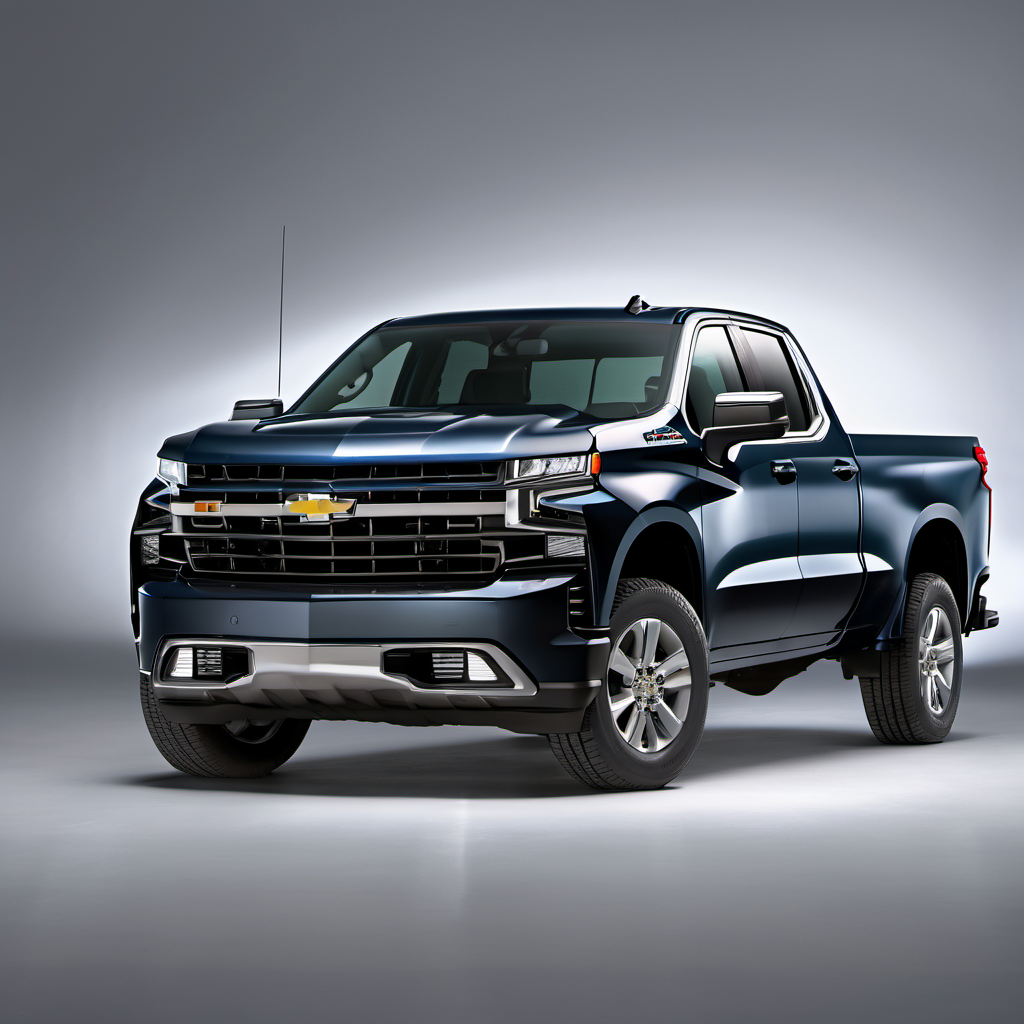
2024 Chevrolet Silverado 1500 Double Cab
Popular pick

2024 Chevrolet

Silverado 1500 Double Cab

5.3L V8 EcoTec3

The 2024 Chevrolet Silverado 1500 Double Cab is a full-size pickup in its fourth generation (2019–present), riding on GM's T1 platform. The Double Cab body style offers a full-size rear door and modest rear-seat room — practical for occasional passengers without the longer footprint of a Crew Cab. With the 5.3L V8 under the hood, you get 355 hp and 383 lb-ft of torque paired to a 10-speed automatic, making it a capable daily driver and work truck. The 5.3L EcoTec3 V8 is the sweet spot of the Silverado lineup — well-proven, relatively simple for a modern engine, and capable of towing up to 9,500 lbs. Active Fuel Management (AFM) cylinder deactivation improves fuel economy on the highway but has been the source of ongoing owner frustration with lifter failures on earlier units; the 2024 model year carries this same system, so it's worth monitoring. On the whole, this is a competent truck that does what full-size trucks need to do — haul, tow, and absorb Wisconsin winters. The main areas to watch are the 10-speed transmission's shudder behavior, the AFM/lifter system, and keeping up with rust prevention given Lake Geneva's road-salt environment.

Reliability
3/5
Verified data
Engine
5.3L V8
Drivetrain
4WD
Fuel
Gasoline
MPG
15 city / 21 hwy / 17 combined
Seats
6
Doors
4
Body
Pickup
MSRP
$43,500

Overview

AI-curated

The 2024 Chevrolet Silverado 1500 Double Cab is a full-size pickup in its fourth generation (2019–present), riding on GM's T1 platform. The Double Cab body style offers a full-size rear door and modest rear-seat room — practical for occasional passengers without the longer footprint of a Crew Cab. With the 5.3L V8 under the hood, you get 355 hp and 383 lb-ft of torque paired to a 10-speed automatic, making it a capable daily driver and work truck. The 5.3L EcoTec3 V8 is the sweet spot of the Silverado lineup — well-proven, relatively simple for a modern engine, and capable of towing up to 9,500 lbs. Active Fuel Management (AFM) cylinder deactivation improves fuel economy on the highway but has been the source of ongoing owner frustration with lifter failures on earlier units; the 2024 model year carries this same system, so it's worth monitoring. On the whole, this is a competent truck that does what full-size trucks need to do — haul, tow, and absorb Wisconsin winters. The main areas to watch are the 10-speed transmission's shudder behavior, the AFM/lifter system, and keeping up with rust prevention given Lake Geneva's road-salt environment.

Known for
  • Proven 5.3L V8 with strong towing and payload numbers
  • Comfortable, well-appointed cabin with good tech features
  • Capable 4WD system well-suited to Midwest winter driving
  • 10-speed automatic transmission with reported shudder issues across the generation
  • Active Fuel Management (AFM) system with a history of premature lifter wear
Best for
  • Owners who regularly tow trailers or haul heavy loads
  • Drivers who need a capable truck for Wisconsin winters
  • Those wanting V8 power with reasonable everyday drivability
  • Contractors and tradespeople needing real payload capacity
Watch for
  • Transmission shudder — common across 2020–2024 models; TSB 21-NA-241 exists but doesn't always fully resolve it
  • AFM lifter collapse — a well-documented failure mode on the 5.3L; watch for ticking, oil consumption, or misfires
  • Infotainment freezes and Bluetooth dropouts — annoying but typically not a safety concern
  • Frame and underbody rust — a serious concern in Wisconsin's salt-heavy winters; undercoating is not optional here
  • High-pressure fuel pump failure — less common but costly and potentially leaves you stranded

Common issues by mileage

6 known

Transmission Shudder (10-Speed Automatic)

high
Typically appears
20–50k mi
Estimated repair
$150 – $600

AFM Lifter Failure (Active Fuel Management)

medium
Typically appears
60–120k mi
Estimated repair
$2,500 – $5,000

Infotainment System Freezes / Bluetooth Failures

high
Typically appears
0–30k mi
Estimated repair
$100 – $400

High-Pressure Fuel Pump Failure

low
Typically appears
40–80k mi
Estimated repair
$900 – $1,500

VVT / Camshaft Phaser Issues

medium
Typically appears
80–150k mi
Estimated repair
$800 – $2,000

Frame and Underbody Rust

high
Typically appears
30–80k mi
Estimated repair
$500 – $3,000

Maintenance schedule

  1. 1
    Every 7,500 miles or 6 months, whichever comes first Engine Oil & Filter Change

    This engine holds 8 quarts of 0W-20 full synthetic. The AFM system is particularly sensitive to oil condition — degraded oil accelerates lifter wear. Don't stretch intervals. Cold Wisconsin winters mean the engine may not fully warm up on short trips, so time-based changes matter too.

  2. 2
    Every 7,500 miles (with every oil change) Tire Rotation

    4WD trucks wear tires unevenly, especially with the added weight of this platform. Rotating on the same schedule as oil changes keeps it simple and ensures even wear across all four corners.

  3. 3
    Every 45,000 miles in towing/severe use; manufacturer suggests 97,500 miles for normal use Transmission Fluid Check / Drain-and-Fill

    Given the known shudder issues with the 10-speed, keeping the transmission fluid fresh is one of the best preventive steps you can take. If you tow regularly, treat it as a severe-duty application and change it more frequently. Use only Dexron-VI.

  4. 4
    Every 60,000 miles, or every 45,000 miles if towing regularly Differential Fluid Change (Front & Rear)

    Both axles run 75W-90 synthetic gear oil. This is especially important for Wisconsin drivers who use 4WD regularly in winter — contaminated diff fluid causes premature bearing and gear wear.

  5. 5
    Every 5 years or 150,000 miles Coolant System Inspection & DEX-COOL Flush

    DEX-COOL (orange) is long-life coolant, but it degrades over time and can cause internal corrosion if mixed with the wrong type or neglected. Check concentration each fall before Wisconsin winter sets in.

  6. 6
    Every 45,000 miles, or inspect annually Air Filter Replacement

    In dusty summer conditions or if the truck is used on unpaved roads, check it earlier. A clogged air filter hurts fuel economy and can affect AFM operation.

  7. 7
    Annually, before winter Brake System Inspection

    Salt exposure accelerates rotor rust and brake hardware corrosion. Inspect pads, rotors, calipers, and brake lines every fall. Brake lines on trucks in the Rust Belt are a known failure point.

  8. 8
    Annually, ideally before first winter season Undercarriage Rust Inspection & Treatment

    Lake Geneva roads are heavily salted. Have the frame, fuel lines, and brake lines inspected each fall. Apply rust inhibitor or undercoating proactively — it's far cheaper than replacing corroded brake lines or a compromised frame.

Always defer to the manufacturer's service manual for warranty-mandated intervals.

Cost of ownership

Annual maintenance
$700 – $1,400
Fuel
At 17 MPG combined and typical driving of 15,000 miles/year, expect roughly $2,700–$3,300/year in fuel costs depending on gas prices. Towing regularly will drop real-world economy to the 12–14 MPG range and push fuel costs higher.
Insurance
Full-size pickup trucks run higher insurance premiums than average. Expect $1,400–$2,200/year for full coverage in southern Wisconsin depending on your driving record and coverage level.

A 2024 Silverado 1500 with the 5.3L is not a cheap truck to own, but it's not unreasonable for what it is. Routine maintenance (oil, tires, filters, fluids) runs $700–$1,400/year at an independent shop under normal use. Budget separately for tires (a set of all-season or winter tires every 50–60k miles, $800–$1,400 mounted and balanced) and for the possibility of transmission or AFM-related repairs, which can be significant. Fuel is the biggest ongoing cost given the V8's appetite. Rust prevention is a genuine ownership cost in this region — don't skip it.

Seasonal care

Lake Geneva, WI
Winter
  • Switch to a rated winter wiper fluid rated to at least -40°F — standard fluid will freeze in the reservoir lines and spray nozzles during a Lake Geneva cold snap
  • Test the battery in October; the 5.3L V8's 8-quart oil capacity means the starter works hard in sub-zero temps and a marginal battery will fail at the worst time
  • Use the correct 0W-20 full synthetic oil year-round — this viscosity flows immediately at cold startup, which is critical for the AFM lifters and VVT phasers
  • Engage 4WD on icy or snow-covered roads, but return to 2WD on cleared pavement to avoid driveline bind and unnecessary wear
  • Flush and inspect the undercarriage after major salt events — pay attention to brake lines, fuel lines, and frame rails where salt packs in
  • Keep the fuel tank above one-quarter full in winter to reduce condensation in the fuel system and ensure the fuel pump stays cool
Summer
  • Check tire pressure monthly — for every 10°F rise in ambient temperature, tires gain roughly 1 PSI, and overinflation accelerates center-tread wear on a heavy truck
  • Inspect and service the A/C system before summer — the compressor works hard on a large cab; if cooling is weak, address it early before a full compressor failure
  • Check coolant concentration and condition heading into summer; the 15.4-quart DEX-COOL system needs to be at the right mix to handle heat properly
  • If towing a boat or trailer frequently in summer heat, monitor transmission temperature and consider more frequent fluid changes
  • Inspect the air filter after any dusty off-road or gravel use — summer construction season means more airborne debris

Comparable vehicles

No comparable vehicles documented yet.

AI profile generated 21 days ago · claude-sonnet-4-6 · v2.