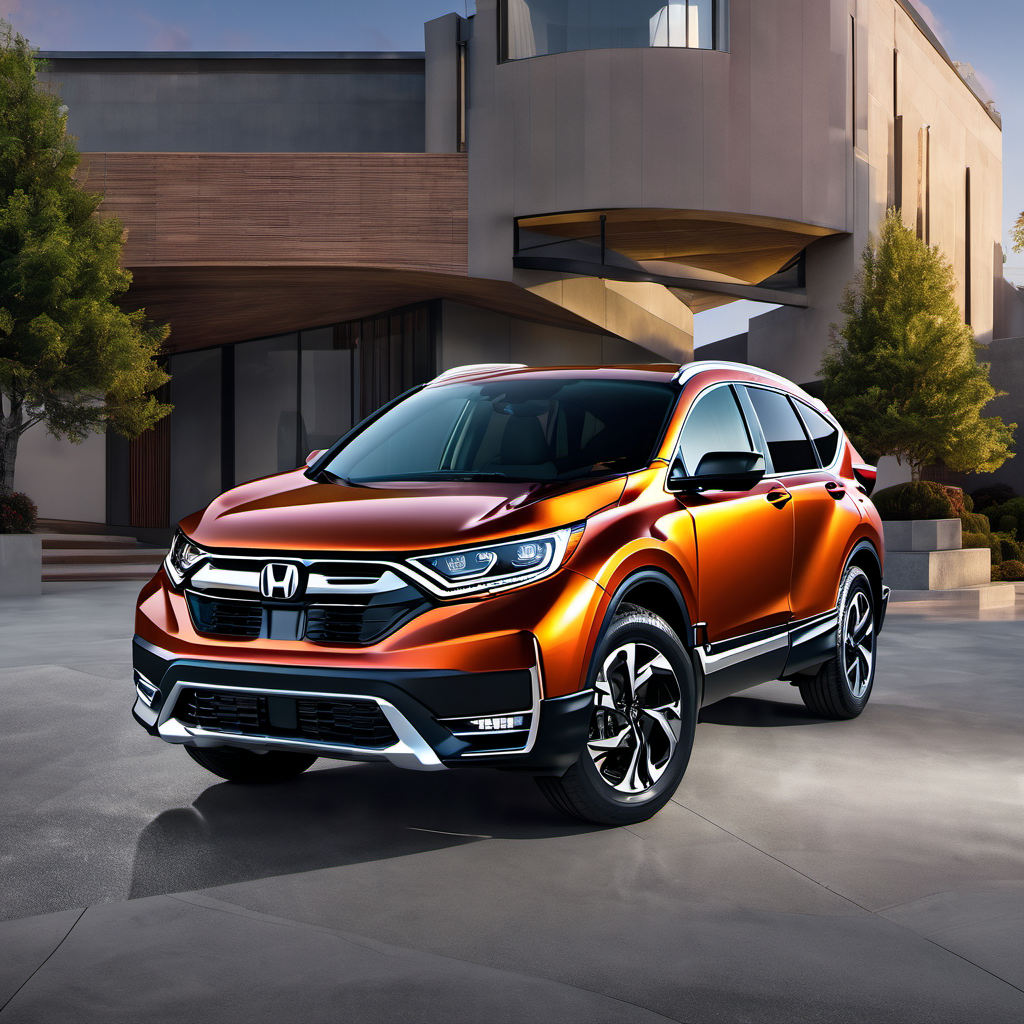
2022 Honda CR-V SUV

2022 Honda

CR-VSUV

SUV

The 2022 Honda CR-V is a compact crossover SUV that has been one of America's best-selling vehicles for over two decades. This generation pairs a 1.5L turbocharged four-cylinder with a CVT and delivers a comfortable, practical package with good fuel economy and a well-thought-out interior. Honda refined the fifth-generation CR-V significantly by 2022, addressing many of the early rough edges from the 2017 redesign. For everyday driving — commuting, family hauling, light cargo — the CR-V hits the mark. The cabin is spacious relative to its footprint, visibility is solid, and the infotainment system covers the basics. Fuel economy of around 30 MPG combined is genuinely achievable in mixed driving. The one issue owners in cold climates like Lake Geneva should know going in: the 1.5T engine has a documented oil dilution tendency in short-trip, cold-weather use. Fuel can seep past the rings into the crankcase before the engine fully warms up. It's manageable with disciplined oil change habits but warrants attention here in Wisconsin.

Reliability
4/5
Verified data
Specs shown for CR-V FWD — the most common configuration. Other trims may vary in engine, drivetrain, or fuel economy. Sign in to see your vehicle's exact specs.
Engine
[object Object]
Drivetrain
FWD
Fuel
Gasoline
MPG
28 city / 34 hwy / 30 combined
Seats
Doors
Body
Small Sport Utility Vehicle 2WD
Length
182.1 inches

Overview

AI-curated

The 2022 Honda CR-V is a compact crossover SUV that has been one of America's best-selling vehicles for over two decades. This generation pairs a 1.5L turbocharged four-cylinder with a CVT and delivers a comfortable, practical package with good fuel economy and a well-thought-out interior. Honda refined the fifth-generation CR-V significantly by 2022, addressing many of the early rough edges from the 2017 redesign. For everyday driving — commuting, family hauling, light cargo — the CR-V hits the mark. The cabin is spacious relative to its footprint, visibility is solid, and the infotainment system covers the basics. Fuel economy of around 30 MPG combined is genuinely achievable in mixed driving. The one issue owners in cold climates like Lake Geneva should know going in: the 1.5T engine has a documented oil dilution tendency in short-trip, cold-weather use. Fuel can seep past the rings into the crankcase before the engine fully warms up. It's manageable with disciplined oil change habits but warrants attention here in Wisconsin.

Known for
  • Consistently strong fuel economy for the segment (~30 MPG combined)
  • Spacious, practical interior with smart cargo storage
  • Refined, comfortable ride quality
  • Long-term Honda build quality and resale value
  • VTEC Turbo 1.5L engine balances efficiency and adequate power
Best for
  • Daily commuters wanting efficiency without sacrificing space
  • Small families needing flexible cargo and passenger room
  • Buyers prioritizing long-term reliability and resale value
  • Drivers who want a capable all-weather vehicle (especially AWD trim)
  • Those who spend significant time on highway miles
Watch for
  • Oil dilution in cold-climate short-trip driving — monitor oil level and smell
  • Infotainment system freezes and slow response are a known complaint on 2022
  • CVT can feel rubber-band-like under hard acceleration — it's by design, not a defect
  • FWD models can struggle in heavy Wisconsin snow; AWD trim is worth the premium here
  • Brake dust accumulation is high on this platform; inspect pads more frequently than you might expect

Common issues by mileage

6 known

Oil Dilution (Fuel in Engine Oil)

medium
Typically appears
0–50k mi
Estimated repair
$0 – $300

Infotainment System Freeze / Slow Response

medium
Typically appears
10k–60k mi
Estimated repair
$150 – $600

System Too Lean (Bank 1) — P0171

low
Typically appears
40k–100k mi
Estimated repair
$100 – $400

VTC / Camshaft Timing Issues

low
Typically appears
60k–120k mi
Estimated repair
$200 – $700

Valve Control Solenoid Circuit Faults

low
Typically appears
70k–130k mi
Estimated repair
$150 – $500

Premature Brake Pad Wear

medium
Typically appears
25k–60k mi
Estimated repair
$150 – $350

Maintenance schedule

  1. 1
    Every 5,000–6,000 miles in Wisconsin winter / 7,500 miles otherwise — use 0W-20 Full Synthetic Engine Oil & Filter Change

    Cold-climate short-trip driving promotes oil dilution on the 1.5T. Shortening the interval in winter flushes diluted oil before it causes wear. The VTEC system is oil-pressure-sensitive — fresh, clean oil is cheap insurance.

  2. 2
    Every 7,500 miles or with every oil change Tire Rotation

    FWD models pull hard on front tires. Consistent rotation evens wear and extends tire life significantly.

  3. 3
    Every 3 years / 30,000 miles Brake Fluid Replacement

    DOT 3 fluid is hygroscopic — it absorbs moisture over time, lowering boiling point and promoting internal corrosion in the ABS module. Wisconsin road salt makes this more urgent than in dry climates.

  4. 4
    Every 30,000 miles or 24 months Air Filter Replacement

    A clogged air filter on a turbocharged engine can skew MAF readings and contribute to lean codes (P0171). Check it visually at every other oil change.

  5. 5
    Every 30,000 miles or 24 months — consider annual if parked outdoors Cabin Air Filter Replacement

    Wisconsin springs bring heavy pollen and road dust. A clogged cabin filter reduces HVAC airflow and puts strain on the blower motor.

  6. 6
    Every 90,000 miles under normal use; consider 60,000 miles if frequent towing or hilly driving Transmission Fluid Change (CVT — Honda DW-1)

    Honda specifies DW-1 fluid — do not substitute. Contaminated CVT fluid accelerates belt and pulley wear. Using the wrong fluid type can cause shuddering or transmission damage.

  7. 7
    First change at 105,000 miles / 10 years; every 60,000 miles / 5 years after Coolant Replacement

    Honda Long Life Type 2 (blue) provides excellent corrosion protection. Degraded coolant accelerates aluminum corrosion in the water pump and heater core — both expensive repairs.

  8. 8
    Every spring — after every Wisconsin winter Inspect Rear Brake Calipers for Seizure

    Road salt and sitting through cold months accelerates caliper slide pin corrosion. A seized rear caliper causes uneven wear and can go unnoticed until pad material is gone. Catch it early and a lube/service is cheap; catch it late and you're replacing calipers.

Always defer to the manufacturer's service manual for warranty-mandated intervals.

Cost of ownership

Annual maintenance
$400 – $800
Fuel
At 30 MPG combined and ~15,000 miles/year, expect roughly $1,500–$1,900/year at $3.00–$3.75/gallon. Highway-heavy drivers will do better; Lake Geneva winter commuters with lots of cold starts and idling will land closer to the high end.
Insurance
Typically $1,200–$1,700/year for a 2022 CR-V in southern Wisconsin for a driver with a clean record. Exact premiums vary by trim, coverage level, and driving history.

The CR-V is one of the more affordable compact SUVs to own long-term. Routine maintenance is straightforward, parts availability is excellent, and independent shops can service everything without dealer-only tooling. The main cost wildcard is infotainment repair — if the head unit needs replacement rather than a software fix, that jumps to $500+. On the mechanical side, budgeting $500–$800/year for routine service in Wisconsin (with the shorter winter oil change cadence) is realistic.

Seasonal care

Lake Geneva, WI
Winter
  • Switch to dedicated winter tires by late October — the stock all-seasons are marginal in heavy snow, and FWD CR-Vs need all the grip help they can get on Lake Geneva's unplowed back roads.
  • Check battery health every fall. The 1.5T's stop-start system and electronics load is hard on batteries in sub-zero temps. A battery older than 4 years should be load-tested before November.
  • Shorten oil change interval to every 5,000 miles (or 3 months) during winter. Cold short-trip driving is exactly when oil dilution occurs on this engine.
  • Use a winter-rated washer fluid rated to at least -20°F. The stock reservoir is low-profile and hard to refill — check it monthly.
  • Apply silicone lubricant to door seals in late fall to prevent them from freezing shut. This is a common oversight on this body style.
  • Rinse the undercarriage at a spray-wash bay every 2–3 weeks during salting season. Pay attention to the subframe and brake lines — they are not heavily coated from the factory.
Summer
  • Check tire pressure monthly — every 10°F of temperature change shifts pressure roughly 1 PSI. Wisconsin summers can spike quickly and over-inflated tires hurt wet-road grip.
  • Run the A/C on full defrost for a few minutes at the start of the season to check refrigerant charge and catch any musty evaporator odors before they get worse.
  • Inspect wiper blades after winter — the rubber degrades from ice and cold. Replace both front blades and the rear wiper before summer storm season.
  • Check coolant concentration in spring — a 50/50 mix protects to -34°F and handles summer heat. After a hard Wisconsin winter, it's worth a test strip check.
  • Clean brake dust from wheels and inspect pads — this platform generates above-average brake dust and summer heat accelerates glazing on neglected pads.

Comparable vehicles

No comparable vehicles documented yet.

AI profile generated 4 days ago · claude-sonnet-4-6 · v2.