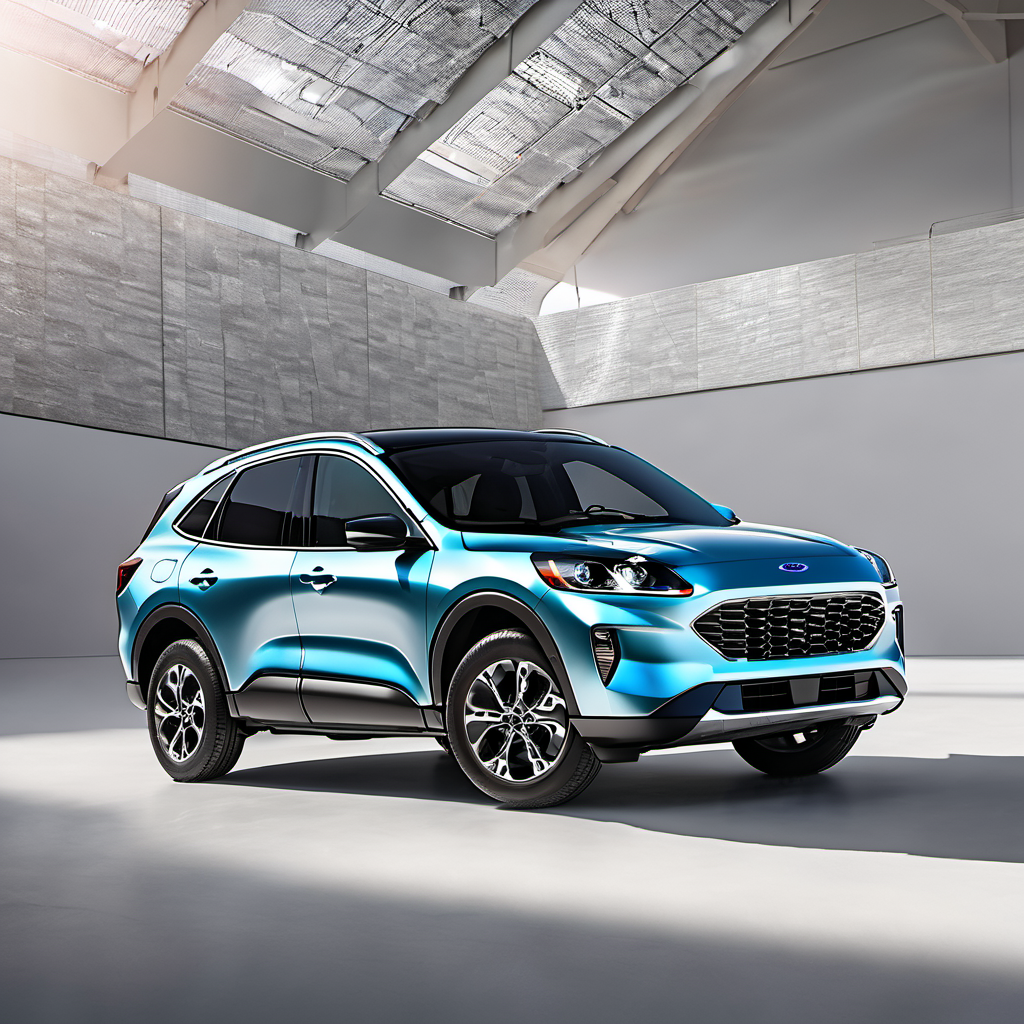
2022 Ford Escape SUV

2022 Ford

EscapeSUV

SUV

The 2022 Ford Escape is a compact crossover SUV that sits in one of the most competitive segments on the road. This generation (fourth-gen, 2020–present) brought a complete redesign with a more car-like unibody platform, multiple powertrain options, and an available plug-in hybrid. The 2.0L EcoBoost variant reviewed here is the performance-oriented top trim engine, offering 250 hp and a respectable tow rating for the class. Day-to-day, the Escape drives more like a car than a truck-based SUV — light steering, comfortable ride, and easy urban maneuverability. The 30 MPG combined rating from the 2.0T is solid for a turbocharged compact. Cargo space is adequate, and Ford's SYNC infotainment is one of the better systems in the segment, though early units in this generation had software growing pains. The main watch items on the 2022 are the well-documented transmission shudder issue (addressed by TSB 21-2379 and a fluid change), infotainment software bugs, and the auto start-stop system. None of these are deal-breakers, but buyers should verify the TSB has been performed and that the software is up to date before purchasing.

Reliability
3/5
Verified data
Specs shown for Escape FWD — the most common configuration. Other trims may vary in engine, drivetrain, or fuel economy. Sign in to see your vehicle's exact specs.
Engine
[object Object]
Drivetrain
FWD
Fuel
Gasoline
MPG
28 city / 34 hwy / 30 combined
Seats
Doors
Body
Small Sport Utility Vehicle 2WD
Length
180.5 inches

Overview

AI-curated

The 2022 Ford Escape is a compact crossover SUV that sits in one of the most competitive segments on the road. This generation (fourth-gen, 2020–present) brought a complete redesign with a more car-like unibody platform, multiple powertrain options, and an available plug-in hybrid. The 2.0L EcoBoost variant reviewed here is the performance-oriented top trim engine, offering 250 hp and a respectable tow rating for the class. Day-to-day, the Escape drives more like a car than a truck-based SUV — light steering, comfortable ride, and easy urban maneuverability. The 30 MPG combined rating from the 2.0T is solid for a turbocharged compact. Cargo space is adequate, and Ford's SYNC infotainment is one of the better systems in the segment, though early units in this generation had software growing pains. The main watch items on the 2022 are the well-documented transmission shudder issue (addressed by TSB 21-2379 and a fluid change), infotainment software bugs, and the auto start-stop system. None of these are deal-breakers, but buyers should verify the TSB has been performed and that the software is up to date before purchasing.

Known for
  • Peppy 2.0L EcoBoost turbo with 250 hp
  • Car-like handling and comfortable ride quality
  • Competitive fuel economy for a turbocharged compact SUV
  • Wide powertrain lineup including hybrid and plug-in hybrid options
  • Well-equipped cabin with Ford SYNC infotainment
Best for
  • Commuters and small families needing daily utility without bulk
  • Drivers who want SUV practicality with near-car driving dynamics
  • Those who tow light loads like small trailers or watercraft (up to 3,500 lbs)
  • Buyers prioritizing fuel efficiency in a non-hybrid compact crossover
Watch for
  • Transmission shudder under acceleration, especially under 60k miles
  • Infotainment freezes and Bluetooth drops — check for latest software update
  • Auto start-stop system malfunctions reported on some units
  • Battery drain in extreme cold — relevant for Wisconsin winters
  • This generation's 1.5L three-cylinder (not this trim) had a known coolant-into-cylinder issue; verify your engine is the 2.0L

Common issues by mileage

6 known

Transmission Shudder / Torque Converter Clutch Slip

high
Typically appears
20–60k mi
Estimated repair
$150 – $400

Infotainment System Freezing / Bluetooth Failure

high
Typically appears
0–40k mi
Estimated repair
$0 – $200

VCT / Camshaft Timing Fault (Oil Maintenance Related)

medium
Typically appears
60–120k mi
Estimated repair
$300 – $900

Turbocharger Bypass Valve Fault

low
Typically appears
60–100k mi
Estimated repair
$200 – $600

Auto Start-Stop System Malfunction

medium
Typically appears
15–60k mi
Estimated repair
$0 – $300

Battery Drain in Cold Weather

medium
Typically appears
0–80k mi
Estimated repair
$150 – $350

Maintenance schedule

  1. 1
    Every 10,000 miles or 12 months, whichever comes first — use 5W-30 Synthetic Blend, 5.7 qt with filter Engine Oil & Filter Change

    The Ti-VCT system and EcoBoost turbo are oil-quality sensitive. Stretched intervals cause sludge in VCT passages and accelerate turbo wear. Don't push past 10k even with the Intelligent Oil-Life Monitor if you do a lot of short-trip cold driving.

  2. 2
    Every 40,000–50,000 miles, or immediately if shudder is felt Transmission Fluid Drain & Fill (Mercon LV)

    Ford doesn't publish a formal change interval for this fluid, but the shudder TSB (21-2379) is essentially a fluid-condition fix. Fresh Mercon LV prevents and often cures the torque converter shudder complaint. Use only Mercon LV — substituting the wrong fluid makes the shudder worse.

  3. 3
    Every 7,500 miles or 6 months Tire Rotation

    FWD layouts put most wear on the front tires. Regular rotation evens wear across all four and helps you get full life out of a set. Easy to combine with oil changes.

  4. 4
    Every 30,000 miles or 30 months Air Filter Replacement

    A clogged air filter robs turbo response and fuel economy. Wisconsin road dust and pollen load filters faster in spring/summer. Inspect at every other oil change.

  5. 5
    Every 20,000 miles or 20 months Cabin Air Filter Replacement

    Affects HVAC airflow and defrost effectiveness — especially important in winter when you need maximum defroster output. Easy DIY behind the glove box.

  6. 6
    Every fall (before temps drop below 20°F consistently) 12V Battery Load Test

    Cold-climate battery failures are the #1 no-start cause in Wisconsin. The Escape's electrical system stresses the battery more than a basic vehicle. A battery older than 4 years should be tested, not assumed good.

  7. 7
    Every 2 years regardless of mileage Brake Fluid Flush (DOT 3)

    DOT 3 is hygroscopic — it absorbs moisture over time, lowering boiling point and promoting internal corrosion. Wisconsin road salt also accelerates corrosion in brake line fittings. Two-year intervals keep the system healthy.

  8. 8
    Inspect every 2 years; full flush at 100,000 miles or per Ford's extended-life interval Coolant System Inspection & Flush (Motorcraft Orange)

    Use only Motorcraft Orange (OAT) coolant — mixing types causes gel formation. Check freeze protection each fall; Lake Geneva can see -20°F. A 50/50 mix protects to roughly -34°F.

Always defer to the manufacturer's service manual for warranty-mandated intervals.

Cost of ownership

Annual maintenance
$500 – $950
Fuel
At 30 MPG combined and ~12,000 miles/year, expect roughly $1,400–$1,700/year at $3.50–$4.25/gal regular unleaded. Premium is not required but the 2.0T is tuned to benefit from it under heavy load.
Insurance
Typically $1,200–$1,800/year in the Lake Geneva area for full coverage on a 2022 model, depending on driver profile and carrier. Compact crossovers in this price range sit in a moderate insurance tier.

The Escape 2.0T is a mid-cost-to-own compact SUV. Routine maintenance is straightforward and parts are widely available. The main budget wildcard is the transmission — if the shudder issue escalates to torque converter replacement, that's a $900–$1,500 hit. Keep up with transmission fluid changes and the TSB, and most owners avoid that expense. Overall cost of ownership is reasonable compared to German or Japanese competitors in this segment.

Seasonal care

Lake Geneva, WI
Winter
  • Test the 12V battery every October — cold weather and the Escape's electrical load are a tough combination on batteries older than 3–4 years
  • Switch to winter tires if you'll see ice regularly; the FWD Escape handles well in snow with proper tires but struggles on ice with all-seasons
  • Top off windshield washer fluid with a -20°F or colder rated fluid — standard fluid freezes on the nozzle and washer lines in Wisconsin winters
  • Check coolant freeze protection with a test strip or refractometer each fall; use Motorcraft Orange OAT at 50/50 for -34°F protection
  • Allow a short warm-up (1–2 minutes) on sub-zero mornings before driving hard — the EcoBoost turbo benefits from oil circulation before boost
  • Rinse the undercarriage at a touchless car wash every 2–3 weeks during salt season; pay attention to wheel wells and rocker panels where salt packs in
Summer
  • Check tire pressure after the first hot week — for every 10°F rise in temperature, pressure increases about 1 PSI; over-inflation reduces contact patch and wet grip
  • Inspect the A/C system before Memorial Day; the Escape's cabin heats quickly when parked — a weak system will be noticeable immediately
  • Check coolant level and hose condition; heat soak on a turbocharged engine is harder on hoses and the overflow reservoir
  • Inspect air filter after spring — pollen and road debris from winter pothole season can load the filter faster than the mileage interval suggests

Comparable vehicles

No comparable vehicles documented yet.

AI profile generated 4 days ago · claude-sonnet-4-6 · v2.