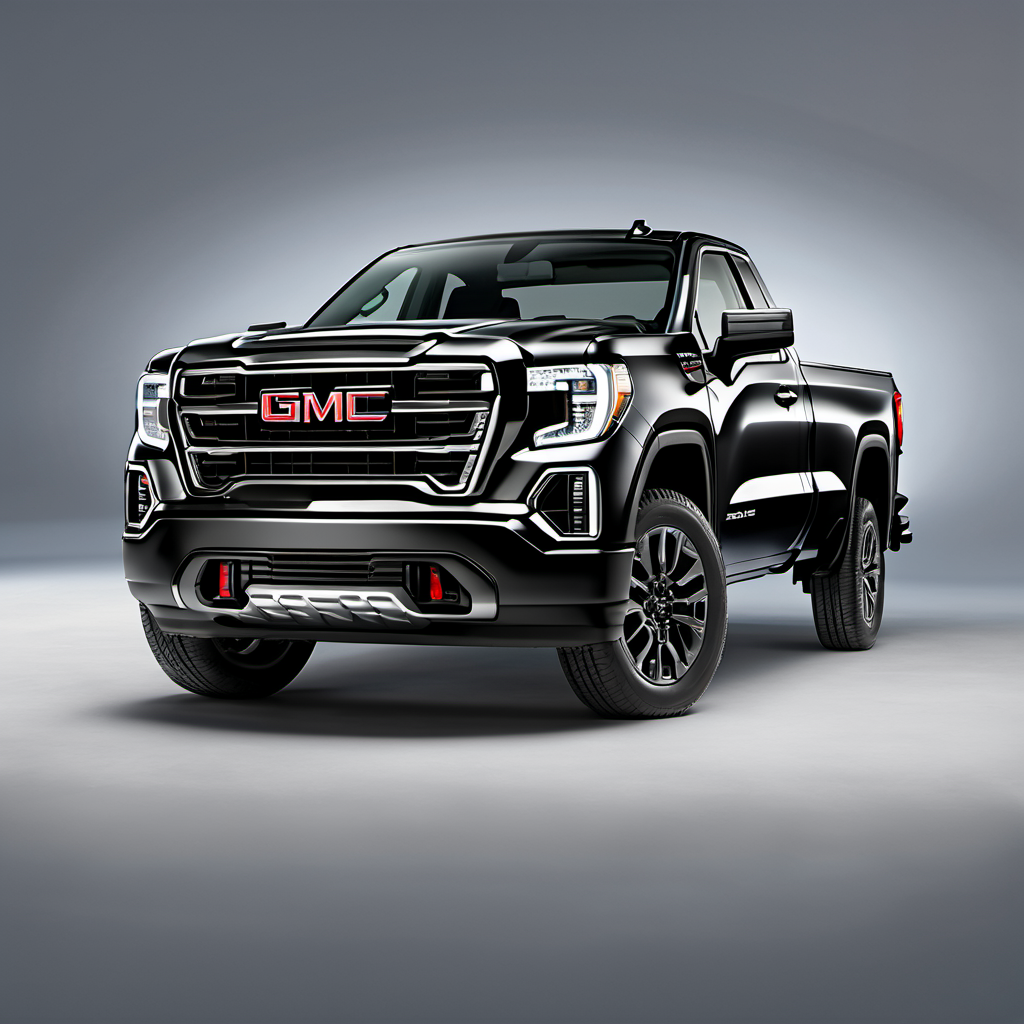
2020 GMC Sierra 1500 Regular Cab Pickup

2020 GMC

Sierra 1500 Regular CabPickup

5.3L V8 · Pickup

The 2020 GMC Sierra 1500 Regular Cab is a full-size work-focused pickup built on GM's T1 platform, sharing its bones with the Chevrolet Silverado 1500. The regular cab configuration is the no-nonsense choice: a long 6.5-foot bed, a tight two-door body, and a powertrain lineup tuned for towing and hauling over commuter comfort. This generation brought significant chassis improvements, including a mixed-material construction and an upgraded 10-speed automatic transmission on higher trims. The 5.3L V8 equipped on this truck is a proven workhorse that GMC has refined over two decades. It makes 355 hp and 383 lb-ft of torque, handles up to 9,300 lbs of towing, and carries a 2,200-lb payload rating — numbers that put it firmly in the upper tier of half-ton capability. Active Fuel Management (cylinder deactivation) and Variable Valve Timing help bring EPA numbers to a reasonable range for the class. For Lake Geneva-area buyers, the regular cab's shorter overall footprint is a practical advantage for farm or commercial use, but the same full-frame construction and 4WD system make it equally capable in Wisconsin winters. The truck's biggest friction points are infotainment reliability and a well-documented transmission shudder — both manageable, neither a dealbreaker if addressed promptly.

Reliability
3/5
Verified data
Engine
[object Object]
Drivetrain
4WD
Fuel
Gasoline
MPG
15 city / 21 hwy / 17 combined
Seats
3
Doors
2
Body
Pickup
MSRP
$33,695

Overview

AI-curated

The 2020 GMC Sierra 1500 Regular Cab is a full-size work-focused pickup built on GM's T1 platform, sharing its bones with the Chevrolet Silverado 1500. The regular cab configuration is the no-nonsense choice: a long 6.5-foot bed, a tight two-door body, and a powertrain lineup tuned for towing and hauling over commuter comfort. This generation brought significant chassis improvements, including a mixed-material construction and an upgraded 10-speed automatic transmission on higher trims. The 5.3L V8 equipped on this truck is a proven workhorse that GMC has refined over two decades. It makes 355 hp and 383 lb-ft of torque, handles up to 9,300 lbs of towing, and carries a 2,200-lb payload rating — numbers that put it firmly in the upper tier of half-ton capability. Active Fuel Management (cylinder deactivation) and Variable Valve Timing help bring EPA numbers to a reasonable range for the class. For Lake Geneva-area buyers, the regular cab's shorter overall footprint is a practical advantage for farm or commercial use, but the same full-frame construction and 4WD system make it equally capable in Wisconsin winters. The truck's biggest friction points are infotainment reliability and a well-documented transmission shudder — both manageable, neither a dealbreaker if addressed promptly.

Known for
  • Proven 5.3L V8 with strong towing and payload capability
  • Solid 4WD system suited for snow and off-road use
  • High-quality interior materials for the class (2019+ redesign)
  • Active Fuel Management for improved highway fuel economy
Best for
  • Contractors and tradespeople needing a work truck with a full-size bed
  • Towers and haulers who want V8 muscle in a half-ton
  • Buyers who prefer a simpler two-door layout for rural or farm use
  • Wisconsin winters — 4WD and good ground clearance handle it well
Watch for
  • Transmission shudder (TSB 19-NA-146) is common by 30k miles — ask if it's been addressed
  • Infotainment freezes and reboots (TSB 19-NA-137) plague 2019–2020 examples
  • Exhaust manifold cracks can develop quietly — listen for a ticking noise at startup
  • Frame and undercarriage rust accelerates fast in salt-belt states like Wisconsin
  • Active Fuel Management (AFM) lifter failures are a known long-term concern on the 5.3L

Common issues by mileage

6 known

Transmission Shudder / Torque Converter Shudder

high
Typically appears
20–50k mi
Estimated repair
$150 – $400

Infotainment System Freezing / Rebooting

high
Typically appears
0–40k mi
Estimated repair
$100 – $300

AFM / Lifter Failure (Active Fuel Management)

medium
Typically appears
80–150k mi
Estimated repair
$2,500 – $5,000

Exhaust Manifold Crack / Leak

medium
Typically appears
40–80k mi
Estimated repair
$600 – $1,100

Frame and Undercarriage Rust

high
Typically appears
30–100k mi
Estimated repair
$300 – $1,500

VVT / Camshaft Actuator Issues

low
Typically appears
60–120k mi
Estimated repair
$400 – $900

Maintenance schedule

  1. 1
    Every 7,500 miles or 12 months Engine oil and filter change — 8 qts of 0W-20 Full Synthetic

    The 5.3L V8 with AFM is oil-volume sensitive. Low or degraded oil accelerates lifter wear. Use exactly 0W-20 full synthetic — not a heavier weight — to ensure proper AFM operation and cold-start protection at Wisconsin sub-zero temps.

  2. 2
    Every 15,000 miles Cabin air filter replacement

    Wisconsin road conditions — salt spray, dust, and debris — clog cabin filters faster than the factory interval suggests. A dirty filter strains the HVAC blower and reduces defrost effectiveness, which matters in winter.

  3. 3
    Every 45,000 miles Engine air filter replacement

    Dusty summer road conditions and rural driving can shorten this interval. A restricted air filter hurts fuel economy and can affect MAF sensor readings.

  4. 4
    Every 45,000 miles or 48 months Transmission fluid service — 12.2 qts DEXRON-VI

    Critical for the 8L90 transmission's torque converter shudder issue. Fresh fluid with correct spec is part of the TSB 19-NA-146 fix. Don't skip or delay this service.

  5. 5
    Every 2 years or as needed Coolant inspection and DEX-COOL top-off

    DEX-COOL's orange color makes it easy to spot contamination. Check the overflow reservoir each spring — freeze-thaw cycles in Wisconsin can work air into the system.

  6. 6
    Every fall before first frost Inspect and treat frame, brake lines, and undercarriage for rust

    Lake Geneva gets heavy road salt from November through March. An annual undercoating or fluid film treatment on exposed brake lines and frame rails is cheap insurance against the most expensive corrosion repairs.

  7. 7
    Every 12 months or each spring Inspect exhaust manifold for cracks or loose bolts

    Thermal cycling through Wisconsin winters stresses the cast iron manifolds. Catching a small crack early is a $600 job; a warped manifold with collateral damage is $1,100+.

  8. 8
    Every 30,000 miles Inspect 4WD transfer case fluid and front/rear differential fluid

    Heavy winter 4WD use and towing put extra stress on drivetrain fluids. Fresh 75W-90 synthetic in the differentials protects gear surfaces and reduces wear.

Always defer to the manufacturer's service manual for warranty-mandated intervals.

Cost of ownership

Annual maintenance
$700 – $1,400
Fuel
At 17 MPG combined and roughly 15,000 miles/year, expect 880–950 gallons annually. At $3.00–$3.50/gal Midwest pricing, that's roughly $2,600–$3,300/year in fuel. Frequent towing or idling in winter will push that higher.
Insurance
Full-coverage insurance on a 2020 Sierra 1500 in the Lake Geneva area typically runs $1,400–$2,000/year depending on driving history, garaging, and coverage levels. A work truck used for hauling may carry slightly higher rates.

The Sierra 1500 5.3L is a middle-of-the-road cost-to-own truck. Routine maintenance is straightforward and parts are widely available at competitive prices. The biggest cost wildcard is AFM lifter failure if it occurs — a $2,500–$5,000 repair. Staying strict on oil change intervals and monitoring for early lifter noise is the single best way to avoid that bill. Frame rust is the other long-term Wisconsin-specific cost center; proactive undercoating keeps it manageable.

Seasonal care

Lake Geneva, WI
Winter
  • Switch to winter-rated tires by late October — the stock all-season tires lose significant grip below 40°F, and Lake Geneva roads can ice over fast on the hills around the lake.
  • Test the battery in September or October. The 5.3L V8's 8-quart oil capacity means a marginal battery struggles badly on sub-zero cold starts. Replace any battery showing more than 3–4 years of age.
  • Top off the washer fluid reservoir with a -20°F or lower rated fluid before the first freeze. The 81-inch-wide truck throws significant spray from semi traffic on I-43.
  • Apply fluid film or undercoating to the frame, brake lines, and fuel lines each fall. Salt exposure from November through March is the primary rust threat on any Wisconsin pickup.
  • Verify the 4WD system engages cleanly before the first snowfall — not when you're already stuck. Run it through 2Hi/4Hi/4Lo briefly in a safe area.
  • Check engine coolant freeze protection — the 15.4-quart DEX-COOL system should be rated to at least -34°F. A refractometer test at your next oil change confirms it.
Summer
  • Check tire pressure every few weeks — ambient temps swinging 40°F between April and August can cause 4–6 PSI fluctuations in a truck with large tires.
  • Inspect the A/C system performance in May before temperatures peak. The AC compressor on this generation has a known failure point around 75k miles in hot climates; catch low refrigerant early before it damages the compressor.
  • After spring, do a full undercarriage wash to remove winter salt residue. Even after the roads dry, salt crystals packed into frame crevices keep corroding all summer.
  • Check the engine air filter — summer dust and pollen can clog it faster, and the 5.3L will see degraded throttle response and fuel economy with a restricted filter.

Comparable vehicles

No comparable vehicles documented yet.

AI profile generated 4 days ago · claude-sonnet-4-6 · v2.