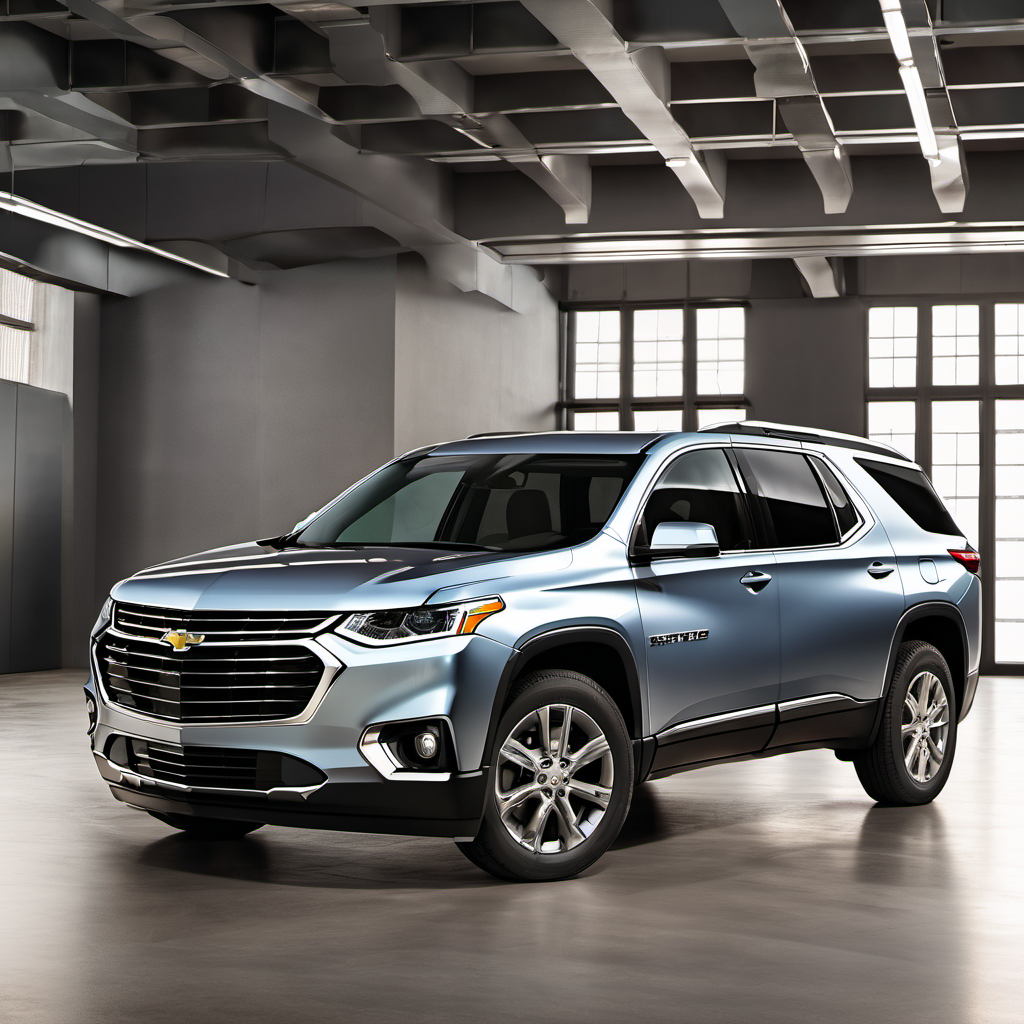
2020 Chevrolet Traverse SUV

2020 Chevrolet

TraverseSUV

3.6L V6 DOHC VVT · SUV

The 2020 Chevrolet Traverse is a three-row, front-wheel-drive or all-wheel-drive crossover SUV built on GM's C1XX platform. It competes directly with the Ford Explorer, Honda Pilot, and Toyota Highlander, offering seating for up to eight passengers and a genuinely roomy interior that earns it a strong family-hauler reputation. Powered exclusively by GM's 3.6L V6 with direct injection and variable valve timing, the Traverse delivers 310 horsepower — enough to feel capable with a full load or towing up to 5,000 lbs. The nine-speed automatic transmission is the weak link in an otherwise solid package; shudder complaints are real and well-documented, with GM issuing TSB 19-NA-142 to address the issue. For Lake Geneva families who need all-weather capability, cargo room, and modern safety tech, the 2020 Traverse is a reasonable choice — but budget for potential transmission attention early and know the infotainment system has its quirks.

Reliability
3/5
Verified data
Specs shown for Traverse FWD — the most common configuration. Other trims may vary in engine, drivetrain, or fuel economy. Sign in to see your vehicle's exact specs.
Engine
[object Object]
Drivetrain
FWD
Fuel
Gasoline
MPG
18 city / 27 hwy / 22 combined
Seats
8
Doors
4
Body
SUV
MSRP
$34,995

Overview

AI-curated

The 2020 Chevrolet Traverse is a three-row, front-wheel-drive or all-wheel-drive crossover SUV built on GM's C1XX platform. It competes directly with the Ford Explorer, Honda Pilot, and Toyota Highlander, offering seating for up to eight passengers and a genuinely roomy interior that earns it a strong family-hauler reputation. Powered exclusively by GM's 3.6L V6 with direct injection and variable valve timing, the Traverse delivers 310 horsepower — enough to feel capable with a full load or towing up to 5,000 lbs. The nine-speed automatic transmission is the weak link in an otherwise solid package; shudder complaints are real and well-documented, with GM issuing TSB 19-NA-142 to address the issue. For Lake Geneva families who need all-weather capability, cargo room, and modern safety tech, the 2020 Traverse is a reasonable choice — but budget for potential transmission attention early and know the infotainment system has its quirks.

Known for
  • Spacious three-row interior with class-competitive cargo room
  • Strong 3.6L V6 engine that holds up well over time
  • Good active safety suite standard on most trims
  • Comfortable highway cruiser with a composed ride
Best for
  • Families needing true three-row seating
  • Light towing (boats, small trailers up to 5,000 lbs)
  • All-season driving with AWD equipped
  • Road trips and highway commuting
Watch for
  • 9-speed transmission shudder — a known, documented issue
  • Infotainment freezes and reboots are common
  • AWD transfer case and differential fluid often neglected — especially important in Wisconsin winters
  • Direct injection carbon buildup on intake valves over time

Common issues by mileage

6 known

Transmission Shudder / Vibration on Acceleration

high
Typically appears
30–70k mi
Estimated repair
$150 – $500

Infotainment System Freezing / Rebooting

high
Typically appears
15–50k mi
Estimated repair
$100 – $300

AWD Transfer Case / Differential Issues in Cold Weather

medium
Typically appears
40–100k mi
Estimated repair
$200 – $800

Brake Wear (Front Rotors Warping)

medium
Typically appears
30–60k mi
Estimated repair
$250 – $550

Engine Noise on Cold Start (Oil Pressure / VVT)

low
Typically appears
50–120k mi
Estimated repair
$100 – $600

Maintenance schedule

  1. 1
    Every 7,500 miles or 6 months, whichever comes first Engine Oil & Filter Change

    This engine uses 0W-20 full synthetic, 6 quarts with filter. The direct-injection 3.6L is susceptible to VVT sludge problems if oil is neglected. Don't stretch intervals — clean oil is the single best thing you can do for this engine's longevity.

  2. 2
    Every 7,500 miles (same visit as oil change) Tire Rotation

    At over two tons, uneven tire wear accelerates quickly. Rotating on schedule maximizes tire life and keeps the AWD system working correctly.

  3. 3
    Every 45,000 miles (earlier if shudder appears) Transmission Fluid Exchange

    GM's published interval is 97,500 miles, but real-world ownership — especially in Wisconsin stop-and-go and cold weather — benefits from more frequent service. If shudder develops, a fluid exchange with Dexron HP and a PCM update is the first step. Use 9.5 quarts Dexron VI minimum; some shops now use Dexron HP for the shudder fix.

  4. 4
    Every 45,000 miles or every other transmission service Differential Fluid Service (Front & Rear)

    Both differentials take SAE 75W-90. In Wisconsin winters, cold thick fluid stresses the AWD system. Fresh fluid keeps engagement smooth and prevents the costly AWD shudder/failure pattern documented on this generation.

  5. 5
    Every 45,000 miles or 36 months Air Filter Replacement

    Part number 19303975. A dirty filter on a direct-injection engine means less airflow to an already carbon-prone intake. Easy DIY swap.

  6. 6
    Every 30,000 miles or 24 months Cabin Air Filter Replacement

    Part number 13356916. Wisconsin roads kick up road salt dust and debris all winter. A clogged cabin filter makes the HVAC work harder and degrades defrost performance — critical for winter visibility.

  7. 7
    Every 5 years or 150,000 miles Coolant System Inspection & DEX-COOL Flush

    This engine holds 11.8 quarts of orange DEX-COOL. Mixing with incorrect coolant or letting it go acidic can cause intake manifold gasket issues and water pump wear. Inspect hoses and reservoir cap annually for any sign of contamination.

  8. 8
    Every 2–3 years regardless of mileage Brake Fluid Check & Replace

    DOT 3 fluid is hygroscopic — it absorbs moisture over time. In Wisconsin winters with heavy brake use on hills and ice, degraded brake fluid can reduce stopping performance. This is a low-cost service that's easy to overlook.

Always defer to the manufacturer's service manual for warranty-mandated intervals.

Cost of ownership

Annual maintenance
$600 – $1,200
Fuel
At ~22 MPG combined and Wisconsin driving patterns, expect roughly $2,000–$2,600/year in fuel at current mid-grade prices. AWD variants will run slightly lower real-world MPG.
Insurance
Expect $1,200–$1,800/year for full coverage on a 2020 Traverse in the Lake Geneva area, depending on driving record and garaging. Three-row crossovers in this class carry moderate insurance costs.

Year-to-year costs are reasonable when nothing goes wrong — oil changes, tire rotations, and filters are the bulk of a normal year. Budget for transmission service earlier than the GM schedule suggests. A shudder repair runs $150–$500; if the torque converter needs replacement, that jumps to $1,500–$2,500 at an independent shop. Keep up with differential fluids and this SUV can easily reach 180k+ miles without a major repair bill.

Seasonal care

Lake Geneva, WI
Winter
  • Switch to dedicated winter tires by late October — AWD helps you go, but it doesn't help you stop on ice. The Traverse's 4,300+ lb weight makes stopping distances long on slick roads.
  • Test the battery before temps drop below 20°F. This vehicle's electronics and 3.6L starter draw serious cold-cranking amps. A weak battery that starts fine in fall will often fail in January.
  • Flush and top off windshield washer fluid with a -20°F or colder rated fluid. The reservoir is large and runs out fast on salty Wisconsin roads.
  • Inspect AWD differential and transfer case fluids — cold, thick fluid from a neglected service interval is a leading cause of AWD engagement problems in winter.
  • Check door and liftgate weather seals and treat with silicone spray. Frozen seals are a common annoyance and can tear if forced.
  • After each significant snowfall or road-salt event, rinse the undercarriage — especially the subframe, brake lines, and AWD components. Salt corrosion is the long-term killer for any Wisconsin vehicle.
Summer
  • Check tire pressure monthly — pressure drops roughly 1 PSI for every 10°F decrease in temperature, so summer heat swings can over-inflate if you set pressures cold. Refer to the door jamb placard, not the tire sidewall.
  • Inspect the A/C system performance before June. The Traverse cabin is large and the A/C works hard. Low refrigerant shows up as poor cooling in the third row first.
  • Check the coolant level and condition at the start of summer. A 3.6L running hot with a compromised cooling system can cause expensive head gasket damage.
  • Heat soak after parking in the sun can cause the infotainment system to be sluggish or reboot on startup — this is normal but if it's getting worse, a dealer software update may help.
  • Inspect wiper blades after winter — salt and cold destroy wiper rubber fast. Replace before summer thunderstorm season.

Comparable vehicles

No comparable vehicles documented yet.

AI profile generated 20 days ago · claude-sonnet-4-6 · v2.