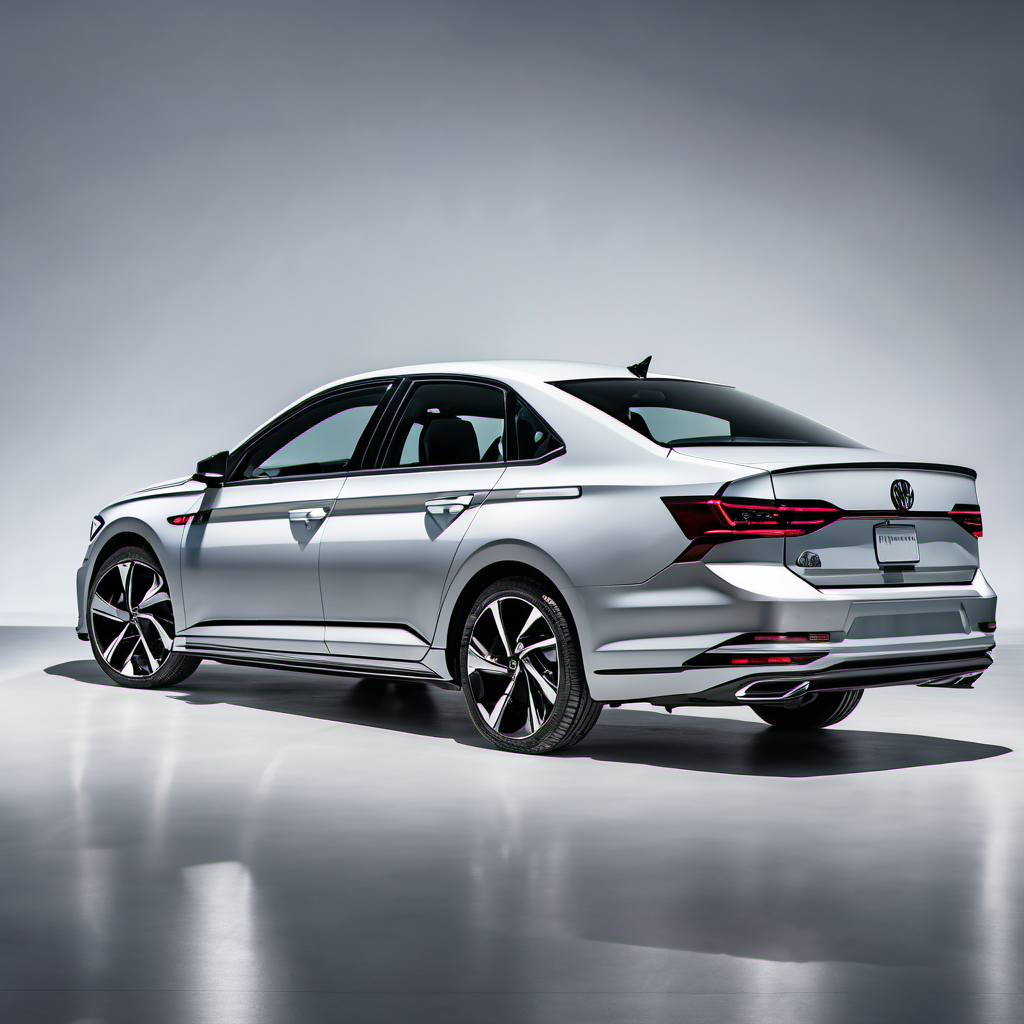
2019 Volkswagen Jetta Sedan

2019 Volkswagen

JettaSedan

1.4L I4 TSI Turbocharged · Sedan

The 2019 Volkswagen Jetta received a full redesign for its seventh generation, riding on VW's MQB platform and gaining a longer wheelbase, more interior room, and a more refined ride than its predecessor. It pairs a turbocharged 1.4L TSI four-cylinder with either a 6-speed manual or an 8-speed automatic (base trims) or a 7-speed DSG dual-clutch, making it one of the more driver-focused compact sedans in the segment. In everyday use, the Jetta punches above its price class for interior quality and road manners. Fit, finish, and NVH isolation feel closer to a near-luxury car than most compact competitors. Fuel economy is competitive at around 30+ mpg combined depending on transmission choice. The weak spots center on the 7-speed DQ200 DSG transmission (shudder and hesitation are documented), occasional oil consumption from the 1.4L engine, and an infotainment unit that earned a poor reputation for sluggish response and freezing. None of these are deal-breakers, but buyers should know what to watch for.

Reliability
3/5
Verified data
Specs shown for Jetta — the most common configuration. Other trims may vary in engine, drivetrain, or fuel economy. Sign in to see your vehicle's exact specs.
Engine
[object Object]
Drivetrain
FWD
Fuel
Gasoline
MPG
30 city / 40 hwy / 34 combined
Seats
5
Doors
4
Body
Sedan
MSRP
$19,895

Overview

AI-curated

The 2019 Volkswagen Jetta received a full redesign for its seventh generation, riding on VW's MQB platform and gaining a longer wheelbase, more interior room, and a more refined ride than its predecessor. It pairs a turbocharged 1.4L TSI four-cylinder with either a 6-speed manual or an 8-speed automatic (base trims) or a 7-speed DSG dual-clutch, making it one of the more driver-focused compact sedans in the segment. In everyday use, the Jetta punches above its price class for interior quality and road manners. Fit, finish, and NVH isolation feel closer to a near-luxury car than most compact competitors. Fuel economy is competitive at around 30+ mpg combined depending on transmission choice. The weak spots center on the 7-speed DQ200 DSG transmission (shudder and hesitation are documented), occasional oil consumption from the 1.4L engine, and an infotainment unit that earned a poor reputation for sluggish response and freezing. None of these are deal-breakers, but buyers should know what to watch for.

Known for
  • Refined, near-premium interior for the price
  • Sharp, composed handling and ride quality
  • Efficient and punchy 1.4L TSI turbo engine
  • Strong long-distance highway comfort
  • Longer wheelbase than most compact competitors
Best for
  • Daily commuters who want European driving feel on a budget
  • Highway-heavy drivers prioritizing fuel economy
  • Buyers who want a roomy compact without stepping up to a midsize
  • Drivers who value interior quality over utility
Watch for
  • DSG transmission shudder, especially under light acceleration in lower gears
  • Higher-than-expected oil consumption — check level at every other fill-up
  • Infotainment system freezes or slow response; software updates help but may not fully resolve
  • Cold-weather battery drain is a known regional concern (relevant in Wisconsin)
  • VW-specific coolant (G12++) and oil spec (0W-20 full synthetic) — don't substitute

Common issues by mileage

6 known

DSG Transmission Shudder / Vibration

medium
Typically appears
15–40k mi
Estimated repair
$150 – $500

System Too Lean (Bank 1) — Vacuum Leak / MAF / O2 Sensor

medium
Typically appears
35–60k mi
Estimated repair
$150 – $350

Infotainment System Freezing / Failure

high
Typically appears
20–50k mi
Estimated repair
$100 – $400

Excessive Oil Consumption

medium
Typically appears
40–80k mi
Estimated repair
$100 – $600

Camshaft Position / VVT Timing Issues

low
Typically appears
60–100k mi
Estimated repair
$300 – $900

Turbocharger Bypass Valve Circuit Fault

low
Typically appears
50–90k mi
Estimated repair
$200 – $600

Maintenance schedule

  1. 1
    Every 10,000 miles or 12 months Engine oil and filter change — 4.5 qts 0W-20 full synthetic

    VW extended the OCI to 10k but the 1.4L TSI is prone to oil consumption; check the dipstick every 3–4 fill-ups and top off as needed. Using the correct 0W-20 spec is non-negotiable — wrong viscosity accelerates wear on the TSI.

  2. 2
    Every 40,000 miles or per VW dealer schedule DSG transmission fluid service (DQ200 fluid)

    The 7-speed DQ200 dry dual-clutch is sensitive to fluid condition. Degraded fluid is a primary cause of the shudder complaints. VW does not always list this as a wear item, but independent shops strongly recommend it at 40k intervals.

  3. 3
    Every 7,500 miles or 6 months Tire rotation

    FWD platforms wear front tires faster. With Wisconsin pothole seasons, even wear across all four extends tire life and keeps handling predictable.

  4. 4
    Every 30,000 miles or 36 months Air filter replacement (Part: 1K0129620)

    A clogged air filter on a turbocharged engine increases the risk of lean conditions and stresses the MAF sensor — a documented fault path on this engine.

  5. 5
    Every 20,000 miles or 24 months Cabin air filter replacement (Part: 5Q0819644A)

    Wisconsin road salt and seasonal pollen load up cabin filters quickly. A blocked filter also reduces defrost airflow — critical in winter.

  6. 6
    Every 2 years regardless of mileage Brake fluid flush — DOT 4

    DOT 4 is hygroscopic and absorbs moisture. In a Wisconsin climate with wide temperature swings, degraded brake fluid raises the risk of vapor lock and reduces pedal feel.

  7. 7
    Every 60,000 miles Spark plug replacement

    Worn plugs on a direct-injection turbo engine worsen combustion efficiency and can contribute to misfires and carbon buildup on intake valves.

  8. 8
    Every 30,000 miles or 3 years Coolant inspection / top-off — G12++ pink only

    VW's G12++ coolant is specific chemistry — mixing with generic green antifreeze causes silicate sludge that clogs the cooling system. Full flush at 60k if coolant color or pH looks off.

Always defer to the manufacturer's service manual for warranty-mandated intervals.

Cost of ownership

Annual maintenance
$600 – $1,100
Fuel
At 34 mpg combined and roughly 12,000 miles/year, expect $1,200–$1,500/year at $3.50–$4.25/gal. Premium is not required; regular 87 octane is acceptable.
Insurance
Compact sedans in this class typically run $1,100–$1,500/year in southeastern Wisconsin for a driver with a clean record. Actual rates vary significantly by driver profile and coverage level.

The Jetta is a reasonably affordable car to maintain when you stay on top of the DSG fluid and use VW-spec engine oil. The main cost spike risk is deferred DSG service leading to a mechatronic or clutch pack replacement ($1,200–$2,500), or ignoring oil consumption until an engine issue develops. Budget an extra $50–$100/year for oil top-offs between changes if your car is a known consumer.
Seasonal care

Lake Geneva, WI
Winter
  • Battery: Test the battery every fall — VW's MQB electronics draw meaningful parasitic current and a marginal battery will fail in a Wisconsin cold snap. Replace anything testing below 70% CCA.
  • Oil viscosity: 0W-20 full synthetic is already well-suited for cold starts; do not switch to a thicker grade — cold starts with the wrong viscosity starve the TSI turbo.
  • Wiper fluid: Fill with a -40°F rated fluid before first freeze. The VW reservoir is adequate but the jets can ice over — keep an eye on spray pattern.
  • Winter tires: The Jetta's summer or all-season OEM tires lose grip quickly below 40°F. A dedicated winter tire set makes a measurable safety difference on Lake Geneva-area roads.
  • Undercarriage rinse: Road salt accumulates in the MQB subframe and suspension pockets. Rinse the undercarriage every 2–3 weeks through the salting season to protect brake lines and suspension hardware.
  • Parking: If possible, park in a garage or plug in a battery tender during extended sub-zero cold spells to reduce battery drain and ease DSG cold-start behavior.
Summer
  • Tire pressure: Check monthly — pressure drops roughly 1 PSI per 10°F temperature change. Under-inflated tires hurt the Jetta's otherwise good fuel economy.
  • A/C system: If cooling performance is weak after winter, have refrigerant level and cabin filter checked before peak heat. The 1.4L TSI does feel the load of A/C compressor drag more than a larger engine.
  • Coolant level: Visually check the pink G12++ reservoir level at every oil change interval — the 1.4L can experience small coolant losses that go unnoticed until overheating.
  • Heat soak on restart: The TSI turbo retains heat after shutdown. If you make frequent short stops in summer heat, let the engine idle 30–60 seconds before shutting down to allow oil circulation to cool the turbo.

Comparable vehicles

If you're shopping for one

Red flags
  • DSG shudder or hesitation that persists after a documented fluid service — may indicate worn clutch packs requiring a costly rebuild.
  • Oil level more than 1 quart low at any service interval — suggests active consumption that may require engine attention.
  • Infotainment unit that reboots during the test drive or shows a 'black screen' — hardware failure is more expensive to resolve than a software update.
  • Any VVT or camshaft timing codes (P0012, P0015) without a documented repair — these can indicate oil pressure or solenoid issues that escalate quickly.
  • Rust on brake lines or battery tray — common on upper Midwest cars and expensive to address safely.
What to inspect
  • Pull a live DSG shudder test: warm the car up fully, then accelerate gently from a stop in 1st–2nd gear. Any vibration or 'slip' feeling warrants a DSG fluid check and TCU software version inquiry.
  • Check oil level cold before test drive — a low reading on a 2019 with under 60k miles is a red flag for consumption issues.
  • Connect an OBD-II scanner and check for stored/pending codes, especially P0171 (lean), P0012/P0015 (VVT timing), and any U-codes indicating infotainment/CAN bus faults.
  • Test every infotainment function: navigation, CarPlay/Android Auto, backup camera, and climate controls. Confirm the unit responds without delay and doesn't reboot during the test drive.
  • Inspect brake lines, battery tray, and subframe for rust if the car was driven in a salt-belt state — Wisconsin and surrounding states are hard on undercarriage steel.
AI profile generated 20 days ago · claude-sonnet-4-6 · v2.