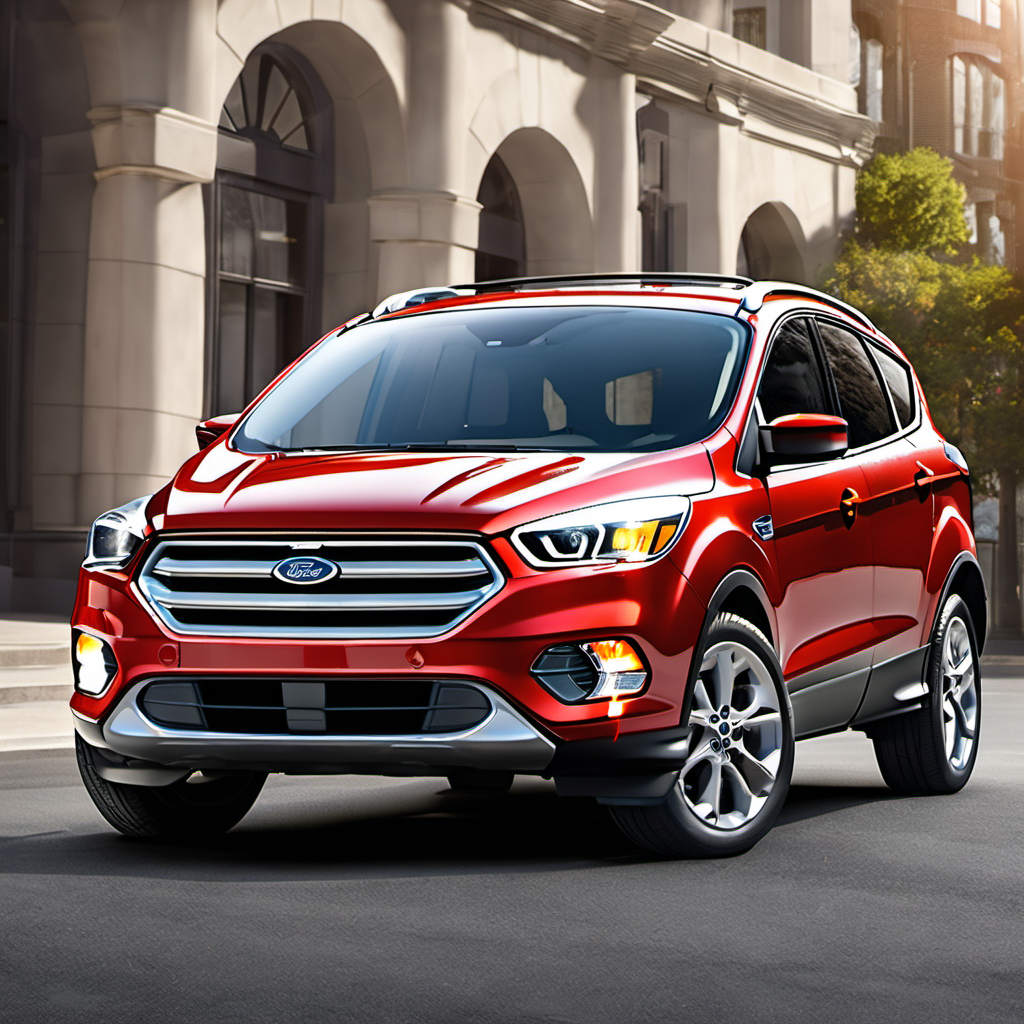
2019 Ford Escape SUV

2019 Ford

EscapeSUV

SUV

The 2019 Ford Escape is a compact crossover SUV that sits in one of the most competitive segments in the market. This generation (third-gen, 2013–2019) was Ford's answer to the Chevy Equinox and Toyota RAV4, and by 2019 it had been refined enough to be a solid daily driver — though it carries some well-documented baggage from the platform's earlier years. The top-spec 2.0L EcoBoost four-cylinder makes a genuinely spirited 245 hp, enough to feel quick around town and on the highway. Most buyers will find the interior comfortable and the cargo area practical. Ford's SYNC infotainment was improved for 2019, though earlier owners in the generation had reason to complain. If you're buying used, the transmission shudder issue is the single biggest thing to know going in. It's been a documented problem across the full 2013–2019 run and can be expensive to resolve. A pre-purchase inspection that includes a test drive with light throttle from a stop is essential.

Reliability
3/5
Verified data
Specs shown for Escape FWD FFV — the most common configuration. Other trims may vary in engine, drivetrain, or fuel economy. Sign in to see your vehicle's exact specs.
Engine
[object Object]
Drivetrain
FWD
Fuel
Gasoline
MPG
21 city / 29 hwy / 24 combined
Seats
Doors
Body
Small Sport Utility Vehicle 2WD
Length
178.1 inches

Overview

AI-curated

The 2019 Ford Escape is a compact crossover SUV that sits in one of the most competitive segments in the market. This generation (third-gen, 2013–2019) was Ford's answer to the Chevy Equinox and Toyota RAV4, and by 2019 it had been refined enough to be a solid daily driver — though it carries some well-documented baggage from the platform's earlier years. The top-spec 2.0L EcoBoost four-cylinder makes a genuinely spirited 245 hp, enough to feel quick around town and on the highway. Most buyers will find the interior comfortable and the cargo area practical. Ford's SYNC infotainment was improved for 2019, though earlier owners in the generation had reason to complain. If you're buying used, the transmission shudder issue is the single biggest thing to know going in. It's been a documented problem across the full 2013–2019 run and can be expensive to resolve. A pre-purchase inspection that includes a test drive with light throttle from a stop is essential.

Known for
  • Punchy 2.0L EcoBoost performance for its class
  • Comfortable, well-designed interior with good cargo flexibility
  • Decent fuel economy for a 245-hp SUV
  • Transmission shudder on the 6F35 automatic — a known multi-year problem
  • Strong parts availability as a high-volume Ford platform
Best for
  • Daily commuters who want a bit of performance with practical space
  • Small families needing easy cargo access and good highway manners
  • Buyers on a budget who want a capable crossover without full-size prices
  • Drivers who prioritize a known, easy-to-service platform
Watch for
  • Transmission shudder under light acceleration — test drive specifically for this
  • Coolant leaks from water pump and radiator connections, especially above 60k miles
  • Undercarriage rust — this is a Wisconsin salt-belt vehicle; inspect thoroughly
  • Infotainment glitches and electrical gremlins that can be tedious to diagnose
  • Oil consumption on higher-mileage EcoBoost engines if not maintained on schedule

Common issues by mileage

6 known

Transmission Shudder (6F35)

high
Typically appears
40–80k mi
Estimated repair
$150 – $3,000

Coolant Leaks (Water Pump / Radiator)

high
Typically appears
50–90k mi
Estimated repair
$300 – $900

VCT / Camshaft Timing Issues

medium
Typically appears
60–120k mi
Estimated repair
$400 – $1,200

Electrical / Infotainment Gremlins

medium
Typically appears
30–80k mi
Estimated repair
$100 – $500

Undercarriage Rust

high
Typically appears
Any mileage in salt-belt use
Estimated repair
$200 – $1,500

AC Compressor Failure

low
Typically appears
70–100k mi
Estimated repair
$700 – $1,400

Maintenance schedule

  1. 1
    Every 10,000 miles or 12 months, whichever comes first Oil Change — 5W-20 Synthetic Blend, 5.7 qts with filter

    The EcoBoost's direct injection and turbo components depend heavily on clean oil. Dirty oil accelerates VCT phaser wear and carbon buildup on intake valves. Don't stretch this interval.

  2. 2
    Every 7,500 miles or 6 months Tire Rotation

    FWD crossovers wear front tires faster. Regular rotation evens out wear and extends tire life significantly, which matters on the Wisconsin freeze-thaw cycle that's hard on rubber.

  3. 3
    Inspect at 60,000 miles; change by 100,000 miles even if not symptomatic Transmission Fluid Check / Change — Mercon LV

    Ford lists this as a 'lifetime' fill, but Wisconsin owners see shudder complaints reduced or delayed significantly with a proactive fluid change. Use only Mercon LV — the wrong fluid will make shudder worse, not better.

  4. 4
    Every 30,000 miles; full coolant change at 100,000 miles Cooling System Inspection

    Motorcraft Orange coolant (OAT) is spec; mixing types causes silting and accelerated seal wear. Inspect hoses and the water pump for seepage at every oil change given the known leak history on this generation.

  5. 5
    Every 30,000 miles or 30 months Air Filter Replacement (FL-400S)

    A clogged air filter on a turbocharged engine causes the turbo to work harder and can affect boost response. Wisconsin gravel roads and spring mud can load filters faster than the interval suggests — inspect annually.

  6. 6
    Every 20,000 miles or when airflow from vents feels reduced Cabin Air Filter Replacement (FP68)

    Often overlooked, but a clogged cabin filter strains the blower motor and reduces defrost effectiveness — a real problem in Wisconsin winters.

  7. 7
    Inspect annually; flush every 2–3 years Brake Fluid Check / Flush — DOT 3

    DOT 3 is hygroscopic — it absorbs moisture over time, which lowers boiling point and accelerates internal corrosion. Wisconsin's humidity and temperature swings accelerate this.

  8. 8
    Every fall before winter season 12V Battery Test

    Cold-cranking amps drop significantly in sub-zero temps. A battery that tests marginal in October will often fail in January in Lake Geneva. A weak battery is also the #1 cause of phantom electrical faults on this platform.

Always defer to the manufacturer's service manual for warranty-mandated intervals.

Cost of ownership

Annual maintenance
$600 – $1,200
Fuel
At 24 MPG combined and ~15,000 miles/year, expect roughly $1,500–$1,800/year at $2.40–$2.90/gal. Highway driving will push closer to 29 MPG and reduce that figure noticeably.
Insurance
Typically $1,100–$1,600/year for full coverage in southern Wisconsin for a driver with a clean record, based on this class and value range. Rates vary significantly by driver profile.

The 2019 Escape is a reasonable cost-to-own vehicle if the transmission stays healthy. Routine maintenance runs $600–$1,200/year at an independent shop. The big financial risk is the transmission — a full torque converter or rebuild job can run $2,500–$3,500, which can easily exceed the vehicle's depreciated value on a high-mileage example. Keep up with transmission fluid and address any shudder early; catching it at the fluid-flush stage costs under $200 vs. waiting until it needs mechanical repair.

Seasonal care

Lake Geneva, WI
Winter
  • Test the 12V battery every October — cold starts in the single digits will expose a weak battery immediately. Replace anything testing below 70% CCA capacity before Thanksgiving.
  • Switch to winter-rated windshield washer fluid rated to at least -20°F. The standard summer fluid will freeze solid in the washer lines and crack the pump.
  • Inspect wiper blades and consider dedicated winter blades — the beam-style wipers handle heavy Wisconsin snow and ice buildup far better than standard frames.
  • Wash the undercarriage every 1–2 weeks during active road-salt season (roughly November–March in Lake Geneva). Pay special attention to the rear wheel wells, brake lines, and subframe — this is where rust starts on these vehicles.
  • Keep the fuel tank above half in very cold weather to reduce condensation in the fuel system and provide ballast weight for traction.
  • Check tire pressure after any temperature drop below 20°F — tires lose roughly 1 PSI per 10°F of temperature drop, and underinflated tires significantly reduce winter traction.
Summer
  • Inspect the AC system operation and listen for unusual compressor noise at the start of the season — catching a failing compressor before it seizes and contaminates the system saves significant money.
  • Check coolant level and condition before summer heat. The EcoBoost runs warm and a low or degraded coolant level combined with stop-and-go traffic can push temps into the danger zone.
  • Recheck tire pressure as temperatures rise — for every 10°F increase in ambient temp, tire pressure rises ~1 PSI. Overinflation reduces contact patch and wear.
  • Heat soak after parking can make the SYNC system sluggish or cause a reboot on startup — this is normal behavior but if it becomes frequent, have the battery and charging system tested as heat accelerates battery degradation.

Comparable vehicles

No comparable vehicles documented yet.

AI profile generated 4 days ago · claude-sonnet-4-6 · v2.