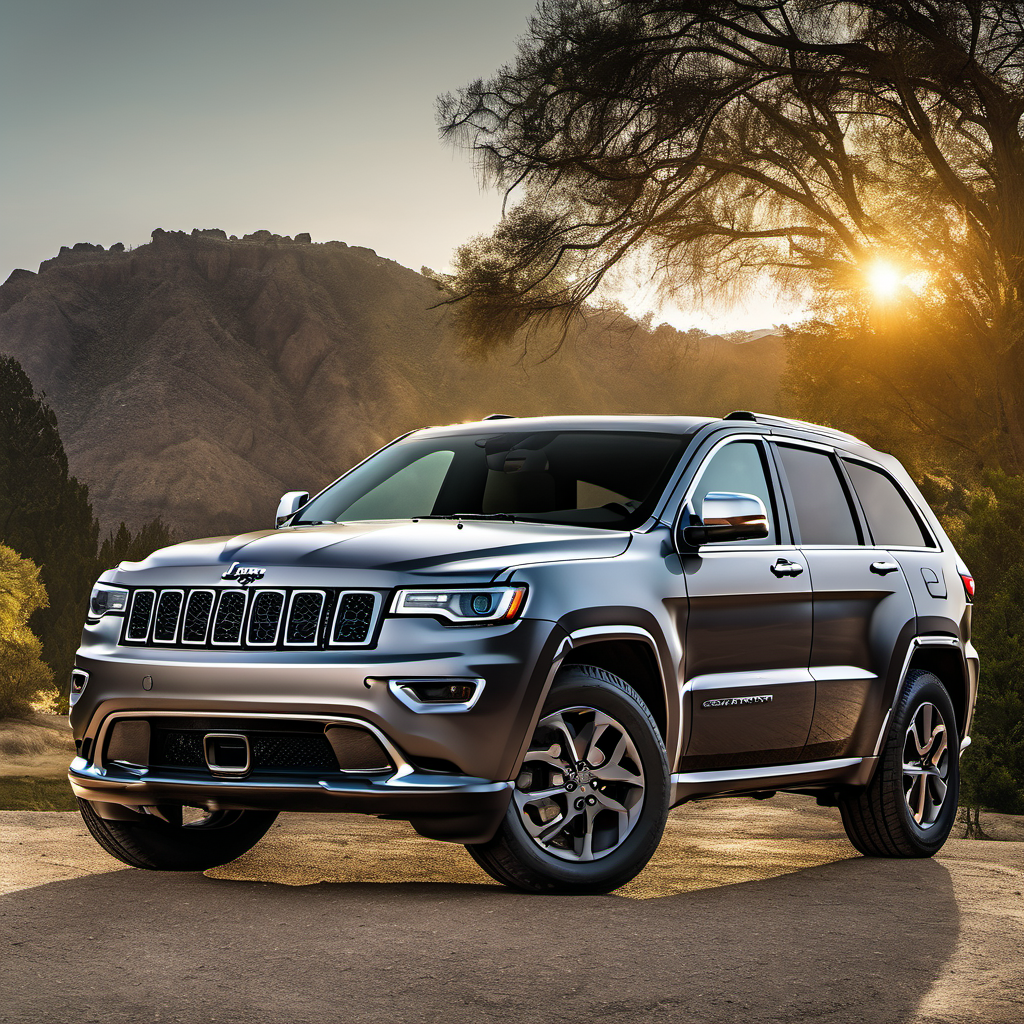
2018 Jeep Grand Cherokee SUV

2018 Jeep

Grand CherokeeSUV

3.6L Pentastar V6 · SUV

The 2018 Jeep Grand Cherokee is the fourth-generation (WK2) version of Jeep's flagship mid-size SUV, a platform that ran from 2011 through 2021. It sits in a sweet spot between the compact Cherokee and the three-row Grand Wagoneer, offering genuine off-road capability alongside a comfortable, well-equipped interior. By 2018, Jeep had refined the WK2 to a high degree — the cabin quality, ride comfort, and available tech were competitive with German rivals at a significantly lower price point. Engine choices range from the bread-and-butter 3.6L Pentastar V6 to the 5.7L and 6.4L Hemi V8s, plus a 3.0L EcoDiesel V6 (the diesel returned for 2018 after a brief pause). The ZF 8-speed automatic is a strong transmission across most trims. The Quadra-Trac and Quadra-Drive 4WD systems are genuinely capable off pavement, and the air suspension available on higher trims adds both on-road comfort and off-road ground clearance. The WK2 Grand Cherokee has a well-documented reliability history: the engines and transmissions hold up well, but the electronics, air suspension, and HVAC systems are consistent weak points. Budget accordingly for those items as the vehicle ages.

Reliability
3/5
Verified data
Specs shown for Grand Cherokee 2WD — the most common configuration. Other trims may vary in engine, drivetrain, or fuel economy. Sign in to see your vehicle's exact specs.
Engine
[object Object]
Drivetrain
4WD
Fuel
Gasoline
MPG
19 city / 26 hwy / 22 combined
Seats
5
Doors
4
Body
SUV
MSRP
$31,695

Overview

AI-curated

The 2018 Jeep Grand Cherokee is the fourth-generation (WK2) version of Jeep's flagship mid-size SUV, a platform that ran from 2011 through 2021. It sits in a sweet spot between the compact Cherokee and the three-row Grand Wagoneer, offering genuine off-road capability alongside a comfortable, well-equipped interior. By 2018, Jeep had refined the WK2 to a high degree — the cabin quality, ride comfort, and available tech were competitive with German rivals at a significantly lower price point. Engine choices range from the bread-and-butter 3.6L Pentastar V6 to the 5.7L and 6.4L Hemi V8s, plus a 3.0L EcoDiesel V6 (the diesel returned for 2018 after a brief pause). The ZF 8-speed automatic is a strong transmission across most trims. The Quadra-Trac and Quadra-Drive 4WD systems are genuinely capable off pavement, and the air suspension available on higher trims adds both on-road comfort and off-road ground clearance. The WK2 Grand Cherokee has a well-documented reliability history: the engines and transmissions hold up well, but the electronics, air suspension, and HVAC systems are consistent weak points. Budget accordingly for those items as the vehicle ages.

Known for
  • Strong Pentastar 3.6L V6 and Hemi V8 engine options
  • Best-in-class off-road capability for the mid-size luxury SUV segment
  • Comfortable, well-insulated ride with available air suspension
  • Feature-rich Uconnect infotainment system
  • Wide trim ladder from base Laredo to high-end Summit and SRT
Best for
  • Families needing towing capacity (up to 7,200 lbs with V8)
  • Drivers who occasionally go off-road or need winter AWD confidence
  • Buyers wanting near-luxury amenities without European repair costs
  • Wisconsin winters — available heated seats, remote start, and AWD standard on most trims
Watch for
  • Air suspension leaks and compressor failures (especially after cold Wisconsin winters)
  • Electronics gremlins in the Uconnect and body control modules
  • EcoDiesel emission system complexity if buying the diesel variant
  • Rear differential and transfer case service often skipped by previous owners
  • Rust on underbody components from road salt exposure

Common issues by mileage

6 known

Air Suspension Compressor Failure / Air Bag Leaks

high
Typically appears
60–120k mi
Estimated repair
$600 – $1,800

HVAC Blend Door Actuator Failure

high
Typically appears
50–100k mi
Estimated repair
$150 – $450

Transfer Case and Front Differential Wear

medium
Typically appears
80–150k mi
Estimated repair
$400 – $1,500

Oxygen Sensor / Heater Circuit Faults

medium
Typically appears
80–140k mi
Estimated repair
$150 – $400

Maintenance schedule

  1. 1
    Every 5,000–6,000 miles (use full synthetic 0W-20 or 5W-20 as specified) Engine oil and filter change

    The Pentastar V6's VVT system is oil-pressure dependent. Dirty or low oil is the #1 cause of camshaft timing codes and solenoid failures. Don't stretch intervals on this engine.

  2. 2
    Every 30,000–45,000 miles Transfer case and front/rear differential fluid service

    Routinely skipped by owners, this is the single best thing you can do to prevent a $1,200+ transfer case replacement. Use only the correct FCA-approved fluid — wrong fluid causes shudder and seal damage.

  3. 3
    Every 30,000 miles Spark plugs (V6)

    The Pentastar's tight V6 packaging makes plug access labor-intensive if they seize in. Replace on schedule to avoid broken plug extractions.

  4. 4
    Every 40,000–50,000 miles Transmission fluid service (ZF 8-speed)

    Jeep/FCA marks the ZF 8HP as 'lifetime fill,' but real-world experience shows fluid degradation causes shift quality issues and solenoid wear beyond 60k. An independent shop fluid service is good insurance.

  5. 5
    Every fall, before freeze-up Air suspension inspection

    Inspect air bags for cracking and check compressor operation before the cold hits. A bag that's starting to seep will fail completely in sub-zero temps, leaving the vehicle on bumpstops.

  6. 6
    Every 2 years Brake fluid flush

    Brake fluid is hygroscopic and absorbs moisture. In a Wisconsin climate with large temperature swings, degraded fluid lowers boiling point and promotes internal corrosion in ABS/ESC hydraulic units.

  7. 7
    Every 5 years or 100,000 miles (whichever comes first) Coolant system service

    The Pentastar is sensitive to coolant condition. Degraded HOAT coolant accelerates water pump wear and can cause thermostat housing leaks — a known V6 weakness.

  8. 8
    Every spring (after road-salt season) and every fall Underbody wash and inspection

    Lake Geneva roads get heavy salt treatment. Flush the underbody, inspect brake lines, fuel lines, and frame rails for rust. Treat any bare metal before re-freeze.

Always defer to the manufacturer's service manual for warranty-mandated intervals.

Cost of ownership

Annual maintenance
$700 – $1,800
Fuel
At 22 MPG combined and ~15,000 miles/year, expect roughly $1,800–$2,200/year in fuel at current Midwest gas prices with the V6. The V8 adds $400–600/year. The EcoDiesel saves money on fuel but adds potential emissions system costs.
Insurance
Mid-size SUV, expect $1,200–$1,800/year for full coverage in the Lake Geneva area depending on trim and driving history. Higher trims (Overland, Summit) cost more to insure due to higher replacement value.

A well-maintained 2018 Grand Cherokee V6 is a reasonable ownership proposition. Routine costs are modest, but you should budget a reserve for the air suspension (if equipped) and electronics — those are when-not-if items on a used example. Figure $700–$1,000/year for normal maintenance, with the possibility of a $600–$1,800 air suspension bill somewhere in the ownership window. Overall cost is higher than a Toyota 4Runner but lower than a comparable German luxury SUV.

Seasonal care

Lake Geneva, WI
Winter
  • Test the battery before November — cold cranking amps drop sharply below 0°F and the Grand Cherokee's electronics place heavy electrical loads on the battery. Replace any battery showing marginal CCA.
  • Switch to a full synthetic 0W-20 or 5W-20 if not already running it — thinner cold-flow oil means faster VVT system pressurization on sub-zero starts.
  • Inspect air suspension bags in October. A bag starting to crack will fail in the cold; a failed bag leaves the SUV on its bumpstops and makes it undriveable. Fix it before freeze-up.
  • Use a winter-rated washer fluid rated to at least -20°F — the standard summer fluid will freeze in the reservoir and lines in a Lake Geneva winter.
  • Switch to dedicated winter tires if you're driving on unplowed roads. The standard all-seasons on most trims lose significant grip below 40°F. AWD helps you go; it doesn't help you stop.
  • Flush the underbody after heavy salt events. Pay attention to brake lines, the spare tire carrier, and the rear differential housing — all common rust spots on Wisconsin-used WK2s.
Summer
  • Check tire pressure monthly — tires gain roughly 1 PSI for every 10°F of temperature increase. Overinflated tires reduce wet-weather grip and accelerate center-tread wear.
  • Run the A/C system and inspect for weak cooling — a slow refrigerant leak may have gone unnoticed over winter. Recharge if cooling output is reduced.
  • Inspect the engine air filter after a muddy spring. Off-road use or gravel-road driving loads the filter quickly.
  • Check coolant level and condition before hot-weather driving. The Pentastar's thermostat housing and water pump are failure points that heat stress accelerates.
  • If equipped with a tow package, verify trailer wiring connector condition before summer towing season — corrosion from winter salt degrades the connector pins.

Comparable vehicles

No comparable vehicles documented yet.

AI profile generated 22 days ago · claude-sonnet-4-6 · v2.