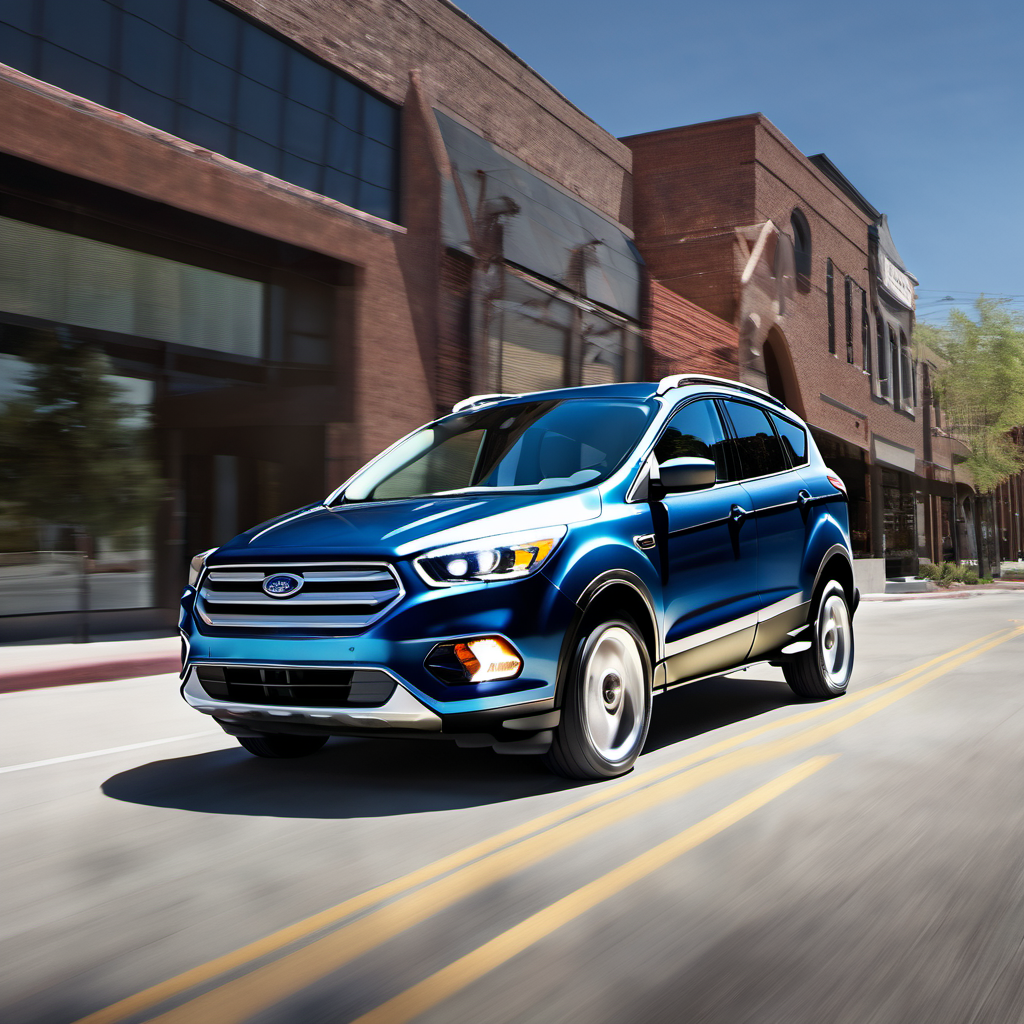
2018 Ford Escape SUV
Popular pick

2018 Ford

EscapeSUV

2.0L EcoBoost I4 · SUV

The 2018 Ford Escape is a compact crossover SUV sitting squarely in one of the most competitive segments on the road. For this model year, Ford offered three engine choices — a naturally aspirated 2.5L four-cylinder, a 1.5L EcoBoost, and the top-tier 2.0L EcoBoost found in this example — paired with a 6-speed automatic and available AWD. The Escape is a sensible daily driver with a comfortable interior, decent cargo space, and a connected tech package (SYNC 3, Apple CarPlay, Android Auto) that holds up well even by today's standards. The 2.0L EcoBoost delivers strong pull for a compact SUV — 245 hp — and is especially well-suited for drivers who occasionally tow or frequently merge on highways. The tradeoff is that the EcoBoost's complexity (turbo, direct injection, variable cam timing) means there's more to maintain than a simple naturally aspirated engine. Oil change discipline is not optional on this engine; neglect it and you'll be reading about VCT solenoid codes and timing wear well before 100k miles. For a Lake Geneva driver, the AWD system is a genuine asset through November–March. The Escape is sized right for town errands and resort-area parking, while still fitting a family of five and weekend gear. Just go in knowing that long-term ownership rewards those who stay on top of oil changes and coolant service.

Reliability
3/5
Verified data
Specs shown for Escape FWD — the most common configuration. Other trims may vary in engine, drivetrain, or fuel economy. Sign in to see your vehicle's exact specs.
Engine
[object Object]
Drivetrain
4WD/4-Wheel Drive/4x4
Fuel
Gasoline
MPG
20 city / 27 highway / 23 combined
Seats
2
Doors
4
Body
SUV
MSRP
$28,155

Overview

AI-curated

The 2018 Ford Escape is a compact crossover SUV sitting squarely in one of the most competitive segments on the road. For this model year, Ford offered three engine choices — a naturally aspirated 2.5L four-cylinder, a 1.5L EcoBoost, and the top-tier 2.0L EcoBoost found in this example — paired with a 6-speed automatic and available AWD. The Escape is a sensible daily driver with a comfortable interior, decent cargo space, and a connected tech package (SYNC 3, Apple CarPlay, Android Auto) that holds up well even by today's standards. The 2.0L EcoBoost delivers strong pull for a compact SUV — 245 hp — and is especially well-suited for drivers who occasionally tow or frequently merge on highways. The tradeoff is that the EcoBoost's complexity (turbo, direct injection, variable cam timing) means there's more to maintain than a simple naturally aspirated engine. Oil change discipline is not optional on this engine; neglect it and you'll be reading about VCT solenoid codes and timing wear well before 100k miles. For a Lake Geneva driver, the AWD system is a genuine asset through November–March. The Escape is sized right for town errands and resort-area parking, while still fitting a family of five and weekend gear. Just go in knowing that long-term ownership rewards those who stay on top of oil changes and coolant service.

Known for
  • Strong-pulling 2.0L EcoBoost with 245 hp
  • SYNC 3 infotainment with Apple CarPlay and Android Auto
  • Competent AWD system for light snow and mixed conditions
  • Comfortable, car-like ride quality for a compact SUV
  • Wide dealer and independent service network
Best for
  • Daily commuters who want a little more confidence in winter
  • Small families needing cargo flexibility without a full-size SUV
  • Drivers who value connected tech at a mid-market price
  • Light-duty towing (up to 3,500 lbs with 2.0L)
Watch for
  • EcoBoost engine is oil-change-sensitive — sludge accelerates VCT wear fast
  • Coolant can leak at the thermostat housing and degas bottle on higher-mileage examples
  • Door latch recalls affected earlier third-gen Escapes; confirm no open recalls on this VIN
  • Transmission can feel hesitant at low speeds if service has been deferred
  • Panoramic roof drains clog and can cause interior water leaks

Common issues by mileage

6 known

VCT Solenoid Failure (Variable Cam Timing)

high
Typically appears
60–120k mi
Estimated repair
$200 – $550

Coolant System Leaks (Thermostat Housing / Degas Bottle)

medium
Typically appears
70–130k mi
Estimated repair
$150 – $500

Turbocharger Bypass / Wastegate Issues

medium
Typically appears
80–150k mi
Estimated repair
$300 – $900

Oxygen Sensor / Heater Circuit Fault

medium
Typically appears
80–120k mi
Estimated repair
$150 – $380

Door Latch Failure

low
Typically appears
Any mileage
Estimated repair
$120 – $350

Panoramic Sunroof Drain Clogs / Water Intrusion

medium
Typically appears
40k mi+
Estimated repair
$75 – $400

Maintenance schedule

  1. 1
    Every 5,000–7,500 miles (do not stretch to Ford's oil life monitor maximum on a used EcoBoost) Engine oil and filter change

    The 2.0L EcoBoost's VCT system is highly sensitive to oil cleanliness. Sludge is the #1 cause of premature VCT solenoid failure and timing chain wear. On a used example, shorten the interval until you know the service history.

  2. 2
    Every 60,000 miles Spark plug replacement

    Ford specifies 60k for the 2.0L EcoBoost. Worn plugs cause misfires and can damage the turbo through unburned fuel. Use OEM-spec iridium plugs.

  3. 3
    Every 15,000–20,000 miles or annually Engine air filter inspection/replacement

    A clogged air filter reduces turbo performance and fuel economy. Wisconsin gravel roads accelerate filter loading — inspect yearly.

  4. 4
    Every 50,000 miles or 5 years Coolant flush

    Degraded coolant loses freeze protection and becomes acidic, attacking the plastic thermostat housing. Critical for Wisconsin's sub-zero winters.

  5. 5
    Every 60,000 miles (especially on a used vehicle with unknown history) Transmission fluid change

    Ford's 6-speed automatic is a 'fill for life' unit in the owner's manual, but real-world use — especially in cold climates — benefits from fresh fluid. Low-speed hesitation and shudder are often resolved with a fluid change.

  6. 6
    Every 60,000 miles AWD rear differential fluid check

    The rear drive unit (PTU/RDU) on AWD Escapes has its own fluid that Ford originally recommended changing at 60k. Low or degraded fluid causes whine and premature wear in the rear coupling.

  7. 7
    Every 2–3 years regardless of mileage Brake fluid replacement

    Brake fluid absorbs moisture over time, lowering its boiling point. In Wisconsin winters, this matters. Salt also attacks brake lines — inspect lines and calipers for corrosion at every brake service.

  8. 8
    Every 15,000–20,000 miles or annually Cabin air filter replacement

    A plugged cabin filter strains the HVAC blower and reduces defroster effectiveness — a real safety concern in Wisconsin winters.

Always defer to the manufacturer's service manual for warranty-mandated intervals.

Cost of ownership

Annual maintenance
$600 – $1,200
Fuel
At 23 MPG combined and roughly 12,000 miles/year, expect ~522 gallons annually. At $3.20–$3.60/gal (Wisconsin average), that's approximately $1,670–$1,880/year in fuel.
Insurance
Typically $1,200–$1,700/year for a 2018 Escape in the Lake Geneva area depending on driving record and coverage level. Compact SUVs generally land in the mid-range for insurance costs.

The 2018 Escape 2.0L AWD is a moderate-cost vehicle to own when maintenance is kept current. Parts availability is excellent and independent shop labor is widely available. The two cost traps are deferred oil changes (leads to expensive VCT/timing repairs) and ignoring early coolant system leaks. Budget on the higher end of the maintenance range if the vehicle's service history is incomplete.

Seasonal care

Lake Geneva, WI
Winter
  • Switch to a 0W-30 or 5W-30 full-synthetic rated for sub-zero starts — the EcoBoost's VCT system needs immediate oil pressure at cold crank, and thick cold oil delays that.
  • Test the battery every fall — the 2.0L EcoBoost puts more electrical load on the battery at startup than a naturally aspirated engine. Replace any battery showing under 500 CCA before November.
  • Fill the washer fluid reservoir with a -20°F or lower rated winter formula. Freeze-up in the washer lines or pump is a common nuisance on any vehicle in Lake Geneva winters.
  • Flush and pressure-test the coolant system before winter. A cracked degas bottle or weeping thermostat housing that's manageable in September becomes a breakdown in January.
  • Inspect the undercarriage for rust on brake lines, fuel lines, and the rear AWD coupling. Salt exposure accelerates rapidly after the first season — catch flaking before it becomes a failure.
  • Run dedicated winter tires if you're on all-seasons. The AWD system helps with acceleration, but stopping is all about tire compound — all-seasons harden below 45°F.
Summer
  • Check tire pressure monthly — temperatures rise from winter lows and pressure climbs roughly 1 PSI per 10°F. Over-inflated tires wear unevenly and reduce wet grip.
  • Inspect the A/C system performance before peak heat. The 2.0L EcoBoost's turbo generates significant engine bay heat — a marginal A/C system that barely cools in spring will struggle in July.
  • Clear panoramic sunroof drains after spring debris accumulation. Run water through the drain channels and confirm it exits under the vehicle rather than backing up into the headliner.
  • Check coolant level and inspect hoses for summer heat soak. High-mileage hoses soften and can collapse under vacuum or blow a pinhole under pressure when the engine is hot.
  • After a Wisconsin winter of salt exposure, flush the undercarriage thoroughly in early spring and re-inspect brake hardware for corrosion that accelerated under road salt.

Comparable vehicles

No comparable vehicles documented yet.

AI profile generated 20 days ago · claude-sonnet-4-6 · v2.