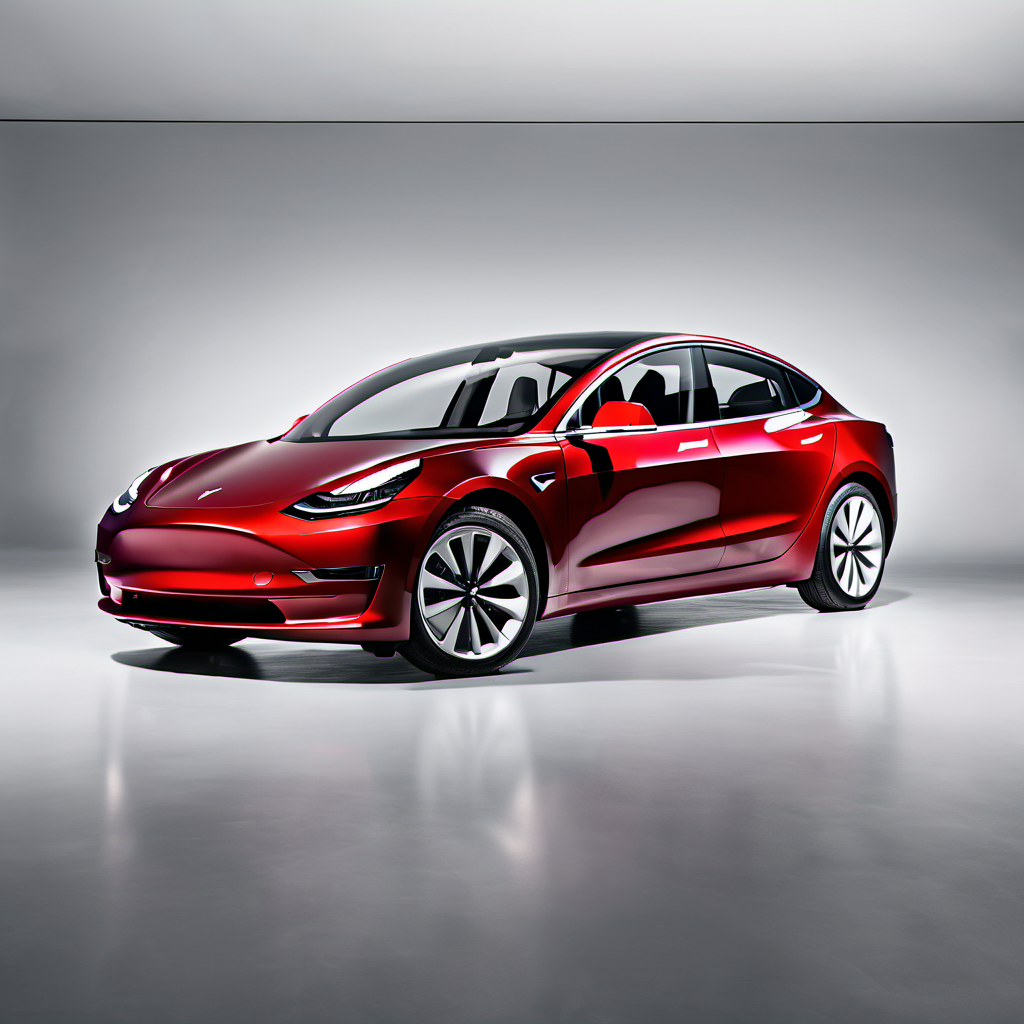
2017 Tesla Model 3 Sedan

2017 Tesla

Model 3Sedan

Sedan

The 2017 Tesla Model 3 is the first model year of Tesla's mass-market all-electric sedan, designed to bring the EV experience to a broader audience at a lower price point than the Model S or Model X. It launched with a single Long Range RWD configuration; the Standard Range and Performance variants came later. The Model 3 quickly became the best-selling EV in the world and redefined expectations for range, over-the-air software updates, and in-car technology in its class. Early 2017–2018 production units were built during Tesla's infamous 'production hell' period, meaning panel gaps, paint inconsistencies, and minor trim fit issues are more common on these cars than on later builds. The powertrain itself — the electric motor, inverter, and battery pack — has proven durable, but the early cars carry some first-year build-quality baggage that buyers should be aware of. For a Lake Geneva driver, the Model 3 RWD is a capable but range-reduced choice in Wisconsin winters. Cold temperatures measurably cut lithium-ion battery range, and the absence of an engine block means no waste heat for cabin warming — the resistive heater pulls harder from the pack. Plan your charging accordingly in January and February.

Reliability
3/5
Verified data
Specs shown for Model 3 Long Range — the most common configuration. Other trims may vary in engine, drivetrain, or fuel economy. Sign in to see your vehicle's exact specs.
Engine
Drivetrain
RWD
Fuel
Electric
MPG
131 city / 120 hwy / 126 combined
Seats
Doors
Body
Midsize Cars

Overview

AI-curated

The 2017 Tesla Model 3 is the first model year of Tesla's mass-market all-electric sedan, designed to bring the EV experience to a broader audience at a lower price point than the Model S or Model X. It launched with a single Long Range RWD configuration; the Standard Range and Performance variants came later. The Model 3 quickly became the best-selling EV in the world and redefined expectations for range, over-the-air software updates, and in-car technology in its class. Early 2017–2018 production units were built during Tesla's infamous 'production hell' period, meaning panel gaps, paint inconsistencies, and minor trim fit issues are more common on these cars than on later builds. The powertrain itself — the electric motor, inverter, and battery pack — has proven durable, but the early cars carry some first-year build-quality baggage that buyers should be aware of. For a Lake Geneva driver, the Model 3 RWD is a capable but range-reduced choice in Wisconsin winters. Cold temperatures measurably cut lithium-ion battery range, and the absence of an engine block means no waste heat for cabin warming — the resistive heater pulls harder from the pack. Plan your charging accordingly in January and February.

Known for
  • Industry-leading energy efficiency and EPA range for its class
  • Over-the-air software updates that genuinely improve the car over time
  • Minimalist interior centered on a single 15-inch touchscreen
  • Strong straight-line performance even in base RWD trim
  • Early production build-quality inconsistencies (panel gaps, paint)
Best for
  • Daily commuters with home charging capability
  • Tech-forward drivers who want a low-maintenance powertrain
  • Buyers with predictable driving patterns and known charging stops
  • Environmentally conscious drivers seeking long-term fuel savings
Watch for
  • Significant range loss in sub-zero Wisconsin winters (can lose 20–40% of rated range)
  • Early 2017 build quality: inspect panel gaps, paint, and trim fit carefully
  • 12V lead-acid auxiliary battery failures that can strand the car
  • Touchscreen-dependent controls — if the screen fails, most vehicle functions are inaccessible
  • Higher repair costs due to limited independent EV service options in the Lake Geneva area

Common issues by mileage

6 known

12V Auxiliary Battery Failure

high
Typically appears
30,000–80,000 mi
Estimated repair
$150 – $350

Touchscreen (MCU) Unresponsiveness or Reboot Loops

medium
Typically appears
40,000–100,000 mi
Estimated repair
$500 – $1,500

Panel Gap and Paint Defects (Body / Trim Fit)

high
Typically appears
0–20,000 mi (early production defect)
Estimated repair
$200 – $2,000

Heat Pump / HVAC Performance (Resistive Heater Battery Drain)

medium
Typically appears
All mileage
Estimated repair
$300 – $1,200

Suspension Creaks and Ball Joint Wear

medium
Typically appears
50,000–100,000 mi
Estimated repair
$300 – $900

Door Handle Mechanism Failure

medium
Typically appears
30,000–80,000 mi
Estimated repair
$150 – $500

Maintenance schedule

  1. 1
    Every 6,000–7,500 miles Rotate tires

    The Model 3's instant torque and regenerative braking accelerate uneven tire wear, especially on the rear axle in RWD. More frequent rotation than a typical ICE car is warranted.

  2. 2
    Every 2 years or 25,000 miles Inspect and replace cabin air filter

    Tesla uses a HEPA-style cabin filter on Model 3. A clogged filter reduces HVAC efficiency, which directly hits range in winter when heating demand is already high.

  3. 3
    Every 2 years regardless of mileage Brake fluid flush

    Regenerative braking reduces brake pad wear dramatically, but the hydraulic fluid still absorbs moisture over time. Corrosion in calipers is a real risk in Wisconsin's salt environment — flush on schedule.

  4. 4
    Annually — especially after each Wisconsin winter Inspect brake calipers and rotors for corrosion

    Because regen braking is used so heavily, the friction brakes rarely get fully exercised. This leads to caliper seizure and rotor surface rust faster than on a conventional car.

  5. 5
    Every 3–4 years proactively Test and replace 12V auxiliary battery

    This is the single most common cause of a Model 3 being completely unable to start or unlock. Replacing it proactively — especially before winter — is cheap insurance compared to a roadside tow.

  6. 6
    Before each winter season and monthly during winter Check and top off windshield washer fluid (winter-rated)

    Wisconsin road salt spray is relentless. Use a fluid rated to at least -30°F. A frozen washer system in a car that's touchscreen-dependent for defrost settings is a real inconvenience.

  7. 7
    Annually or per Tesla service schedule Inspect coolant level in battery thermal management loop

    The battery and motor use a liquid cooling/heating circuit. Low coolant can cause thermal management faults and reduced cold-weather performance. Have a qualified EV shop check the loop annually.

  8. 8
    Ensure over-the-air updates are applied promptly Software update check

    Tesla pushes fixes for range calibration, charging behavior, and HVAC efficiency via OTA. Keeping the car updated is the closest analog to a tune-up on this platform.

Always defer to the manufacturer's service manual for warranty-mandated intervals.

Cost of ownership

Annual maintenance
$300 – $800
Fuel
Electricity cost varies widely. At Wisconsin average residential rates (~$0.15/kWh), expect roughly $500–$700/year for 12,000 miles of typical driving. Cold weather will push that higher in winter months due to heating load.
Insurance
Typically $1,400–$2,200/year in the Lake Geneva area for a 2017 Model 3, depending on driver profile. Repair costs for body and electronics are high, which raises premiums above comparable ICE sedans.

Day-to-day ownership costs are genuinely low — no oil changes, no exhaust system, no transmission service. But don't mistake 'low maintenance' for 'zero cost.' Tires wear fast, the 12V battery needs proactive replacement, and any out-of-warranty repair involving the touchscreen, battery management, or body electronics will be expensive. Budget for a Tesla-certified or experienced EV shop, as general repair shops in the Lake Geneva area may not be equipped to handle the high-voltage system.
Seasonal care

Lake Geneva, WI
Winter
  • Precondition the battery while still plugged in before every cold-weather drive — this warms the pack and dramatically improves both range and charging speed at no cost to stored energy.
  • Replace 12V auxiliary battery proactively if it's over 3 years old; cold temps accelerate failure and a dead 12V will lock you out of the entire car.
  • Switch to winter-rated tires — the stock all-season tires are marginal on snow and ice, and RWD in Wisconsin winter demands aggressive tread.
  • Use washer fluid rated to at least -30°F; road salt spray is constant on WI highways and the touchscreen controls the defrost system.
  • Expect 20–40% range reduction in sub-zero temps; plan charging stops accordingly and avoid letting the battery drop below 20% in extreme cold.
  • Rinse the undercarriage regularly to limit road salt corrosion on suspension components, brake lines, and exposed aluminum battery enclosure edges.
Summer
  • Park in shade or a garage when possible — a hot cabin forces the HVAC to work harder on startup, pulling from the pack before you even move.
  • Precondition the cabin while plugged in on hot days, just as in winter — it saves battery and reduces heat soak on the touchscreen electronics.
  • Check tire pressure monthly; Wisconsin summer temps can cause significant pressure swings and the Model 3's heavy battery pack is hard on tires.
  • Inspect wiper blades before summer storm season — the car's large windshield makes poor wipers a real visibility hazard.

Comparable vehicles

If you're shopping for one

Red flags
  • No service history at all — Tesla OTA updates log internally, but physical service (tire rotations, brake flushes) should have receipts
  • Touchscreen that's sluggish, flickering, or won't reboot — MCU replacement is a $500–$1,500 job
  • Any dashboard warning about battery or charging system — get a full EV health report from a qualified shop before buying
  • Signs of underbody impact or scraping on the battery enclosure — the Model 3 sits low and the pack can be damaged by road debris
  • Mismatched paint panels suggesting prior collision repair — verify with a paint thickness gauge or a pre-purchase inspection
What to inspect
  • Panel gaps on all four doors, trunk, and frunk — run your hand along every seam and look for inconsistencies over 4mm
  • Paint finish under direct light for orange peel, thin coverage at edges, and any paint bubbling near door seams
  • All four door handles — test each one a dozen times; early units have fragile mechanisms
  • Touchscreen responsiveness — reboot it during the test drive and confirm it comes back cleanly within 3 minutes
  • Brake rotors for heavy surface rust grooves — a sign the friction brakes have been barely used and calipers may be sticking
  • 12V battery age — ask for service records or check the manufacture date; budget for replacement if it's original
  • Tire tread depth and wear pattern — uneven rear wear indicates alignment or rotation has been neglected
AI profile generated 4 days ago · claude-sonnet-4-6 · v2.