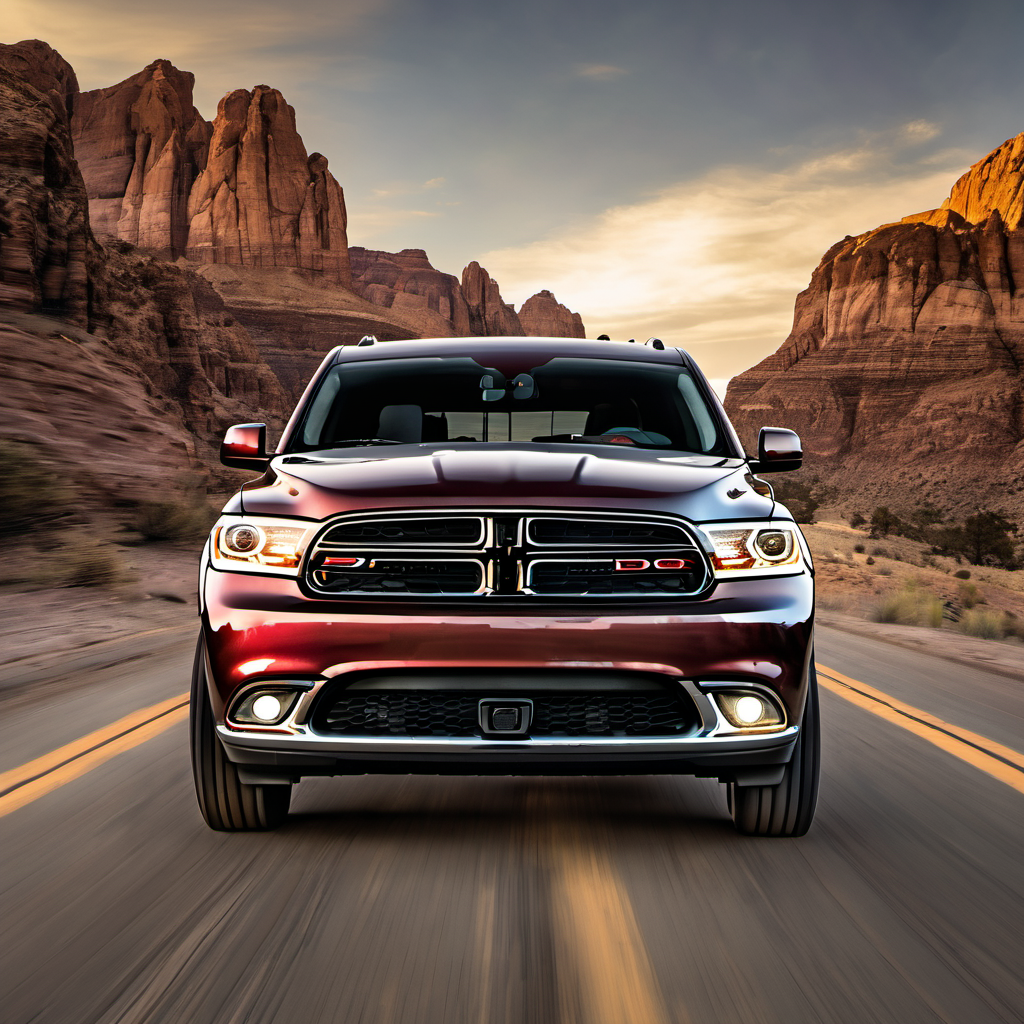
2017 Dodge Durango SUV

2017 Dodge

DurangoSUV

SUV

The 2017 Dodge Durango is a three-row, body-on-frame-inspired unibody SUV that punches above its weight in the family hauler segment. With the 5.7L HEMI V8 under the hood, it delivers legitimate truck-like grunt — 360 hp and a 7,400-lb tow rating — while still seating up to seven. It's one of the few mid-size SUVs that can actually tow a boat or camper without breaking a sweat. The Durango shares its platform with the Jeep Grand Cherokee, which means parts availability is solid and independent shops know this vehicle well. The HEMI engine, paired with Dodge's 8-speed automatic, is proven and durable when maintained properly. The MDS (Multi-Displacement System) cylinder deactivation is a love-it-or-hate-it feature — it helps fuel economy but is the source of the most common mechanical headaches on this engine. As an older-generation design still selling strong in 2017, the Durango's interior tech was beginning to show its age compared to fresher competitors, but the Uconnect infotainment system remained a class leader. Buyers get a lot of vehicle for the money, but the V8 model especially demands consistent, timely maintenance to stay out of trouble.

Reliability
3/5
Verified data
Specs shown for Durango RWD — the most common configuration. Other trims may vary in engine, drivetrain, or fuel economy. Sign in to see your vehicle's exact specs.
Engine
[object Object]
Drivetrain
RWD
Fuel
Mid-grade gasoline
MPG
14 city / 22 hwy / 17 combined
Seats
Doors
Body
Standard Sport Utility Vehicle 2WD

Overview

AI-curated

The 2017 Dodge Durango is a three-row, body-on-frame-inspired unibody SUV that punches above its weight in the family hauler segment. With the 5.7L HEMI V8 under the hood, it delivers legitimate truck-like grunt — 360 hp and a 7,400-lb tow rating — while still seating up to seven. It's one of the few mid-size SUVs that can actually tow a boat or camper without breaking a sweat. The Durango shares its platform with the Jeep Grand Cherokee, which means parts availability is solid and independent shops know this vehicle well. The HEMI engine, paired with Dodge's 8-speed automatic, is proven and durable when maintained properly. The MDS (Multi-Displacement System) cylinder deactivation is a love-it-or-hate-it feature — it helps fuel economy but is the source of the most common mechanical headaches on this engine. As an older-generation design still selling strong in 2017, the Durango's interior tech was beginning to show its age compared to fresher competitors, but the Uconnect infotainment system remained a class leader. Buyers get a lot of vehicle for the money, but the V8 model especially demands consistent, timely maintenance to stay out of trouble.

Known for
  • Strong HEMI V8 performance and class-leading tow rating for a mid-size SUV
  • Three-row seating in a relatively manageable footprint
  • Uconnect infotainment — one of the better systems of its era
  • Shared Grand Cherokee platform with wide parts availability
  • MDS cylinder deactivation that can cause lifter and oil consumption issues if neglected
Best for
  • Families needing three rows and real towing capability
  • Drivers who want V8 power without stepping into a full-size SUV
  • Weekend towers — boats, campers, trailers up to 7,400 lbs
  • Buyers who prioritize value-per-dollar in the used market
Watch for
  • MDS lifter failures — especially on high-mileage units with inconsistent oil changes
  • Fuel economy is poor for the class; budget accordingly
  • RWD base configuration is a liability in Wisconsin winters without proper snow tires
  • Transmission cooler line corrosion on Wisconsin-salted examples
  • TIPM (Totally Integrated Power Module) electrical gremlins common across Chrysler/Dodge platforms

Common issues by mileage

6 known

MDS Lifter / Cam Lobe Failure (HEMI V8)

medium
Typically appears
80–130k mi
Estimated repair
$2,500 – $6,000

VVT Solenoid / Oil Control Valve Failure

medium
Typically appears
60–100k mi
Estimated repair
$200 – $600

Camshaft Position / Timing Over-Retard Faults

medium
Typically appears
70–120k mi
Estimated repair
$150 – $2,000

Oxygen / O2 Sensor Heater Circuit Faults

medium
Typically appears
80–140k mi
Estimated repair
$150 – $450

Maintenance schedule

  1. 1
    Every 5,000–6,000 miles or 6 months (do NOT stretch to the 10k OLM recommendation on the HEMI MDS) Engine oil and filter change — full synthetic 5W-20

    The MDS lifter system is oil-pressure dependent and extremely sensitive to degraded oil. Stretching intervals is the single biggest contributor to the expensive lifter/cam failures seen on this engine. Use only the specified 5W-20 viscosity.

  2. 2
    Every 45,000 miles, or immediately on any used purchase with unknown history Transmission fluid change

    Dodge's 8-speed automatic (ZF 8HP) is durable but not a 'lifetime fluid' transmission in real-world use. Fresh fluid prevents wear and valve body issues. Dark or burnt-smelling fluid is a red flag.

  3. 3
    Every 60,000 miles Transfer case fluid change (if AWD-equipped)

    Applies if the vehicle has been upgraded or purchased with AWD. The active transfer case uses a specific fluid; using the wrong type causes premature clutch wear.

  4. 4
    Every 30,000 miles on the HEMI V8 Spark plug replacement

    The HEMI uses two plugs per cylinder (16 total). At 30k miles, plugs can seize in the aluminum heads if left too long, making replacement far more costly. Don't wait for a misfire.

  5. 5
    Every 5 years or 100,000 miles Coolant flush

    HOAT coolant degrades and becomes acidic. Degraded coolant accelerates water pump and radiator wear — both repairs are more expensive on the V8 due to access.

  6. 6
    Every 2–3 years Brake fluid flush

    Brake fluid is hygroscopic and absorbs moisture over time. In Wisconsin's freeze-thaw cycles, water-contaminated fluid can cause ABS modulator corrosion and reduced braking performance.

  7. 7
    Every fall, before winter salt season Inspect underbody for corrosion — brake lines, fuel lines, trans cooler lines

    Brake and transmission cooler lines on Wisconsin-salted Durangos can develop rust perforation without obvious external signs. A lift inspection every fall catches problems before they become roadside emergencies.

  8. 8
    Every fall, or if battery is 3+ years old Battery load test

    The HEMI's high compression demands a strong battery for cold starts. A battery that tests fine in September can fail to start the truck at -10°F in January. Replace proactively rather than reactively.

Always defer to the manufacturer's service manual for warranty-mandated intervals.

Cost of ownership

Annual maintenance
$900 – $1,800
Fuel
At 17 MPG combined and ~15,000 miles/year, expect roughly 880 gallons annually. At $3.50/gal mid-grade, that's approximately $3,100/year in fuel — one of the highest in its class.
Insurance
Typically $1,400–$2,000/year for full coverage in Wisconsin for a driver with a clean record. Higher trims with third-row and advanced safety features may be slightly lower due to safety discounts.

The 5.7L HEMI Durango is not cheap to run. Fuel alone will exceed $3,000/year for average drivers. Annual maintenance runs $900–$1,800 in normal years, but a single MDS lifter job or TIPM replacement can add $1,000–$6,000 to any given year. Budget accordingly and don't skip oil changes — it's the cheapest insurance you can buy on this engine.

Seasonal care

Lake Geneva, WI
Winter
  • Switch to dedicated winter/snow tires — the RWD Durango is genuinely dangerous on ice without them. All-seasons are not a substitute in Wisconsin winters.
  • Have the battery load-tested every fall. The HEMI needs a strong battery at sub-zero temps; a marginal battery that starts fine at 40°F may leave you stranded at -10°F.
  • Fill washer fluid reservoir with a rated -20°F or colder formula. The 70.9-inch-tall windshield collects significant road spray on Wisconsin highways.
  • Inspect brake and transmission cooler lines for surface rust and pitting before salt season begins. Perforation is a safety and mechanical emergency.
  • Apply dielectric grease to underbody electrical connectors, especially wheel speed sensor harnesses, which are vulnerable to salt corrosion and ABS fault codes.
  • Keep the fuel tank at least half full in extreme cold to reduce condensation in the tank and keep the fuel pump cooled.
Summer
  • Check tire pressure monthly — tires gain 1 PSI for every 10°F of temperature increase, and an overinflated tire on hot pavement reduces grip and wears unevenly.
  • Inspect the A/C system before the first heat wave — cabin blower motor resistors and refrigerant charge are common summer complaints on this generation.
  • If towing in summer heat, verify transmission fluid and engine coolant are fresh. Towing near the 7,400-lb limit on hot days stresses both systems significantly.
  • Check the serpentine belt and tensioner — heat accelerates belt cracking, and a HEMI without a belt loses power steering, charging, and cooling simultaneously.

Comparable vehicles

No comparable vehicles documented yet.

AI profile generated 1 mo ago · claude-sonnet-4-6 · v2.