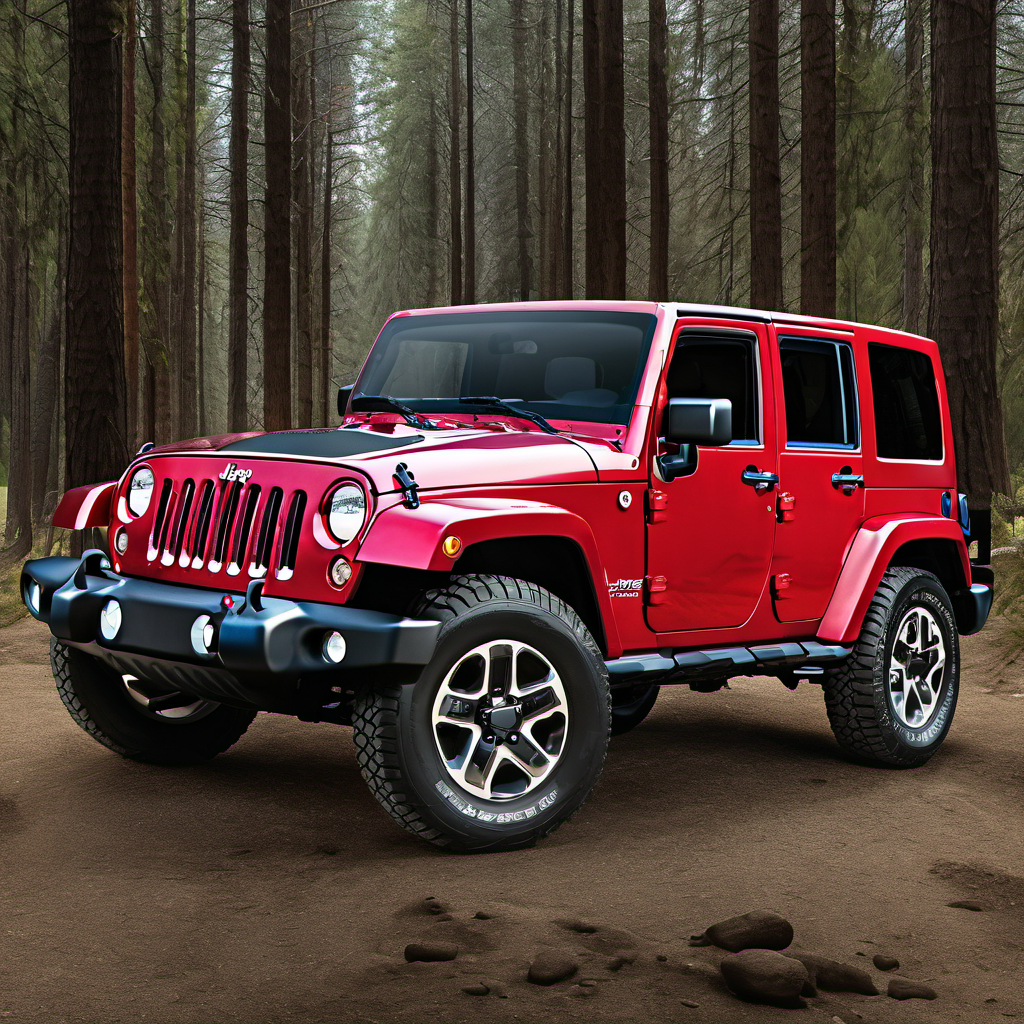
2015 Jeep Wrangler SUV

2015 Jeep

WranglerSUV

3.6L V6 Pentastar · SUV

The 2015 Jeep Wrangler (JK generation, 2007–2018) is one of the most purpose-built off-road vehicles on the market. It rides on solid front and rear axles, has a removable top and doors, and is built around a body-on-frame architecture that prioritizes trail capability over on-road refinement. The two-door Wrangler Sport and four-door Unlimited (Wrangler Unlimited) both share the same 3.6L Pentastar V6, which was a major reliability improvement over the older 3.8L. By 2015 the Pentastar had over five model years of real-world seasoning and most early software/hardware gremlins were ironed out. The Wrangler is not a commuter car. Expect a choppy ride on pavement, noticeable highway wind noise especially with the soft top, and fuel economy that rarely beats 20 mpg combined. What you get in return is genuine rock-crawling ability, a massive aftermarket ecosystem, and a vehicle identity that is truly unlike anything else. Many JK owners report 200k+ miles with routine maintenance, though the 3.6L has specific oil-consumption and cam-phaser sensitivities you need to stay ahead of. For buyers in Wisconsin, the solid axle and 4WD system handle winter roads well, but the body is not inherently rust-resistant. The frame and undercarriage require consistent attention if the vehicle sees road salt.

Reliability
3/5
Verified data
Specs shown for Wrangler 4WD — the most common configuration. Other trims may vary in engine, drivetrain, or fuel economy. Sign in to see your vehicle's exact specs.
Engine
[object Object]
Drivetrain
4WD
Fuel
Gasoline
MPG
16 city / 21 hwy / 17 combined
Seats
5
Doors
4
Body
SUV
MSRP
$28,895

Overview

AI-curated

The 2015 Jeep Wrangler (JK generation, 2007–2018) is one of the most purpose-built off-road vehicles on the market. It rides on solid front and rear axles, has a removable top and doors, and is built around a body-on-frame architecture that prioritizes trail capability over on-road refinement. The two-door Wrangler Sport and four-door Unlimited (Wrangler Unlimited) both share the same 3.6L Pentastar V6, which was a major reliability improvement over the older 3.8L. By 2015 the Pentastar had over five model years of real-world seasoning and most early software/hardware gremlins were ironed out. The Wrangler is not a commuter car. Expect a choppy ride on pavement, noticeable highway wind noise especially with the soft top, and fuel economy that rarely beats 20 mpg combined. What you get in return is genuine rock-crawling ability, a massive aftermarket ecosystem, and a vehicle identity that is truly unlike anything else. Many JK owners report 200k+ miles with routine maintenance, though the 3.6L has specific oil-consumption and cam-phaser sensitivities you need to stay ahead of. For buyers in Wisconsin, the solid axle and 4WD system handle winter roads well, but the body is not inherently rust-resistant. The frame and undercarriage require consistent attention if the vehicle sees road salt.

Known for
  • Class-leading off-road capability with solid front and rear axles
  • Removable doors, roof, and fold-down windshield
  • Massive aftermarket support and customization ecosystem
  • Strong community and resale value retention
  • 3.6L Pentastar V6 — a significant reliability upgrade over the older 3.8L
Best for
  • Off-road and trail enthusiasts
  • Owners who want a highly customizable platform
  • Wisconsin winters — with proper tires and undercoating
  • Buyers who prioritize capability and fun over fuel economy
  • Those comfortable with a higher-maintenance, character-filled vehicle
Watch for
  • Death Wobble — a violent front-end shimmy caused by worn steering/suspension components
  • Oil consumption on the 3.6L Pentastar — monitor between changes
  • Cam phaser and VVT-related codes if oil changes are skipped
  • Rust on frame, floor pans, and rocker panels in salt-belt states
  • Aftermarket lift/tire mods that stress axles, hubs, and alignment

Common issues by mileage

6 known

Death Wobble — Violent Front-End Shimmy

high
Typically appears
40–120k mi
Estimated repair
$300 – $1,200

Oxygen Sensor / O2 Heater Circuit Failure

medium
Typically appears
80–150k mi
Estimated repair
$150 – $450

Rust — Frame, Floor Pans, and Rocker Panels

high
Typically appears
50k+ mi (salt-belt vehicles)
Estimated repair
$500 – $4,000

Soft/Hard Top Leaks and Seal Deterioration

high
Typically appears
Any mileage / age-related
Estimated repair
$80 – $600

Steering Stabilizer and Track Bar Wear

high
Typically appears
40–100k mi
Estimated repair
$150 – $700

Maintenance schedule

  1. 1
    Every 5,000 miles or 6 months — strictly Engine oil and filter change (use 0W-20 full synthetic)

    The 3.6L Pentastar's VVT/cam phaser system is oil-pressure-sensitive. Stretching intervals causes sludge that triggers expensive cam phaser failures. Full synthetic at 5k intervals is cheap insurance.

  2. 2
    Every 30,000 miles Transfer case and differential fluid changes (front, rear, and transfer case)

    More frequent if the vehicle is used off-road or in water crossings. Contaminated fluids cause axle bearing and gear wear that is costly to repair.

  3. 3
    Every 30,000 miles or 2 years Inspect and lubricate front axle U-joints, front driveshaft U-joints, and steering components

    The solid-axle front end has multiple greaseable joints that dry out, especially after off-road use or repeated salt exposure. Dry U-joints fail without warning.

  4. 4
    Every 60,000 miles Spark plugs replacement

    The 3.6L has a known issue with spark plugs seizing in the head if left too long. Change at or before 60k to avoid broken plugs during removal, which is a major additional cost.

  5. 5
    Every 2 years Inspect and treat frame and undercarriage for rust

    Critical for Wisconsin vehicles. Road salt accelerates frame rust on the JK. Annual undercoating application or fluid film treatment on the frame and floor pan is strongly recommended.

  6. 6
    Every 30,000 miles Brake fluid flush

    The JK's exposed brake lines and off-road use accelerate moisture absorption in brake fluid. Wet fluid lowers boiling point and promotes internal corrosion in calipers and wheel cylinders.

  7. 7
    Every 15,000 miles or annually Inspect front and rear Dana axle vent tubes

    If the vent tubes are clogged or submerged during water crossings, water can be sucked into the axle housing, contaminating the gear oil and causing premature bearing failure.

  8. 8
    Before each winter season Inspect and replace wiper blades; switch to winter-rated washer fluid

    The Wrangler's flat windshield is exposed to full wind blast. Standard blades ice up quickly. Use a -40°F-rated washer fluid and winter beam-style wipers to maintain visibility in Lake Geneva winters.

Always defer to the manufacturer's service manual for warranty-mandated intervals.

Cost of ownership

Annual maintenance
$800 – $2,000
Fuel
At ~17 mpg combined and ~15,000 miles/year, expect roughly $2,000–$2,600/year at current Midwest gas prices. Highway cruising in the 70+ mph range or aggressive off-road use will push that higher.
Insurance
Typically moderate — the Wrangler's strong resale value and theft desirability can push premiums slightly above average for the segment. Budget $1,100–$1,700/year for full coverage depending on your record and location.

The Wrangler is affordable to maintain when you stay on schedule — oil changes, fluids, and steering/suspension checks are the budget. The costs spike hard when deferred maintenance triggers cam phaser, axle, or rust damage. Budget extra if the vehicle has been lifted or off-roaded, as those add wear to tires, driveline components, and alignment.

Seasonal care

Lake Geneva, WI
Winter
  • Switch to a -40°F-rated washer fluid before first freeze — the flat windshield gets constant spray and standard fluid will ice on contact.
  • Install winter beam-style wiper blades; the standard frame blades pack with ice and streak badly.
  • Test and load-test the battery before November. Cold starts on the 3.6L demand a strong battery; the JK's open body style means the engine bay sees full ambient temperature.
  • Apply fluid film or undercoating to the frame, floor pans, and rocker panels before salt season — the JK's rust vulnerability is real in Wisconsin.
  • Verify 4WD engagement (both 4Hi and 4Lo) before you need it. Park-lot test while conditions are safe.
  • After any salt-heavy drive, rinse the undercarriage including the frame, brake lines, and axle housings. Salt accumulates in the frame channels.
Summer
  • Check tire pressure monthly — the JK's taller tires (especially aftermarket) see noticeable pressure swings with temperature. Correct pressure affects stability and fuel economy.
  • Inspect A/C system before summer heat arrives. The 3.6L runs warmer in stop-and-go, and a weak A/C system becomes miserable quickly with the JK's limited cabin insulation.
  • Monitor coolant level and condition — the Pentastar's cooling system should be flushed per the service interval; low coolant or a tired thermostat causes heat soak in traffic.
  • Inspect soft top zippers and fabric for cracks from winter cold; UV exposure will accelerate deterioration through summer. Treat fabric with a UV protectant.
  • Check differential and transfer case fluid condition after off-season storage — any moisture ingestion from late-fall water crossings should be addressed before heavy summer use.

Comparable vehicles

No comparable vehicles documented yet.

AI profile generated 22 days ago · claude-sonnet-4-6 · v2.