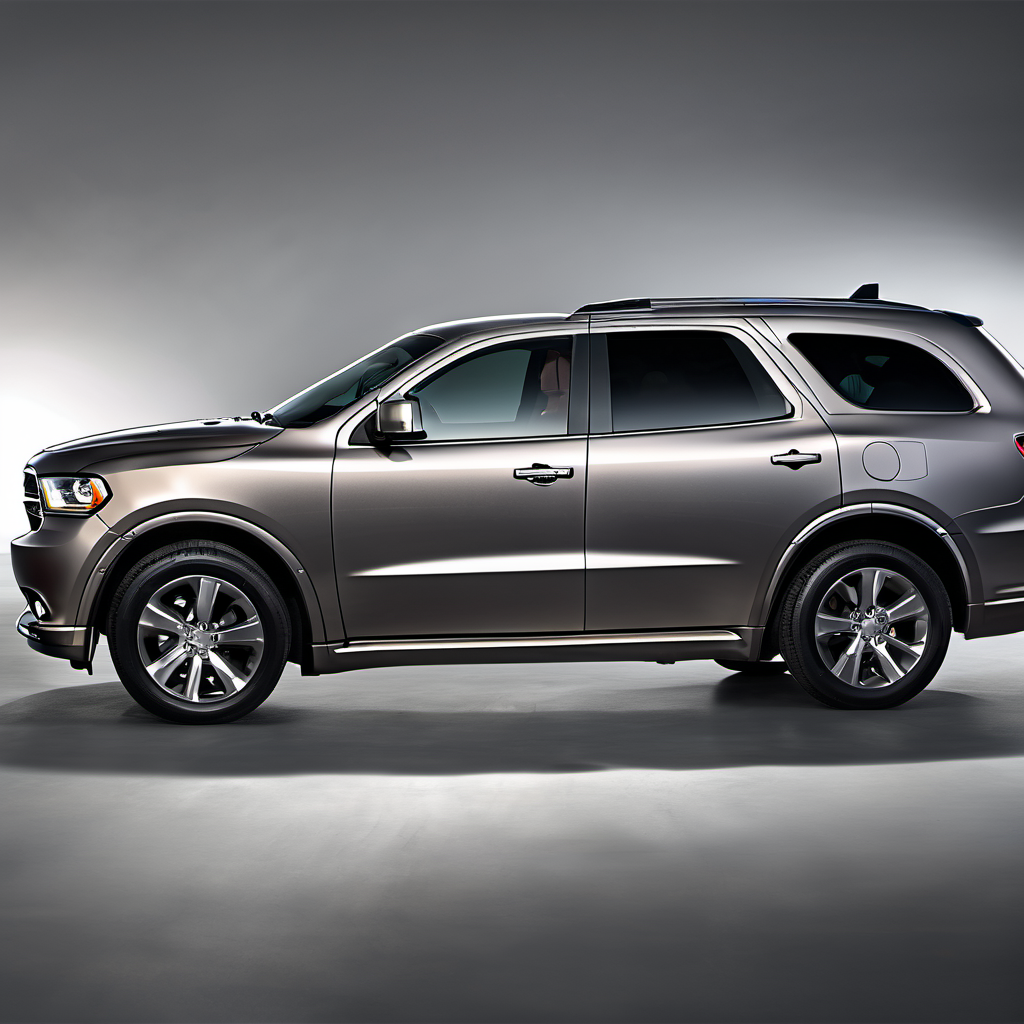
2015 Dodge Durango SUV

2015 Dodge

DurangoSUV

SUV

The 2015 Dodge Durango is a three-row, body-on-frame-inspired midsize SUV built on Chrysler's Lambda platform. It seats up to seven, offers real 4WD capability, and is powered by Chrysler's proven 3.6L Pentastar V6 in base and mid trims — with an available 5.7L HEMI V8 for those who need more tow muscle. It occupies a unique niche as one of the few midsize SUVs that can tow up to 6,200 lbs (V6) while still fitting in a standard garage. For 2015 Dodge continued the second-generation Durango largely unchanged, offering a well-equipped interior, Uconnect infotainment, and an available AWD system. Ride quality is car-like compared to traditional truck-based SUVs, but it still has the structural rigidity to handle trailer duty. The Pentastar V6 is generally a reliable engine, though it does have known VVT-related oil sludge vulnerabilities if maintenance is skipped. As a Wisconsin daily driver, the Durango's available 4WD system is a genuine asset. Ground clearance is reasonable, and the cabin is spacious enough for families making the run from Lake Geneva to Milwaukee in a snowstorm. Fuel economy is mediocre by modern standards — budget for premium-grade fuel habits and plan on regular fill-ups.

Reliability
3/5
Verified data
Specs shown for Durango AWD — the most common configuration. Other trims may vary in engine, drivetrain, or fuel economy. Sign in to see your vehicle's exact specs.
Engine
[object Object]
Drivetrain
4WD
Fuel
Gasoline
MPG
17 city / 24 hwy / 19 combined
Seats
Doors
Body
Standard Sport Utility Vehicle 4WD

Overview

AI-curated

The 2015 Dodge Durango is a three-row, body-on-frame-inspired midsize SUV built on Chrysler's Lambda platform. It seats up to seven, offers real 4WD capability, and is powered by Chrysler's proven 3.6L Pentastar V6 in base and mid trims — with an available 5.7L HEMI V8 for those who need more tow muscle. It occupies a unique niche as one of the few midsize SUVs that can tow up to 6,200 lbs (V6) while still fitting in a standard garage. For 2015 Dodge continued the second-generation Durango largely unchanged, offering a well-equipped interior, Uconnect infotainment, and an available AWD system. Ride quality is car-like compared to traditional truck-based SUVs, but it still has the structural rigidity to handle trailer duty. The Pentastar V6 is generally a reliable engine, though it does have known VVT-related oil sludge vulnerabilities if maintenance is skipped. As a Wisconsin daily driver, the Durango's available 4WD system is a genuine asset. Ground clearance is reasonable, and the cabin is spacious enough for families making the run from Lake Geneva to Milwaukee in a snowstorm. Fuel economy is mediocre by modern standards — budget for premium-grade fuel habits and plan on regular fill-ups.

Known for
  • One of the few midsize SUVs with genuine three-row seating and serious tow capacity
  • Pentastar 3.6L V6 — widespread, well-supported engine across FCA lineup
  • Comfortable, car-like ride compared to older truck-based SUVs
  • Uconnect 8.4 infotainment — well-regarded for its era
  • Available HEMI V8 for towing up to 7,400 lbs
Best for
  • Families needing three rows plus towing capability
  • Wisconsin winters with available 4WD
  • Highway commuters who want SUV utility without full-size footprint
  • Light off-road or gravel road use
Watch for
  • VVT system sludge if oil changes were skipped — can trigger cam timing codes
  • Transfer case and front differential leaks on high-mileage examples
  • TIPM (Totally Integrated Power Module) failures — a recurring FCA issue
  • Rear air suspension (if equipped) is expensive to repair
  • Uconnect radio and module communication faults on older units

Common issues by mileage

6 known

TIPM (Totally Integrated Power Module) Failure

medium
Typically appears
60,000–150,000 mi
Estimated repair
$400 – $1,100

Transfer Case Fluid Leak / Wear

medium
Typically appears
80,000–150,000 mi
Estimated repair
$200 – $900

Oxygen / O2 Sensor Heater Circuit Faults

medium
Typically appears
80,000–130,000 mi
Estimated repair
$150 – $400

Rear Air Suspension Compressor / Bag Failure (if equipped)

low
Typically appears
70,000–120,000 mi
Estimated repair
$500 – $1,800

Maintenance schedule

  1. 1
    Every 5,000–6,000 miles Full synthetic oil change (0W-20 or 5W-20 per cap label)

    The Pentastar's VVT system is oil-passage dependent. Stretched intervals cause sludge that clogs cam timing solenoids — an expensive fix that is entirely preventable.

  2. 2
    Every 30,000 miles or 2 years Transfer case and rear differential fluid change

    4WD Durangos work hard in Wisconsin winters. Fresh fluid prevents premature wear in the transfer case and axles, especially if the vehicle sees any off-pavement use.

  3. 3
    Every 30,000–45,000 miles Transmission fluid change (8-speed ZF-based)

    FCA says 'lifetime' fluid — independent shops don't agree. The 8-speed is reliable but sensitive to degraded fluid. Change it at an independent shop before 45k.

  4. 4
    Every 2 years or before each Wisconsin winter Battery load test and replace if below spec

    The Durango's electronics (TIPM, modules) are sensitive to low-voltage conditions. A marginal battery in a Wisconsin winter will cause mysterious electrical faults and hard starts. Replace at the first sign of weakness — don't wait until it fails.

  5. 5
    Every fall (before first freeze) Flush and refill coolant; inspect hoses and thermostat

    Coolant degrades and loses freeze protection over time. Sub-zero Lake Geneva winters demand full-strength protection. Inspect rubber hoses for cracking — cold weather makes brittle hoses fail suddenly.

  6. 6
    Every 60,000 miles Spark plug replacement (iridium OEM spec)

    Worn plugs on the Pentastar can cause misfires that are misdiagnosed as VVT or cam issues. OEM-spec iridium plugs are worth the extra cost over cheap copper plugs.

  7. 7
    Every fall Inspect and lubricate brake calipers and slides; check rotor thickness

    Road salt accelerates caliper slide corrosion dramatically. Stuck slides cause uneven pad wear and brake pull. Catching this in fall avoids a stuck caliper mid-winter.

  8. 8
    Every spring Full underbody wash and rust inspection — especially frame rails, brake lines, and fuel lines

    Wisconsin road salt is relentless. Brake lines and fuel lines on FCA products from this era are known to corrode. Catching a weeping line early is a $200 fix; ignoring it becomes a $1,500+ emergency.

Always defer to the manufacturer's service manual for warranty-mandated intervals.

Cost of ownership

Annual maintenance
$700 – $1,400
Fuel
At 19 MPG combined and ~15,000 miles/year, expect roughly $2,200–$2,700/year at current Midwest gas prices. The FFV designation means it CAN run E85, but E85 reduces fuel economy noticeably — run it only if the pump price math works out.
Insurance
Midsize SUV rates in the Lake Geneva area typically run $1,200–$1,800/year for a 2015 Durango, depending on coverage level and driver profile.

The Durango is a moderately expensive vehicle to own. Routine maintenance is affordable if you stay ahead of it — the expensive repairs (TIPM, VVT system, transfer case) almost always stem from deferred service. Budget $700–$1,400/year for normal upkeep on a well-maintained example. A high-mileage unit with unknown service history could cost considerably more in the first year of ownership.

Seasonal care

Lake Geneva, WI
Winter
  • Test battery every fall — the Durango's electronics are sensitive to low voltage, and Wisconsin sub-zero temps kill marginal batteries fast. Replace anything below 70% CCA.
  • Switch to full synthetic 0W-20 if not already using it — cold-start oil flow is critical to protecting the Pentastar's VVT cam passages.
  • Fill washer fluid reservoir with -20°F or colder rated fluid; keep a spare jug in the cargo area. The Durango's large windshield burns through fluid fast.
  • Inspect wiper blades before first snow — replace with winter blades designed to resist ice packing in the blade frame.
  • Flush underbody with a pressure washer every 2–3 weeks during heavy salt season, paying attention to brake lines, fuel lines, and frame rails.
  • Verify 4WD system engages cleanly before the first snowfall — a quiet summer can mask a transfer case issue you don't want to discover on an icy highway on-ramp.
Summer
  • Check tire pressure monthly — ambient temps in southern Wisconsin can swing 40°F+ between winter and summer, causing significant pressure changes.
  • Inspect the A/C system (cabin filter, refrigerant charge, condenser for debris) — the Durango's large cabin takes a real toll on the A/C compressor in hot weather.
  • Watch coolant temperature gauge on hot days with a full load or while towing — the 3.6L can run warm when working hard in heat. Verify the cooling fan operates at full speed.
  • After a Wisconsin winter, do a full underbody inspection in spring for salt corrosion on brake hardware, suspension components, and any exposed metal.

Comparable vehicles

No comparable vehicles documented yet.

AI profile generated 4 days ago · claude-sonnet-4-6 · v2.