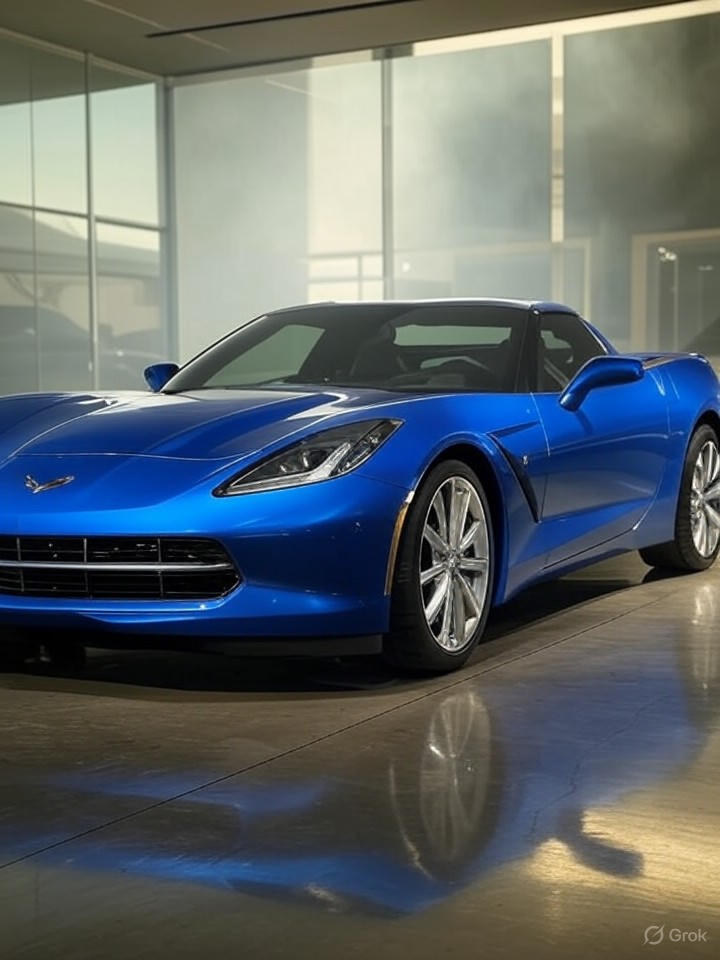
2014 Aston Martin Vantage

2014 Aston

Martin Vantage

4.7L V8

The 2014 Aston Martin Vantage is a hand-built British sports car built around a naturally aspirated 4.7L V8. It sits at the entry point of the Aston Martin lineup but still delivers genuine supercar presence — a low-slung aluminum body, rear-wheel drive, and a sonorous exhaust note that's hard to replicate. Build quality is a step above most mass-market sports cars but a step below the obsessive precision of Ferrari or Porsche of the same era. This generation of the Vantage (2005–2017) earned a loyal following for its driver-focused character, classic proportions, and relatively accessible price in the used market. That said, 'relatively accessible' is a relative term — parts, labor, and specialist knowledge are expensive, and this is not a car to maintain on the cheap. For a Lake Geneva owner, the Vantage is almost certainly a seasonal driver. That's actually one of the best ways to own one — keep it garaged through salt season, drive it spring through fall, and budget accordingly for annual servicing at a shop familiar with low-volume British cars.

Reliability
2/5
Engine
[object Object]
Drivetrain
RWD
Fuel
Gasoline
MPG
14 city / 20 hwy / 16 combined
Seats
2
Doors
2
Body
Coupe
MSRP
$124,995

Overview

AI-curated

The 2014 Aston Martin Vantage is a hand-built British sports car built around a naturally aspirated 4.7L V8. It sits at the entry point of the Aston Martin lineup but still delivers genuine supercar presence — a low-slung aluminum body, rear-wheel drive, and a sonorous exhaust note that's hard to replicate. Build quality is a step above most mass-market sports cars but a step below the obsessive precision of Ferrari or Porsche of the same era. This generation of the Vantage (2005–2017) earned a loyal following for its driver-focused character, classic proportions, and relatively accessible price in the used market. That said, 'relatively accessible' is a relative term — parts, labor, and specialist knowledge are expensive, and this is not a car to maintain on the cheap. For a Lake Geneva owner, the Vantage is almost certainly a seasonal driver. That's actually one of the best ways to own one — keep it garaged through salt season, drive it spring through fall, and budget accordingly for annual servicing at a shop familiar with low-volume British cars.

Known for
  • Naturally aspirated 4.7L V8 with a distinctive exhaust note
  • Hand-built aluminum bodywork and bespoke interior
  • Balanced rear-wheel-drive handling
  • Low, wide, classically proportioned coupe silhouette
  • Long-running platform with a well-understood parts catalog
Best for
  • Enthusiast weekend and seasonal drivers
  • Owners who can budget for specialist-level maintenance
  • Drivers who prioritize analog feel and character over technology
  • Collectors seeking a usable entry-level exotic
Watch for
  • High ownership costs — parts sourcing and labor are expensive
  • Touchtronic gearbox can be costly to repair if neglected
  • Carbon buildup on intake valves from direct injection-adjacent design
  • Active NHTSA recall on fuel system (campaign 14V339000) — verify it has been completed
  • Extremely unsuitable for year-round Wisconsin driving; road salt will destroy underbody components

Common issues by mileage

6 known

Clutch / Gearbox Actuator Wear (Sportshift)

high
Typically appears
20–40k mi
Estimated repair
$1,500 – $3,000

Carbon Buildup on Intake Valves

high
Typically appears
30–60k mi
Estimated repair
$600 – $1,400

Random/Multiple Cylinder Misfire (P0300)

medium
Typically appears
50–80k mi
Estimated repair
$200 – $600

Catalytic Converter Efficiency Loss (P0420)

medium
Typically appears
60–90k mi
Estimated repair
$800 – $2,500

Fuel System Hose Leak (NHTSA Recall 14V339000)

high
Typically appears
Any mileage — recall-related
Estimated repair
$0

Camshaft Position / VVT Solenoid Faults

low
Typically appears
60–100k mi
Estimated repair
$400 – $1,200

Maintenance schedule

  1. 1
    Every 10,000 miles or 12 months, whichever comes first Engine Oil Change

    The 4.7L V8 carries 7.7 quarts and runs hot in performance driving. Use 5W-30 full synthetic. This is the single highest-impact service you can do — skipping it accelerates wear on the VVT system and valve train.

  2. 2
    Every 30,000 miles Spark Plug Inspection and Replacement

    Worn plugs on a high-compression V8 (11.3:1) show up quickly as misfires and rough idle. Proactive replacement is far cheaper than diagnosing a P0300 after the fact.

  3. 3
    Every 40,000–50,000 miles Intake Valve Cleaning (Walnut Blast or Chemical)

    Carbon buildup is a documented issue on this engine. Cleaning before symptoms appear is far less expensive than waiting until power loss or rough idle forces the issue.

  4. 4
    Every 30,000–40,000 miles Transmission Fluid Service

    The Touchtronic/Sportshift gearbox holds 9.0 quarts of ATF. Fresh fluid keeps the actuators and clutch pack operating correctly. This is one of the more expensive repairs on the car if neglected.

  5. 5
    Every 2 years regardless of mileage Brake Fluid Flush

    DOT 4 fluid absorbs moisture over time, reducing boiling point. On a performance car capable of 180 mph, fade-free braking is non-negotiable. Especially important after sitting through a Wisconsin winter.

  6. 6
    Every 5 years or 50,000 miles Coolant System Inspection and Flush

    OAT coolant (10.5 qt capacity) degrades over time. Aluminum-intensive construction makes this engine sensitive to coolant chemistry — wrong or degraded coolant accelerates corrosion.

  7. 7
    Every fall before storage Pre-Storage Preparation (Annual for Seasonal Drivers)

    For most Wisconsin owners this car will sit October–April. Change oil before storage (not after), fill the tank and add fuel stabilizer, connect a battery tender, and store on jack stands or tire cradles to prevent flat-spotting.

  8. 8
    One-time — verify at next service Fuel System Recall Verification (14V339000)

    NHTSA campaign 14V339000 addresses a fuel hose that can leak and create a fire risk. Confirm this recall was completed on this specific VIN before driving the car.

Always defer to the manufacturer's service manual for warranty-mandated intervals.

Cost of ownership

Annual maintenance
$2,000 – $5,000
Fuel
Premium 91+ octane required. At ~16 MPG combined and typical seasonal driving (5,000–8,000 mi/yr), expect $800–$1,400/year in fuel at current Wisconsin pump prices.
Insurance
Agreed-value classic/collector car insurance is strongly recommended over standard auto policy for seasonal storage use. Expect $800–$2,000/year depending on coverage, storage location, and driving profile.

The Vantage is a low-cost purchase compared to newer exotics but a relatively high-cost car to own. Annual maintenance at an independent specialist shop runs $2,000–$5,000 in a normal year — more if any of the known issues surface. Budget a separate $3,000–$5,000 contingency fund for unplanned repairs. The car rewards owners who treat it like what it is: a hand-built British sports car that needs regular attention, proper storage, and a specialist with the right scan tools.

Seasonal care

Lake Geneva, WI
Winter
  • Do NOT drive this car on Wisconsin winter roads. Road salt will attack the aluminum body panels, underbody components, and brake hardware. A single salted-road drive can cause damage that costs more to remediate than the fuel savings.
  • Before storage, change the engine oil — used oil contains combustion acids that corrode bearings during long sits.
  • Add a quality fuel stabilizer and top off the tank to minimize moisture condensation in the fuel system.
  • Connect a battery tender/maintainer for the full storage period. The electronics are sensitive to low-voltage events and a discharged battery in a cold garage can brick modules.
  • Store on a flat, dry surface — ideally a heated garage. If storing on the same tires, use tire cradles or move the car slightly every few weeks to prevent flat spots on the performance tires.
  • Cover with a breathable car cover, not a plastic tarp, to prevent moisture trapping against the paint.
Summer
  • Check tire pressure at every fill-up — heat causes pressure to rise and performance tires on a RWD car at the limit are unforgiving. Set cold pressure to spec.
  • Inspect the A/C system at the start of driving season. Aston Martin A/C systems are not immune to refrigerant loss over a long storage period.
  • After the first drive of the season, check all fluid levels — coolant, brake fluid, and oil — as seals can weep slightly during storage.
  • Monitor the temperature gauge closely in stop-and-go traffic. The low-slung nose limits airflow at low speeds and heat soak can be a factor.
  • Inspect brake pads and rotors at the start of summer — pads can develop surface corrosion during winter storage that makes the first few stops feel grabby. Let them bed back in with gentle use before any spirited driving.

Comparable vehicles

If you're shopping for one

Red flags
  • No service records or evidence of dealer/specialist servicing — budget service history on an Aston Martin is a major warning sign.
  • Any evidence of winter driving or salt exposure (white residue on underbody, rust on brake components beyond normal surface oxidation).
  • Fuel smell in the engine bay or near the rear of the car — may indicate the fuel hose recall was never completed.
  • Rough idle, hesitation, or loss of power at any RPM — likely carbon buildup or worse on a low-mileage car.
  • Dashboard warning lights that the seller can't explain or has 'just reset' — the electronics on this car communicate real problems.
  • Mismatched paint panels or evidence of bodywork repair — aluminum repairs on an Aston Martin are very expensive to do correctly and easy to do poorly.
What to inspect
  • Verify NHTSA recall 14V339000 (fuel hose) has been completed on this specific VIN before purchase or first drive.
  • Check for service records showing oil changes at or before 10,000-mile / 12-month intervals — a skipped service on this engine is a serious red flag.
  • Test every gear in the Sportshift/Touchtronic transmission for smooth, prompt engagement. Hesitation, clunking, or refusal to shift can indicate actuator wear costing $1,500–$3,000.
  • Inspect the exhaust system and underbody for rust, especially if the car has any history of non-seasonal use in the Midwest.
  • Have a specialist perform a compression test and leak-down test on all 8 cylinders — the 11.3:1 compression ratio amplifies any valve train issues.
  • Scan all modules for stored and pending DTCs before purchase, not just the powertrain module.
AI profile generated 4 days ago · claude-sonnet-4-6 · v2.