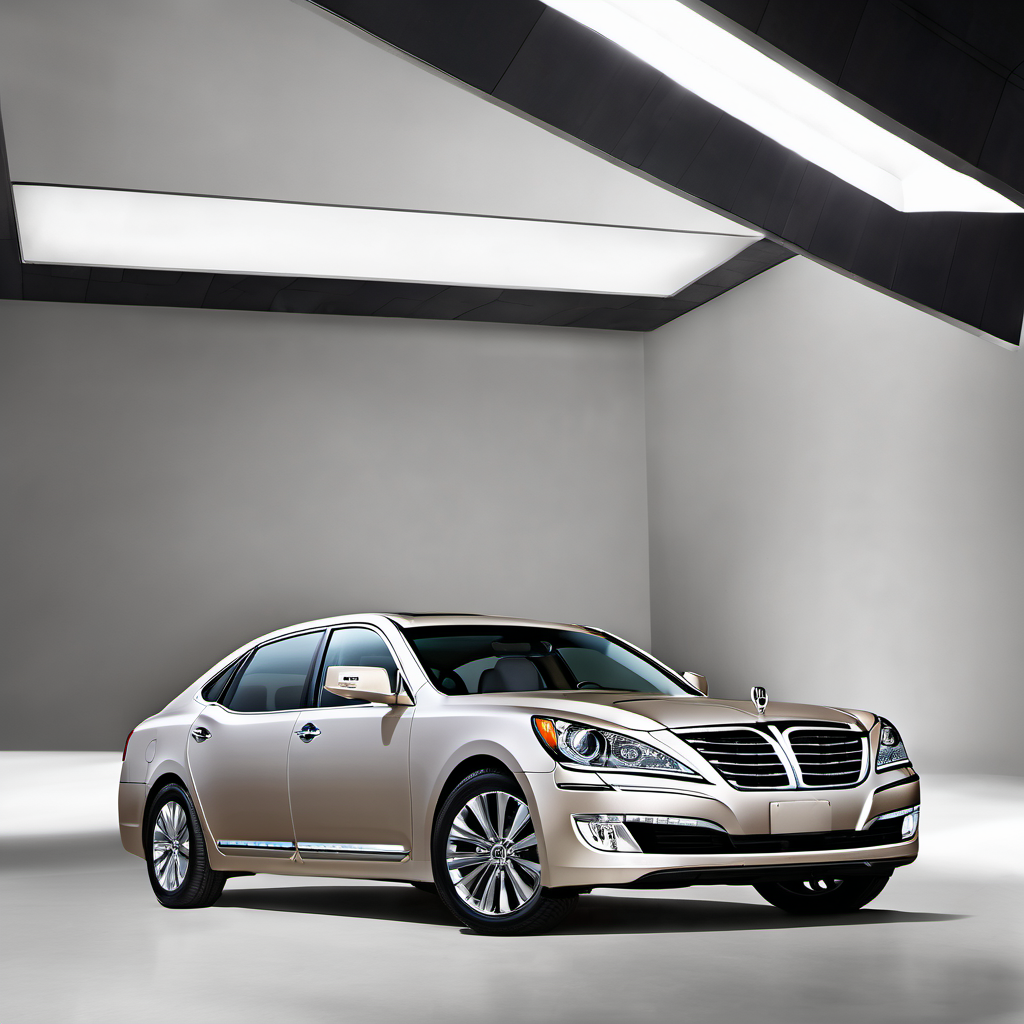
2013 Hyundai Equus Sedan

2013 Hyundai

EquusSedan

Sedan

The 2013 Hyundai Equus is a full-size rear-wheel-drive luxury sedan that competed directly with the Mercedes-Benz S-Class and BMW 7 Series at roughly half the price. It was Hyundai's flagship, offering a 5.0L V8, a genuinely sumptuous interior, and a concierge-style ownership experience that included a dealer technician coming to you for service. By this model year, the Equus had earned a reputation as a credible ultra-luxury value play rather than a badge-chasing knockoff. Under the skin, it shares platform and powertrain DNA with the Genesis sedan, using a well-regarded 5.0L Tau V8 mated to an 8-speed automatic. The ride is pillow-soft, the cabin is whisper-quiet, and the feature list — massaging seats, reclining rear captain's chairs on the Ultimate trim — was genuinely competitive with German flagships costing $30,000 more. On the used market, the Equus is one of the more interesting buys in the full-size luxury segment: depreciation has been steep, meaning you get a lot of car for the money. The flip side is that luxury-car repair bills don't depreciate alongside the sticker price, and finding a shop that truly knows the Tau V8's VVT system is more important than it would be on a volume-selling German flagship.

Reliability
3/5
Verified data
Specs shown for Equus — the most common configuration. Other trims may vary in engine, drivetrain, or fuel economy. Sign in to see your vehicle's exact specs.
Engine
[object Object]
Drivetrain
RWD
Fuel
Premium gasoline
MPG
15 city / 23 hwy / 18 combined
Seats
Doors
Body
Large Cars

Overview

AI-curated

The 2013 Hyundai Equus is a full-size rear-wheel-drive luxury sedan that competed directly with the Mercedes-Benz S-Class and BMW 7 Series at roughly half the price. It was Hyundai's flagship, offering a 5.0L V8, a genuinely sumptuous interior, and a concierge-style ownership experience that included a dealer technician coming to you for service. By this model year, the Equus had earned a reputation as a credible ultra-luxury value play rather than a badge-chasing knockoff. Under the skin, it shares platform and powertrain DNA with the Genesis sedan, using a well-regarded 5.0L Tau V8 mated to an 8-speed automatic. The ride is pillow-soft, the cabin is whisper-quiet, and the feature list — massaging seats, reclining rear captain's chairs on the Ultimate trim — was genuinely competitive with German flagships costing $30,000 more. On the used market, the Equus is one of the more interesting buys in the full-size luxury segment: depreciation has been steep, meaning you get a lot of car for the money. The flip side is that luxury-car repair bills don't depreciate alongside the sticker price, and finding a shop that truly knows the Tau V8's VVT system is more important than it would be on a volume-selling German flagship.

Known for
  • Exceptional value versus German flagships when purchased used
  • Tau 5.0L V8 producing strong, smooth power
  • Ultra-quiet, well-insulated cabin
  • Generous standard equipment including rear massage and reclining seats
  • Concierge service model at launch (dealer technician came to owner)
Best for
  • Buyers who want S-Class comfort at a fraction of the used price
  • Highway-dominant drivers who can live with V8 fuel economy
  • Owners who prioritize rear-seat luxury over driver engagement
  • Someone with a trusted independent shop comfortable with Korean luxury vehicles
Watch for
  • VVT oil control solenoid failures tied to oil change neglect — expensive repair
  • Steep depreciation means repair costs can exceed market value on high-mileage examples
  • Limited independent shop familiarity compared to German or Japanese flagships
  • Air suspension (Ultimate trim) adds significant repair cost complexity
  • Battery drain issues from the heavy electronics load if the vehicle sits

Common issues by mileage

6 known

Cam Phaser Wear / Oil Sludge in VVT System

medium
Typically appears
80–150k mi
Estimated repair
$800 – $2,500

Oxygen / Air-Fuel Sensor Heater Circuit Faults

medium
Typically appears
70–120k mi
Estimated repair
$200 – $600

Air Suspension Compressor or Strut Failure (Ultimate Trim)

medium
Typically appears
70–130k mi
Estimated repair
$600 – $2,200

Battery Drain / Parasitic Draw from Electronics

medium
Typically appears
50–120k mi
Estimated repair
$150 – $600

Maintenance schedule

  1. 1
    Every 5,000 miles — do NOT stretch to 7,500+ mi on this engine Full-synthetic oil change (5W-30 or per cap spec)

    The Tau V8's VVT cam phaser system is extremely sensitive to oil viscosity and cleanliness. Extended intervals are the single biggest cause of solenoid and phaser failure on this engine.

  2. 2
    Every 60,000 miles Automatic transmission fluid change

    Hyundai specifies 'lifetime' fluid but real-world experience shows the 8-speed benefits from fresh fluid at this interval to prevent harsh shifts and valve body wear.

  3. 3
    Every 60,000 miles Spark plug replacement (iridium)

    Worn plugs on a high-compression V8 increase misfire risk and can trigger knock-related timing retard, stressing the VVT system further.

  4. 4
    Every 30,000 miles or annually Air filter replacement

    Wisconsin roads kick up road dust and salt particulate year-round; a clogged filter increases fuel trim variation.

  5. 5
    Every 2 years Brake fluid flush

    The Equus uses an advanced ABS/ESC system with multiple control modules. Moisture-contaminated fluid lowers boiling point and can accelerate internal corrosion in ABS actuators.

  6. 6
    Every fall, before Wisconsin winter Battery load test

    The Equus has an extremely high electronics load (massaging seats, rear entertainment, air suspension ECU). A marginal battery will fail in sub-zero temps and can trigger cascading module communication faults.

  7. 7
    Every 2 weeks during winter road-salt season Underbody and wheel-well rinse

    The Equus uses an aluminum-intensive suspension with complex electronic connectors low on the chassis. Salt accumulation accelerates connector corrosion and can cause intermittent ABS/ESC codes.

  8. 8
    Every 5 years / 100,000 miles Coolant flush (pink HOAT type)

    Hyundai uses a specific pink long-life coolant; mixing types degrades corrosion protection on the aluminum V8 block and heads.

Always defer to the manufacturer's service manual for warranty-mandated intervals.

Cost of ownership

Annual maintenance
$900 – $2,200
Fuel
Expect roughly $2,800–$3,800/year at average Wisconsin driving (12,000 mi/yr) with premium fuel prices. The 18 MPG combined figure assumes highway-weighted driving; city-heavy use will push costs higher.
Insurance
Full-size luxury sedan in this class typically runs $1,400–$2,200/year in Wisconsin depending on driver profile and trim (air suspension Ultimate trim adds replacement value).

The Equus is a bargain to buy used but not cheap to maintain. Routine annual costs are manageable if maintenance is kept current. The danger zone is deferred maintenance — a neglected VVT system or ignored transmission fluid can produce $1,500–$4,000 repair bills that rival or exceed the car's depreciated market value. Budget for surprises and have a shop that knows Hyundai's luxury platform before you commit.

Seasonal care

Lake Geneva, WI
Winter
  • Load-test the battery every October — the Equus's heavy electronics draw kills a weak battery fast in sub-zero Lake Geneva temps.
  • Switch to a full-synthetic 0W-30 or 5W-30 if not already in use; cold cranking on a 5.0L V8 with thick oil starves the VVT system on initial startup.
  • Fill washer fluid reservoir with rated -25°F or lower fluid; the tall windshield and fast highway speeds (I-43/US-12 corridor) burn through fluid quickly.
  • Check tire pressure weekly — RWD on low-profile luxury tires is slippery on snow; every 10°F drop costs roughly 1 PSI.
  • Rinse the underbody and wheel wells every 1–2 weeks during salt season; pay attention to the rear suspension electronic connectors and the exhaust sensors.
  • If the car sits more than a week in deep winter, use a battery maintainer — parasitic draw from dormant modules is a real issue.
Summer
  • Check tire pressure at cold start — low-profile performance tires on the Equus are sensitive to the 30°F+ swing between Wisconsin winter and summer ambient temps.
  • Inspect and recharge A/C refrigerant if cabin cooling feels weak; the large cabin and rear-zone HVAC system work the compressor hard.
  • Watch engine coolant temp gauge during slow city driving in heat — confirm the electric cooling fan is cycling properly.
  • Inspect wiper blades before summer storm season; UV and winter salt residue degrade blades quickly on the large Equus windshield.
  • Clean and condition leather surfaces — the ventilated/heated seat perforations can trap salt residue from winter that accelerates leather cracking in summer heat.

Comparable vehicles

2013 Genesis
G90

Spiritual successor sharing the same Tau V8 platform; better parts availability trajectory and more shop familiarity on the used market.

No catalog match
2013 Mercedes-Benz
S550

The car the Equus targeted directly — similar segment and feature set, but significantly higher ownership and repair costs and much stronger parts/specialist network.

No catalog match
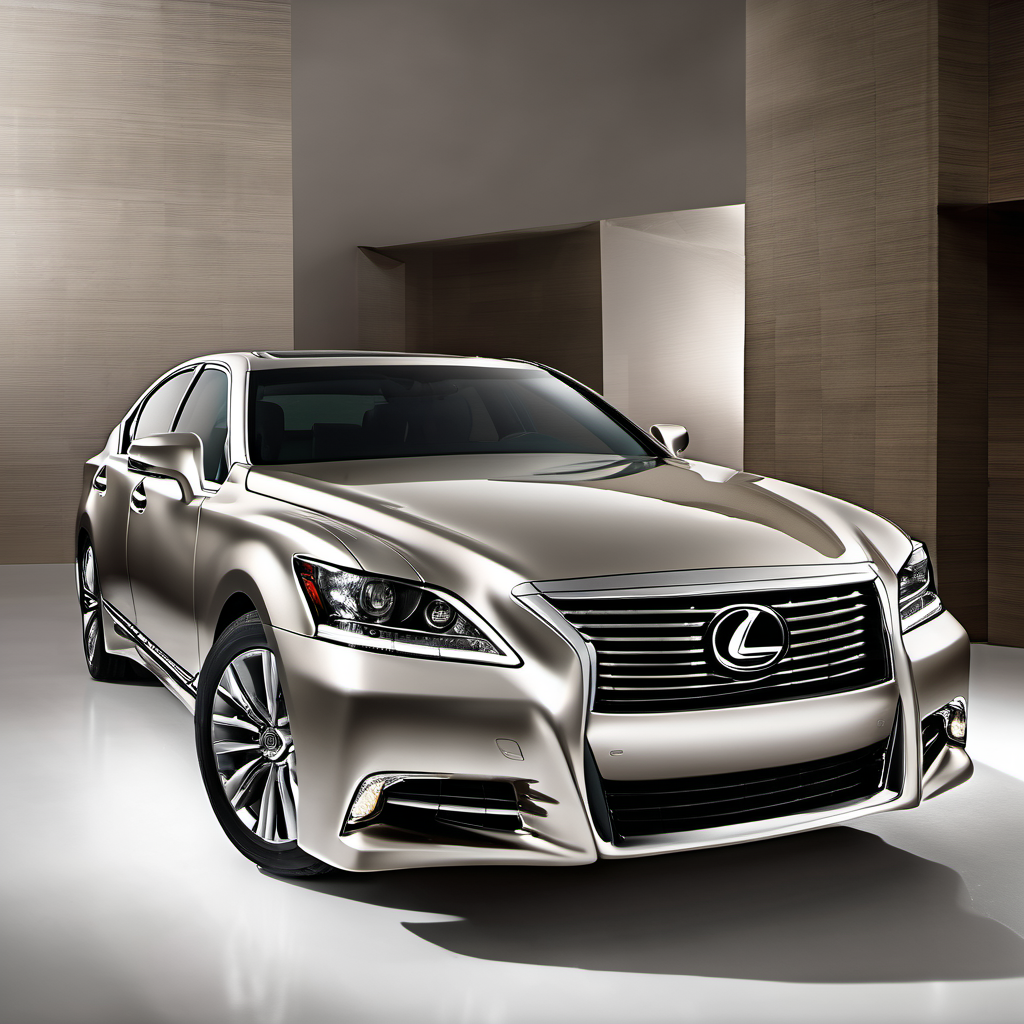
2013 Lexus LS 460
2013 Lexus
LS 460

RWD V8 full-size luxury sedan at a similar used price point; better long-term reliability reputation and stronger dealer/independent shop support.

2013 BMW
750i

Same flagship luxury segment and price range used; higher performance ceiling but also higher maintenance costs and more complex electronics.

No catalog match

If you're shopping for one

Red flags
  • No documented oil change history or obvious sludge in the valve covers.
  • Active cam timing DTCs (P0012, P0015, P0022, P0025) — walk away unless priced to reflect a full VVT repair.
  • Multiple U01xx network communication codes stored simultaneously — could indicate a failing BCM or corroded chassis harness.
  • Air suspension warning light on or vehicle visibly sitting lower on one corner.
  • Any signs of accident repair to the front or rear — the Equus has complex active safety and parking sensor systems that are difficult to fully restore after collision damage.
  • Odometer reading over 120k with no record of transmission fluid service or spark plug replacement.
What to inspect
  • Pull oil filler cap and inspect for sludge — any brown mayonnaise-like buildup is a red flag for VVT damage already in progress.
  • Scan for active or stored P0012/P0015/P0022/P0025 cam timing codes before purchase; these indicate solenoid or phaser wear.
  • Check for U01xx CAN bus codes — multiple stored network faults suggest wiring or module issues that can be expensive to chase.
  • Test all rear-seat functions: massage, recline, heating/cooling — motors and seat control modules are costly to replace.
  • If Ultimate trim with air suspension, bounce each corner and listen for compressor run time; sagging or slow leveling = imminent compressor replacement.
  • Verify the maintenance history specifically for oil change intervals — any gap longer than 6 months or 6,000 miles is a yellow flag on this engine.
AI profile generated 4 days ago · claude-sonnet-4-6 · v2.