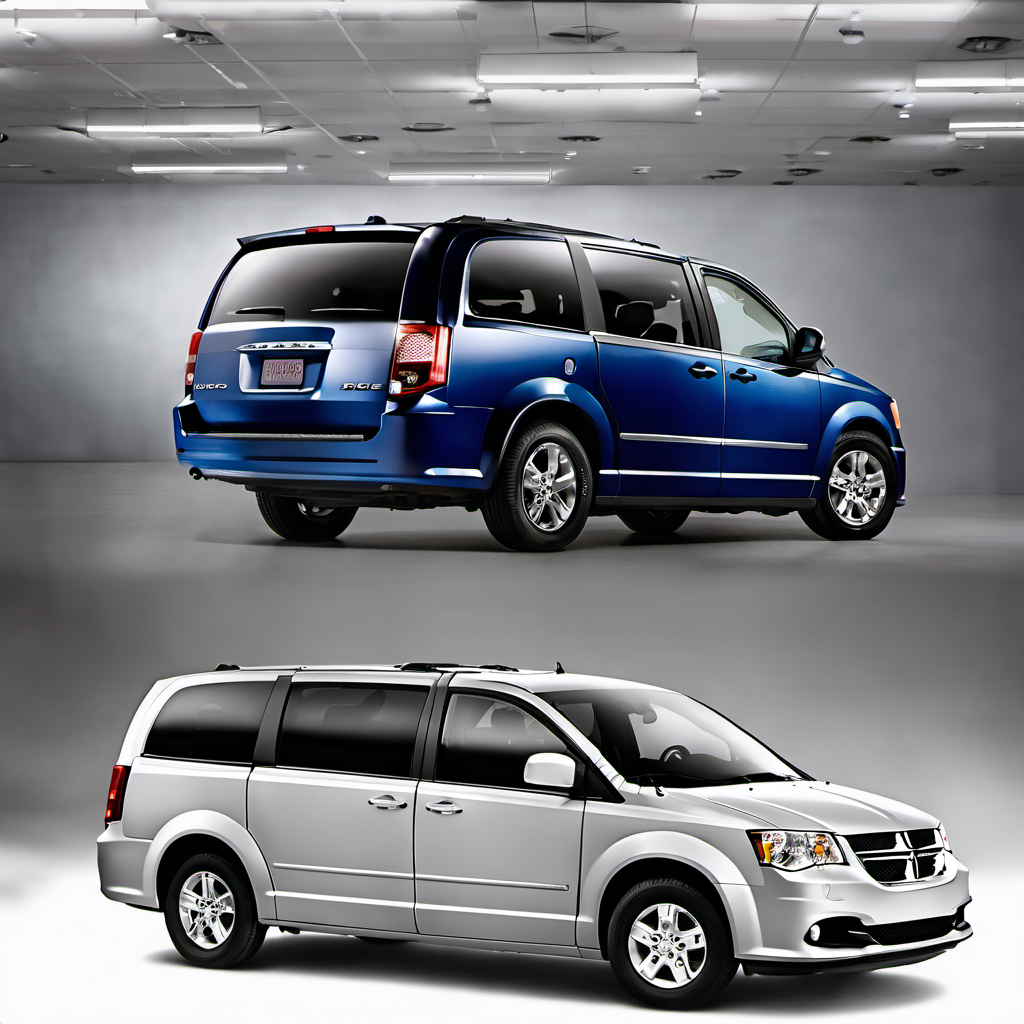
2011 Chrysler Town and Country
Popular pick

2011 Chrysler

Town and Country

3.6L V6

The 2011 Chrysler Town & Country is a full-size front-wheel-drive minivan that set the standard for family hauling during its generation. It received a significant refresh for 2011, most notably swapping the aging 4.0L V6 for Chrysler's new 3.6L Pentastar V6 — a much stronger engine that breathed new life into the platform. With Stow 'n Go seating, a long list of available tech features, and a roomy three-row cabin, it competed aggressively at the top of the minivan segment. The Pentastar engine was genuinely good news for reliability compared to its predecessor, but the 2011 model year was the first year for that engine, and early production units showed some teething issues — particularly with the variable valve timing (VVT) system. The 62TE six-speed automatic transmission also has a documented history of problems that buyers should understand before purchase. For families in Lake Geneva and the broader upper Midwest, this van checks a lot of boxes: it's comfortable on long highway drives, handles snow reasonably well on a good set of winter tires, and has enough capacity for kids, gear, and groceries. The key is going in with eyes open about the powertrain and electrical gremlins that can surface as mileage climbs.

Reliability
3/5
Specs shown for Town and Country — the most common configuration. Other trims may vary in engine, drivetrain, or fuel economy. Sign in to see your vehicle's exact specs.
Engine
[object Object]
Drivetrain
FWD/Front-Wheel Drive
Fuel
Gasoline
MPG
17 city / 25 highway
Seats
Doors
4
Body
Minivan - 2WD
MSRP
$29,995

Overview

AI-curated

The 2011 Chrysler Town & Country is a full-size front-wheel-drive minivan that set the standard for family hauling during its generation. It received a significant refresh for 2011, most notably swapping the aging 4.0L V6 for Chrysler's new 3.6L Pentastar V6 — a much stronger engine that breathed new life into the platform. With Stow 'n Go seating, a long list of available tech features, and a roomy three-row cabin, it competed aggressively at the top of the minivan segment. The Pentastar engine was genuinely good news for reliability compared to its predecessor, but the 2011 model year was the first year for that engine, and early production units showed some teething issues — particularly with the variable valve timing (VVT) system. The 62TE six-speed automatic transmission also has a documented history of problems that buyers should understand before purchase. For families in Lake Geneva and the broader upper Midwest, this van checks a lot of boxes: it's comfortable on long highway drives, handles snow reasonably well on a good set of winter tires, and has enough capacity for kids, gear, and groceries. The key is going in with eyes open about the powertrain and electrical gremlins that can surface as mileage climbs.

Known for
  • Stow 'n Go second- and third-row seating that folds flat into the floor
  • Tri-zone climate control and family-friendly interior layout
  • Debut of the Pentastar 3.6L V6 — a major improvement over prior engines
  • Strong towing capacity for a minivan (3,600 lbs)
Best for
  • Families with multiple kids needing maximum interior flexibility
  • High-mileage highway commuters who want car-like ride quality
  • Buyers who need occasional light towing or cargo hauling
  • Families wanting premium features at a used-market discount
Watch for
  • 62TE transmission failures and harsh shifting, especially 100k+ miles
  • VVT solenoid and cam phaser issues on early Pentastar engines
  • Power sliding door track wear and electrical faults
  • Premature brake wear — rotors warp early in Wisconsin's salt and heat cycles
  • TIPM (Totally Integrated Power Module) failures causing random electrical gremlins

Common issues by mileage

6 known

62TE Transmission Harsh Shift / Failure

high
Typically appears
80–150k mi
Estimated repair
$1,800 – $4,500

TIPM (Totally Integrated Power Module) Failure

medium
Typically appears
70–130k mi
Estimated repair
$500 – $1,200

Power Sliding Door Motor / Track Failure

medium
Typically appears
60–100k mi
Estimated repair
$250 – $700

Front Brake Rotor Warping

high
Typically appears
25–60k mi
Estimated repair
$250 – $550

Oxygen Sensor / Heater Circuit Fault

low
Typically appears
80–140k mi
Estimated repair
$150 – $400

Maintenance schedule

  1. 1
    Every 40,000 miles — do NOT follow the 'lifetime fluid' myth Transmission fluid change (62TE)

    The 62TE is sensitive to degraded fluid. Fresh ATF+4 fluid at this interval is the single biggest thing you can do to extend transmission life. Many failures trace back to owners who never changed the fluid.

  2. 2
    Every 5,000–6,000 miles Engine oil change with full-synthetic 5W-20

    The Pentastar's VVT system has tight oil passages in the cam phasers. Clean oil prevents sludge buildup that triggers P0012/P0015/P0022/P0025 codes and costly phaser repairs.

  3. 3
    Every 60,000 miles Spark plugs (NGK or OEM Mopar)

    The Pentastar is a high-compression V6; worn plugs cause misfires, reduced fuel economy, and stress the coil packs.

  4. 4
    Every 5 years / 100,000 miles Coolant flush

    OAT coolant degrades and becomes corrosive to the aluminum Pentastar block. Wisconsin freeze-thaw cycles make this especially important.

  5. 5
    Every 3 years Brake fluid flush

    Brake fluid absorbs moisture over time, lowering boiling point and accelerating rotor and caliper corrosion — a real issue with Wisconsin road salt.

  6. 6
    Every 20,000 miles Brake rotor and pad inspection

    This van's weight and FWD layout put heavy load on the front brakes. Rotors warp early; catch them before pads wear through to metal.

  7. 7
    Every 12 months / before winter Power sliding door track cleaning and lubrication

    Salt and grit pack into the sliding door tracks, wearing the nylon rollers and straining the motor. A clean, lightly lubricated track prevents most door failures.

  8. 8
    Every fall Battery load test

    A marginal battery will fail in a Wisconsin winter cold snap, and a low-voltage condition can trigger TIPM glitches and false fault codes. Replace proactively at 4–5 years.

Always defer to the manufacturer's service manual for warranty-mandated intervals.

Cost of ownership

Annual maintenance
$700 – $1,600
Fuel
At 20 MPG combined and ~15,000 miles/year, expect roughly $2,100–$2,500/year at $2.80–$3.30/gal. Highway driving helps; city-heavy routes will push you closer to 17 MPG.
Insurance
Minivans typically insure cheaply — expect $900–$1,400/year for a 2011 model with a clean record in the Lake Geneva area, depending on coverage level.

On a well-maintained example, routine annual costs (oil changes, brakes, tires, fluids) run $700–$1,100. Budget an additional $500–$1,600 in years where the transmission needs service, door actuators fail, or VVT solenoids act up. A 62TE rebuild or replacement is the one bill that can sting hard ($1,800–$4,500); setting aside a small monthly repair fund is smart ownership strategy for a van of this age.
Seasonal care

Lake Geneva, WI
Winter
  • Switch to a dedicated set of winter tires — all-season tires lose grip below 45°F, and the van's weight makes traction management critical on Lake Geneva-area roads.
  • Use winter-grade washer fluid rated to at least -20°F; the standard reservoir is large but empties fast when driving on salted roads.
  • Test the battery every fall and replace if it's 4+ years old or fails a load test. Cold cranking a 3.6L V6 at -10°F demands a strong battery.
  • Wash the undercarriage every 1–2 weeks during road-salt season to protect the subframe, brake lines, and sliding door tracks from corrosion.
  • Check that the remote start (if equipped) is functional before the first hard freeze — it's a genuine quality-of-life item for warming the cabin and defogging windows.
  • Inspect power sliding door seals and tracks before winter; ice can freeze the door open or closed and damage the motor if forced.
Summer
  • Check tire pressure monthly — pressure drops roughly 1 PSI per 10°F temperature swing, and summer heat can mask a slow leak.
  • Inspect and recharge A/C refrigerant if cooling is marginal; the tri-zone climate system works hard when fully loaded with passengers in Wisconsin humidity.
  • Watch for heat soak after long highway drives — the 62TE runs warm under load. If you notice delayed engagement after a hot highway stop, get the fluid and cooling circuit checked.
  • Inspect the serpentine belt and tensioner annually; belt cracking accelerates in summer heat and a failure strands the whole family.

Comparable vehicles

If you're shopping for one

Red flags
  • Any transmission fault codes or a service history showing the fluid was never changed
  • Check engine light related to P0012/P0015/P0022/P0025 — possible cam phaser damage from oil neglect
  • Rust perforations on the undercarriage floor, subframe, or rear quarter panels
  • Non-functional power sliding door(s) — repairs can exceed $600 and are often deferred by sellers
  • A TIPM that's already been replaced once but still shows intermittent electrical issues — can indicate deeper wiring problems
What to inspect
  • Transmission behavior: test drive should include a cold start, highway acceleration, and a full stop-and-go cycle. Any shuddering, delayed engagement, or hunting between gears is a red flag.
  • Pull codes before purchase — P0012, P0015, P0022, P0025 indicate VVT/cam phaser trouble that may mean the engine was run on degraded oil.
  • Operate both power sliding doors through multiple cycles; listen for grinding or hesitation from the tracks and motors.
  • Inspect the undercarriage for rust on the subframe, brake lines, and frame rails — Wisconsin salt exposure is brutal and repairs can be expensive or even make the vehicle unsafe.
  • Check the TIPM for signs of trouble: random horn honking, fuel pump not priming, wipers/windows acting erratically are classic symptoms.
  • Ask for documented oil change history — skipped intervals are the primary cause of Pentastar VVT failures on this engine's first model year.
AI profile generated 4 days ago · claude-sonnet-4-6 · v2.