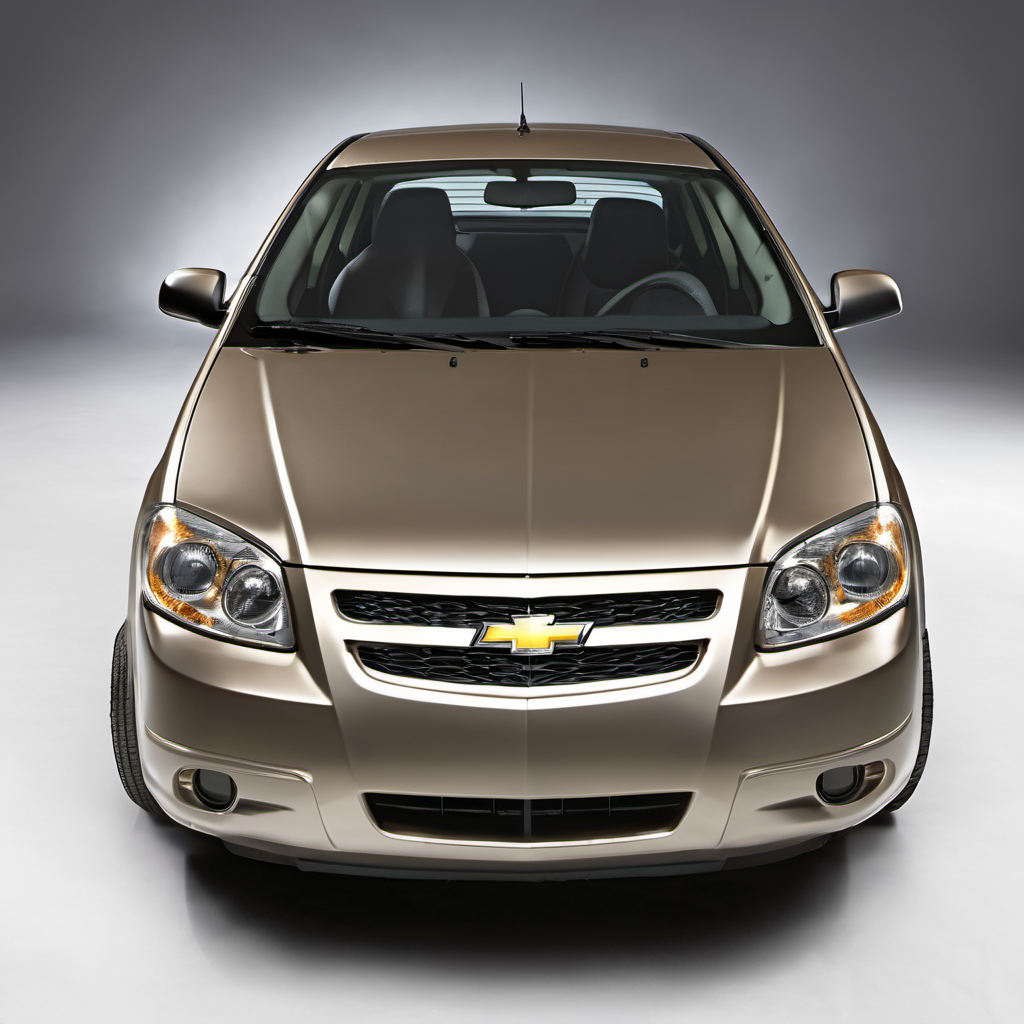
2010 Chevrolet Cobalt Sedan
Popular pick

2010 Chevrolet

CobaltSedan

2.2L I4 · Sedan

The 2010 Chevrolet Cobalt is a compact front-wheel-drive sedan built on GM's Delta platform and assembled in the United States. It was Chevrolet's entry-level compact car through most of the 2000s, replacing the Cavalier and itself replaced by the Cruze after 2010 — making this the final model year. The Cobalt filled a straightforward role: affordable transportation with decent fuel economy and low purchase price. The 2.2L Ecotec four-cylinder is the standard engine and is generally regarded as reliable when maintained properly. The automatic transmission is adequate for everyday driving, though not particularly sporty. Interior materials are budget-grade and the feature set is minimal by today's standards, but the mechanicals are simple and parts are inexpensive. As a last-year model, the 2010 Cobalt benefits from any mid-cycle refinements GM made but also shares the known weaknesses that followed the platform throughout its run. It makes the most sense as a low-cost daily driver or second car where fuel costs and purchase price are the priority.

Reliability
3/5
Verified data
Specs shown for Cobalt Coupe — the most common configuration. Other trims may vary in engine, drivetrain, or fuel economy. Sign in to see your vehicle's exact specs.
Engine
[object Object]
Drivetrain
Front-Wheel Drive
Fuel
Gasoline
MPG
25 city / 37 highway
Seats
Doors
2
Body
Subcompact Cars
MSRP
$16,995

Overview

AI-curated

The 2010 Chevrolet Cobalt is a compact front-wheel-drive sedan built on GM's Delta platform and assembled in the United States. It was Chevrolet's entry-level compact car through most of the 2000s, replacing the Cavalier and itself replaced by the Cruze after 2010 — making this the final model year. The Cobalt filled a straightforward role: affordable transportation with decent fuel economy and low purchase price. The 2.2L Ecotec four-cylinder is the standard engine and is generally regarded as reliable when maintained properly. The automatic transmission is adequate for everyday driving, though not particularly sporty. Interior materials are budget-grade and the feature set is minimal by today's standards, but the mechanicals are simple and parts are inexpensive. As a last-year model, the 2010 Cobalt benefits from any mid-cycle refinements GM made but also shares the known weaknesses that followed the platform throughout its run. It makes the most sense as a low-cost daily driver or second car where fuel costs and purchase price are the priority.

Known for
  • Good highway fuel economy for its class
  • Simple, low-cost mechanicals that are easy to work on
  • Affordable new and used purchase prices
  • Solid Ecotec 2.2L engine longevity when oil is changed regularly
  • Final Cobalt model year before Cruze replacement
Best for
  • Budget-conscious commuters needing a reliable point-A-to-B car
  • First-time car owners or high-school/college drivers
  • Buyers who want low operating costs over features
  • Short to medium highway commutes where 37 MPG hwy matters
Watch for
  • Ignition switch issues (broader GM recall era — verify any open recalls were completed)
  • Strut mount and front suspension wear on Wisconsin salt roads
  • Power steering rack leaks on higher-mileage examples
  • Rust on subframe, rockers, and brake lines — critical in the upper Midwest
  • Timing chain tensioner noise at startup on high-mileage engines

Common issues by mileage

6 known

Timing chain tensioner wear / startup rattle

medium
Typically appears
90–150k mi
Estimated repair
$350 – $750

Power steering rack leak or failure

high
Typically appears
80–130k mi
Estimated repair
$400 – $850

Front strut mounts and strut bearing plates worn (especially after Wisconsin winters)

high
Typically appears
60–100k mi
Estimated repair
$250 – $550

Upstream oxygen sensor heater circuit failure

medium
Typically appears
80–120k mi
Estimated repair
$150 – $300

Brake line rust and failure (salt exposure)

high
Typically appears
80k+ mi
Estimated repair
$300 – $900

Intake valve control solenoid / VVT solenoid fault

low
Typically appears
100–150k mi
Estimated repair
$150 – $400

Maintenance schedule

  1. 1
    Every 5,000 miles or 6 months (conventional oil); every 7,500 miles with full synthetic Engine oil and filter change

    The Ecotec 2.2L's timing chain and VVT components depend on clean, properly pressurized oil. Neglected oil changes are the #1 cause of early timing chain wear on this engine.

  2. 2
    Every 5 years or 50,000 miles Coolant flush

    GM's Dex-Cool can turn acidic when diluted or aged, corroding the intake manifold gaskets and water pump on this engine family.

  3. 3
    Every 30,000–40,000 miles for the 4-speed automatic Transmission fluid change

    GM's 'lifetime' fluid designation is optimistic. Fresh fluid extends shift quality and transmission life significantly, especially through cold Wisconsin winters.

  4. 4
    Every year, before and after winter Brake line inspection for rust

    Exposed steel brake lines corrode quickly under road salt. A pinhole leak is a safety emergency. Inspect carefully at the rear axle and along the frame.

  5. 5
    Every 60,000 miles or at first sign of cracking/squealing Serpentine belt and tensioner inspection

    Belt failure leaves you stranded and can cause rapid engine overheating.

  6. 6
    Every 2 years or 30,000 miles Front suspension inspection (struts, mounts, tie rod ends, sway bar links)

    Wisconsin potholes and frost heaves accelerate wear on these components. Clunking over bumps or loose steering feel are early warning signs.

  7. 7
    Every 60,000 miles (platinum/iridium plugs) Spark plugs replacement

    The Ecotec 2.2L is sensitive to worn plugs — misfires under load and reduced fuel economy are common symptoms of neglected plugs.

  8. 8
    Every fall, before temperatures drop below 20°F Battery test

    Wisconsin winters are hard on batteries. A battery that passes a summer load test can still fail at -10°F. Test every autumn; replace proactively after 4–5 years.

Always defer to the manufacturer's service manual for warranty-mandated intervals.

Cost of ownership

Annual maintenance
$500 – $1,200
Fuel
At 30 MPG combined and ~12,000 miles/year, expect roughly $1,400–$1,700/year at current mid-grade fuel prices.
Insurance
Generally among the lowest-cost vehicles to insure — expect $800–$1,400/year depending on driver history and coverage level.

The Cobalt is a genuinely low-cost vehicle to own day-to-day. Parts are cheap and widely available. The watch item is rust repair, which can escalate quickly on upper Midwest cars over 10 years old — a full brake line replacement or subframe repair can add $500–$1,500 to a given year's costs. Budget for it rather than be surprised.
Seasonal care

Lake Geneva, WI
Winter
  • Switch to a full synthetic 5W-30 oil if still running conventional — cold-start protection below 0°F is significantly better.
  • Test the battery every fall. The stock battery is likely past its service life on any 2010 example still running original equipment.
  • Upgrade to winter wiper blades and fill the reservoir with -20°F or lower rated washer fluid — standard fluid freezes in the spray nozzles.
  • Inspect and lubricate all door seals and locks before freeze season to prevent frozen doors and broken handles.
  • Rinse the undercarriage — especially the brake lines, subframe, and rocker panels — every 2 weeks during heavy salt season. This car's rust rate on lower surfaces is high.
  • Check tire pressure monthly; cold air drops pressure roughly 1 PSI per 10°F drop, which affects braking and handling on snow.
Summer
  • Check coolant concentration — the 50/50 Dex-Cool mix needs to handle both freeze protection and boil-over protection above 100°F.
  • Inspect the A/C system for proper cooling; the manual A/C compressor clutch on this generation can wear and fail, especially if the refrigerant is low.
  • Re-check tire pressure after the first hot week — pressure rises in summer heat and over-inflation causes uneven wear and reduced wet-road grip.
  • Inspect the serpentine belt for cracking or glazing — heat accelerates belt deterioration and a highway breakdown in July is no fun.
  • Check for any coolant seeps around the intake manifold gasket — heat cycling can reveal slow leaks that were masked in winter.

Comparable vehicles

If you're shopping for one

Red flags
  • Any visible rust bubbling on the rocker panels, rear wheel arches, or floor — structural rust on a compact car is rarely worth repairing.
  • Brake pedal that feels soft, spongy, or goes low before firm — walk away until the brake lines are fully inspected.
  • Timing chain rattle that persists after the first 10 seconds of startup — indicates significant wear or low oil pressure.
  • Milky or foamy oil on the dipstick or under the oil cap — head gasket or intake gasket failure mixing coolant into oil.
  • Seller cannot confirm or show documentation of the GM ignition switch recall being completed.
  • Transmission that slips, shudders, or hesitates between gears — the 4-speed automatic is not cost-effective to rebuild on a budget car.
What to inspect
  • Crawl under and look at every inch of the brake lines, subframe, and rocker panels for rust — this is the #1 make-or-break item on any upper Midwest Cobalt over 10 years old.
  • Start the engine cold and listen for any rattling from the timing chain area in the first 5–10 seconds before oil pressure builds.
  • Test the power steering through full lock-to-lock turns in a parking lot — any whining, hesitation, or binding points to rack issues.
  • Check all four struts/shocks by bouncing each corner — more than 1–2 oscillations after release means worn shocks.
  • Verify the ignition recall (if applicable) was completed — ask for the CARFAX or GM service history showing recall work.
  • Test the A/C and heat thoroughly — HVAC blend door and blower motor issues are common on aging examples.
  • Look for coolant odor or white residue around the intake manifold area (Dex-Cool gasket leaks).
AI profile generated 4 days ago · claude-sonnet-4-6 · v2.