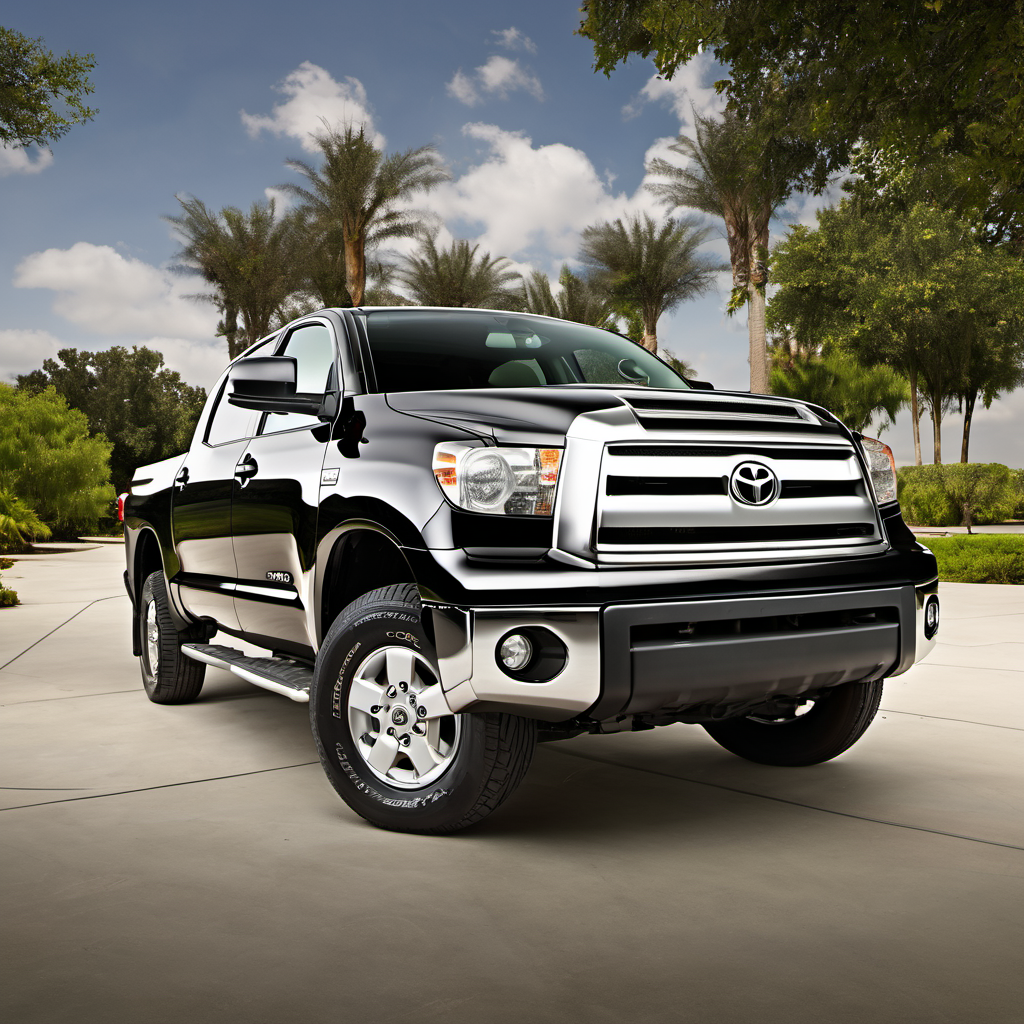
2009 Toyota Tundra CrewMax Pickup

2009 Toyota

Tundra CrewMaxPickup

5.7L V8 iForce · Pickup

The 2009 Toyota Tundra CrewMax is the second generation of Toyota's full-size pickup, now in its third model year of the redesigned platform launched in 2007. The CrewMax body style is the largest cab option Toyota offered, featuring a true four-door layout with rear-hinged back doors and a notably spacious rear seat — arguably more rear legroom than any competitor at the time. It rides on a body-on-frame platform and was available with either a 4.7L V8 or the more popular 5.7L iForce V8. The 2009 model year is largely carried over from the 2007–2008 launch, making it a well-sorted version of the generation with most early production bugs worked out. The 5.7L engine is widely regarded as one of the strongest, smoothest V8s in any half-ton of this era, and the truck earned high owner satisfaction scores for ride quality and cabin refinement relative to its domestic competitors. As a used truck now well past 100k miles in most cases, buyers should focus on VVT-i system health, frame rust (especially given Wisconsin road salt), and the condition of the secondary air injection system. Tundras of this generation hold value well and can last well past 200k miles with consistent oil changes and attention to the VVT system.

Reliability
4/5
Verified data
Engine
5.7L V8 iForce
Drivetrain
4WD
Fuel
Gasoline
MPG
13 city / 18 hwy / 15 combined
Seats
5
Doors
4
Body
Pickup
MSRP
$37,555

Overview

AI-curated

The 2009 Toyota Tundra CrewMax is the second generation of Toyota's full-size pickup, now in its third model year of the redesigned platform launched in 2007. The CrewMax body style is the largest cab option Toyota offered, featuring a true four-door layout with rear-hinged back doors and a notably spacious rear seat — arguably more rear legroom than any competitor at the time. It rides on a body-on-frame platform and was available with either a 4.7L V8 or the more popular 5.7L iForce V8. The 2009 model year is largely carried over from the 2007–2008 launch, making it a well-sorted version of the generation with most early production bugs worked out. The 5.7L engine is widely regarded as one of the strongest, smoothest V8s in any half-ton of this era, and the truck earned high owner satisfaction scores for ride quality and cabin refinement relative to its domestic competitors. As a used truck now well past 100k miles in most cases, buyers should focus on VVT-i system health, frame rust (especially given Wisconsin road salt), and the condition of the secondary air injection system. Tundras of this generation hold value well and can last well past 200k miles with consistent oil changes and attention to the VVT system.

Known for
  • 5.7L iForce V8 — strong, smooth, and very durable with proper oil changes
  • Spacious CrewMax rear cabin — best-in-class rear legroom for 2009
  • High resale value relative to domestic half-tons
  • Solid long-term reliability when maintained
  • Toyota's conservative, overbuilt suspension and frame design
Best for
  • Owners wanting a reliable work truck that also serves as a family hauler
  • Light-to-moderate towing (up to 10,100 lbs with 5.7L)
  • High-mileage users who want a truck that keeps running
  • Buyers who prioritize cabin space and ride comfort
Watch for
  • Frame rust and perforation — Wisconsin salt is brutal on these; inspect the undercarriage closely
  • VVT-i oil sludge issues if oil changes were skipped — can cause timing codes and expensive repairs
  • Secondary air injection pump failure (common at 80k–120k miles)
  • Rear differential fluid leaks on higher-mileage examples
  • Fuel economy is poor by any standard — mid-teens combined is typical

Common issues by mileage

6 known

VVT-i Oil Control Valve / Camshaft Timing Fault

high
Typically appears
80–150k mi
Estimated repair
$300 – $1,800

VVT Solenoid Circuit Range/Performance

medium
Typically appears
80–160k mi
Estimated repair
$200 – $700

Secondary Air Injection Pump Failure

high
Typically appears
70–120k mi
Estimated repair
$400 – $1,200

O2 / Air-Fuel Sensor Heater Circuit Faults

medium
Typically appears
100–180k mi
Estimated repair
$150 – $450

Frame Rust / Perforation

high
Typically appears
60k mi and up (age-related)
Estimated repair
$500 – $5,000

Rear Differential Fluid Leak / Bearing Noise

medium
Typically appears
100–200k mi
Estimated repair
$200 – $1,500

Maintenance schedule

  1. 1
    Every 5,000 miles or 6 months — do NOT stretch to 10k on this engine Engine oil and filter change

    The 5.7L iForce's VVT-i system is highly sensitive to oil quality. Sludge from extended intervals is the #1 cause of expensive camshaft timing failures on this engine. Use a full synthetic 0W-20 or 5W-30 per Toyota spec.

  2. 2
    Every 60,000 miles Transmission fluid change

    Toyota calls this fluid 'lifetime' but it degrades — especially with towing. Fresh ATF keeps the 6-speed automatic shifting cleanly and extends clutch pack life.

  3. 3
    Every 30,000 miles or immediately if you tow regularly Rear differential and transfer case fluid change

    Both sumps are small and the fluid breaks down under load. Neglected differential fluid is a direct path to bearing failure. Inspect the pinion seal and cover gasket at each change.

  4. 4
    Every 2–3 years Inspect and flush brake fluid

    Brake fluid absorbs moisture over time, lowering its boiling point and accelerating internal corrosion in calipers and master cylinders. Wisconsin's humidity and temperature swings make this especially important.

  5. 5
    Every 60,000 miles or at first cold-start check engine light Inspect secondary air injection pump and valves

    These pumps fail silently until the light comes on. Early inspection and clearing moisture from the system (weep holes in the pump) can prevent a full replacement.

  6. 6
    Every fall before winter salt season Undercarriage rust inspection and treatment

    Frame perforation is a known issue on this generation. Annual inspection lets you catch rust early when a wire brush and rust converter can still save the metal. Apply a penetrating oil or undercoating to raw metal.

  7. 7
    Every 90,000 miles (iridium plugs) Spark plug replacement

    The 5.7L uses iridium plugs with a long service life, but worn plugs stress the ignition coils and reduce fuel economy. At 90k–100k on a used truck, verify plugs have been changed.

  8. 8
    Every fall / annually Battery test and terminal cleaning

    The 5.7L V8 draws significant cranking current, and sub-zero Wisconsin mornings will expose a weak battery immediately. A battery over 4 years old should be load-tested before November. Clean terminal corrosion annually.

Always defer to the manufacturer's service manual for warranty-mandated intervals.

Cost of ownership

Annual maintenance
$700 – $1,600
Fuel
At 15 MPG combined and ~15,000 miles/year, expect roughly $2,800–$3,400/year in fuel at $2.80–$3.50/gal. Heavy towing or short trips push this higher.
Insurance
Full-size pickup rates in Wisconsin typically run $1,200–$1,800/year for full coverage on a 2009 model, depending on driving history and coverage level.

Day-to-day ownership costs are moderate for a full-size truck — the engine and drivetrain are durable and don't require expensive surprise repairs if maintained. Fuel is the biggest ongoing cost given the V8's appetite. Budget an extra $500–$1,500 every few years for VVT solenoid or secondary air injection work on higher-mileage examples. Frame rust remediation, if needed, can be the largest single expense on an older Wisconsin truck.

Seasonal care

Lake Geneva, WI
Winter
  • Load-test the battery every fall — the 5.7L V8 needs strong cranking amps in sub-zero temps; replace any battery over 4 years old proactively
  • Switch to full synthetic 0W-20 or 0W-30 oil if not already using it — it flows immediately at cold start and protects the VVT-i system during the critical first seconds of startup
  • Fill the washer fluid reservoir with a -20°F or -30°F rated fluid; the large windshield and wide hood create heavy spray splash from Wisconsin roads
  • Inspect brake lines and ABS sensor wiring along the frame for rust and salt damage — route areas near the rear frame rails are especially vulnerable
  • Apply a spray lubricant or anti-seize to door hinges, tailgate linkage, and running board mounting hardware before first freeze to prevent salt seizure
  • Check 4WD engagement (front hubs and transfer case) before you need it — a truck that's been in 2WD all summer may reveal a stuck actuator the first time you engage 4-Hi on an icy road
Summer
  • Check tire pressure monthly — tire pressure drops roughly 1 PSI for every 10°F drop in temperature, and Wisconsin summers cause overinflation; keep pressures at door-placard spec
  • Inspect the A/C system for refrigerant leaks and verify the cabin air filter is clean — the large CrewMax cabin takes more effort to cool and a restricted filter makes it worse
  • After winter, perform a thorough undercarriage wash and re-inspect the frame for new rust perforation — catching it in spring is far better than fall
  • Check coolant concentration (should protect to at least -34°F) and inspect hoses and clamps — summer heat soak after towing stresses an aging cooling system
  • Inspect the secondary air injection pump housing for wasp/mud dauber nests — common in summer on trucks parked outside, and a nest can destroy the pump on the next cold start

Comparable vehicles

No comparable vehicles documented yet.

AI profile generated 4 days ago · claude-sonnet-4-6 · v2.