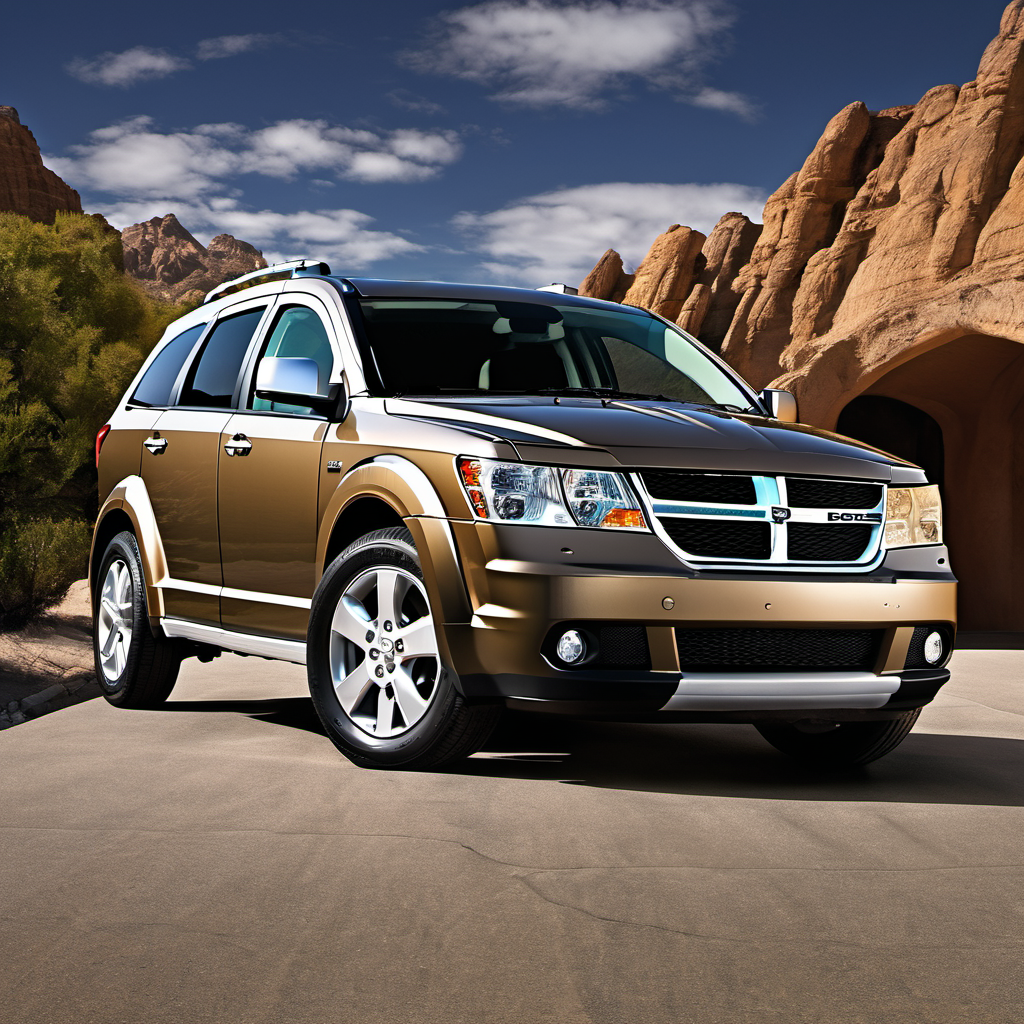
2009 Dodge Journey SUV
Popular pick

2009 Dodge

JourneySUV

2.4L I4 World Engine · SUV

The 2009 Dodge Journey was Chrysler's entry into the crossover SUV market, blending car-like handling with family-hauler utility. Built in Toluca, Mexico, it sits on a stretched Mitsubishi GS platform shared with the Avenger and Sebring. The base 2.4L four-cylinder was the volume seller, offering adequate around-town power but struggling under highway loads — especially with a full cabin. The Journey was positioned as an affordable, versatile family vehicle with up to three rows of seating. That value proposition came with trade-offs in long-term reliability. Early model years like the 2009 have a mixed ownership record, and the 4-cylinder/4-speed combination in particular drew criticism for feeling underpowered and thirsty for its size. For buyers on a tight budget who need space, it can still serve a purpose — but eyes-open maintenance is essential. At this age and price point, deferred service items are the rule, not the exception. Budget for catch-up maintenance before counting on it for daily duty.

Reliability
2/5
Verified data
Specs shown for Journey 2WD — the most common configuration. Other trims may vary in engine, drivetrain, or fuel economy. Sign in to see your vehicle's exact specs.
Engine
[object Object]
Drivetrain
Front-Wheel Drive (FWD)
Fuel
Gasoline
MPG
19 city / 25 highway
Seats
Doors
4
Body
Sport Utility Vehicle - 2WD
MSRP
$20,970

Overview

AI-curated

The 2009 Dodge Journey was Chrysler's entry into the crossover SUV market, blending car-like handling with family-hauler utility. Built in Toluca, Mexico, it sits on a stretched Mitsubishi GS platform shared with the Avenger and Sebring. The base 2.4L four-cylinder was the volume seller, offering adequate around-town power but struggling under highway loads — especially with a full cabin. The Journey was positioned as an affordable, versatile family vehicle with up to three rows of seating. That value proposition came with trade-offs in long-term reliability. Early model years like the 2009 have a mixed ownership record, and the 4-cylinder/4-speed combination in particular drew criticism for feeling underpowered and thirsty for its size. For buyers on a tight budget who need space, it can still serve a purpose — but eyes-open maintenance is essential. At this age and price point, deferred service items are the rule, not the exception. Budget for catch-up maintenance before counting on it for daily duty.

Known for
  • Roomy interior with available third-row seating
  • Competitive base MSRP when new
  • Lots of cargo flexibility and under-floor storage
  • Sluggish 2.4L four-cylinder paired with older 4-speed automatic
  • Higher-than-expected fuel consumption for a 4-cylinder crossover
Best for
  • Budget-conscious families needing occasional third-row space
  • Low-mileage local driving where highway demands are minimal
  • Buyers comfortable with DIY or affordable independent-shop maintenance
Watch for
  • Transmission reliability on the 4-speed automatic (41TE)
  • VVT/oil sludge issues on the 2.4L World Engine when oil changes are skipped
  • Rust on underbody, subframe, and brake lines — critical in Wisconsin salt conditions
  • TIPM (Totally Integrated Power Module) electrical gremlins common on this era of Chrysler
  • Strut and front suspension wear accelerated by Wisconsin road conditions

Common issues by mileage

6 known

Transmission solenoid pack failure (41TE 4-speed automatic)

high
Typically appears
80–130k mi
Estimated repair
$300 – $900

VVT system sludge / camshaft timing codes — oil starvation to VVT solenoids

high
Typically appears
60–120k mi
Estimated repair
$200 – $750

TIPM (Totally Integrated Power Module) failures — random no-start, horn, fuel pump issues

high
Typically appears
70–150k mi
Estimated repair
$400 – $1,100

Front strut and strut mount wear

high
Typically appears
60–100k mi
Estimated repair
$350 – $700

Oxygen sensor heater circuit failure

medium
Typically appears
80–140k mi
Estimated repair
$150 – $400

Underbody and brake line corrosion (Wisconsin salt exposure)

high
Typically appears
60–100k mi
Estimated repair
$300 – $1,500

Maintenance schedule

  1. 1
    Every 5,000 miles or 6 months — do not stretch Engine oil and filter change

    The 2.4L World Engine's VVT system is extremely sensitive to dirty or low oil. Sludge buildup at extended intervals is a leading cause of P0012/P0015 camshaft timing codes and premature timing chain wear.

  2. 2
    Every 30,000 miles regardless of 'lifetime' claims Transmission fluid service (41TE)

    Chrysler's 41TE does not have a truly lifetime fluid. Degraded fluid accelerates solenoid wear and shift quality loss. Most neglected examples coming into the shop have never had it done.

  3. 3
    Every 30,000 miles Spark plug replacement

    The 2.4L World Engine runs platinum plugs with a 30k interval at this age. Worn plugs increase misfire risk and can mask other drivability issues.

  4. 4
    Every 5 years or 50,000 miles Coolant flush

    OAT coolant degrades over time. Low or degraded coolant is a common cause of overheating on the 2.4L, especially in summer stop-and-go.

  5. 5
    Every fall before winter season Brake line and underbody corrosion inspection

    Lake Geneva road salt is severe. Brake lines on this platform are a known rust point. Catching early surface rust before it penetrates prevents a brake failure or expensive replacement.

  6. 6
    Every 15,000–20,000 miles Cabin and engine air filter replacement

    Clogged engine air filters reduce already-modest 2.4L performance. Cabin filter is frequently overlooked and contributes to A/C odor and reduced airflow.

  7. 7
    Every 30,000 miles or when clunking is noticed Front suspension inspection (struts, mounts, tie rods, sway bar links)

    Wisconsin frost heaves and potholes accelerate front-end wear. Strut mounts in particular are a common failure point by 80k miles on this vehicle.

  8. 8
    Every fall, or if the vehicle is 3+ years old Battery load test

    Cold cranking amps drop sharply below 0°F. A battery that tests fine in summer can leave you stranded in a Lake Geneva January. The TIPM is also sensitive to low-voltage conditions.

Always defer to the manufacturer's service manual for warranty-mandated intervals.

Cost of ownership

Annual maintenance
$700 – $1,800
Fuel
At 21 MPG combined and typical Wisconsin driving, expect roughly $1,800–$2,400/year at current mid-grade gas prices, depending on annual mileage.
Insurance
Typically moderate — older crossover in this price range usually runs $900–$1,400/year for full coverage in southern Wisconsin, depending on driver profile.

The Journey's low purchase price is its main appeal, but ownership costs add up. Maintenance on a well-kept example is manageable, but a neglected one can surprise you with a transmission service, TIPM replacement, and front-end work in the same year. Budget $700–$1,800 annually for routine maintenance on a high-mileage example, and keep a cushion for the known failure points listed above.
Seasonal care

Lake Geneva, WI
Winter
  • Load-test the battery every October — the 2.4L needs strong cranking amps below 0°F and the TIPM behaves erratically under low voltage
  • Switch to a full-synthetic 5W-30 oil before temperatures drop to improve cold-start lubrication to the VVT system
  • Inspect and replace wiper blades with winter-rated blades; keep washer fluid rated to at least -20°F — Wisconsin winters will test both
  • Inspect brake lines and underbody for salt corrosion every fall; apply undercoating or rust inhibitor to exposed metal
  • Keep the fuel tank above half when temperatures are below 20°F to prevent fuel line moisture issues and reduce fuel pump strain
  • Check tire tread depth and cold-weather inflation — FWD-only means traction is entirely dependent on front tire condition; consider dedicated winter tires
Summer
  • Check coolant level and condition before summer heat arrives — the 2.4L runs warm in traffic and degraded coolant raises overheating risk
  • Inspect the A/C system for refrigerant level and cabin filter condition; musty odor from vents usually means a clogged or moldy cabin filter
  • Check tire pressure monthly — for every 10°F rise in ambient temperature, pressure increases roughly 1 PSI, leading to overinflation and uneven wear
  • Inspect the serpentine belt for cracking; heat accelerates belt degradation on this engine
  • Clear any debris from the cowl/air intake area, which can trap moisture and cause electrical issues near the TIPM

Comparable vehicles

If you're shopping for one

Red flags
  • Check engine light on, especially with VVT-related codes (P0012, P0015) — could indicate expensive timing chain or oil system work needed
  • Any sign of transmission slipping, hard shifts, or fluid that smells burnt — 41TE rebuilds start around $1,500
  • Intermittent no-start or random electrical failures — classic TIPM failure, budget $400–$1,100 to fix
  • Visible rust perforation on frame, underbody, or brake lines — walk away or get a full shop inspection before buying
  • Oil sludge under the valve cover or milky residue on the dipstick — engine damage may already be underway
  • U-codes (U0100, U0101, U0102) in stored memory — indicate CAN bus/module communication failures that can be expensive to diagnose and resolve
What to inspect
  • Pull the oil cap and look for sludge or mayonnaise-like buildup — a sign of skipped oil changes that can mean imminent VVT and timing chain problems
  • Check transmission for smooth, firm shifts through all gears; shudder, slipping, or delayed engagement on a 41TE usually means solenoid wear
  • Look for rust on the brake lines along the frame rails and rear axle — critical safety item in any Wisconsin-road vehicle
  • Test all electrical functions: windows, locks, horn, fuel pump prime (key to 'on' position) — TIPM failures cause random outages across all of these
  • Inspect front struts for leaking fluid and bounce the front corners to check for weak or collapsed strut mounts
  • Check for any stored or pending DTCs with a scan tool before purchase — P0012/P0015 VVT codes and U-codes are red flags
AI profile generated 4 days ago · claude-sonnet-4-6 · v2.