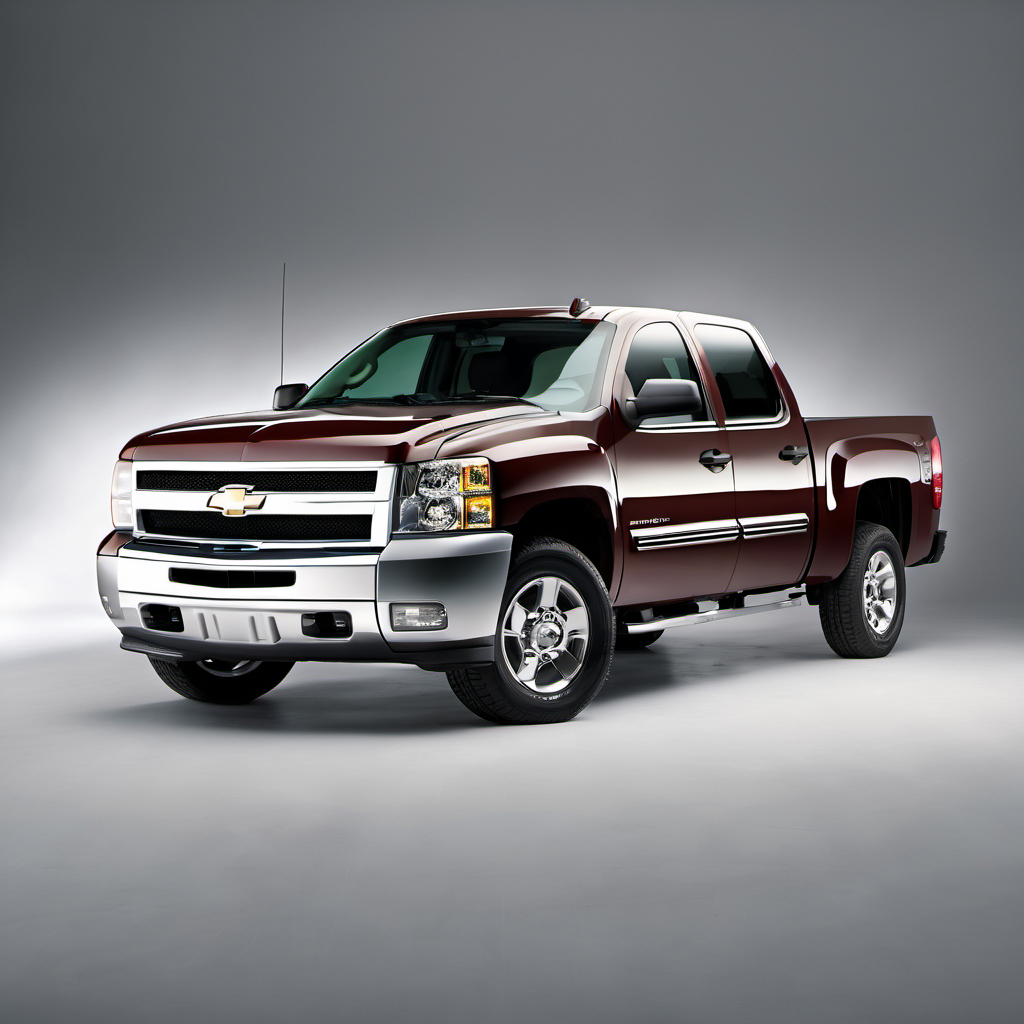
2008 Chevrolet Silverado 1500 Crew Cab Pickup
Popular pick

2008 Chevrolet

Silverado 1500 Crew CabPickup

5.3L V8 · Pickup

The 2008 Chevrolet Silverado 1500 Crew Cab is part of GM's GMT900 platform (2007–2013), widely regarded as one of the best-engineered generations of the Silverado. It offers a full four-door cab with seating for up to six, making it equally capable as a work truck and a family hauler. The 5.3L V8 is the most common engine in this generation and has a well-documented track record of reaching 200,000–300,000 miles with proper maintenance. The GMT900 generation brought real improvements over its predecessor: a stiffer frame, better suspension geometry, a more refined interior, and significantly improved fuel economy via Active Fuel Management (AFM — cylinder deactivation). That AFM system is also one of the truck's most talked-about liabilities at higher mileage, so it's worth understanding before you buy. For buyers in the Lake Geneva area, this truck checks important boxes: available 4WD, strong towing capacity (up to 10,700 lbs with the right axle ratio), and a robust aftermarket and parts supply. Rust on the frame, cab corners, and rocker panels is the biggest used-market concern for any Wisconsin truck of this vintage.

Reliability
4/5
Verified data
Engine
5.3L V8
Drivetrain
4WD
Fuel
Gasoline
MPG
14 city / 20 hwy / 16 combined
Seats
6
Doors
4
Body
Pickup
MSRP
$33,000

Overview

AI-curated

The 2008 Chevrolet Silverado 1500 Crew Cab is part of GM's GMT900 platform (2007–2013), widely regarded as one of the best-engineered generations of the Silverado. It offers a full four-door cab with seating for up to six, making it equally capable as a work truck and a family hauler. The 5.3L V8 is the most common engine in this generation and has a well-documented track record of reaching 200,000–300,000 miles with proper maintenance. The GMT900 generation brought real improvements over its predecessor: a stiffer frame, better suspension geometry, a more refined interior, and significantly improved fuel economy via Active Fuel Management (AFM — cylinder deactivation). That AFM system is also one of the truck's most talked-about liabilities at higher mileage, so it's worth understanding before you buy. For buyers in the Lake Geneva area, this truck checks important boxes: available 4WD, strong towing capacity (up to 10,700 lbs with the right axle ratio), and a robust aftermarket and parts supply. Rust on the frame, cab corners, and rocker panels is the biggest used-market concern for any Wisconsin truck of this vintage.

Known for
  • 5.3L Vortec V8 durability — commonly exceeds 200k mi with oil changes kept up
  • Strong towing and payload ratings for the half-ton class
  • Wide parts availability and affordable independent-shop repair costs
  • GMT900 platform praised for solid ride quality and handling vs. competitors of the era
  • Active Fuel Management (AFM) cylinder deactivation for improved highway MPG
Best for
  • Owners needing a capable daily driver and weekend tow rig
  • Families that want truck utility without sacrificing rear-seat room
  • Buyers wanting a proven, parts-cheap workhorse with long-term ownership potential
  • Light-to-moderate off-road use (4WD models)
  • High-mileage budget buyers who are willing to do preventive maintenance
Watch for
  • Active Fuel Management (AFM) lifter failures — can be catastrophic if ignored
  • Frame and rocker panel rust on Wisconsin/salt-belt trucks
  • Throttle body carbon buildup causing rough idle or stalling
  • Transfer case encoder motor failures on 4WD models
  • Intake manifold gasket weeping coolant (less common than prior gen but still seen)

Common issues by mileage

6 known

Throttle Body Carbon Buildup / Rough Idle

medium
Typically appears
60–120k mi
Estimated repair
$100 – $300

Transfer Case Encoder Motor Failure (4WD)

medium
Typically appears
80–130k mi
Estimated repair
$250 – $600

Frame and Underbody Rust

high
Typically appears
Any mileage — age/salt driven
Estimated repair
$500 – $4,000

Rocker Panel and Cab Corner Rust

high
Typically appears
Any — age driven
Estimated repair
$600 – $2,500

Intake Manifold / Gasket Coolant Seep

low
Typically appears
100–160k mi
Estimated repair
$300 – $700

Maintenance schedule

  1. 1
    Every 5,000 miles (conventional) or 7,500 miles (full synthetic) — do NOT rely solely on the oil life monitor Engine oil and filter change

    Fresh oil is the single most important factor in AFM lifter longevity. The AFM system starves lifters of oil when it's dirty or low. Short-trip driving degrades oil faster than the monitor accounts for. In Wisconsin winters, moisture contamination is an added reason to change on a short interval.

  2. 2
    Every 45,000 miles or 4 years Transfer case and front differential fluid change

    Neglected transfer case fluid accelerates encoder motor and chain wear. Wisconsin 4WD use — especially if you engage 4Lo in deep snow — puts extra stress on these fluids.

  3. 3
    Every 45,000 miles; immediately if the truck has been driven through deep water Rear differential fluid change

    Water intrusion through the breather vent (common in deep snow/slush driving) emulsifies the gear oil and accelerates bearing wear.

  4. 4
    Every 60,000 miles or at first sign of rough idle Throttle body cleaning

    Prevents carbon buildup from causing idle hunt, hesitation, and stalling. Quick and inexpensive when done proactively.

  5. 5
    Every 100,000 miles (AC Delco iridium plugs) Spark plug replacement

    OEM iridium plugs are rated to 100k. Running past this risks plugs seizing in the aluminum heads — removal gets expensive. Replace on schedule.

  6. 6
    Every 3 years Brake fluid flush

    Brake fluid absorbs moisture over time, lowering its boiling point and accelerating internal caliper and ABS modulator corrosion — a bigger deal in salt-belt climates.

  7. 7
    Annually — best done each fall before salt season Undercarriage inspection and rust treatment

    Catching rust at the spring hangers, brake lines, and fuel lines early is far cheaper than structural repair or line replacement later. Annual oil-based undercoating on exposed metal dramatically extends the truck's life in Wisconsin.

  8. 8
    Every 5 years or 100,000 miles (DEX-COOL) Coolant system flush

    DEX-COOL can become acidic past its service life, attacking intake gaskets, the water pump, and heater core. Use a proper DEX-COOL-compatible coolant on refill.

Always defer to the manufacturer's service manual for warranty-mandated intervals.

Cost of ownership

Annual maintenance
$700 – $1,600
Fuel
At 16 MPG combined and ~15,000 miles/year, expect roughly $2,400–$2,900/year in fuel at current upper-Midwest prices. Highway driving with AFM active can push closer to 20 MPG and reduce that noticeably.
Insurance
Typically $900–$1,400/year for a 2008 model in the Lake Geneva area, depending on coverage level and driver history. Full-coverage rates vary widely based on lender requirements.

For a well-maintained example, annual maintenance runs $700–$1,100 in routine years (oil changes, filters, fluids, tires). Budget $1,400–$1,600 or more in any year that involves suspension, brake, or AFM-related work. The biggest financial risk is deferred maintenance on the AFM system — a neglected lifter job can run $3,000–$5,500. Parts are widely available and independent shops can handle nearly everything on this truck, keeping labor costs reasonable compared to domestic competitors.

Seasonal care

Lake Geneva, WI
Winter
  • Switch to a full synthetic 5W-30 before temperatures drop below 0°F — it flows faster on cold starts and gives the AFM lifters better protection during those critical first seconds of start-up
  • Test the battery every fall — cold-cranking amps drop significantly below 0°F and a marginal battery that works fine in October will leave you stranded in January
  • Fill the washer fluid reservoir with a rated -20°F or colder solution; the 5.3L runs hot under the hood but the reservoir and lines can still freeze overnight
  • Inspect and treat brake lines and fuel lines for rust before salt season; these are high-failure items on salt-belt trucks of this age
  • Confirm the 4WD system engages and disengages correctly before the first snowfall — find encoder motor issues now, not on a snowy highway on-ramp
  • Keep the fuel tank above one-quarter full to reduce condensation in the tank and to add weight over the rear axle on slippery surfaces
Summer
  • Check tire pressure monthly — every 10°F rise in ambient temperature raises tire pressure roughly 1 PSI, and the Silverado's load range means proper inflation is critical for handling and wear
  • Inspect the A/C system for refrigerant leaks and test cabin cooling before peak heat — the condenser on this generation sits low and is vulnerable to road debris damage
  • Watch coolant temperature gauge closely in hot weather towing or stop-and-go traffic; if the truck runs warmer than normal, address it before it becomes an overheating event
  • After a winter of salt exposure, flush the undercarriage thoroughly in spring and re-treat any bare metal before summer heat accelerates oxidation

Comparable vehicles

No comparable vehicles documented yet.

AI profile generated 21 days ago · claude-sonnet-4-6 · v2.