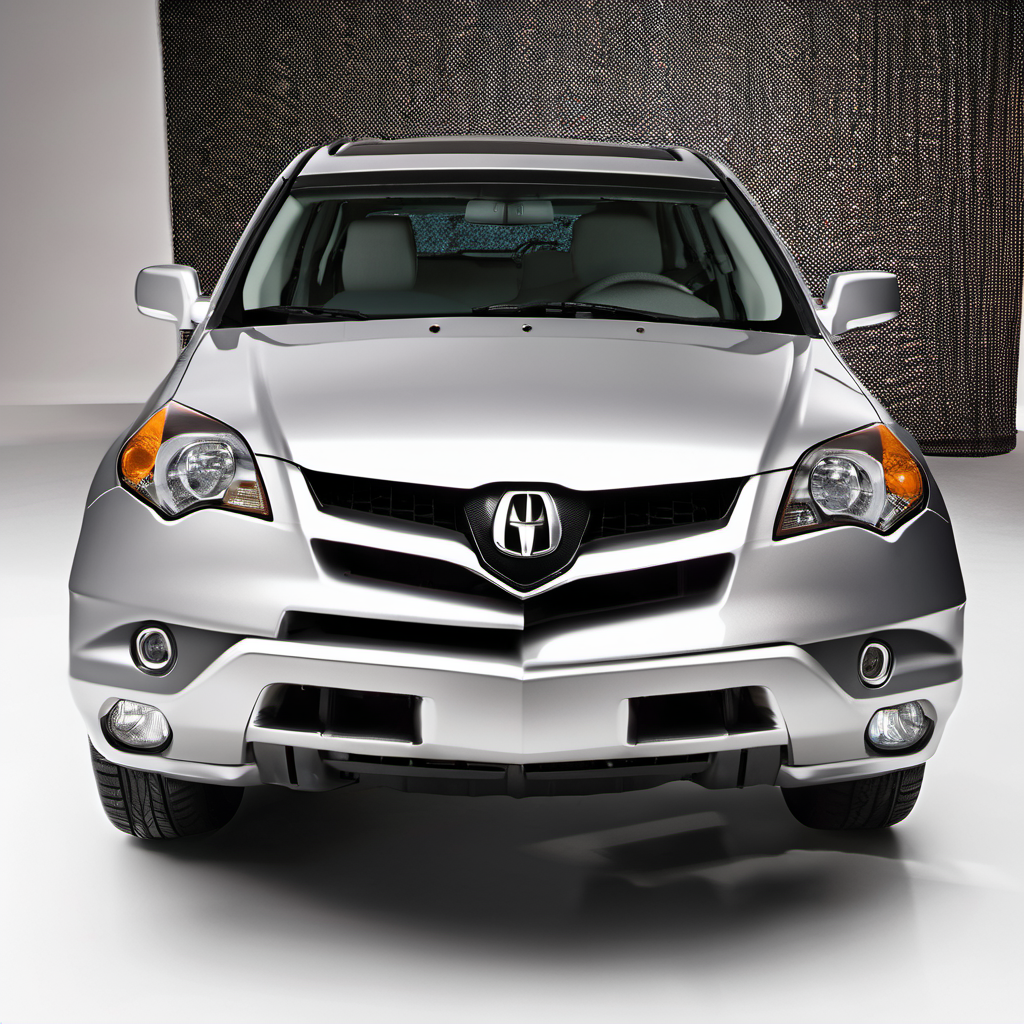
2007 Acura RDX SUV

2007 Acura

RDXSUV

SUV

The 2007 Acura RDX was a groundbreaking compact luxury crossover — the first turbocharged Acura and one of the first turbocharged Honda-platform vehicles sold in the U.S. It debuted a 2.3L turbocharged inline-4 making 240 hp, paired with a 5-speed automatic and Acura's SH-AWD system. At launch it was positioned as a sporty, driver-focused alternative to the BMW X3 and Volvo XC60, and it largely delivered on that promise. That said, the first-generation RDX (2007–2012) was a technological experiment, and the turbo engine in particular came with real-world ownership complexity that buyers didn't fully appreciate at the time. Fuel economy was disappointing for a 4-cylinder, premium fuel was required, and the turbo system introduced failure modes uncommon on Honda/Acura's normally-aspirated lineup. For a used buyer in 2025, a high-mileage 2007 RDX demands careful pre-purchase inspection. Well-maintained examples with documented oil changes can still deliver reliable service, but neglected ones are money pits. Budget accordingly and verify the maintenance history before committing.

Reliability
3/5
Verified data
Specs shown for RDX 4WD — the most common configuration. Other trims may vary in engine, drivetrain, or fuel economy. Sign in to see your vehicle's exact specs.
Engine
[object Object]
Drivetrain
AWD
Fuel
Premium gasoline
MPG
17 city / 22 hwy / 19 combined
Seats
Doors
Body
Sport Utility Vehicle - 4WD

Overview

AI-curated

The 2007 Acura RDX was a groundbreaking compact luxury crossover — the first turbocharged Acura and one of the first turbocharged Honda-platform vehicles sold in the U.S. It debuted a 2.3L turbocharged inline-4 making 240 hp, paired with a 5-speed automatic and Acura's SH-AWD system. At launch it was positioned as a sporty, driver-focused alternative to the BMW X3 and Volvo XC60, and it largely delivered on that promise. That said, the first-generation RDX (2007–2012) was a technological experiment, and the turbo engine in particular came with real-world ownership complexity that buyers didn't fully appreciate at the time. Fuel economy was disappointing for a 4-cylinder, premium fuel was required, and the turbo system introduced failure modes uncommon on Honda/Acura's normally-aspirated lineup. For a used buyer in 2025, a high-mileage 2007 RDX demands careful pre-purchase inspection. Well-maintained examples with documented oil changes can still deliver reliable service, but neglected ones are money pits. Budget accordingly and verify the maintenance history before committing.

Known for
  • First turbocharged Acura — 240 hp 2.3L K23 turbo engine
  • SH-AWD (Super Handling All-Wheel Drive) with torque vectoring
  • Firm, sporty suspension tuning atypical for a luxury crossover
  • Premium fuel requirement with below-average real-world MPG
  • Tight rear passenger and cargo space for the class
Best for
  • Drivers who want a sporty, engaging compact crossover
  • Buyers prioritizing AWD capability in Wisconsin winters
  • Those with a solid independent mechanic and a maintenance budget
  • Commuters who drive mostly highway miles (better MPG there)
Watch for
  • Turbo and timing chain issues on unmaintained examples
  • Carbon buildup on intake valves — a known issue on direct-injection turbos of this era
  • High oil consumption if turbo seals are worn
  • Rear differential and SH-AWD actuator failures at higher mileage
  • Premium fuel-only — regular fuel will trigger knock retard and reduce performance

Common issues by mileage

6 known

Timing chain tensioner wear / VTC actuator rattle

high
Typically appears
80–150k mi
Estimated repair
$800 – $2,200

Turbocharger failure / oil feed line clogging

medium
Typically appears
100–180k mi
Estimated repair
$1,500 – $3,800

VTC (Variable Timing Control) solenoid failure

medium
Typically appears
70–130k mi
Estimated repair
$200 – $600

Rear differential / SH-AWD actuator failure

medium
Typically appears
90–160k mi
Estimated repair
$1,200 – $3,500

Oxygen / A/F sensor failure

medium
Typically appears
80–140k mi
Estimated repair
$200 – $550

Turbo bypass / wastegate valve issues

low
Typically appears
100–200k mi
Estimated repair
$300 – $900

Maintenance schedule

  1. 1
    Every 5,000 mi or 6 months — do not stretch to 7,500+ on a turbo engine Engine oil and filter change

    The K23A1 turbo bearings and VTC actuator screens depend on clean, pressurized oil. Stretched intervals are the single biggest cause of expensive failures on this engine. Use 5W-30 full synthetic and stick to the short interval.

  2. 2
    Listen for cold-start rattle at every oil change; inspect tensioner hardware by 100k mi Timing chain / VTC actuator inspection

    A brief cold-start rattle that clears within a few seconds is the first warning. Catching tensioner or actuator wear early is a $800–$1,200 job; ignoring it until the chain skips can total the engine.

  3. 3
    Every 30,000 mi or 3 years Rear differential fluid change (SH-AWD)

    Most owners never change this fluid. Degraded fluid accelerates wear on the electromagnetic clutch packs inside the rear differential. Fresh fluid is cheap insurance against a $1,200–$3,500 actuator replacement.

  4. 4
    Every 30,000–40,000 mi for a used vehicle with unknown history Transmission fluid change

    Honda/Acura 5-speed automatics are durable but sensitive to degraded fluid. If the history is unknown, do a fresh drain-and-fill (not a flush) immediately after purchase.

  5. 5
    Every 30,000 mi (iridium plugs) Spark plug replacement

    The turbo raises combustion temperatures; worn plugs on a boosted engine can cause misfires and increased knock retard. Don't push past 30k on a turbo application even with iridium plugs.

  6. 6
    Every 15,000–20,000 mi or annually in Wisconsin Air filter replacement

    A restricted air filter reduces turbo efficiency and can increase intake temps. Wisconsin road grit and spring pollen clog filters faster than in dry climates.

  7. 7
    Every 2–3 years regardless of mileage Brake fluid flush

    Acura specifies DOT 3 brake fluid. Wisconsin winters put extra stress on braking systems; moisture-contaminated fluid lowers boiling point and can cause fade or ABS irregularities.

  8. 8
    Every 5 years / 60,000 mi (use Honda-spec blue coolant) Coolant system inspection and flush

    The turbo adds heat load to the cooling system. Degraded coolant loses its corrosion inhibitors, leading to water pump and radiator issues. Use only Honda/Acura-compatible coolant — do not mix universal green antifreeze.

Always defer to the manufacturer's service manual for warranty-mandated intervals.

Cost of ownership

Annual maintenance
$900 – $2,000
Fuel
Premium fuel (91 octane) required. At 19 MPG combined and ~15,000 mi/year, expect roughly 790 gallons annually — at $4.00/gal premium that's approximately $3,160/year in fuel costs alone.
Insurance
Expect mid-range luxury crossover rates — typically $1,200–$1,800/year in Wisconsin for a 2007 model depending on driver profile and coverage level.

The 2007 RDX is not a cheap vehicle to own despite its age. Premium fuel, a turbo engine that demands strict oil discipline, and aging SH-AWD components mean annual maintenance costs are higher than a comparable naturally-aspirated crossover. Budget $900–$2,000/year for routine maintenance in good years, and keep a $2,000–$4,000 reserve for the turbo- or timing-related repairs that are statistically likely on any high-mileage example. A well-maintained RDX at a fair price is a good value; a cheap one with unknown history is a gamble.

Seasonal care

Lake Geneva, WI
Winter
  • Battery test every fall — the 2007 RDX's turbo adds electrical load; a marginal battery that starts the car in September may leave you stranded in January at sub-zero temps in Lake Geneva.
  • Switch to a winter-rated full synthetic 5W-30 if not already running it — cold flow matters for turbo bearing lubrication on frigid cold starts.
  • Allow 60–90 seconds of idle before driving hard in sub-zero temperatures — the turbo bearings need oil pressure before you build boost.
  • Top off washer fluid with a -20°F or colder rated fluid; the reservoir and lines freeze quickly and Lake Geneva winters regularly hit those temps.
  • Inspect and treat all door and hatch seals with rubber protectant — road salt and freeze-thaw cycles crack seals and cause water intrusion.
  • Check brake lines and calipers for salt corrosion annually — the RDX's SH-AWD system means all four corners work hard, and corroded calipers cause uneven braking on snow and ice.
Summer
  • Check tire pressure monthly — turbo engines run hot and Wisconsin summer temps cause pressure to rise; over-inflated tires reduce grip and accelerate center tread wear.
  • Inspect the intercooler for road debris — the front-mounted intercooler on the RDX is exposed; bent fins reduce boost cooling efficiency and can cause heat soak on hot days.
  • A/C system check every 2–3 years — verify refrigerant level and condenser condition; the condenser sits in front of the radiator and is vulnerable to stone chips and bug buildup.
  • Watch coolant temp gauge closely on hot days in stop-and-go traffic — a marginal radiator or low coolant that's tolerable in spring can cause overheating under summer heat soak.
  • Clean the engine bay of winter salt residue in early spring before summer heat bakes it onto wiring and rubber components.

Comparable vehicles

No comparable vehicles documented yet.

AI profile generated 2 hr ago · claude-sonnet-4-6 · v2.