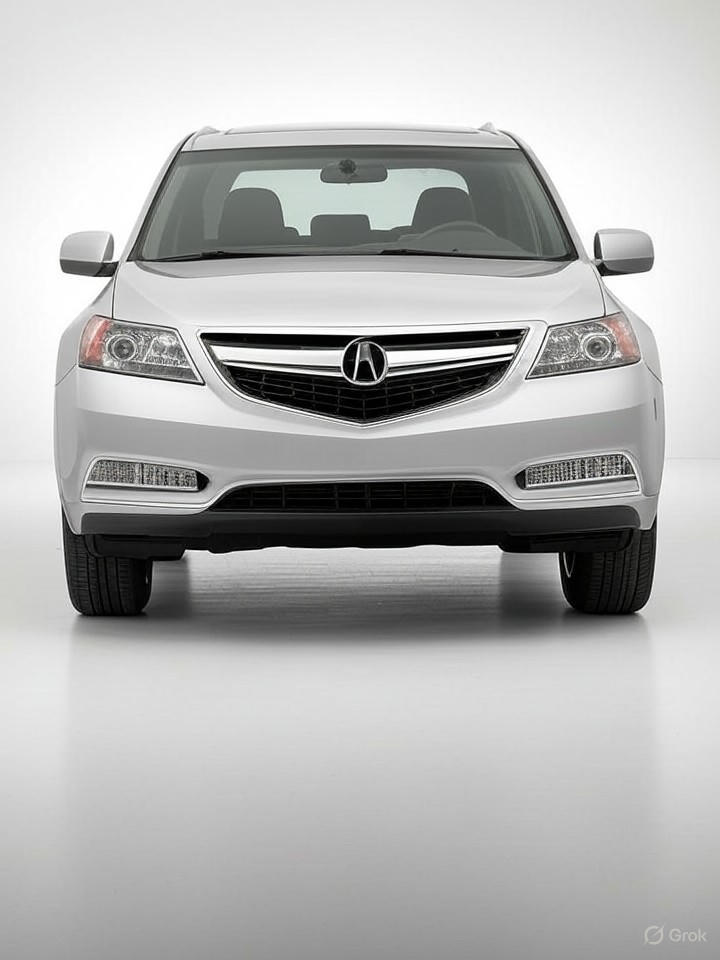
2006 Acura MDX SUV

2006 Acura

MDXSUV

SUV

The 2006 Acura MDX is a three-row luxury SUV built on Honda's unibody platform, powered by a 3.5L V6 paired with a 5-speed automatic and Honda's Super Handling All-Wheel Drive (SH-AWD). It was one of the first mainstream luxury SUVs to offer torque-vectoring AWD, giving it handling that punched well above its class. At nearly 20 years old, well-maintained examples are still genuinely useful family haulers. The first-generation MDX (2001–2006) earned a strong reputation for reliability when serviced properly, but the 2006 model year specifically carries some VTM-4/SH-AWD maintenance baggage and is now at an age where deferred maintenance on the timing belt, transmission, and differential fluid shows up fast. Budget for a thorough inspection and catch-up service before putting miles on any used example. In the Lake Geneva area, its AWD system and decent ground clearance make it a capable year-round vehicle. Just keep up with the differential fluid changes — neglecting them in any season, but especially winter, accelerates wear on an already aging drivetrain.

Reliability
4/5
Verified data
Specs shown for MDX 4WD — the most common configuration. Other trims may vary in engine, drivetrain, or fuel economy. Sign in to see your vehicle's exact specs.
Engine
[object Object]
Drivetrain
AWD
Fuel
Premium gasoline
MPG
15 city / 21 hwy / 17 combined
Seats
Doors
Body
Sport Utility Vehicle - 4WD

Overview

AI-curated

The 2006 Acura MDX is a three-row luxury SUV built on Honda's unibody platform, powered by a 3.5L V6 paired with a 5-speed automatic and Honda's Super Handling All-Wheel Drive (SH-AWD). It was one of the first mainstream luxury SUVs to offer torque-vectoring AWD, giving it handling that punched well above its class. At nearly 20 years old, well-maintained examples are still genuinely useful family haulers. The first-generation MDX (2001–2006) earned a strong reputation for reliability when serviced properly, but the 2006 model year specifically carries some VTM-4/SH-AWD maintenance baggage and is now at an age where deferred maintenance on the timing belt, transmission, and differential fluid shows up fast. Budget for a thorough inspection and catch-up service before putting miles on any used example. In the Lake Geneva area, its AWD system and decent ground clearance make it a capable year-round vehicle. Just keep up with the differential fluid changes — neglecting them in any season, but especially winter, accelerates wear on an already aging drivetrain.

Known for
  • Honda's SH-AWD torque-vectoring all-wheel drive — genuinely sporty for a 3-row SUV
  • Smooth, refined 3.5L VTEC V6 with solid longevity when maintained
  • Comfortable ride quality with a well-finished interior for the era
  • Strong towing capacity (~5,000 lbs) for a unibody crossover
  • Third-row seating (tight for adults, usable for kids)
Best for
  • Families needing three rows and real AWD capability in Wisconsin winters
  • Buyers wanting a reliable luxury SUV on a used-car budget
  • Drivers who prioritize handling dynamics over outright off-road ability
  • Highway commuters — the V6 is smooth and refined at speed
Watch for
  • Timing belt — interference engine, catastrophic if it fails; must be on a documented schedule
  • SH-AWD rear differential fluid — neglect causes expensive rear diff failure
  • Transmission wear from skipped drain-and-fill services (not serviceable with just a flush)
  • VCM/VTEC oil pressure codes from sludge if previous owner used extended oil change intervals
  • Rust on frame, subframe, and brake lines — significant concern on any Wisconsin/salt-belt vehicle of this age

Common issues by mileage

6 known

Timing Belt Failure (Interference Engine)

high
Typically appears
90–105k mi (and every ~90k thereafter)
Estimated repair
$700 – $1,100

SH-AWD Rear Differential Wear / Failure

high
Typically appears
80–150k mi
Estimated repair
$800 – $3,500

VTC (Variable Timing Control) Actuator Rattle / Oil Pressure Codes

medium
Typically appears
80–150k mi
Estimated repair
$400 – $900

Automatic Transmission Shudder / Harsh Shifting

medium
Typically appears
100–160k mi
Estimated repair
$300 – $4,500

Oxygen / A/F Sensor Failure

medium
Typically appears
100–180k mi
Estimated repair
$150 – $450

VTEC / VVT Solenoid Screen Clogging

medium
Typically appears
80–140k mi
Estimated repair
$100 – $350

Maintenance schedule

  1. 1
    Every 90,000 miles or 7 years — whichever comes first Timing Belt, Water Pump, Tensioner & Idler Replacement

    This is a non-negotiable service on an interference engine. If records don't confirm when it was last done, treat it as overdue. Replacing the water pump and tensioner at the same time saves significant labor cost down the road.

  2. 2
    Every 7,500 miles or 6 months Engine Oil & Filter Change (5W-30)

    Honda's J35 is sensitive to sludge buildup from extended intervals. Staying on schedule keeps VTC actuators, VTEC solenoid screens, and oil passages clean. Use a quality 5W-30 meeting API SN or better — thicker oil can starve VVT components.

  3. 3
    Every 30,000 miles SH-AWD Rear Differential Fluid Change

    This is the single most neglected service on used MDXs and the most expensive consequence of neglect. Use only Honda Dual Pump Fluid II or a certified equivalent. Skipping this is the #1 cause of rear differential failure on the SH-AWD system.

  4. 4
    Every 30,000 miles Automatic Transmission Fluid Drain-and-Fill

    Honda specifies a drain-and-fill, not a flush. Doing this on schedule keeps the fluid clean and prevents the shudder and harsh-shifting issues common on higher-mileage MDXs. Use Honda ATF-Z1 or DW-1 equivalent.

  5. 5
    Every 30,000 miles Front and Rear Differential / Transfer Case Fluid

    In addition to the rear diff, the front differential shares fluid with the transmission. Keep all drivetrain fluids fresh, especially given Wisconsin winters and the added stress of AWD engagement.

  6. 6
    Every 105,000 miles Spark Plug Replacement (Iridium)

    The J35 uses iridium plugs with a long service life, but at this vehicle's age many are well past due. Fresh plugs restore smooth idle and help avoid misfires that can stress catalytic converters.

  7. 7
    Every 3 years Brake Fluid Flush

    Honda recommends this interval because brake fluid absorbs moisture over time, lowering its boiling point. In Wisconsin, where brakes work hard on wet and icy roads, fresh fluid is a real safety item — not just a maintenance checkbox.

  8. 8
    Every 5 years after initial service Coolant Drain & Refill (Honda Blue / Type 2)

    Honda's blue coolant (Hoat/silicate-free) is specific to their alloy engines. Using the wrong coolant or letting it degrade causes internal corrosion. At a vehicle this age, confirm the coolant type and condition — mixed or degraded coolant is common on cars with multiple owners.

Always defer to the manufacturer's service manual for warranty-mandated intervals.

Cost of ownership

Annual maintenance
$600 – $1,800
Fuel
Requires premium recommended; at 17 MPG combined and ~12,000 miles/year, expect roughly $2,000–$2,600/year depending on pump prices. Regular 87 octane can be used in a pinch but will reduce performance and fuel economy.
Insurance
Typically $1,000–$1,500/year for full coverage on a 2006 MDX in Wisconsin for a driver with a clean record, though this varies significantly by driver profile and coverage level.

Day-to-day costs are moderate for a luxury SUV of this era. The big expenses come in irregular intervals: timing belt service ($700–$1,100), rear differential rebuild if neglected ($800–$3,500), and transmission work if fluid service was skipped ($300–$4,500). A well-maintained example with documented service history will spend most years in the $600–$900 routine maintenance range. An example with unknown history could hit $3,000–$5,000+ in catch-up services in year one.

Seasonal care

Lake Geneva, WI
Winter
  • SH-AWD rear differential fluid viscosity matters in sub-zero temps — if it hasn't been changed recently, do it before winter sets in. Cold, degraded fluid won't protect adequately during initial startup.
  • Battery check every fall: the J35's cold-cranking demands combined with Wisconsin sub-zero temps will expose a weak battery fast. A battery that 'works fine' in summer can fail at -10°F.
  • Switch to winter wiper blades and top off with -20°F or colder rated washer fluid — road salt spray at highway speed burns through fluid fast.
  • Inspect brake lines and brake hose fittings for rust and corrosion — at 18+ years old, salt-belt brake line failures are a real safety risk on these vehicles.
  • Check tire pressure weekly in cold snaps — every 10°F drop loses roughly 1 PSI. Under-inflated tires on snow are dangerous and wear unevenly.
  • Rinse the undercarriage regularly after road salt exposure, paying particular attention to the subframe, control arm brackets, and differential housing.
Summer
  • Verify A/C performance before summer heat arrives — the MDX uses R134a refrigerant and the system is old enough that recharge or compressor service may be due.
  • Check coolant level and condition in spring; heat soak in stop-and-go traffic stresses a cooling system with aging hoses and a potentially tired water pump.
  • Inspect all rubber hoses and belts (including the serpentine belt) after winter — freeze-thaw cycles accelerate cracking.
  • Tire pressure rises in heat — check monthly and adjust to spec (typically 32–35 PSI). Overinflation reduces wet-road grip.
  • With a 3.5L V6 and AWD, the cooling system works harder towing or carrying a full load in summer. Tow with a fresh coolant flush and confirm the trans cooler is clear.

Comparable vehicles

No comparable vehicles documented yet.

AI profile generated 2 hr ago · claude-sonnet-4-6 · v2.